Socializing a Border Collie With Kids, Dogs and Strangers
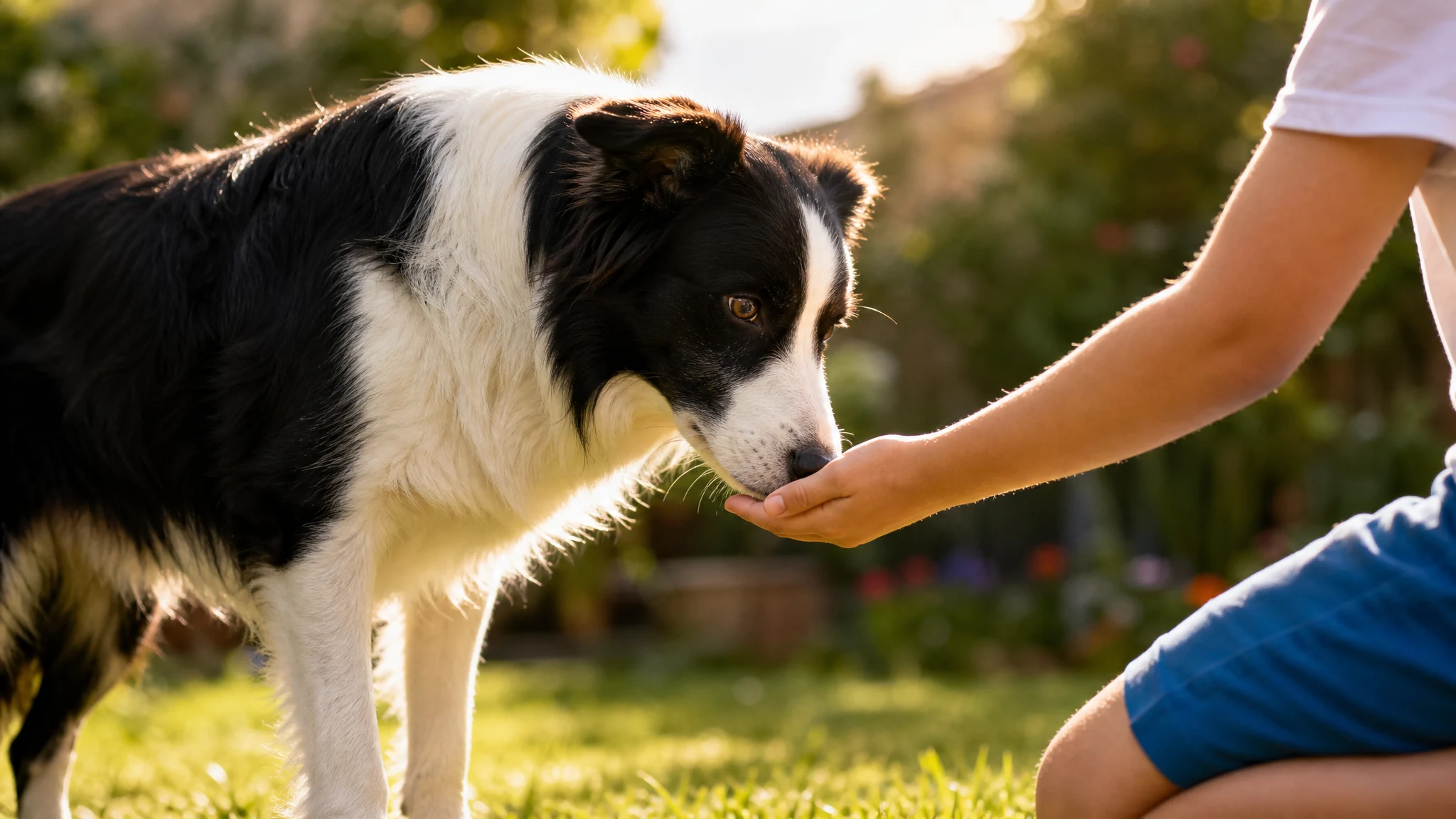
General training information. Every dog is an individual; for health or behavior concerns, see your veterinarian.
Border Collies are smart, keen and affectionate with their people. They also notice everything. A dog that notices everything needs help sorting out what is safe, what is interesting and what is none of its business.
This guide walks you through a practical plan for Border Collie socialization. It covers children, other dogs and visitors. It is reward-based from start to finish, in line with the American Veterinary Society of Animal Behavior (AVSAB).
What the Breed Sources Say First
Before the steps, here is what the AKC Border Collie breed page and the breed standard actually tell us.
- The AKC rates the breed 3 of 5 for Good With Young Children, a scale where 3 means "with supervision."
- The AKC also rates the breed 3 of 5 for Good With Other Dogs, again "with supervision."
- The AKC rates Openness To Strangers 4 of 5.
- The AKC says the breed tends to herd animals and people, and does best with older, well-behaved children.
- The breed standard, as published by the Border Collie Society of America (the AKC parent club), describes the temperament as energetic, intelligent, keen, alert and responsive. It says the dog is affectionate with friends, may be reserved with strangers, and is never shy or fearful.
So if you are wondering whether Border Collies are good with kids, the honest answer is "it depends on supervision and on the child's age and manners." Individual dogs vary, and the ratings are a starting point, not a promise.
Materials You Will Need
- Small, soft treats your dog loves, cut pea-sized so you can reward often.
- A flat collar or a well-fitted harness, and a six-foot leash.
- A longer line for open spaces, used with a harness.
- A baby gate or exercise pen to give your dog a protected space.
- A mat or bed for settle practice.
- A few chew items and a puzzle feeder for quiet time.
- A notebook or phone notes to track what your dog found easy and what was hard.
You do not need special equipment. Avoid shock, prong and choke collars. They can add fear and pain to the exact moments you want your dog to feel good about.
Step-by-Step Socialization Plan
Step 1: Start early and keep it positive
The AKC says early socialization is especially vital for this breed, from early puppyhood through about seven months. Treat that as your main window. Ask your veterinarian which places and dogs are safe for your puppy before vaccines are complete.
The goal is not to meet everyone. The goal is for your puppy to see new things and feel fine about them. Watch, feed a treat, move on.
Step 2: Teach a calm base behavior
Before you add kids or dogs, teach your Border Collie to settle on a mat. Reward every few seconds at first. Slowly stretch the time.
This gives you something to ask for in every new situation. A dog that knows how to settle has a job other than watching and chasing. The AKC rates the breed 5 of 5 for mental stimulation needs, so give the mat plenty of reward value.
For more on the foundation behaviors, see our complete guide to training a Border Collie.
Step 3: Introduce strangers at a distance
Your dog may be reserved with strangers, even though the AKC scores openness fairly high. Let your dog set the pace.
- Stand far enough from a person that your dog can look at them and still eat treats.
- When your dog glances at the person, say "yes" and feed.
- Move a little closer over several sessions.
- Let the dog choose to approach. Never push a dog toward someone or let strangers lean over it.
- Ask visitors to ignore the dog at first, then toss a treat on the floor near their feet.
Keep sessions short. Five minutes that end happily beat twenty that end in stress.
Step 4: Build up to children, with supervision
Because the AKC scores the breed 3 of 5 with young children, adult supervision is part of the plan, not an optional extra. The AKC also notes that the breed tends to herd people and does best with older, well-behaved children.
Use these ground rules.
- An adult is always within arm's reach when the dog and a child are together.
- Children learn to stay calm, not to chase, grab, hug or corner the dog.
- Children never take a toy or chew from the dog. They trade by tossing a treat away.
- Short, planned sessions. End before anyone gets wound up.
- When you cannot watch, use the gate or pen.
Teach children to be "a tree" if the dog gets excited: stand still, arms folded, and look away. Then an adult calls the dog to the mat for a reward.
Step 5: Manage herding around kids
The breed was developed for sheep herding. The breed standard describes gathering stock with wide outruns and controlling it with "eye" and a stalking movement. A running, squealing child can look a lot like stock to some dogs.
Watch for staring, stalking, circling, crouching or nipping at heels. These can be signs your dog is trying to herd. Do not punish the dog for them. Instead:
- Interrupt calmly by calling your dog's name or using a recall cue, and reward the dog for turning to you.
- Move the dog to the mat, gate or pen if the child is running or playing wildly.
- Give the dog an approved outlet, such as a fetch game on a leash or a puzzle toy, before kids play outside.
- Reward calm behavior when children move around. Feed for lying down while a child walks by.
If the nipping continues or gets rough, talk to a qualified, reward-based trainer or your veterinarian. Check any trainer's methods first and avoid anyone who uses force.
Step 6: Introduce other dogs carefully
The AKC rates the breed 3 of 5 with other dogs, meaning supervision matters. When you plan a border collie with other dogs introduction, set it up to succeed.
- Start with a calm, friendly, vaccinated adult dog you know. A parallel walk at a comfortable distance works well.
- Keep leashes loose. A tight leash can make dogs tense.
- Let the dogs sniff for a few seconds, then call them away and reward.
- Meet on neutral ground, not in either dog's home or yard.
- Take toys, bones and food away beforehand.
- Keep early meetings short, then build up.
Watch for your Border Collie fixating, crouching and stalking the other dog. Interrupt and redirect early. A herding dog can be irritating to a dog that does not like being chased or controlled.
Well-run puppy classes with small groups and reward-based instructors can help. Ask to watch a class first.
Step 7: Mix in real-world places
Once your dog is comfortable at home, add variety: a quiet street, a patio outside a pet-friendly shop, a parking lot at a calm hour. Bring treats, keep a safe distance and leave before your dog is overwhelmed.
The AKC rates the breed's barking level 4 of 5, so practice quiet behavior around new sights and sounds. Reward silence and calm looks.
Step 8: Keep going
The AKC recommends obedience training early and for life as mental stimulation. Socialization is the same. Keep adding calm, positive experiences as your dog matures, and keep up exercise and a job such as agility, herding or obedience work.
Quick Reference
| Situation | Main goal | Watch for |
|---|---|---|
| Strangers | Calm curiosity, no pressure | Backing away, hard stares, barking |
| Children | Calm, supervised, short sessions | Stalking, circling, heel nipping |
| Other dogs | Loose leash, short polite greetings | Fixating, crouching, chasing |
Tips for Better Sessions
- Exercise your dog first. A tired dog learns better, though overdoing high-intensity ball play is not wise. The University of Minnesota Canine Genetics Lab describes Border Collie Collapse as an episodic disorder triggered by strenuous exercise, and advises stopping at the first sign of wobbliness.
- Reward often and early. Pay for the behavior you want before the dog gets tense.
- Use distance as your tool. More space means an easier success.
- Learn your dog's signals. Lip licking, turning away, freezing or stiff posture mean it is time to increase distance.
- Keep notes. They show patterns, like a dog who is fine with calm kids but struggles with fast scooters.
Common Mistakes to Avoid
- Flooding. Dragging a nervous dog into a crowd or dog park does not build confidence.
- Unsupervised child time. Even a gentle dog can nip at running children. Supervise every time.
- Letting herding practice happen. If chasing kids pays off, it will repeat. Interrupt and redirect early.
- Skipping the job. The AKC says the breed needs a job to be happy, and can be too much dog for owners without time or energy to keep it occupied. A bored dog is harder to socialize.
- Using punishment. Shock, prong and choke collars, scruffing and alpha rolls can create fear and may make aggression worse. Stick with rewards.
- Stopping at seven months. The early window is important, but later experiences still count.
What Results to Expect
With patient, consistent practice, many Border Collies become calmer and more comfortable around visitors, children and other dogs. You may see quicker recovery after a surprise, easier greetings and better settling when people are around.
Results vary with age, history, genetics and how often you practice. Some dogs stay reserved with strangers, and many keep a pull to herd. That is part of the breed, not a failure. If you see fear, growling, snapping or worsening behavior, ask your veterinarian to rule out health causes and consider a qualified reward-based behavior professional.
Health questions, including pain or sudden behavior changes, belong with your veterinarian.