Leash Training a Border Collie: Pulling, Lunging and Loose-Leash Walking
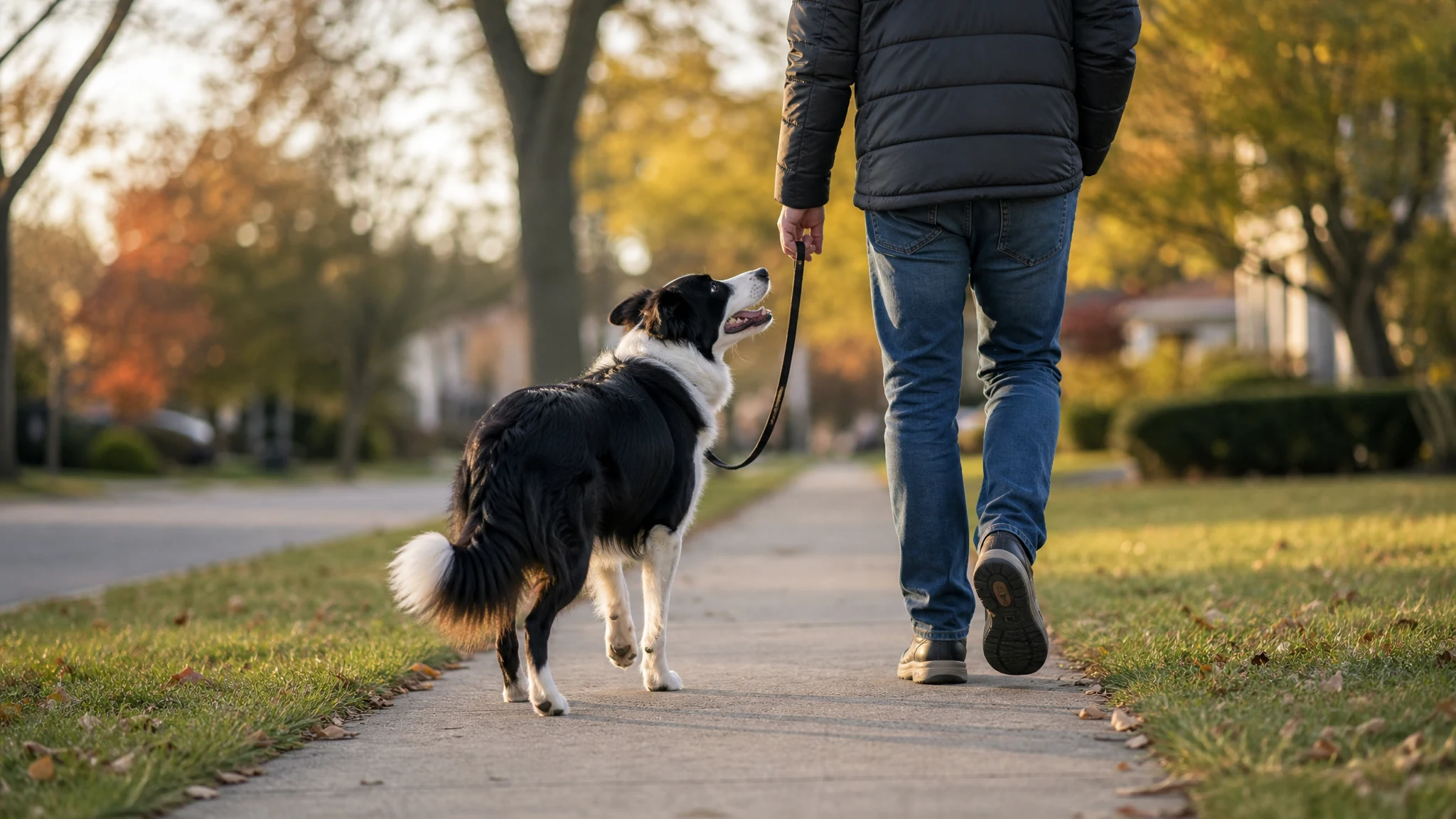
General training information. Every dog is an individual; for health or behavior concerns, see your veterinarian.
Border Collie leash training can feel like a mismatch at first. You want a calm stroll. Your dog wants to work, move and watch everything at once.
The good news is that this breed is quick to learn. The American Kennel Club (AKC) rates Border Collie trainability at 5 of 5. This guide shows how to teach a Border Collie to walk on a loose leash, and what to do when pulling turns into lunging.
For the bigger picture on teaching a Border Collie, see the complete guide to training a Border Collie.
Why Border Collies Pull
Pulling is not stubbornness. It usually comes from a mix of energy, speed and a head full of things to look at.
The AKC gives the Border Collie 5 of 5 for energy level and 5 of 5 for mental stimulation needs. It describes the dog as a bright workaholic that can be too much for owners without the time or energy to keep it occupied. A dog like that sets a faster pace than most people want to walk.
Breeding matters too. The Border Collie Society of America (BCSA), the AKC parent club, publishes the AKC breed standard. It describes a sheepdog that gathers and fetches stock with wide outruns and controls it with "eye" and a stalking movement. That is a dog bred to move toward things and watch them closely.
The AKC also notes that the breed tends to herd animals and people. On a walk, that can show up as fixating on bikes, joggers or other dogs. Individual dogs vary, so watch your own dog rather than assuming.
One more reason is simple. Pulling works. Every time the leash is tight and you follow, the dog learns that tension moves you forward. Your job is to make a loose leash the thing that pays.
Materials You Need
- A flat collar or a well-fitted front-clip harness. A front clip attaches at the chest, so a pull turns the dog toward you instead of forward. Either one is fine for training.
- A standard 4 to 6 foot leash. Skip retractable leashes. They teach a dog that pulling extends the leash.
- Small, soft treats. Pea-sized pieces you can deliver fast. Use something the dog loves, and count the treats in the day's food.
- A treat pouch so rewards are easy to reach.
- A quiet starting place. A hallway, a fenced yard or an empty driveway.
Do not use prong, choke or shock collars. They rely on pain or discomfort, and they do not fit the humane, reward-based approach recommended by the American Veterinary Society of Animal Behavior (AVSAB). They can also make a dog link painful feelings with the very thing it is staring at, which tends to make lunging worse.
Before You Start: Exercise First
A Border Collie who has had no outlet will struggle to walk calmly. The AKC says the breed needs daily exercise beyond a walk or yard romp, plus a job and room to run.
Before a training walk, give your dog some real exercise and a short brain game. A few minutes of hide-and-seek with treats or a simple trick session can take the edge off. Then the lesson starts with a dog who can think.
Be careful with repetitive, high-intensity play such as endless ball retrieving. The University of Minnesota Canine Genetics Lab describes Border Collie Collapse as an episodic disorder triggered by strenuous exercise. It advises stopping at the first sign of wobbliness. If you see that, or have any concern about your dog's stamina or gait, talk to your veterinarian.
How to Leash Train a Border Collie: Step by Step
Keep sessions short, about five minutes at first. Quit while your dog is still keen.
Step 1: Get comfortable with the gear
Let your dog wear the collar or harness around the house with treats and play. Clip the leash on and let it drag for a few minutes while you supervise. The goal is a dog who feels nothing odd about being clipped up.
Step 2: Teach "find your spot"
Stand in a quiet room with the leash in one hand. Each time your dog is beside your leg, say "yes" and drop a treat by your foot. After a few rounds, take one step. If your dog follows and stays near, reward again at your side.
Reward at the position you want, which is next to you, not in front. Border Collies learn position quickly when it pays well.
Step 3: Mark and reward slack
Walk slowly indoors. Any moment the leash makes a loose "J" shape, mark it with "yes" and give a treat at your side. You are paying for slack, not for the dog simply being near you.
Aim for rewards every few steps at first. Frequent rewards stop the dog from drifting ahead out of boredom.
Step 4: Add a turn when the leash tightens
If the leash goes tight, stop moving. Wait for your dog to look back or ease off. The moment the leash loosens, mark and reward, then walk on. If waiting does not work, call your dog and turn the other way, then reward when the dog catches up.
Stay calm. Do not yank. The lesson is that tight means stop and loose means go.
Step 5: Move outside
Start in the driveway or yard. Outdoors is more exciting, so go back to frequent rewards. Expect your dog to forget some of what it knew indoors. That is normal and not a failure.
Step 6: Build distance and distraction slowly
Take longer routes only when your dog manages a short one with a mostly loose leash. Add one new challenge at a time, such as a quiet street, then a busier one. If your dog is too excited to take treats, you have moved too fast. Go back a step.
Loose-Leash Games That Suit a Thinking Dog
Border Collies often do better with games than with plain repetition. The AKC recommends early and lifelong obedience work for mental stimulation. These games turn leash manners into that kind of work.
- Treat scatter. Toss a few treats on the ground and say "find it." This gives a keyed-up dog a calm nose-down task, and it works well when you spot a trigger and need a quick reset.
- Follow the pace change. Walk fast, slow, fast, then stop. Reward the dog for adjusting and keeping the leash loose. This keeps a quick mind tuned to you.
- Figure eights and U-turns. Change direction often so the dog has to watch you to know where you are going.
- Sniff breaks as a reward. Say "go sniff" and release your dog to the end of the leash. Sniffing is a real reward and it makes the loose-leash walking you ask for easier to give.
- Check-ins. Mark and reward every time your dog looks at you on its own. Over time you will see more of it.
Lunging at Triggers
Lunging is different from ordinary pulling. The dog hurls itself toward a bike, car, person or another dog, sometimes barking. The AKC rates the breed 4 of 5 for barking and says it may be reserved with strangers, so noisy reactions are not unusual.
The cause varies. It can be frustration, excitement, fear or a strong urge to chase or control movement. You cannot always tell which from the outside, so treat the behavior gently and do not punish it. Punishment can add stress and make the reaction worse.
A reward-based plan for lunging
- Find the distance. Work out how far from the trigger your dog can still notice it and take a treat. That is your starting distance.
- Reward calm noticing. When your dog sees the trigger and stays loose, mark and reward. The trigger should predict good things.
- Use a U-turn early. If your dog stiffens or stares hard, turn away before the lunge, using a cheerful voice and a treat trail. Leaving early is a skill, not a defeat.
- Add an alternate job. Teach "look at me" or a hand target ahead of time, then use it near the trigger.
- Close the distance slowly. Move a little nearer across many sessions, only when your dog stays relaxed.
Do not use a harsh correction. Skip leash pops, prong collars and shock devices. A front-clip harness can help you steer a dog away without pain, but gear alone will not change the feeling behind the lunge.
If lunging is intense, if your dog has bitten or tried to, or if it seems fearful, ask your veterinarian to rule out pain or other health causes. Then look for a qualified trainer who uses reward-based methods. Check with a professional body that lists such trainers before you hire anyone.
Tips and Common Mistakes
Tips
- Practice short and often. Several five-minute sessions beat one long one.
- Start socialization early. The AKC says it is especially vital from early puppyhood through about seven months.
- Walk the same relaxed route for a while. Familiar places mean fewer surprises.
- Use your dog's daily food for some training rewards.
- Make sure the whole household uses the same rules, so the dog does not learn that some people allow pulling.
Mistakes to avoid
- Walking too long too soon. A dog worn out by excitement stops listening.
- Letting pulling pay off sometimes. If you follow a tight leash even once in a while, the dog keeps trying.
- Waiting too long to reward. Mark the loose leash right away.
- Staring contests with triggers. Allowing your dog to fix its gaze on a trigger can build the very intensity you want to reduce.
- Using tight leash tricks for control. Holding the leash short and taut can add tension in the dog.
- Skipping exercise and mental work. A bored Border Collie finds its own jobs.
- Using pain-based gear. Prong, choke and shock collars are not part of humane training.
What Results to Expect
Many dogs show less pulling after a few weeks of regular, short sessions, but timing varies a lot. Age, past habits, daily exercise and how exciting your neighborhood is all play a part.
Indoors and in a quiet yard, you may see steadier walking fairly soon. Busy streets usually take longer. Lunging tends to improve more slowly and can come in waves, so expect good days and rough days.
With patient practice, most owners can work toward a walk that is calmer and more enjoyable for both of you. No method can promise a result for every dog. If progress stalls, check your dog's exercise, your reward rate and your starting distance, and talk with your veterinarian about any health concerns.
Border Collie leash training works best as part of a bigger picture of training, exercise and a job to do. The AKC points to herding, obedience and agility as sports where the breed shines, and those can be a fine outlet for the energy that now goes into pulling.