Crate Training a Border Collie and Preventing Separation Anxiety
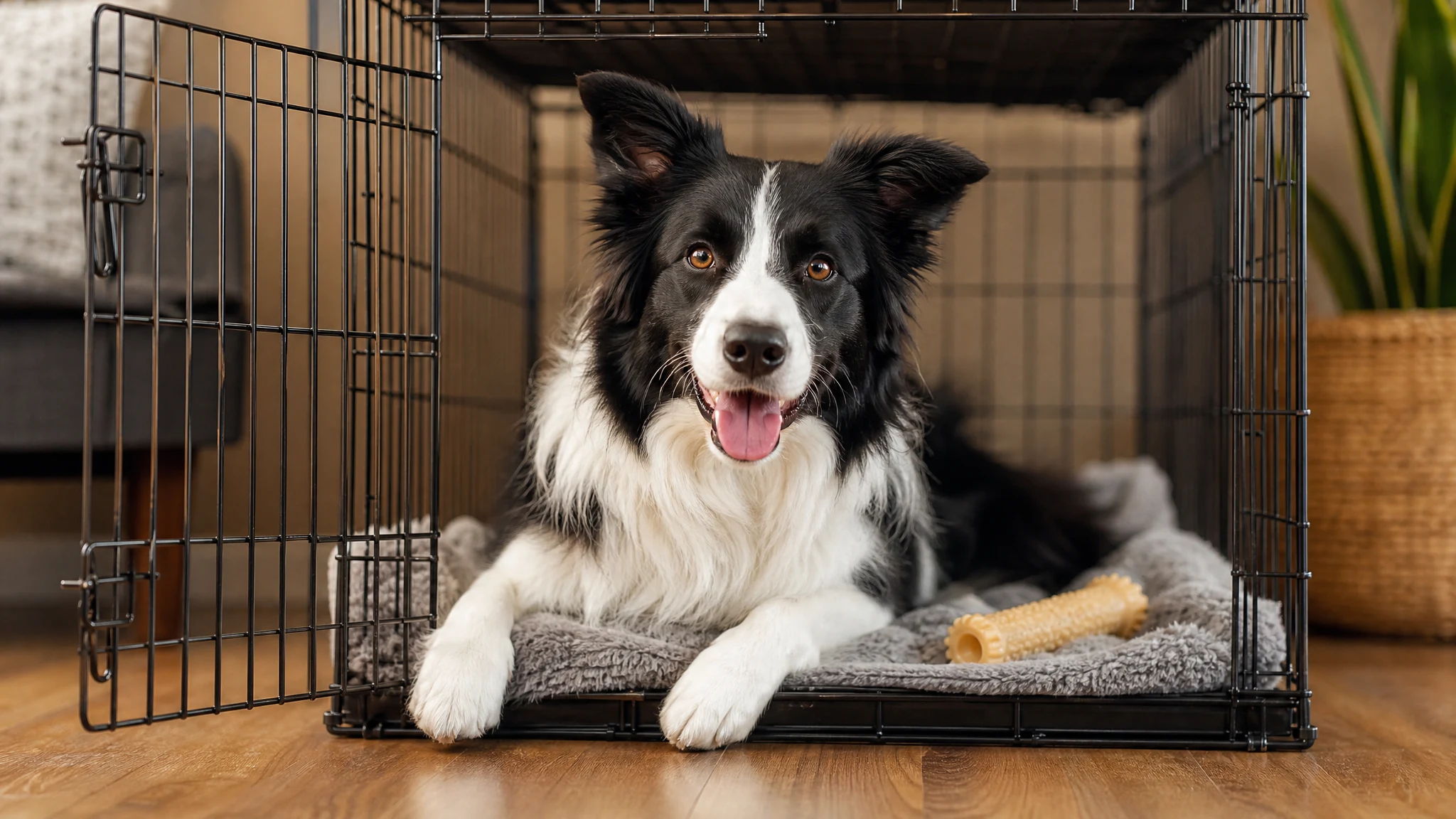
General training information. Every dog is an individual; for health or behavior concerns, see your veterinarian.
A Border Collie that settles calmly in a crate is a gift to you both. It gives your dog a quiet place to rest and gives you a safe way to leave the house. But this breed makes the job more interesting than it sounds.
The American Kennel Club (AKC) rates the Border Collie 5 of 5 for energy, 5 of 5 for mental stimulation needs and 5 of 5 for affection with family. A dog like that cares a lot about where you are and what is happening next. That is the heart of both crate training and border collie separation anxiety prevention: teach your dog that quiet time is calm, predictable and rewarding.
This guide covers crate training a Border Collie from the first day, picking the right crate size, building alone time in small steps, spotting signs of distress and knowing when to call your veterinarian.
Why the Crate Matters for This Breed
The AKC calls the Border Collie a bright workaholic that can be too much for owners without the time or energy to keep it occupied. The AKC also says the breed needs a job or activity to be happy.
A crate does not replace that job. It does something different. It teaches your dog how to switch off, which is a real skill for a dog bred for work. The Border Collie Society of America (BCSA), the AKC parent club, describes the breed standard as energetic, intelligent, keen and alert. Those traits are wonderful in the field and tiring in a living room. A dog that has learned to rest on cue is easier to live with.
Individual dogs vary. Some take to a crate in a day, and others need weeks of patient practice.
Materials You Will Need
- A crate of the right size. See the sizing section below.
- A washable mat or crate pad. Skip anything your dog can shred and swallow.
- Small, soft treats. Cut them pea-sized so you can reward often without overfeeding.
- A food puzzle or stuffable chew toy. Pick one sized for your dog that can be used safely when unsupervised.
- A crate cover or light blanket. Optional. Some dogs like a den feel, and others do not.
- A timer or phone. Short, planned sessions work better than guessing.
- A baby gate or exercise pen. Handy for the early practice stages.
Choosing the Right Crate Size
The AKC lists adult Border Collies at 19-22 inches tall for males and 18-21 inches for females, with a weight of 30-55 pounds. That is a medium dog with a lot of range, so measure your own dog rather than guessing from the breed average.
A good crate lets your adult dog stand up without ducking, turn around easily and stretch out on one side. Too small is uncomfortable. Too large can make a young puppy feel less secure and may give it room to use one end as a toilet.
How to measure
- Measure your dog from nose to the base of the tail while standing.
- Measure from the floor to the top of the head or the tips of the ears, whichever is higher.
- Compare both numbers with the crate maker's own sizing guide. Brands label sizes differently, so check with the manufacturer rather than trusting a size letter or number.
For a puppy, buy a crate that fits the expected adult size and use a divider to shrink the space for now. Because the breed's weight range is wide (30-55 pounds, per the AKC), ask your breeder or veterinarian what size your puppy is likely to reach.
Step-by-Step: Crate Training a Border Collie
Step 1: Set up a calm spot
Place the crate in a room where the family spends time, such as the living room or a corner of the kitchen. Dogs that feel left out tend to fuss. Keep it away from drafts, heaters and direct sun.
Put in the mat and a toy. Leave the door tied open so it cannot swing shut and startle your dog.
Step 2: Let your dog explore on their own terms
Toss a few treats near the crate, then just inside the door, then toward the back. Let your dog walk in and out freely. Praise quietly when they enter.
Do not push, pull or lure with force. If your dog backs off, return to treats near the doorway for another session. Reward-based training is the approach recommended by the American Veterinary Society of Animal Behavior (AVSAB), and the crate is a good place to practice it.
Step 3: Feed meals in the crate
Once your dog walks in happily, serve meals at the back of the crate. At first keep the door open. After a few days, close it while your dog eats and open it the moment the bowl is empty.
Gradually extend the time the door stays closed after meals, from a few seconds to a few minutes. Open the door while your dog is quiet, not while they are protesting.
Step 4: Teach a cue and reward calm
Pick one word, such as "bed" or "crate," and say it as your dog walks in. Reward with a treat dropped inside. Then ask for a short settle and reward again.
Border Collies are quick learners. The AKC rates the breed 5 of 5 for trainability. That also means they learn the wrong lessons fast. If whining gets the door opened, your dog may learn that whining works. Wait for a breath of quiet before opening.
Step 5: Close the door while you stay nearby
Sit next to the crate with the door shut and give your dog a stuffed chew toy. Read a book or scroll your phone. After a minute or two, calmly open the door and let your dog out without fuss.
Build up in small steps. If your dog gets worried, drop back to an easier step.
Step 6: Move around the room, then leave it
With your dog settled and the door shut, stand up, walk across the room and return. Then step out of sight for a few seconds. Come back before your dog gets upset. Over several days, lengthen the time out of sight.
Vary the length. Sometimes it is five seconds and sometimes it is two minutes. Predictable patterns can make your dog wait for the moment you reappear.
Step 7: Practice short departures
Once your dog stays relaxed while you are out of sight in the house, try stepping outside for a minute. Keep arrivals and departures low-key. Skip long goodbyes and over-excited greetings, which can raise the emotional temperature.
Building Alone Time Without Panic
Alone-time practice is the main tool for preventing border collie separation anxiety. The goal is to stay below the point where your dog gets upset, then slowly raise the bar.
| Stage | What you do | Move on when |
|---|---|---|
| 1 | Door closed, you sit beside the crate | Your dog settles within a minute or two |
| 2 | You walk around the room | Your dog stays relaxed as you move |
| 3 | You leave the room for seconds, then minutes | Your dog rests or chews calmly |
| 4 | You step outside briefly | No whining, pacing or panting when you return |
| 5 | Short trips with the car or a quick errand | Your dog is calm on arrival and exit |
There is no set timetable. Some dogs move through these stages in a week, and others need much longer. Let your dog's behavior set the pace, not the calendar.
Exercise before crate time
A tired Border Collie settles more easily. The AKC says the breed needs daily exercise beyond a walk or yard romp, plus a job and space to run. A brisk walk, a training session or a sniff-heavy outing before crate time helps.
One caution comes from the University of Minnesota Canine Genetics Lab. It describes Border Collie Collapse as an episodic disorder triggered by strenuous exercise, and it advises watching for it during activities such as repeated ball retrieving. Stop at the first sign of wobbliness. Questions about your own dog's exercise limits belong with your veterinarian.
Give the mind a job too
The AKC notes that early and lifelong obedience training provides mental stimulation. Even five minutes of cue practice, scent games or trick training before you leave can take the edge off. For a wider training plan, see our complete guide to training a Border Collie.
Socialization and Early Habits
The AKC says early socialization is especially vital for the breed, from early puppyhood through about seven months. Good experiences with new people, sounds and places help build a confident dog, and confidence supports calm alone time.
The BCSA standard describes the breed as affectionate with friends and possibly reserved with strangers, but never shy or fearful. Reward-based, gentle exposure helps a young dog feel secure. Do not force a nervous puppy into situations it cannot handle.
Practice crate time during this period too. Short, pleasant sessions during the day, including while people are busy nearby, teach that the crate is part of normal life.
Signs of Separation Distress
Some fussing at first is normal. Watch for patterns that are intense or do not improve with careful, gradual practice. Signs that may point to real distress include:
- Non-stop barking, howling or whining after you leave
- Frantic scratching or chewing at the crate door or bars
- Drooling or heavy panting that starts when you prepare to go
- Toilet accidents in a dog that is otherwise house-trained
- Refusing food or treats when left alone
- Pacing, trembling or trying to escape
- Signs of injury to the mouth, paws or nails from the crate
The AKC rates barking level at 4 of 5 for the breed, so some vocal behavior is not unusual. What matters is whether your dog is relaxed or panicking. Record a short video of your dog during practice sessions so you can see what happens when you are gone.
When to See a Veterinarian
Contact your veterinarian if your dog shows intense distress, hurts itself in the crate, stops eating or has sudden changes in house-training or behavior. Medical problems, pain and other issues can look like anxiety, and only a veterinarian can sort that out.
Do not try to diagnose your dog yourself. Your veterinarian may suggest a behavior consultation or refer you to a qualified behavior professional who uses reward-based methods. Any medication or supplement decisions are for your veterinarian alone.
One breed-specific note: the BCSA's Breed Health Overview lists MDR1 drug sensitivity as DNA-testable in Border Collies. If medication is ever discussed, tell your veterinarian you have a Border Collie and ask whether MDR1 testing makes sense.
Tips for Success
- Keep sessions short and happy. End before your dog gets bored or worried.
- Stay consistent. Everyone in the house should use the same cue and the same rules.
- Use the crate for rest, not routine confinement. The AKC notes this breed is not suited to owners who are away from home often, so plan for breaks, exercise and company.
- Watch out for herding behavior. The AKC says the breed tends to herd animals and people. A busy household may stir your dog up, so give a quiet rest spot when things get lively.
- Rotate chews and puzzles. A smart dog gets bored with the same toy.
- Check supervision limits. Only leave items in the crate that are safe for your dog when unattended.
Common Mistakes to Avoid
- Using the crate as punishment. It should always be a good place.
- Moving too fast. Jumping from five minutes to two hours is a recipe for setbacks.
- Letting the dog out during a tantrum. Wait for a calm moment first.
- Skipping exercise and mental work. A bored, under-exercised Border Collie will find its own entertainment.
- Making departures dramatic. Big goodbyes can raise anxiety.
- Choosing a crate that is too large or too small. Check the fit against your own dog's measurements.
- Using harsh corrections. Never use shock, prong or choke collars, scruffing or dominance methods. They can raise fear and stress and are not in line with AVSAB guidance.
What to Expect
With patient, consistent practice, many Border Collies learn to rest calmly in a crate. Your dog may start walking in on its own, settling faster and handling short absences with less fuss. Progress is rarely a straight line, and setbacks after a change in routine, a move or an illness are common.
Results vary by age, background and temperament, and no method works for every dog. If you are not seeing progress, go back to an easier step or ask your veterinarian for guidance.
The AKC lists the breed's life expectancy as 12-15 years. The habits you build in the first months can make the many years after them easier for both of you.