How Much Exercise Does a Border Collie Need? Plus Brain Games
General training information. Every dog is an individual; for health or behavior concerns, see your veterinarian.
If you are asking how much exercise a Border Collie needs, the short answer is: more than most people expect, and not only with the legs. This breed was built to work stock all day, and the mind needs a workout as much as the body does.
This guide walks you through building a daily routine in steps, with exercise and brain games you can set up at home. It also covers the mistakes that tend to turn a bright, willing dog into a frustrated one.
What the Breed Is Built For
The Border Collie Society of America, the AKC parent club, describes the breed as a sheepdog from the border country between Scotland and England. Its job was gathering and fetching stock with wide outruns, then controlling the animals with "eye" and a stalking movement. The club's AKC standard notes that the breed is still used as a working sheepdog worldwide.
The AKC breed page rates the Border Collie 5 out of 5 for energy level and 5 out of 5 for mental stimulation needs. It describes a bright workaholic that can be too much dog for owners without the time or energy to keep it occupied. Individual dogs vary, but those ratings explain why a short walk around the block rarely does the job.
Materials You Will Need
- A secure, fenced area or a long line for open spaces
- A well-fitted flat collar or harness and a standard leash
- Soft, small treats your dog loves, cut into pea-sized pieces
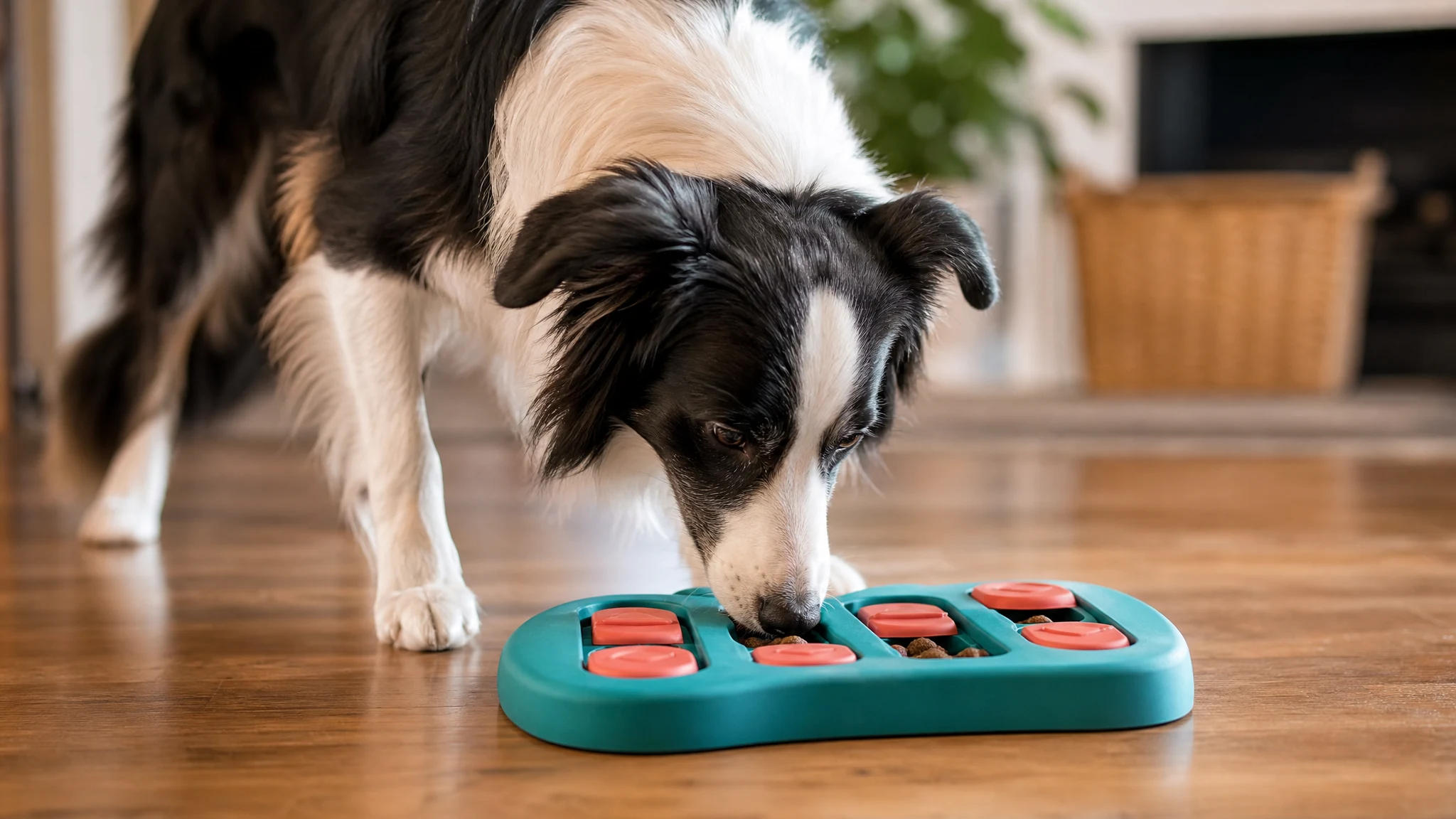
- A puzzle feeder, snuffle mat or lick mat, or a muffin tin with tennis balls
- A few cardboard boxes and old towels for hide-and-seek and search games
- A clicker or a short marker word such as "yes"
- A water bowl and a shaded rest spot
Step 1: Know the Baseline
The AKC says this breed needs daily exercise beyond a walk or a yard romp, plus a job and space to run. For dogs that are not working stock, it calls for vigorous daily exercise. It also says the breed suits active owners and is not a good fit for people who are away from home often.
The AKC does not publish a set number of minutes, so treat any minute count you see online as a rough guess. A better measure is the dog itself. After a good session, a well-exercised dog settles, lies down and rests. A dog that is still pacing, barking at shadows or chewing the furniture usually needs more mental work, not just more running.
Step 2: Match the Plan to the Life Stage
Puppies
The AKC stresses early socialization, from early puppyhood through about seven months. For a puppy, a lot of the best "exercise" is exploring new surfaces, sounds and calm people at a pace the pup can handle.
The Border Collie Society of America's health statement says growth plates close at about 12 months. No source I rely on gives a safe minute count for puppy exercise, so ask your veterinarian what is right for your puppy's age and build. Until then, keep sessions short, avoid repetitive hard impact such as endless ball chasing, and let the pup rest when it wants to.
Adolescents and Adults
This is when daily vigorous exercise matters most. Plan for at least one real outlet each day: a run in a secure area, a fetch session with breaks, a hike, or sport practice. Add training and brain games on top of that.
The AKC lists herding events, obedience, agility, rally, tracking, flying disc and flyball as outlets for the breed. Many owners find that a weekly class or sport gives the week a backbone.
Seniors
The AKC gives a life expectancy of 12 to 15 years. Older dogs often still want to work, but the body may not keep up with the mind. Ask your veterinarian how to adjust. In the meantime, shift toward sniffing, gentle walks and short training games, which keep the brain busy with less strain on the joints.
Step 3: Build a Daily Structure
- Morning: A leashed or long-line walk with plenty of sniffing, followed by a short training session of five minutes or so.
- Midday: A food puzzle or search game in place of a bowl meal.
- Afternoon or evening: The main exercise block, such as a run, hike, fetch with breaks or sport practice.
- Night: A calm lick mat or chew, then a rest on a bed or in a crate if your dog is crate trained.
Rest is part of the plan. A dog that learns to switch off is easier to live with than one that is always on. If you need help teaching a settle, the complete Border Collie training guide covers the foundation skills.
Step 4: Add Sniff Walks
A sniff walk is a slow outing where the dog chooses where to investigate. You are not trying to cover distance. You are letting the nose do the work.
- Pick a quiet route with grass, trees or edges where scents collect.
- Clip a long line to a harness or collar.
- Stop when your dog stops. Wait while it sniffs.
- Keep your own pace slow and relaxed for 15 to 20 minutes, or longer if your dog stays engaged.
Many owners find a dog comes home from a sniff walk calmer than from a fast march, though results vary from dog to dog.
Step 5: Use Puzzle Feeders and Search Games
These turn meals into work. Start easy so your dog wins early.
- Scatter feed: Toss a handful of kibble into the grass or onto a towel and let your dog hunt for it.
- Muffin tin game: Put treats in some cups and cover each cup with a tennis ball. Your dog removes the balls to find the food.
- Box search: Hide a treat under one of several cardboard boxes. Say "find it" and let your dog work it out.
- Room search: Ask your dog to wait, hide a toy or treat, then release it with "find it."
Make each game a little harder only after your dog solves the current one quickly. If your dog gives up, go back a step.
Step 6: Play Training Games That Fit the Original Job
The Border Collie Society of America's standard says the breed was selected for "biddable stock sense" and can work out of sight of the handler without commands. That is a lot of independent thinking. Games that ask your dog to read you and make choices fit that history well.
Stop and Start Games
Herding is about controlled movement. Teach a reliable "down" or "stand" from a distance, then reward it. Play a game where you walk, ask for a down, then release with a cue and a treat toss. This builds impulse control in a way that feels like play.
Go Around and Targeting
Place a cone or bucket a few steps away. Reward your dog for going around it, first with you beside it, then at greater distance. This echoes the wide outruns the breed was bred for. Keep the cue and reward positive, and never force the dog.
Learn-the-Name Game
Line up three toys. Teach your dog the name of one, add a second, and so on. Many Border Collies enjoy this kind of discrimination work. Reward correct picks and quietly reset on mistakes.
Tricks and Shaping
Shaping means rewarding small steps toward a behavior you want, such as putting a paw on a box. It teaches your dog to offer ideas, and it tires the brain fast. Keep sessions to a few minutes and end on a win.
Real Herding and Sport
If your dog is keen, try a herding instinct test or lesson with a qualified instructor. The Border Collie Society of America lists herding among the activities in its versatility program, and the United States Border Collie Handlers Association runs sheepdog and cattledog trials with annual National Finals. The American Border Collie Association is the working-dog registry. Check with those organizations for events and contacts.
Tips for Success
- Keep sessions short. Two or three five-minute training games beat one long drill.
- Use soft rewards. Small treats, play and praise keep the pace up. Reward-based methods are the approach recommended by the American Veterinary Society of Animal Behavior.
- Rotate the games. A dog that has solved the same puzzle fifty times gets bored quickly.
- Teach an off switch. Reward calm behavior on a mat so your dog learns that rest is also a job.
- Redirect herding gently. The AKC notes the breed tends to herd animals and people, and that it does best with older, well-behaved children. If your dog nips at heels or circles kids, redirect to a toy or a cue, and supervise closely.
Common Mistakes to Avoid
- Only adding more running. More hard exercise can build fitness without solving boredom. Add brain work too.
- Endless ball retrieving. The University of Minnesota Canine Genetics Lab describes Border Collie Collapse as an episodic disorder triggered by strenuous exercise, and it advises watching for it during intense play such as repeated ball retrieving. Stop at the first sign of wobbliness and call your veterinarian.
- Skipping socialization. The AKC calls early socialization especially vital for this breed. Reserved behavior with strangers is noted in the breed standard, so gentle, positive exposure matters.
- Using punishment. Shock, prong or choke collars and dominance methods are not part of a humane plan and can damage trust.
- Exercising through heat or pain. If your dog limps, pants hard or seems off, stop and ask your veterinarian.
Expected Results
With a steady routine, many owners find their Border Collie is calmer in the house, more focused on them and less likely to invent its own jobs. Over a few weeks, you may notice faster settling after exercise and fewer attention-seeking behaviors.
These are possible outcomes, not promises. Age, health, temperament and history all play a part. If your dog stays restless or anxious despite a good plan, talk with your veterinarian and consider a qualified, reward-based trainer.
Health Questions
Questions about joints, stamina or collapse belong with your veterinarian. The OFA/CHIC program lists hip evaluation and annual eye exams until age seven for the breed, and the Border Collie Society of America health statement recommends hip evaluation after 24 months. A good breeder can share those results for the parents of any puppy.
Sources
- AKC Border Collie breed page
- Border Collie Society of America, AKC Standard for the Border Collie
- Border Collie Society of America, Versatility Program
- Border Collie Society of America, Health Statement (October 2016)
- University of Minnesota Canine Genetics Lab, Border Collie Collapse
- OFA / CHIC: Border Collie
- United States Border Collie Handlers Association
- American Border Collie Association