Border Collie Sports and Jobs: Putting the Breed's Instincts to Work
General training information. Every dog is an individual; for health or behavior concerns, see your veterinarian.
A Border Collie without a job will often invent one. It might be herding the kids, patrolling the fence line, or rearranging your sock drawer. The good news is that the breed's drive is easy to point at something useful once you know where to start.
This guide walks you through picking a sport or job, preparing your dog, and taking the first steps. It covers the most common options for a border collie working dog, whether yours comes from show lines, sport lines or working stock.
Why Border Collie Sports Matter for This Breed
The American Kennel Club (AKC) rates the Border Collie 5 out of 5 for energy level, 5 out of 5 for mental stimulation needs and 5 out of 5 for trainability. On the AKC's scale, a 5 for mental stimulation means the dog needs a job or activity. The AKC also calls the breed a bright workaholic that may be too much for owners without the time or energy to keep it busy.
That is the honest picture. A walk around the block does not meet this need. Dog sports for Border Collies give the dog a purpose, and they give you a structured way to spend time together.
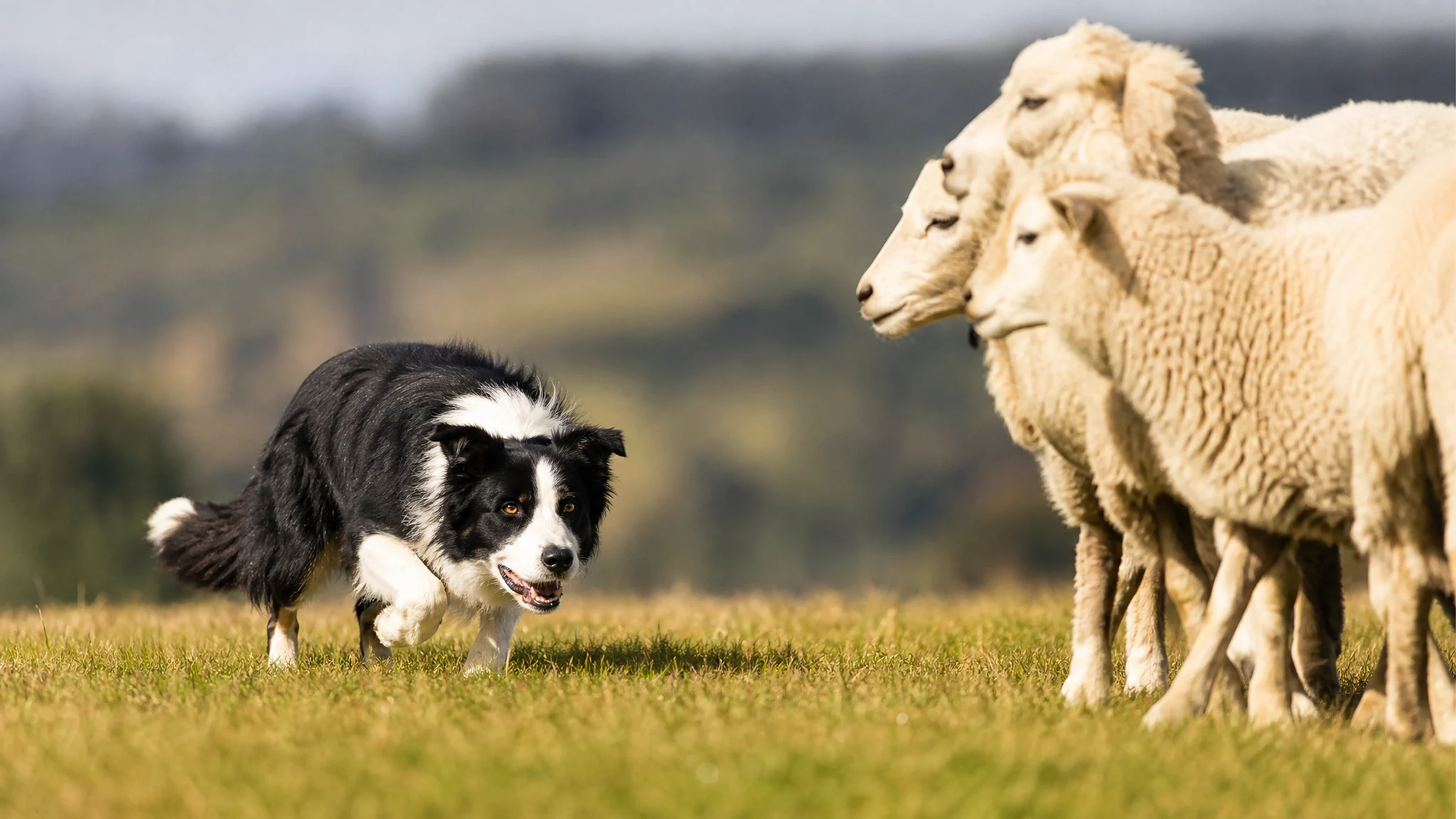
The breed's history explains the drive. According to the Border Collie Society of America (BCSA), the AKC parent club, the AKC breed standard describes a dog that gathers and fetches stock with wide outruns and controls it with "eye" and a stalking movement. The same standard notes the breed is still used as a working sheepdog worldwide. Individual dogs vary, but this is the background your dog comes from.
The Main Sports and Jobs at a Glance
The AKC lists herding events, obedience, agility, rally, tracking, flying disc and flyball for the breed. It also says Border Collies are dominant in sheepdog trials and top-level agility. Here is what each one asks of your dog.
| Sport or job | What it is | Why it can suit the breed |
|---|---|---|
| Herding | Moving livestock under your direction | It is the breed's original purpose |
| Agility | Running a course of jumps, tunnels and obstacles | Speed, focus and handler teamwork |
| Obedience and rally | Precision exercises, with signs to follow in rally | Rewards attention and mental work |
| Tracking | Following a scent trail | A calm, thinking job |
| Flyball and flying disc | Fast retrieving and catching games | Burns energy, but needs care (see below) |
The BCSA Versatility Program also recognizes herding, obedience, rally, agility, conformation, scent work, barn hunt, Fast CAT and dock diving. Herding is required for those awards. If you like variety, that program shows how many directions a Border Collie can go.
Materials You Will Need
- A flat buckle collar or a well-fitted harness. Avoid shock, prong or choke collars, which have no place in reward-based training.
- A 6-foot leash and, later, a long line for open spaces.
- Small, soft treats your dog loves, cut into pea-sized pieces.
- A favorite toy, such as a tug or a ball, for reward play.
- A treat pouch or pocket so rewards come fast.
- A clicker or a short marker word like "yes" (optional).
- Fresh water and a shaded rest spot for every session.
- A notebook to log what you tried and how your dog responded.
Step-by-Step: Choosing and Starting a Sport
Step 1: Build the foundation first
Every sport rests on the same basics. Your dog should come when called, settle on a mat, walk politely on a leash and offer eye contact for a reward. Our complete guide to training a Border Collie covers these skills in order.
The AKC says early socialization is especially important for the breed, from early puppyhood through about seven months. It also recommends obedience training early and for life, as mental stimulation. A dog that is comfortable around new people, dogs and places will cope far better in a busy trial or class setting.
Step 2: Get a health check before you start
Talk with your veterinarian before beginning a physical sport. Ask about your dog's age, joints and fitness, and about when jumping work is appropriate. The BCSA Health Statement from October 2016 notes that growth plates close at about 12 months, and it advises that hip evaluation take place after 24 months. Your vet can tell you how that applies to your own dog.
Health questions about a specific dog always belong with a veterinarian. Do not guess.
Step 3: Match the sport to your dog and your life
Be honest about both sides of the leash. Some dogs love speed and noise. Others prefer slower, precise work. You also need to think about travel time, budget and your own fitness.
- Write down what your dog does naturally: chasing, circling, sniffing, retrieving or staring.
- Write down how much weekly time you can commit.
- Pick one sport that fits both lists. Do not start three at once.
A dog that crouches and stares at moving things may enjoy herding. A dog that lives for a ball may do well at flyball or disc, with the cautions in Step 7. A dog that thinks hard may love tracking or obedience.
Step 4: Find a local club or class
The AKC runs events in herding, obedience, agility, rally and tracking, and it keeps information on rules and entry requirements for each. Check the AKC site for current details, because requirements can change. Local training clubs and dog sport facilities often offer beginner classes. Ask any club about its training methods before you sign up, and look for one that uses rewards, not force.
For herding, ask local clubs or farms about a first-time instinct assessment. Do not assume any single facility is right for you. Visit, watch a class and see how the instructor treats the dogs.
Step 5: Start with short, fun sessions
Keep early sessions to five to ten minutes. End while your dog still wants more. Border Collies learn fast, which means they can also practice mistakes fast, so stay ahead of them by rewarding what you like.
- Pick one skill, such as a hand target, a sit or a simple turn.
- Mark the exact moment your dog gets it right, then reward within a second or two.
- Repeat several times, then take a break.
- Raise difficulty only after your dog succeeds many times in a row.
Step 6: Add distractions slowly
Practice at home, then in the yard, then at a quiet park, then near the class or field. If your dog stops responding, you moved too fast. Go back one step. The AKC notes the breed may be reserved with strangers, so give your dog time to watch new places and people from a comfortable distance.
Step 7: Protect your dog while it works
The University of Minnesota Canine Genetics Lab describes Border Collie Collapse as an episodic disorder triggered by strenuous exercise. It has been seen in sport and ball-obsessed dogs. The lab advises watching closely during intense play such as repeated ball retrieving, and stopping at the first sign of wobbliness.
If your dog wobbles, stumbles or seems unsteady, stop, let it rest in a cool place and call your veterinarian. Do not wait to see if it passes. Build in rest breaks, and do not let a keen dog run until it drops.
Step 8: Think about the working side
Some Border Collies come from working stockdog lines. The American Border Collie Association (ABCA) is a working-dog registry, and the United States Border Collie Handlers Association (USBCHA) runs sheepdog and cattledog trials with annual National Finals. Both are good places to learn how working dogs are trained and tested. If you want a border collie working dog in a real farm role, talk to working handlers directly and be ready to learn from them.
The BCSA standard also says the breed was selected for "biddable stock sense" and can work out of sight of the handler without commands. That independence is a gift on a farm. In a suburban home it can look like your dog ignoring you, so keep your cues clear and your rewards worth working for.
Tips for Success
- Reward the calm. Border Collies can get wound up. Pay your dog for settling on a mat between turns, and it will learn that waiting is part of the game.
- Rotate activities. Mix a physical sport with a thinking one, such as agility with scent games, so your dog uses both body and brain.
- Keep herding off people. The AKC says the breed tends to herd animals and people, and it is best with older, well-behaved children. Redirect nipping at heels with a toy or a cue, and supervise play with kids.
- Use a log. Note what your dog loved, what stressed it and how long it recovered. Patterns show up quickly.
- Be patient with trials. You do not need to compete. Classes and club fun days count as meaningful work too.
Common Mistakes to Avoid
- Doing too much too soon. More hours do not equal a better dog. Overtraining can leave you with a dog that cannot switch off.
- Chasing the ball endlessly. Repeated retrieving is exactly the pattern flagged in Border Collie Collapse research. Vary the games and set limits.
- Skipping socialization. A sport-ready dog still needs calm manners around strangers and other dogs.
- Using force. The American Veterinary Society of Animal Behavior (AVSAB) supports reward-based training. Harsh methods can damage trust and make a sensitive dog shut down.
- Picking a sport for your ego. Choose one your dog enjoys, not the one that looks best on social media.
- Ignoring health signs. Limping, reluctance to jump or sudden changes in drive deserve a vet visit.
What You Can Reasonably Expect
Results vary with the dog, the handler and the amount of practice. Many owners find that a regular job gives their Border Collie a healthier outlet for its energy, and that restless habits may ease as a result. Some dogs also seem more settled at home after structured work.
You may notice a stronger bond and better focus within a few weeks of steady, short sessions. Progress in a sport itself often takes months. Some dogs will take to it quickly and others will need more time. Setbacks are normal, and they do not mean you or your dog failed.
The AKC says the breed needs a job, such as agility, herding or obedience, to be happy. If your dog is still restless after you add structured activity, review your plan with your veterinarian or a qualified, reward-based trainer.
Final Thoughts
A Border Collie is built for work, and giving it a purpose is one of the kindest things you can do. Start with solid basics, check in with your vet, choose one sport that fits and keep it fun. Whether you end up in a trial ring, on a farm or in a backyard class, your dog will be glad you gave it something to think about.
Sources
- AKC Border Collie breed page
- Border Collie Society of America, AKC Standard for the Border Collie
- Border Collie Society of America, Versatility Program
- BCSA Health Statement, October 2016
- University of Minnesota Canine Genetics Lab, Border Collie Collapse
- American Border Collie Association
- United States Border Collie Handlers Association