 Border Collie
12 Border Collie training topics
Every common Border Collie challenge, with first steps and guides to read.
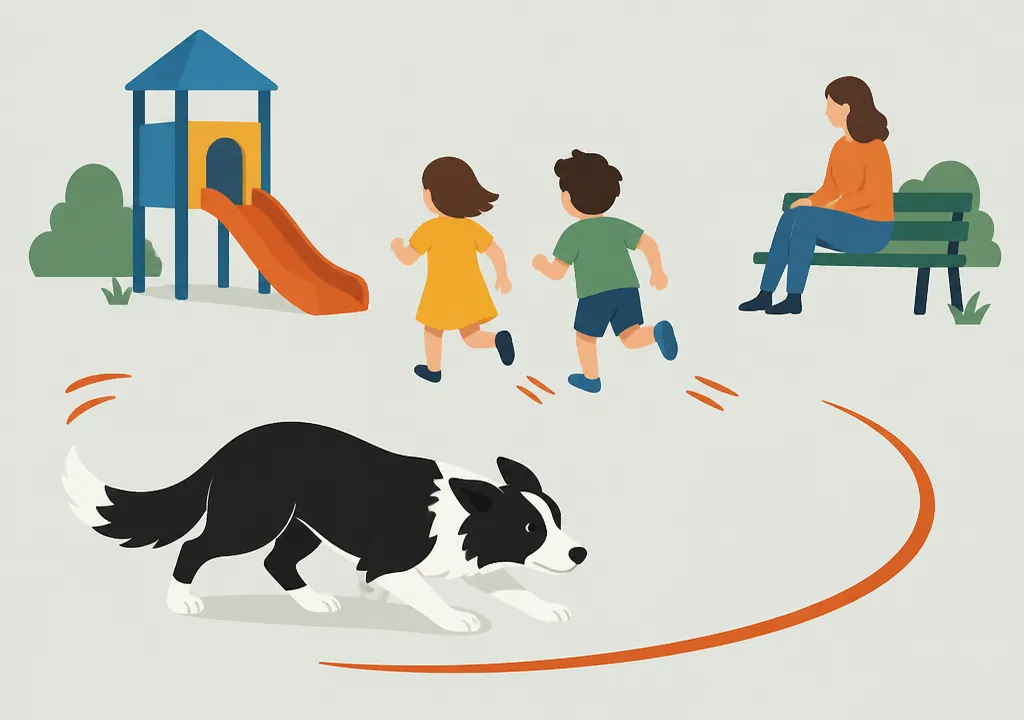
Herding the kids
Turn the urge to round up children into calm play.
Nipping at ankles and rounding up running children is herding instinct with the wrong flock, not meanness. Redirect the nip to a sit or a fetched toy and reward it every time.
The full guide shows how to build that alternative job early and calmly.
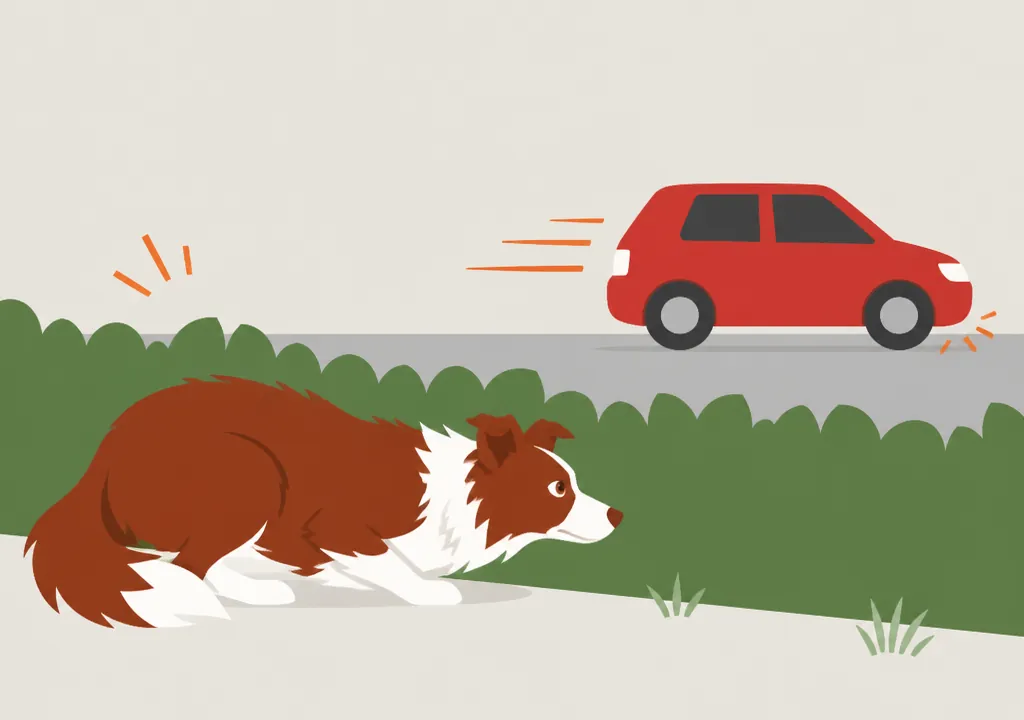
Chasing bikes and cars
A steady sit when wheels roll past.
Wheels and a bolting cat trip the same wiring in a breed bred to gather moving animals. At home, a new dog stays separate from a resident cat or poultry for two to three weeks.
The full guide covers those introductions and teaching a dog to glance, then check back with you.
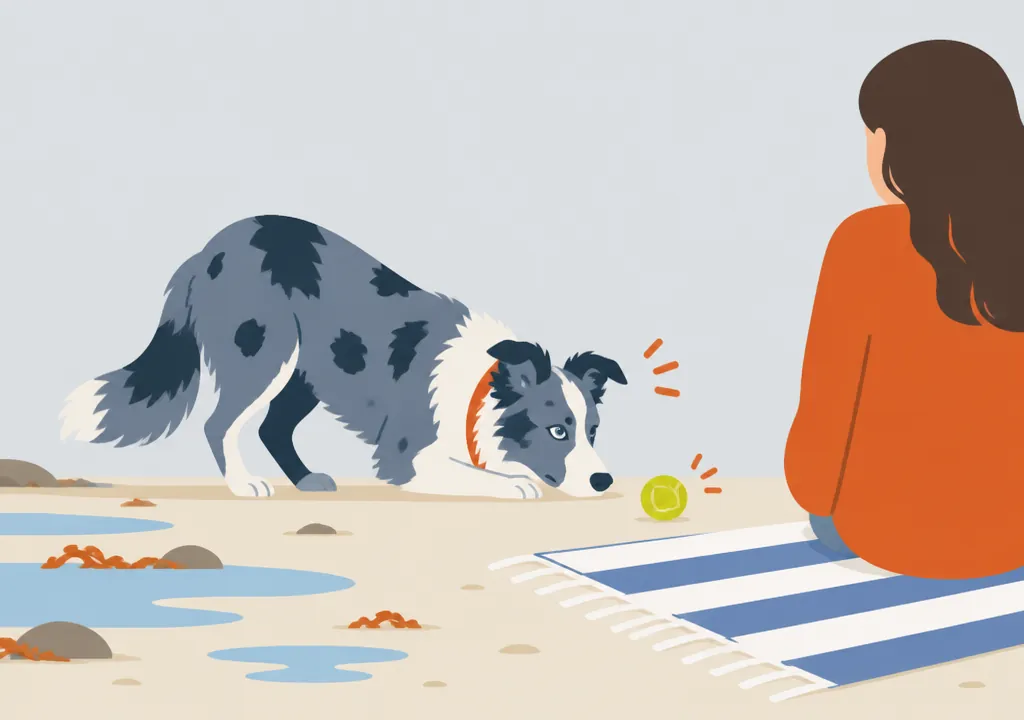
Ball obsession
Fetch with an off switch.
For many Border Collies a big ball beats cooked chicken, and the same wiring turns brooms and shovels into targets. Handled well, that intensity gives you a focused partner, not a dog with no off switch.
The full guide gives that instinct a real outlet through sheep lessons and a herding ball.

Chasing lights and shadows
Redirect the fixation into healthy games.
Staring at lights and shadows means a Border Collie with nowhere to put their mind, and rest answers it. This guide is about the crate. The common mistake is teaching crate rest and alone time at once.
The full guide separates crate comfort from alone time and helps choose a setup.
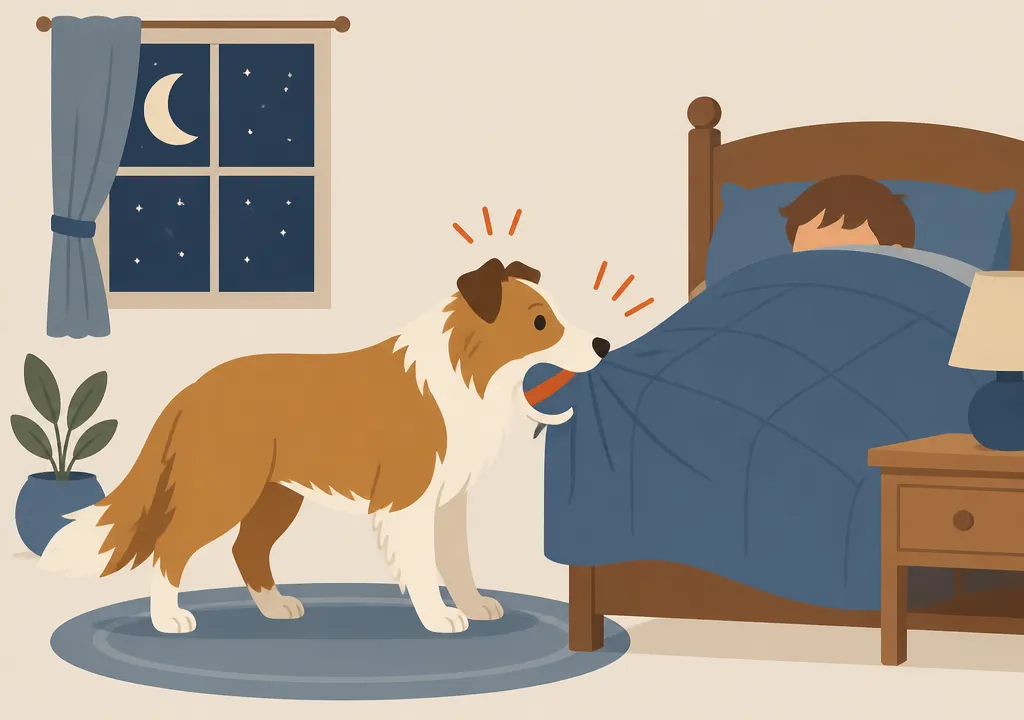
Never switching off
Rest is a skill, and it can be taught.
A delivery driver walks up the path and your Border Collie is already at the door, barking. That is no malfunction, just a watchful, reserved breed with mental energy and nowhere better to put it.
The full guide teaches a settle that replaces the barking at the door.
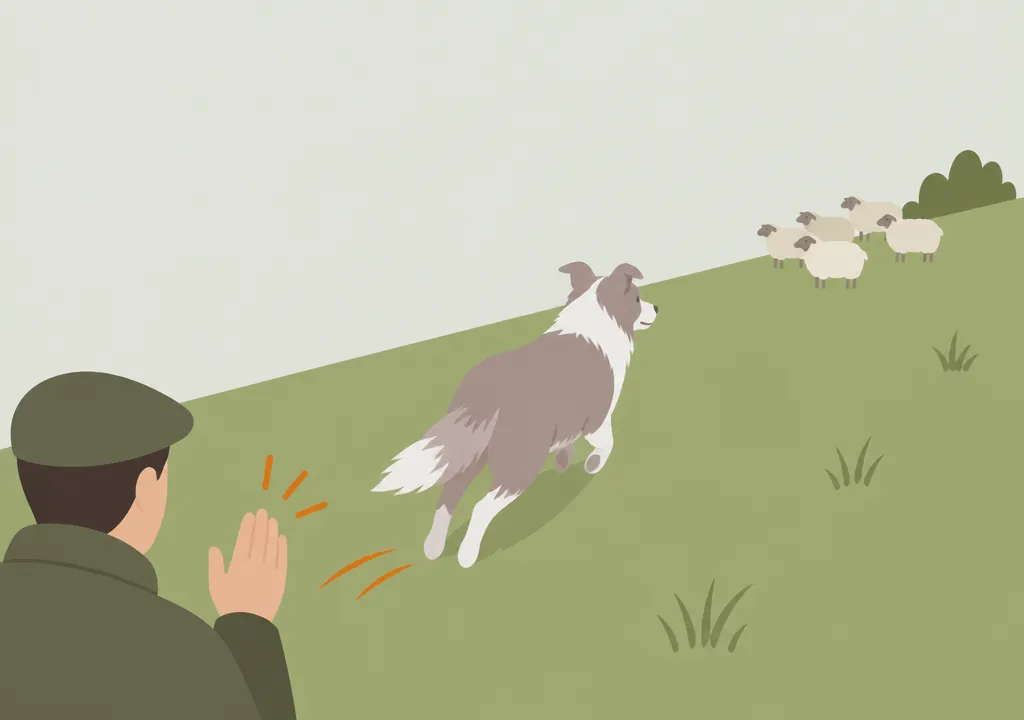
Recall in open spaces
Come back, even from a field of sheep.
Bred for wide outruns and a stalking, watching style of work, Border Collies lose their attention to a runner, a bike or a flock instantly. Make the cue a happy, rewarded event, taught in quiet rooms first.
The full guide covers rewards that beat movement and the steps into open space.
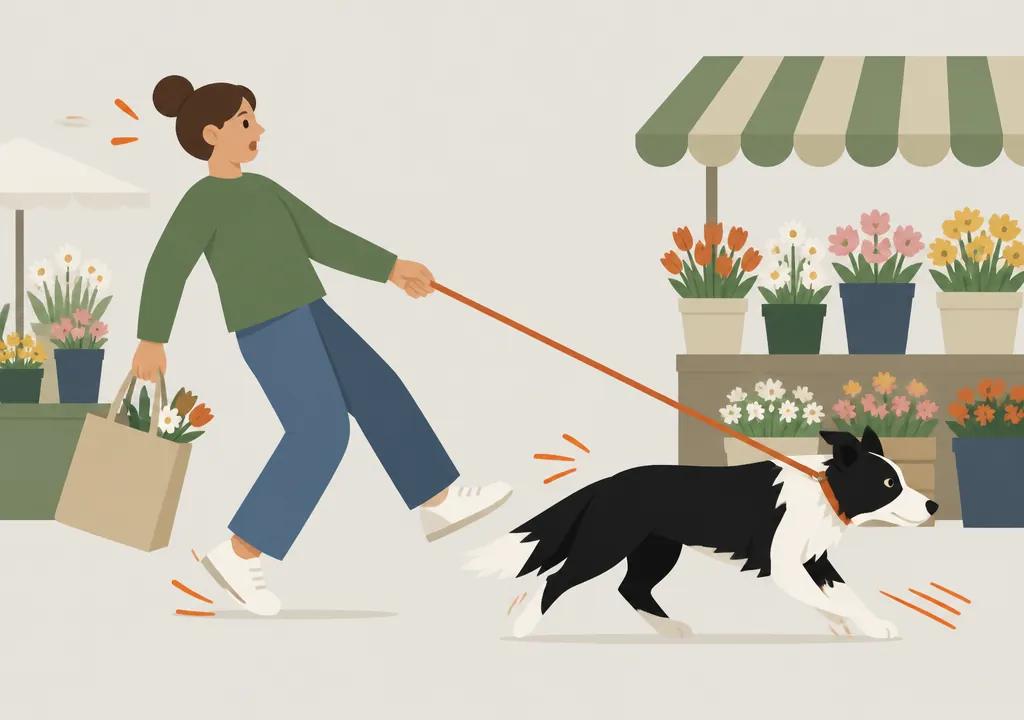
Leash pulling
Slow a fast, focused dog to your pace.
Loose-leash walking starts with a fixed-length leash on a well-fitted harness. The lesson is rewarding a slack leash at enough distance to think, because a breed built to control movement goes from staring to lunging fast.
The full guide walks through the symptoms, where check-ins begin and how distance changes things.
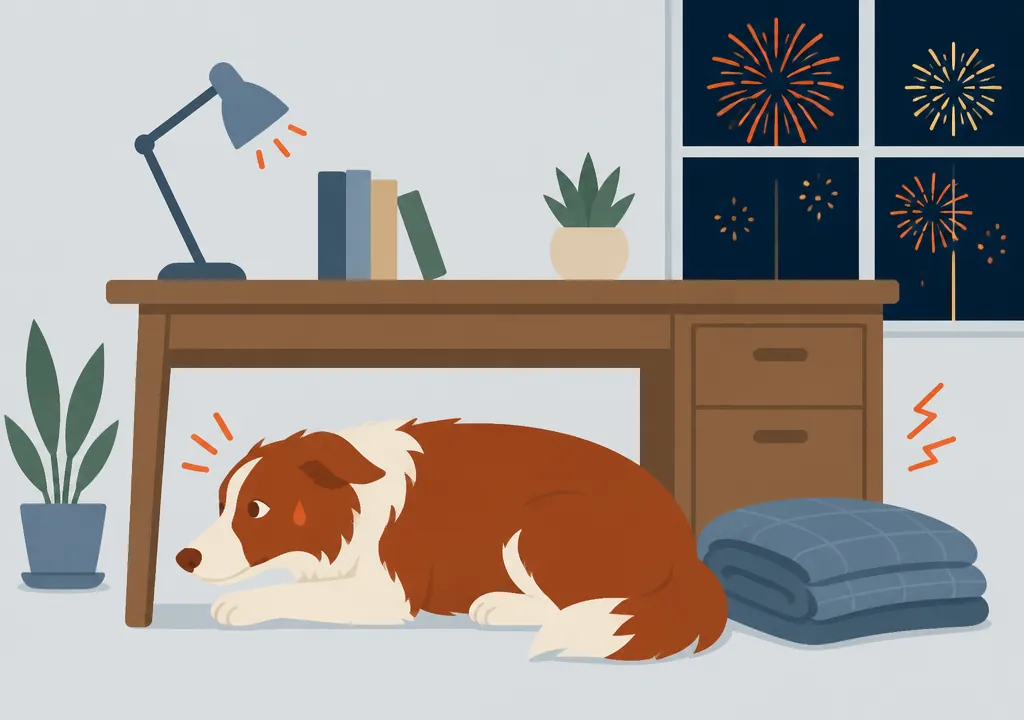
Noise sensitivity
Calm confidence around bangs and storms.
Work on a noise-sensitive Border Collie starts with the volume, not the dog. Lower the sound until they can eat and pair each sound with food, because a dog who can take a treat can learn.
The full guide tests seven common beliefs about noise sensitivity, down to when medication belongs.
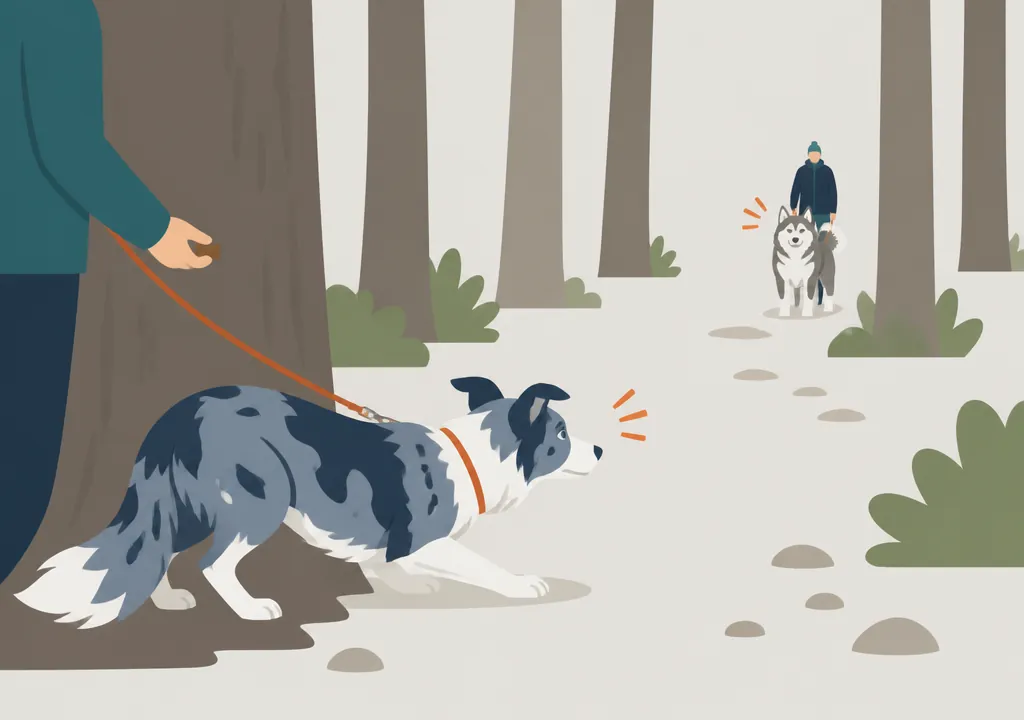
Reactive to other dogs
Keep calm distance when another dog appears.
One Border Collie stalks children with a hard stare and never touches anyone, another snaps when a hand reaches for the collar. The first is running a bred-in herding pattern, the second says something is wrong.
The full guide shows how to tell them apart and build the right plan for each.
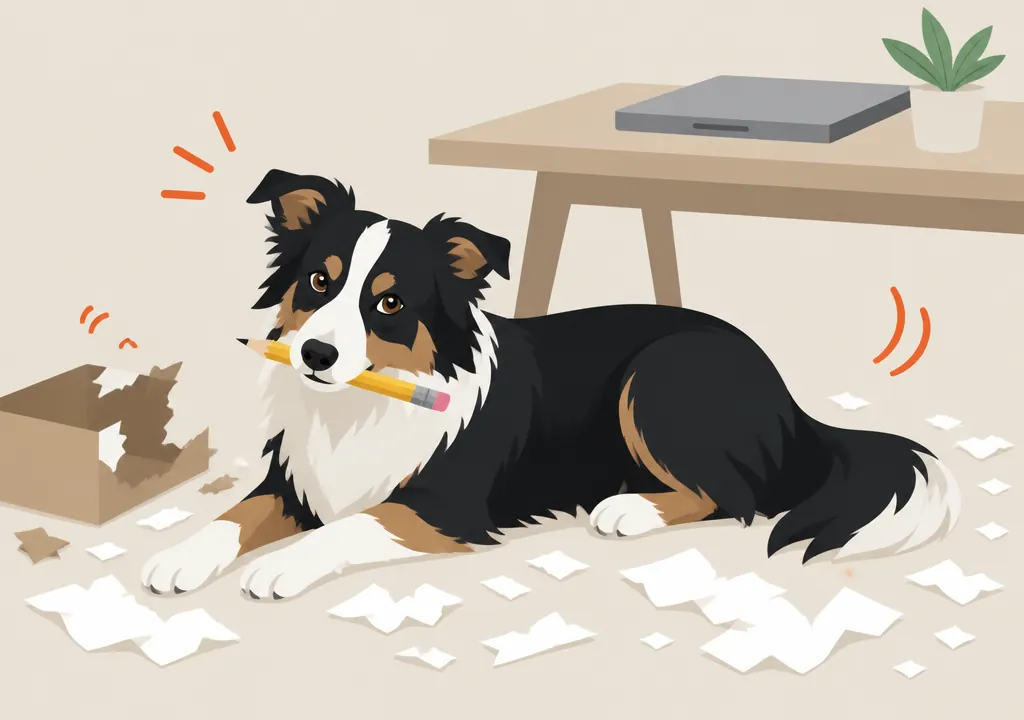
Boredom chewing
Brain work before the furniture.
Chew toys, a longer walk and patience miss with a Border Collie, because the chewing is a thinking problem, not an energy problem. Shaped to solve problems alone, this bright workaholic invents a task when given none.
The full guide covers the mental work that has to be trained in on purpose.
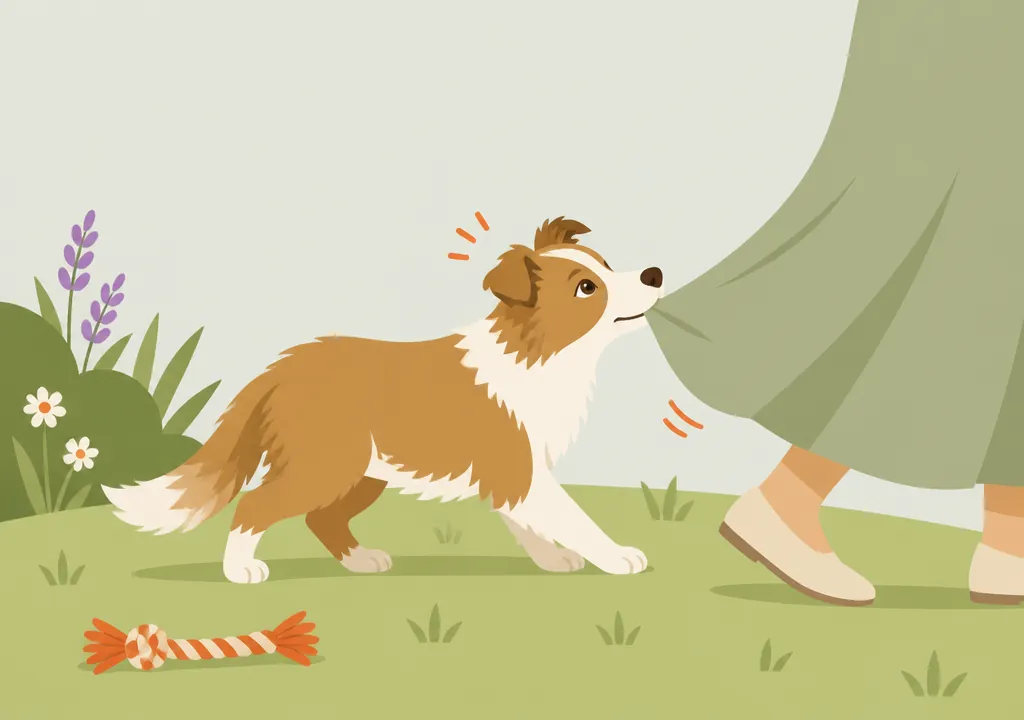
Puppy nipping
Move needle teeth onto tug toys.
Needle teeth on hands and heels are the first sign that a Border Collie puppy's herding drive switched on the day they arrived. Holding training for later leaves the best learning months to chance.
The full guide follows a Border Collie from eight weeks to two, matching lessons to the age.
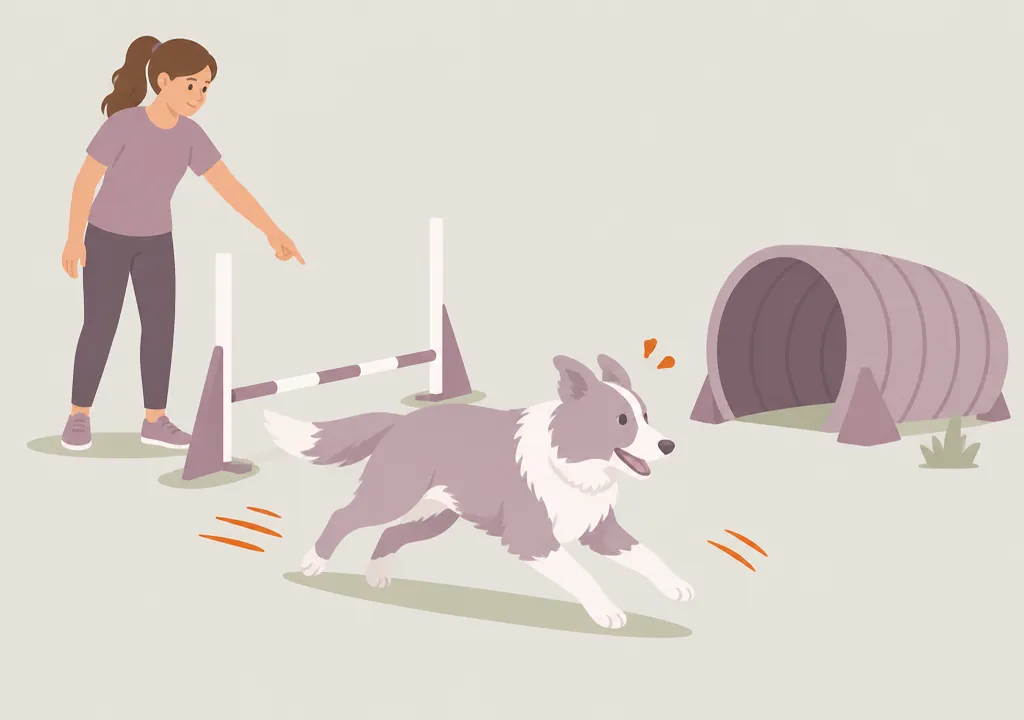
The teenage months
Hold on to skills while drive grows.
Last month your Border Collie sat on the first ask, and this week they stare through the cue. Between puppyhood and maturity, herding drive and energy grow faster than impulse control, so solid skills wobble.
The full guide runs a skills reset, then recall under rising drive and trained rest.