 Border Collie
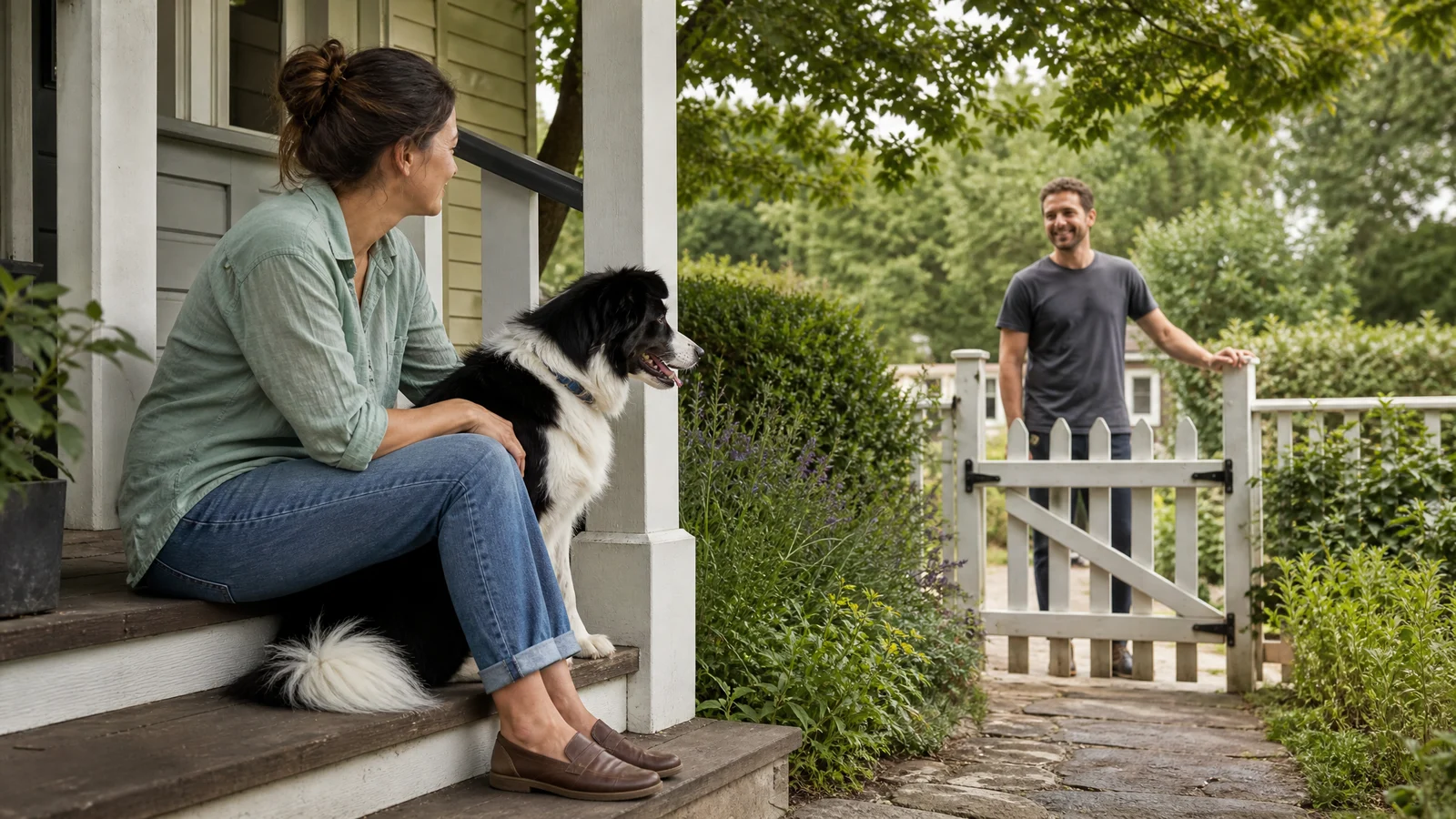
A child runs across the yard, a dog appears at the gate and an unfamiliar adult steps onto the porch. A Border Collie may study each arrival before deciding whether to approach. Socialization does not require a greeting. It teaches the dog that people, animals, movement and new places can be observed safely, with enough room to make a good choice.
We aim for curiosity, recovery and the ability to turn back to the handler. That standard respects a breed whose published description allows sensible reserve with strangers. This guide covers preparation before an exposure, early practice with children and dogs, the puppy window through about seven months, adjustments after puppyhood and a simple decision path for choosing whether to repeat, make the setup easier or leave.
Before Border Collie Socializing Begins
Plan the exit before the meeting. Choose a place with enough room to move away, keep the first exposure brief and bring a reward your dog can eat without becoming frantic. Ask the other person to wait for instructions. If another dog is involved, choose one who can remain calm and is handled by someone willing to create space.
Define success in observable terms. Your Border Collie can look at the person or dog, keep a loose body, take a reward and turn back toward you. A greeting is optional. For a reserved dog, watching from across the area and then leaving calmly may be a stronger social lesson than being touched by a stranger.
Reserve Is Not a Failure
The breed standard describes an energetic, intelligent and responsive dog who can be affectionate with friends while sensibly reserved with unfamiliar people. Reserve is not a reason to force contact. The socialization goal is a dog who can stay safe and responsive around ordinary life.
Keep regular vet visits on the calendar and ask your veterinarian how to balance early outings with your puppy's individual health needs. The social environment and the puppy's physical readiness both belong in the plan. Choose controlled places rather than high-traffic areas where you cannot manage contact.
Prepare a simple communication plan for human helpers. Tell them where to stand, whether to move and when the session is finished. They should not call the dog repeatedly or offer a hand to sniff. One person controls the exposure, while the Border Collie remains free to observe without conflicting invitations.
Early Socializing With People and Dogs
The early stage is about carefully chosen experiences, not collecting as many greetings as possible. The puppy socialization statement identifies the first three months as especially important. Use that period to pair varied sights and sounds with safety, food and the option to move away.
Children Move Differently
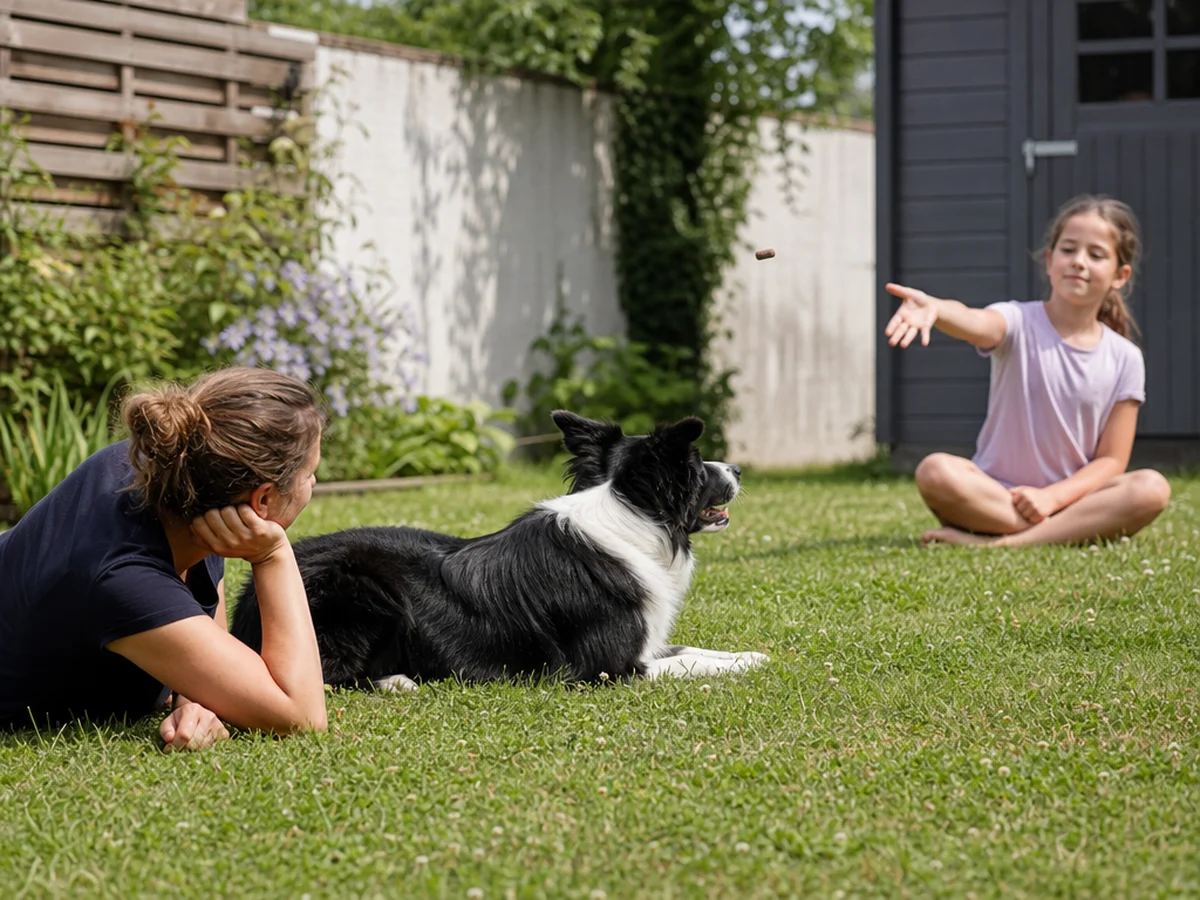
Children can run, squeal, wave objects and change direction quickly. Begin with a calm child sitting or standing at a distance. Reward your dog for looking and returning attention to you. Let the child toss a treat away from their body if the dog remains relaxed, which creates space rather than drawing the dog into reaching hands.
Supervision is active and close. An adult watches both dog and child, controls movement and ends the interaction before either becomes overexcited. Teach children to walk near the dog, leave food and toys alone, and avoid hugging or cornering them. A gate gives everyone a break without turning separation into drama.
Strangers Do Not Need to Touch
Ask unfamiliar adults to stand at an angle, keep their hands to themselves and let the dog choose whether to approach. Direct leaning and reaching can make a hesitant dog retreat. If the Border Collie comes closer with a loose body, the person can drop a treat on the ground. Petting is not the price of the food.
Vary appearance and movement while keeping the emotional task easy. Hats, bags, deeper voices and walking aids can all look different to a puppy. Introduce one change at a time. If the dog pauses, let them observe. Reward recovery rather than pulling them toward the unfamiliar detail.
Dog Meetings Need Space
Begin by walking the dogs in the same direction with open space between them. Walk in the same direction with generous space between the dogs. Reward check-ins and relaxed sniffing. If both bodies stay loose, reduce the distance gradually. A brief curved approach is easier than a tight meeting at the end of two tense leashes.
The UKC breed description says Border Collies should be keen and responsive rather than nervous or aggressive. That is a breed ideal, not a guarantee about any individual meeting. If either dog stiffens, stares or stops responding, increase distance. Our guide to eye, stalk and stance explains why a Border Collie's intense focus can be misread.
End dog meetings while both dogs can still disengage. Call your Border Collie away, reward the return and create space before deciding on another pass. A successful meeting does not need to become play. Calm movement in the same area is valuable social information and is easier to repeat safely.
Socializing Through the Seven-Month Window
The breed profile says positive exposure is especially valuable from early puppyhood through about seven months. Treat that span as a period for building variety without sacrificing quality. A puppy should meet different parts of life while staying able to eat, explore and recover. Overwhelming exposure can teach fear just as effectively as careful exposure teaches safety.
The socialization overview from the AVMA also describes an early period when puppies are especially open to their surroundings. The exact calendar matters less than beginning thoughtfully and continuing after the early window. Social learning does not end at a birthday.
Variety Without Flooding
Build variety across days instead of crowding it into one outing. Let each exposure answer one clear social question.
- Watch children playing from a distance where your puppy can turn away and take food.
- Pass adults with different clothing, voices and movement while rewarding voluntary check-ins.
- Walk parallel with a calm dog before considering a brief greeting.
- Explore quiet surfaces, doorways, parked vehicles and household sounds one change at a time.
- Practice settling on a mat while ordinary family activity happens at a manageable level.
- Follow stimulating outings with quiet rest so the puppy can recover before the next lesson.
Do not measure progress by how many people touched the puppy. Look for shorter pauses, quicker recovery, a softer body and the ability to choose you after noticing something new. Those changes show that the dog is processing the environment instead of merely enduring it.
Keep exposures brief enough to finish well. A Border Collie's alertness can make a busy place mentally demanding even when little physical activity occurs. Leaving after a few successful observations protects the lesson. Another calm visit can add difficulty later through slightly closer distance or more movement.
Repeat categories with variety. One calm adult does not represent every stranger, and one suitable dog does not prepare a puppy for every canine style. Change a single feature while preserving the familiar setup, such as a new person at the same distance or the same helper moving slowly. This lets the puppy generalize without losing the feeling of safety.
Border Collie Socializing After Puppyhood
An adolescent or adult dog can still learn new social responses. The plan becomes more selective because existing expectations are stronger. Start with the distance where the dog can notice the trigger and recover. Repeat predictable setups instead of hoping crowded environments will make the dog get used to them.
Reserved Dogs Need Neutrality
A reserved Border Collie does not need to become socially enthusiastic. Neutral behavior is a useful goal: notice the stranger, remain able to move with you and recover after they pass. Reward that sequence. If the dog chooses not to greet, protect the choice and prevent strangers from following.
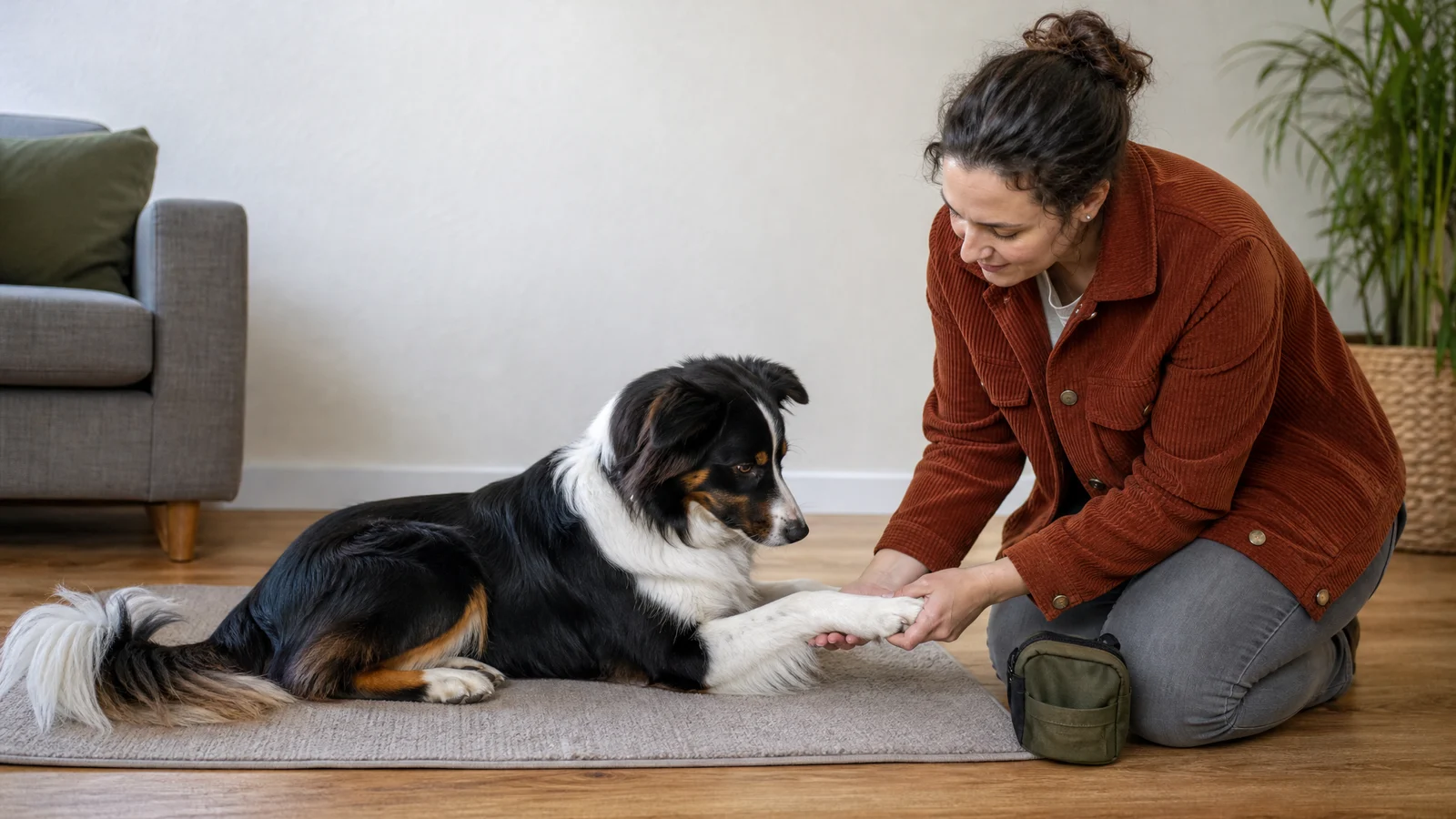
At home, use a gate or leash to create a clear arrival routine. Let the visitor enter and sit before the dog comes closer. Reward the dog for checking in, settling on a mat or choosing distance. If the visitor will stay, several quiet observations can be more helpful than one intense introduction at the door.
Reactivity Shrinks the Learning Zone
Barking, pulling or lunging means the setup needs more distance. Best Friends lists those behaviors among common forms of leash reactivity around dogs, people, animals, bikes and cars. Move away until your dog can respond again, then reward looking back at you.
A qualified reward-based trainer can help arrange controlled practice when reactions are strong or safety is uncertain. Use barriers, quiet routes and predictable helpers between sessions so the behavior is not rehearsed repeatedly. Progress often begins with calmer observation, not closer greetings.
Watch for a sudden change from the dog's usual social behavior. New avoidance, irritability or difficulty recovering belongs in a conversation with your veterinarian as well as a review of the training setup. Social plans work only when the dog's comfort and capacity are taken seriously.
Schedule recovery after challenging observations. A quiet sniff, water and rest can follow the outing without another social demand. Stacking several busy events makes it hard to know which part exceeded the dog's capacity. Separate lessons give you cleaner information and let the Border Collie begin the next exposure with attention available.
Choose the Next Socializing Step
Read the dog's body, then choose among three paths. The decision should preserve attention and recovery rather than push toward contact.
- If the body is loose, the dog can eat and attention returns easily, repeat the setup once or make one small part harder. Reduce distance slightly while the person stays still, or add movement while preserving the original distance.
- If your Border Collie pauses, leans away, closes their mouth or needs extra time to respond, keep the exposure easier. Add distance, reduce movement and reward the first sign of recovery before uncertainty grows.
- If barking, lunging, frantic retreat or a sustained stare begins, leave calmly. Begin the next session at an easier level, with a clearer exit and fewer competing events, rather than staying until the dog stops reacting.
Use the same decision process with children, dogs and adults, but do not assume the safe distance is identical. Fast child movement may require more room than a seated adult, while a staring dog may be harder than a passing person. Let the specific response set the starting point for that category.
The long-term aim is a Border Collie who can move through family life without being required to greet everyone in it. Preserve choice, reward recovery and treat safe neutrality as success. Each good exposure should leave the dog more able to think during the next one, not simply more tired from getting through it.
 BehaviorHow to Help a Noise-Sensitive Border Collie Stay Calm
 BehaviorTeaching a Border Collie to Settle Instead of Barking
 HealthVet Handling Training for a Border Collie