 Border Collie
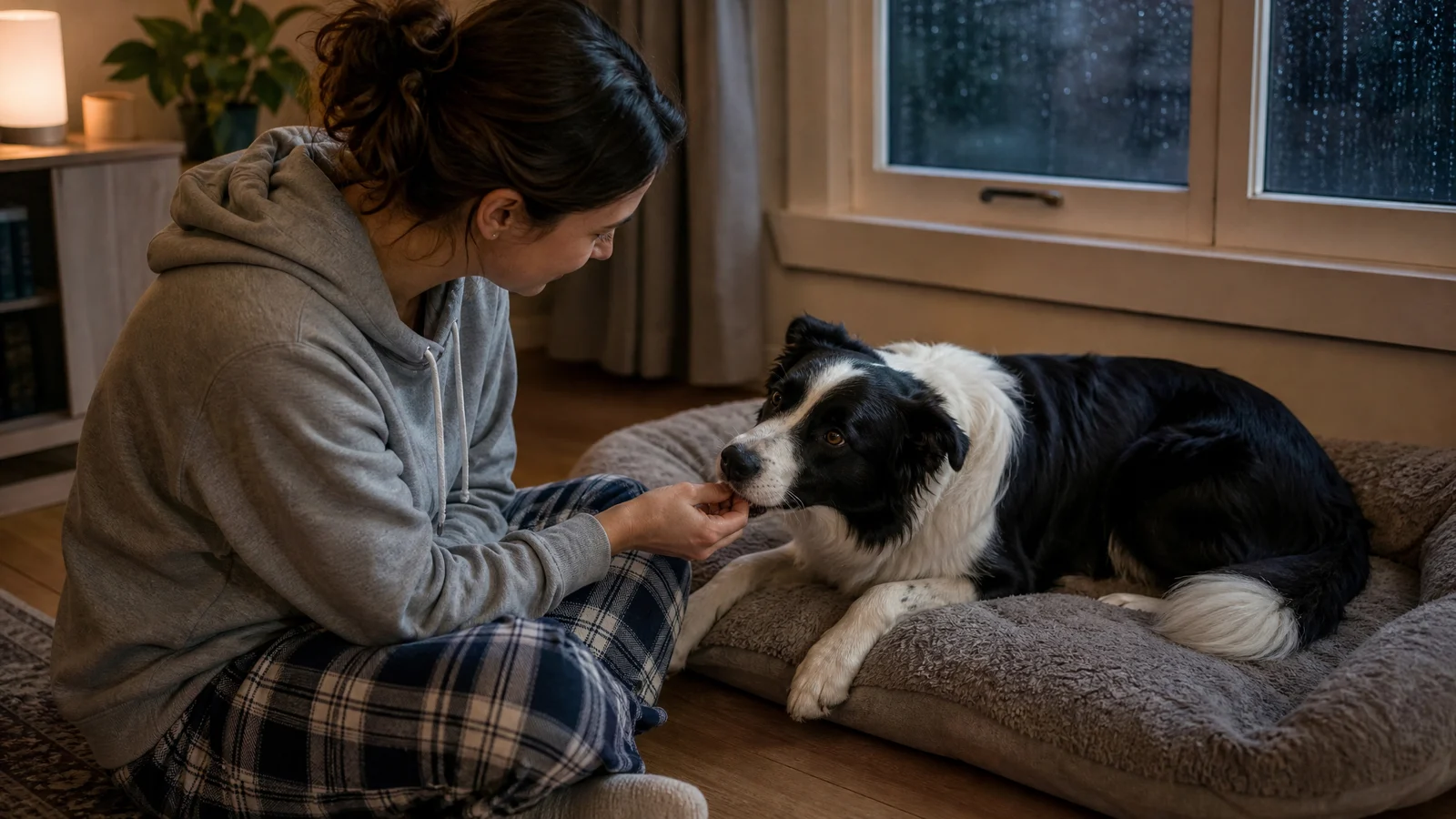
The plan for a noise-sensitive Border Collie starts with the volume, not the dog. Lower the sound until they can still eat, manage the space so the worst sounds arrive muffled, and pair each sound with food. A dog who is comfortable enough to take a treat is a dog who can learn, so that is where every later step begins, whether the trigger is the vacuum, a doorbell or fireworks.
Below, you'll find seven common beliefs about noise sensitivity in Border Collies put to the test, including whether a smart dog outgrows fear, whether comfort makes it worse, and when medication belongs in the plan. For many years we have worked with this breed, and one pattern keeps showing up: the alertness owners love is the same alertness that makes a doorbell feel like an emergency.
It matters because a Border Collie who decides every beep is a warning becomes a dog who can't settle, while one who learns that sound predicts chicken gets much easier to live with.
Exposure Alone Does Not Cure Noise Sensitivity
The belief is simple: noise is only scary until it is boring, so more of it must mean faster boredom. For a dog who was mildly startled once, that can be true. For a dog who is already afraid, every extra blast is another rehearsal of being afraid, and Border Collies are very good at rehearsing.
The Border Collie standard calls for dogs who are keen and responsive, and that is exactly the trouble. Selective breeding built in intensity, energy and trainability, and a dog wired that way often feels a loud noise at full strength. A dog bred to notice the smallest change in a flock will notice a smoke alarm battery chirping from another room, long after you have stopped hearing it.
Gradual practice looks different. Start with the sound so quiet your dog barely registers it, let it play, give a treat, then stop the sound and the treats stop too. Over many short sessions the sound turns into the announcement that food is coming. You raise the volume only after your dog stays loose and eager at the current level, and you drop back without fuss on the day they seem off.
Let your dog's body set the pace, not your calendar. If they stop eating, go stiff, pin their ears, or start hunting for the exit, the volume is too high and you are no longer practicing. Verdict: exposure is an ingredient, but only the quiet, rewarded, dog-paced kind counts.
Does a Smart Border Collie Outgrow Noise Sensitivity?
Border Collies have a reputation as the dog who works everything out, so owners assume a dog this bright will reason their way past fear. Intelligence does not work like that. A clever dog is simply better at learning what a noise predicts, and if the first lessons were bad ones, they learn them fast and keep them.

The breed is described as a remarkably bright workaholic, and that brain spends its energy on whatever is available. If what is available is the sound of the garage door, expect a dog with opinions about the garage door. Verdict: smart does not mean calm, and age alone is not a plan.
Puppies and the Early Window
Early socialization is especially vital for this breed, with positive exposure from early puppyhood through about seven months. The word that matters is positive. A puppy hauled to a fireworks show has been exposed, not socialized.
Play ordinary household sounds at low volume while your puppy eats or plays, run the vacuum across the room while treats rain, and let your puppy walk away whenever they like. Dogs vary a lot, so a puppy who shrugs everything off today is not guaranteed to stay that way.
Adults Who Never Grew Out of It
An adult who flinches at the doorbell has not been waiting for wisdom to arrive. Plan as though the sensitivity is stable, and work on it with the same patience you would give any other skill. Dogs vary, so a quiet puppyhood is no reason to skip the practice.
A sudden new fear of sounds in an adult deserves a veterinary check, because a dog in pain or feeling unwell may react very differently than usual. It is also worth giving a dog with this much brain plenty to do, which is covered in our piece on Border Collie boredom chewing and brain work.
Comforting a Noise-Sensitive Border Collie Is Safe
The belief says that petting a trembling dog pays them for being scared and teaches them to tremble more. Fear is an emotion, not a trick your dog is performing for snacks. Comfort does not reinforce an emotion, and a dog who learns that you show up when things go wrong is a dog who recovers faster.
What matters is how you comfort. Sit nearby, keep your voice low and boring, and offer food if they will take it. Let your dog choose whether to lean on you, leave the room, or stay put, because a Border Collie who is hauled into a lap against their will is being handled, not helped.
Set up the safe space before the next storm, not during it. A room in the middle of the house with the door open, no windows nearby, a bed, a chew, and nothing you would mind getting dug at works for most dogs. If your dog heads there on their own, leave them alone and let them have it.
Skip the ball in the middle of a scary event. Balls are intense for many dogs, and a revved-up, frightened dog is not calmer for chasing one. A soothing job works better, such as scattering a handful of treats on a mat so they can sniff and hunt, which gives a working mind something to do besides listen.
Do Border Collies Only Fear Thunder and Fireworks?
Most owners watch for the big events and miss the rest. Thunder and fireworks get the headlines, but plenty of Border Collies struggle with sounds that happen every day. Verdict: the big events are only the most obvious part of the picture.
Loud Events and Noisy Chores
Yard and household tools are a daily test for this breed. Many owners report their dogs fixating on brooms, mops, vacuums, snow shovels, and lawn mowers, so a chore becomes a trigger rather than a rare event. A mower is both loud and a moving thing, and the same sound can make one dog bolt and another dog circle and lunge.
Read the body to tell them apart. A dog who is stiff, backing away, or looking for cover is afraid, while a dog who is crouched, staring, and stalking is working, and both need distance and a plan. Some owners keep their dog indoors during yard work and shoveling, and with reason, since a few report injuries from dogs going after tools. Settle your dog in a different room with a chew before the chore starts, not after the trouble does.
Small Sounds and Quiet Signs
Beeps, chirps, the microwave, the doorbell, and a dropped pan can all count. Small-sound sensitivity is easy to miss because the dog may not run or bark, just go quiet. Look for these signs:
- Freezing in place after a sound, then scanning the room before moving again.
- Shadowing you from room to room and staying pressed close when a trigger is likely.
- Turning down treats they would normally take at once.
- Lip licking, yawning, panting, or a tight closed mouth with no hot weather or exercise to explain it.
- Hiding behind furniture or leaving the room when a certain appliance starts up.
Because the signs are small, the practice can be small too. Pick the one sound that bothers your dog most often and start there.
Noise Gear Supports Sensitivity but Does Not Cure It
Wraps, ear covers, white noise, and safe rooms are management, not treatment. They lower the load on your dog so that training has a chance, and they do nothing on their own to change how your dog feels about the sound. Results vary from dog to dog, and some dogs ignore a wrap completely.
Introduce gear when nothing is happening. Let your dog sniff it, drop a treat, put it on for a moment, take it off, and build up slowly, so the first time they wear it is not during the loudest night of the year. Never leave a dog alone in gear they have not practiced with.
Steady background sound such as a fan, a radio at modest volume, or white noise can soften sudden sounds from outside. Window coverings and a closed interior room do the same, which is simply management doing its job. If your dog is stuck inside during a noisy evening, a long-lasting chew and a few brain games from our Border Collie boredom chewing guide give a busy mind something else to do.
The danger is relying on the gear alone. If the wrap goes on every time the sound starts and the practice never happens, the sensitivity stays exactly where it was. Use the gear to get through the day, and use the quiet hours to train.
Medication for Noise Sensitivity Is Not Failure
Some owners feel that calling the vet about medication means they have failed. It doesn't. A dog who cannot eat, cannot settle, or hurts themselves trying to escape is not in a state to learn, and your vet may suggest medication to lower fear enough for training to work.
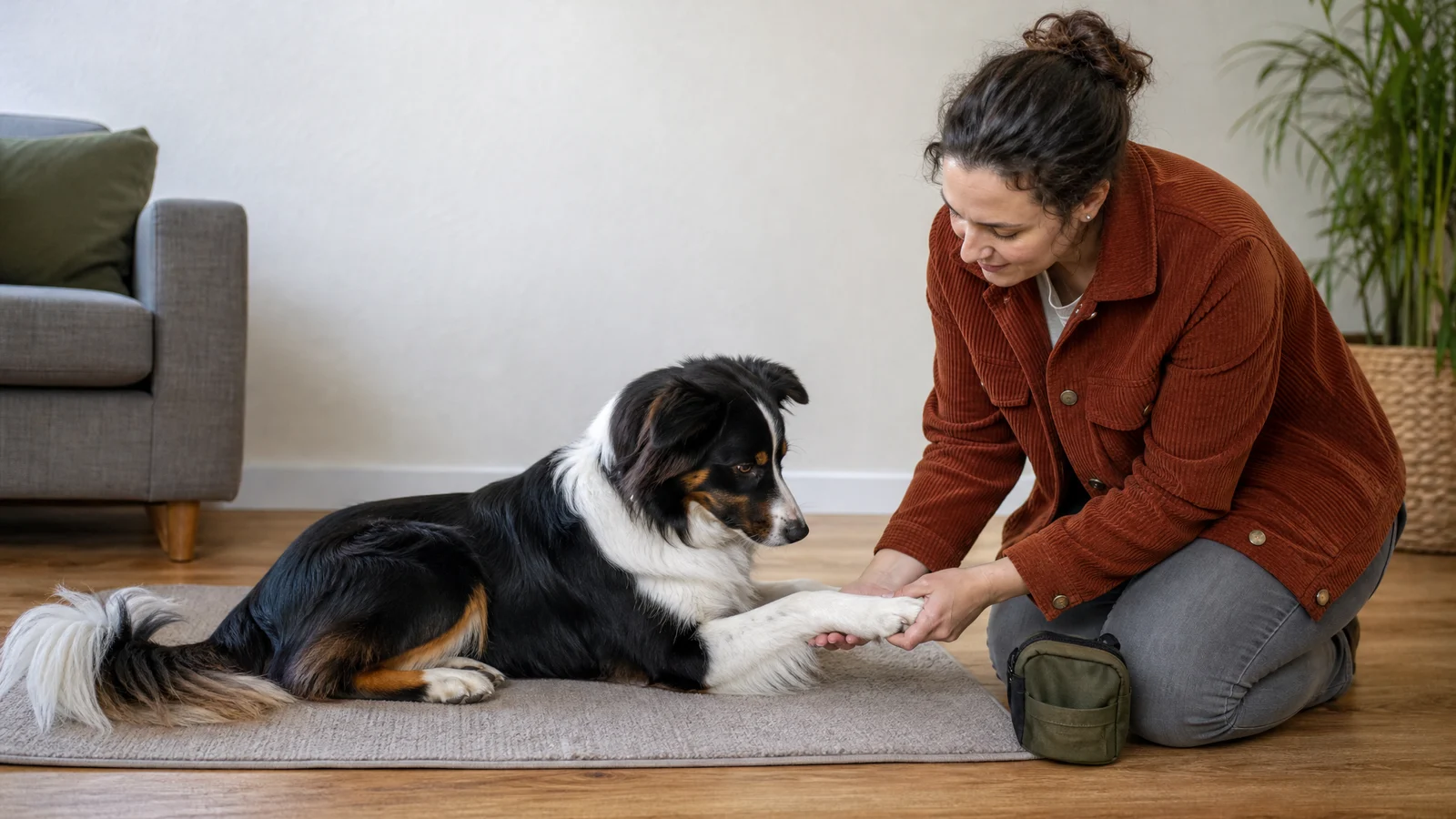
Signs that call for a vet visit or a behavior consult include panic that does not ease when the noise stops, destructive escape attempts, fear spreading to more and more sounds, a sudden change in an adult dog, and practice at low volume that still goes nowhere. Regular vet visits are a good habit anyway, and calm handling makes them easier, so see our guide to vet handling training for Border Collies.
If you want a behavior specialist, check credentials. Only veterinarians holding board certification may use the title behaviorist. Trainers have no such limit on the word, and it requires no education at all. Ask about training, ask about methods, and choose someone who uses rewards.
This is general information, not medical advice. Your veterinarian can check for health problems, decide whether medication makes sense for your dog, and guide any treatment plan.
Two Weeks Toward a Calmer Border Collie
Two weeks will not erase sensitivity, but it is enough to set up the space, find your dog's starting volume, and see whether the approach is working. Do the management first, because practice on top of constant stress goes nowhere.
- Week one, first few days: set up the safe room, with a bed, a chew, and the door open, and use it for a few calm minutes each day so it becomes familiar.
- Week one, next few days: note which sounds bother your dog and when, then move chores, loud appliances, and visitors away from your dog's time in the safe room.
- Week one, whenever you can: toss a treat whenever a quiet, ordinary sound happens, so good things start predicting the sounds you cannot avoid.
- Week two: pick one sound and play it at a volume your dog barely notices, giving a treat as it plays. Switch off the sound and the treats together, and finish the session while it is still brief and fun for your dog.
- Week two, when your dog is relaxed: raise the volume a little and drop back at once if your dog stiffens, stops eating, or leaves. For a dog who loves a herding ball, a calm round of ball play after a good session can work as a reward, but only if the ball does not wind them up.
Progress With Border Collie Noise Sensitivity
Progress looks small. Your dog recovers faster after a sound, takes treats at a volume that used to shut them down, or heads for the safe room on their own and settles there.
The takeaway for this breed is that their sharp senses and strong drive make noise a bigger deal than it is for most dogs, so the work is to lower the volume, protect the space, and make sound predict something good. Keep your vet in the loop, ask for help early rather than late, and a dog who notices everything can learn that most of it is nothing to worry about.
 BehaviorTeaching a Border Collie to Settle Instead of Barking
 HealthVet Handling Training for a Border Collie
 BehaviorBorder Collie Boredom Chewing and the Brain Work That Helps