 Border Collie
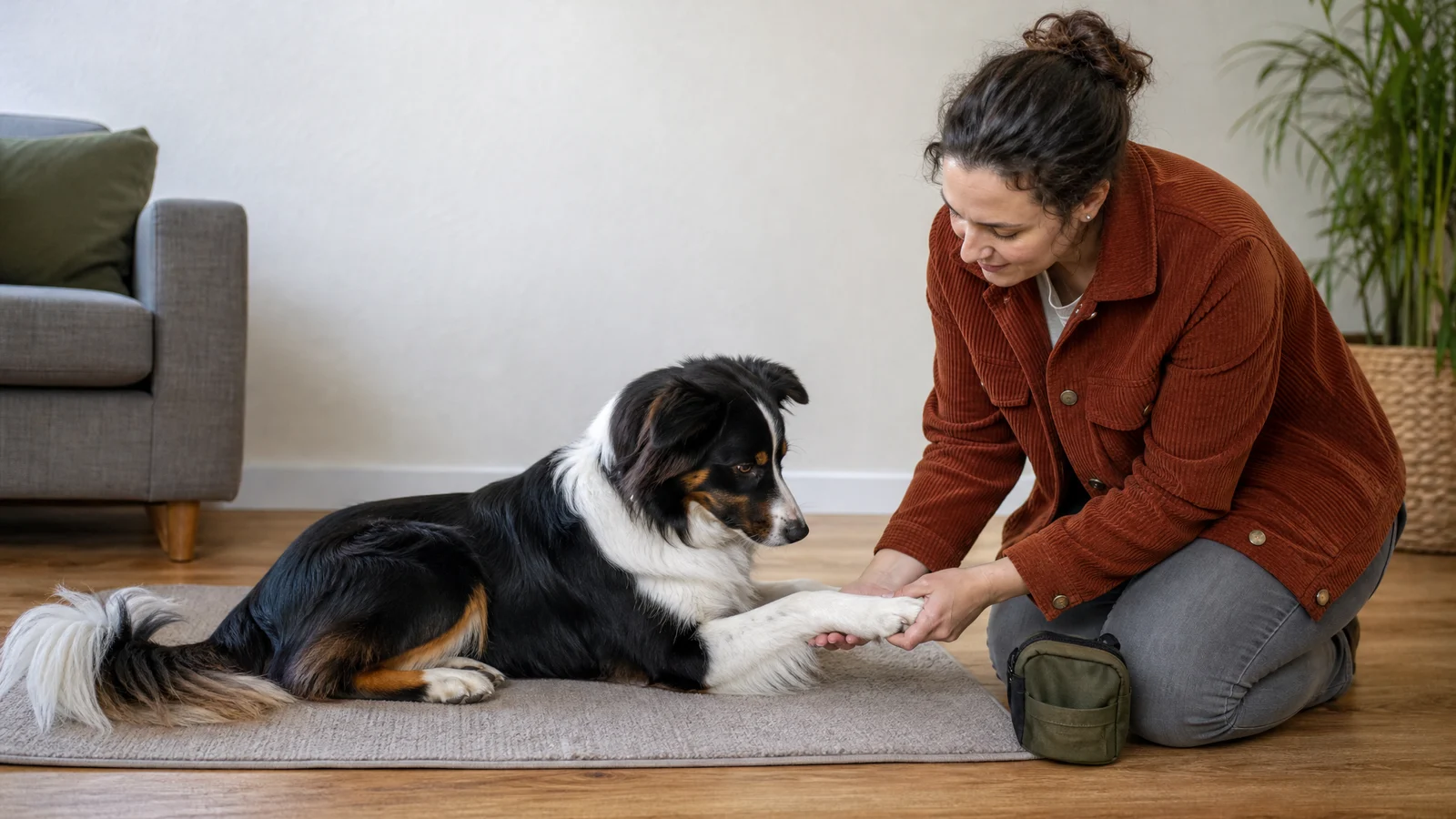
How do you get a dog to just let the vet touch them? It is the question behind nearly every appointment, and the usual answer is to hold the dog still, finish fast, and hand out treats afterward. For a watchful, responsive Border Collie, that answer falls short. The standard describes the breed as alert, keen and responsive, and many of these dogs notice every hand, sound and shift in the room, so being pinned can teach them that nothing they say will be heard.
This article looks at cooperative care, the practice of showing your dog how to take an active role in being examined and touched. It helps you prepare for the next appointment, build skills at a pace your dog can manage, and tell a comfortable dog from one who has simply gone still. Done well, you get a dog who walks into the clinic willing. Done badly, every visit gets harder than the last.
Restraint Versus Cooperative Care at the Vet
Restraint is what most people expect at the vet. A technician steadies the dog, the exam happens, and the treats arrive afterward like an apology. Cooperative care turns that around. The dog is shown what is coming, paid while it happens, and given a clear way to ask for a pause that the humans honor. It sounds like a small edit, but to the dog it changes who has a say.
That matters more than usual for this breed. The breed standard describes the Border Collie as alert, keen and responsive, with an uncanny ability to reason. A dog who reasons that well keeps score. If a stranger's hands are followed by being held, they learn the sequence fast, and a treat handed over afterward cannot rewrite what came before it.
Consent does not mean your dog gets a veto over medical care. It means the dog holds a position, for example resting their chin on your open hand, and that position is the yes. When they step away, you pause, shrink the step, and try again. A dog who learns that no gets heard has far less reason to say it loudly.
Treats still matter, but timing changes. Food and praise arrive during the touch, in small steady bursts, so the handling itself predicts good news. The popular plan of finishing quickly and rewarding at the end leaves a thinking dog with a long stretch in the middle that has nothing good in it.
Border Collie Versus Aussie at the Exam Table
Advice often comes from a friend with an Australian Shepherd, and across a waiting room the two herders can look alike. We have spent many years training Border Collies, so we stay with what we know and make no claims about every Aussie. Dogs of both breeds vary, and a plan borrowed from a look-alike may not fit the dog on your table.
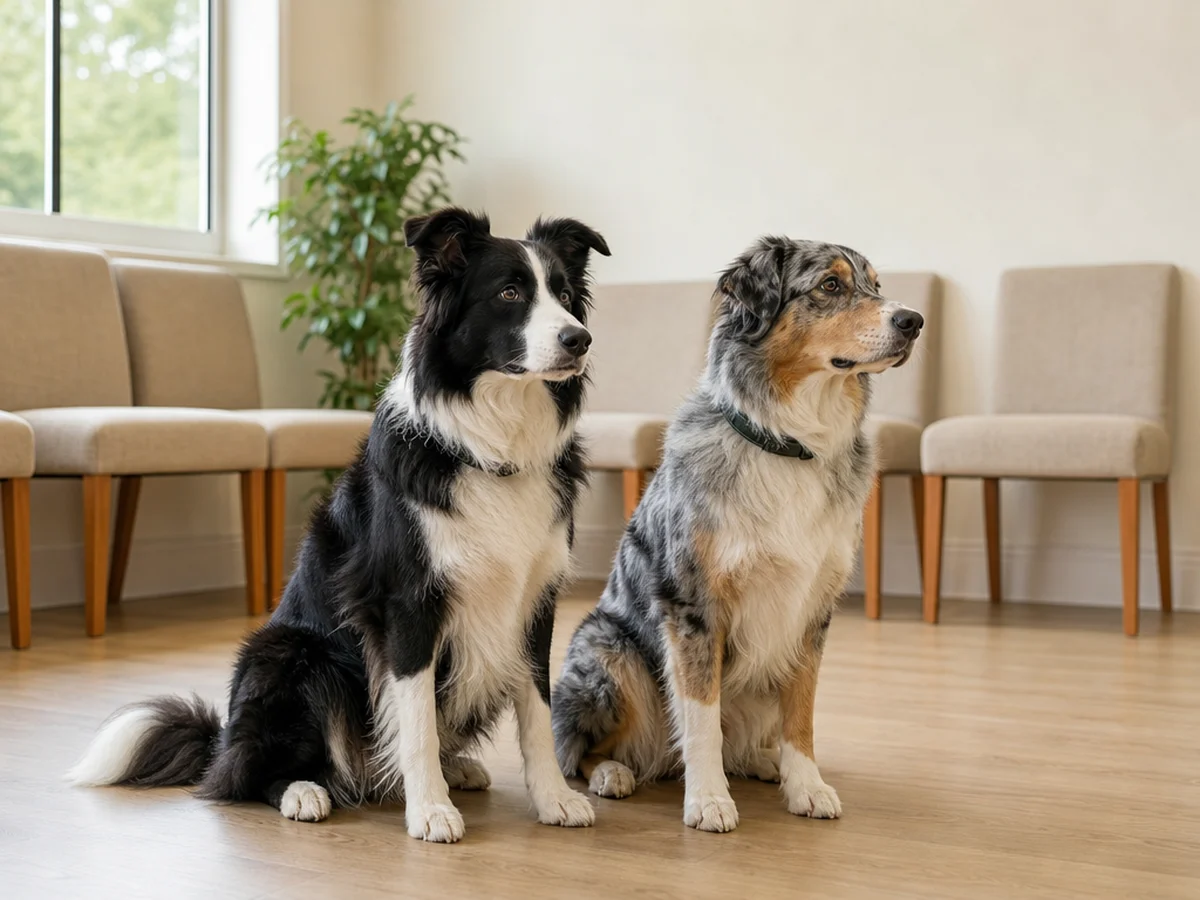
What we can say is that the standard calls the Border Collie alert, responsive and possibly sensibly reserved with strangers, and describes a dog who can work out of sight of their handler, reading the situation without commands. In an exam room that can look like a dog tracking the vet's hands, the technician's position and the door all at once. A dog who spends the visit scanning for what comes next is working, not misbehaving.
So predictability is your best tool. Let your dog see and sniff the stethoscope or the scale before either touches them, and ask the vet to approach slowly from the side and keep the same order each time. Clinics are also full of clipper buzz and clanging metal, so our notes on Border Collie noise sensitivity are worth reading before you book.
A reserved dog also does better when they choose when to say hello. Invite the vet to toss treats from a distance, and let your dog walk up to the vet instead of the other way around.
Preventing Stress Now, Teaching Cooperative Care Later
These are two separate jobs, and mixing them up is where many people get stuck. Prevention is what you do for the appointment already on the calendar, and it works through management: fewer triggers, shorter exposure, easier rewards. Teaching is the slower project of building skills, and it cannot be finished by next week. Keep them apart and you can protect your dog today without pretending the skills are further along than they are.
Management for the Next Appointment
Phone the clinic first and request a quiet time slot, a room straight away so you skip the lobby, or permission to stay in your vehicle until staff are ready for you. Bring high-value treats your dog rarely gets, tell the staff exactly where your dog struggles, and keep the visit short. A dog bred for hard work also settles better after real mental effort, so give them some beforehand, using ideas from our guide to daily Border Collie brain work.
If your dog might bite when sore or frightened, a muzzle can keep everyone safe, but only when introduced kindly. Muzzle-train with rewards so the dog sees it as a good thing. Fastening a muzzle onto a dog with no preparation tends to frighten them, and every attempt after that becomes harder. Start well ahead of the visit.
This article is general information about handling and muzzle training, not medical advice. Check with your veterinarian about any pain or sudden change in how your dog reacts to touch, and about whether a muzzle or other support suits your dog's exams.
The Slower Skills Plan
The skills plan runs alongside with no deadline. The building blocks are small: a chin rest, a paw offered on request, standing calmly on a towel, a hand moving along the back, ears, legs and feet, a lift onto a low surface, and the muzzle. Each is taught on its own and paired with food until the dog offers it. Keep regular vet visits on the calendar in the meantime, because skipping checkups to avoid stress only gives your dog less practice.
Puppy Handling Games Versus Adult Border Collie Retraining
A puppy and an adult arrive with different histories, and the plan follows from that. Puppies are still forming opinions, so the job is to fill the early months with good experiences. Adults arrive with opinions already formed, so the job is to rebuild, carefully, whatever went wrong. Either way, progress comes faster when you stop expecting the dog to cope and start adapting the setup around them.
What a Puppy Can Absorb
Breed guidance calls early socialization especially vital for the Border Collie, with positive exposure to a wide variety of people and situations from early puppyhood through about seven months. Fold handling into that window.
Touch paws, ears and mouth in quick games with a treat arriving at once, stand the puppy on a towel, and let a friendly visitor hold them gently while you feed. If your clinic allows it, drop in for a weigh-in and a treat, then leave before anything unpleasant happens. Short happy visits teach a clever puppy that the building predicts snacks.
Rebuilding for an Adult With Poor Associations
An adult who dreads the clinic or the table has learned something, and from their point of view the lesson was probably accurate. Start further back than feels reasonable, at a distance from the trigger where the dog still takes food happily. Change the cues too, with a new mat, a different room, or a different person doing the handling. Rebuild one body area at a time and let willingness, not the calendar, decide when to move on.
Border Collies are highly trainable, so new patterns can take hold well. The old fear may still return at the clinic door, since a dog this observant links smells, floors and sounds to past events. That is why the next section matters.
Cooperative Care Rehearsal at Home Versus the Real Clinic Visit
Home is easy and the clinic is not, so the plan has to climb from one to the other in steps so gradual that your dog is never left guessing. At home the floor is familiar, the smells are yours and nobody is hurrying. In the clinic there are strange dogs, slick floors, a stranger's hands and many new sounds. Skills that look solid in your kitchen can vanish at the door, which is normal and no sign of failure.
Start With the Marker at Home
Before you use a marker, pair it with food in a quiet room. Click or say your word, deliver a treat inside 3 seconds, and repeat the pairing several times. Once the sound means food, mark your dog for resting their chin in your hand, then for holding it a moment longer as you touch a shoulder, an ear or a paw. Keep sessions short and end on an easy win.
A coat that wants brushing about weekly gives you a built-in rehearsal. Treat each brushing as a handling session, with a treat for every stroke along a new area, and you practice the exam routine without it ever feeling like practice.
Add Difficulty One Piece at a Time
Change only one thing at a time: a new room, a new person, a longer touch, or a tool such as a brush or a stethoscope. If your dog's response gets worse, return to the last easy step. Rehearse the whole routine, including the towel, the table and the order of body areas, so the clinic version feels like a game they already know.
Bring It to the Clinic
Begin with visits that involve only treats and a friendly greeting, then add a weigh-in, then the real exam with your rehearsed routine. A dog who stops eating at a particular step is asking you to shrink it, so ease back. Pace varies widely by dog: some accept handling after a few days, while others take months or years to complete a plan. Patience is part of the method.
Cooperative Care Progress Marked by Choice, Not Tolerance
It is tempting to count a quiet dog as a successful one. A Border Collie who stands rigid on the table with their eyes fixed ahead can look calm, and the staff may call them a perfect patient. But stillness and comfort are different things. Tolerance means the dog has stopped protesting, while choice means they are still taking part, and the difference shows at the next visit. The tolerating dog often gets worse and the choosing dog gets better.
Real progress looks like a dog who offers. They rest their chin in your palm and wait, lean into a touch, step onto the scale without being lifted, or hand you a paw as the clippers appear. Their body is loose, their mouth is soft, and they take treats gently. When you pause, they nudge or stay close to ask for more.
Try a pause test. Stop touching, keep your hands still and watch. A comfortable dog stays or moves closer. A dog who leaves is telling you the last step was too much, which is useful information and no setback. A frozen dog does neither. They hold position, refuse food, breathe fast and shallow, and look away or stare through you. Treat that as a red light and go back to an easier step.
Jot down what your dog offers after each session, because small gains are easy to miss. Patterns matter more than one uneven day.
A Border Collie Who Offers Handling Willingly
You will know the plan is working when your dog begins to volunteer. They walk to the mat without being asked, place their chin in your hand, and watch you for the next step. Over time the offers appear in new places, like the porch, the parking lot and finally the exam room. The vet's touch becomes one more game they know how to win, and the staff starts remarking on how easy they are.
When Border Collie Handling Needs Professional Help
Some signs mean the problem is beyond a home plan, and getting help early protects your dog and everyone around them. Start with your regular veterinarian, then look for a board-certified veterinary behaviorist for serious cases.
A veterinarian can use the title behaviorist only with board certification, but trainers and others face no such restriction, so ask anyone who uses the word what training stands behind it. Our piece on Border Collie aggressive behavior helps separate intensity from true reactivity. Reach out to a professional promptly when your dog shows one of these signs:
- Growling, snapping or biting during handling that does not ease when you return to easier steps.
- Fear that grows from visit to visit even though you are practicing, such as trembling at the clinic door or refusing all food in the parking lot.
- A sudden new dislike of being touched somewhere, which deserves a veterinary exam before any training changes.
- Attempts to bolt, hide or fight to escape that could hurt the dog or the people nearby.
- Staff or family who can no longer handle the dog safely, even with a muzzle the dog has been trained to accept.
This is the whole shift. A dog bred for attention and trainability does not need to be held down to be examined. They need to be told what is coming, paid while it happens, and trusted when they say stop.
Give them that and you may one day watch your Border Collie walk to the table, offer a paw before anyone asks, and wait for the vet with the same bright attention they bring to everything else. If anything on that list appears along the way, bring in a professional rather than push harder.
 BehaviorBorder Collie Boredom Chewing and the Brain Work That Helps
 Exercise and jobsBorder Collie Running: Open-Field Time With a Reliable Recall
 Puppy trainingBorder Collie Puppy Milestones From 8 Weeks to 2 Years