 Border Collie
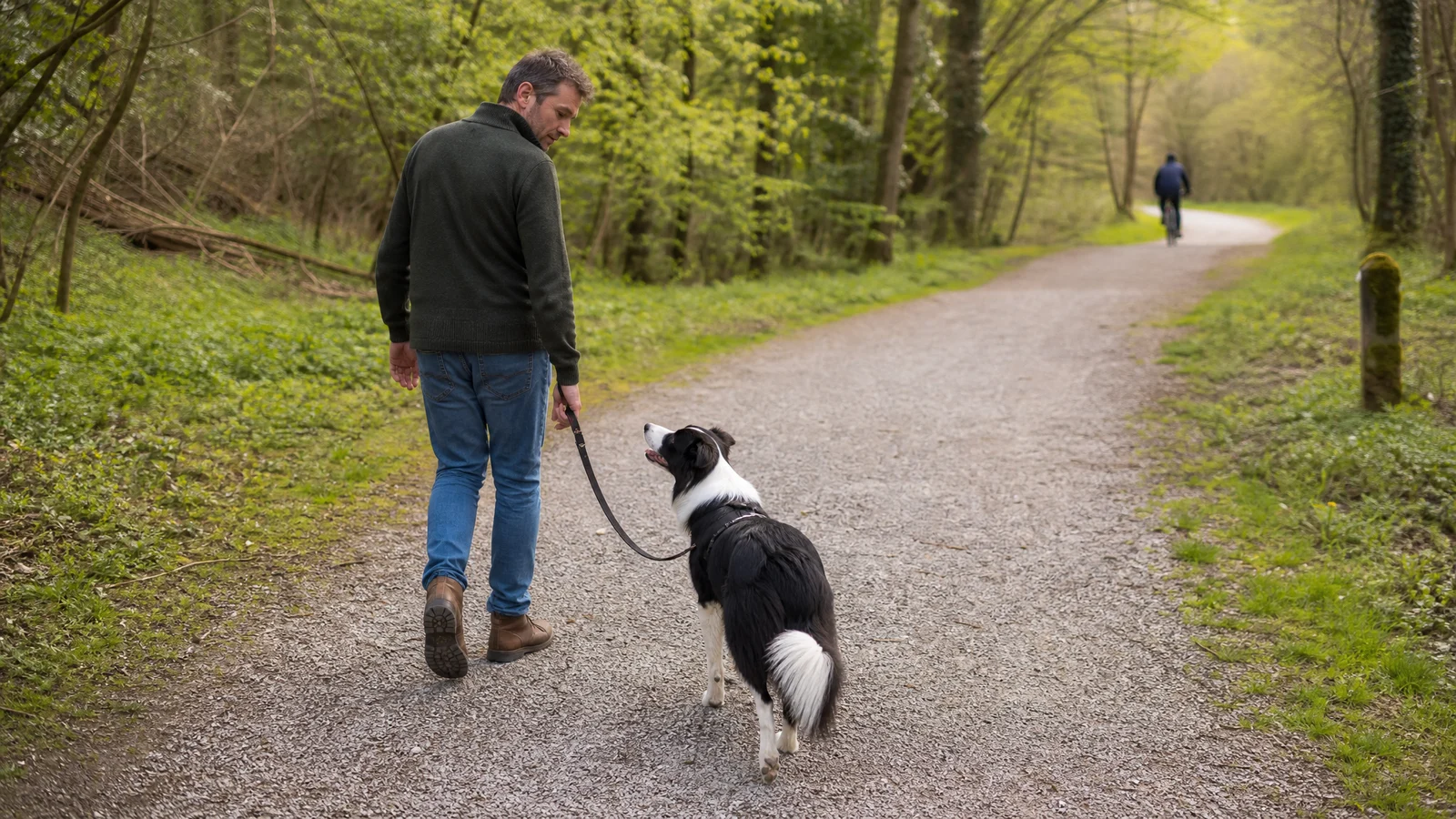
The best everyday setup for leash training a Border Collie is a fixed-length leash attached to a comfortable, well-fitted harness. The leash gives you a predictable connection, while the harness supports safe handling. Neither item teaches loose walking by itself. The lesson comes from rewarding a slack leash and arranging enough distance for your dog to think.
That distinction matters for a breed developed to notice and control movement. A bike, car or jogger can turn an ordinary walk into staring, acceleration or lunging before the handler understands the sequence. We'll walk you through those different symptoms, show where check-ins begin, explain how distance changes the response and help you choose one useful goal for the next Border Collie leash-training walk.
Border Collie Leash Gear for Clear Feedback
Choose gear that stays consistent while you teach. A fixed-length leash has a clear amount of space, so slack and tension feel different every time. A harness should allow normal shoulder movement, stay secure when the dog turns and fit closely enough that backing up does not become an escape route. Check the fit before each outing.
Gear has separate jobs, and confusing them creates unrealistic expectations. Use this table to keep each choice in its lane.
| Item | What It Does | What It Cannot Do |
|---|---|---|
| Fixed-length leash | Creates a predictable walking radius and visible slack | Teach the dog where to walk without rewards |
| Comfortable harness | Supports handling and keeps the connection secure | Remove interest in moving triggers |
| Treat pouch | Keeps rewards ready for precise delivery | Make a setting easy enough for learning |
| Quiet route | Reduces competing movement during early practice | Replace later training around real distractions |
Skip gear changes as the first response to every difficult walk. If the dog can pull successfully toward a smell, person or open space, the environment is rewarding the pull. Change what forward motion buys, improve your timing and lower the difficulty. Equipment should support that plan, not become the plan.
Handle the leash with enough slack that your own arm is not creating constant pressure. Gather only the extra length needed for the setting, and keep your hand quiet near your center. If the connection is tight before the dog moves, neither of you can identify the moment when pulling begins. Clear feedback starts with genuine slack.
Why Does Border Collie Leash Training Stay Tight?
A tight leash often means that pulling has worked. The dog leans forward, the person follows and the interesting destination gets closer. Because the result arrives after the pull, the behavior is likely to return. This is a learning pattern, not evidence that your Border Collie is trying to control the household. The Border Collie trainability guide explains why repeated outcomes can become habits so quickly for this breed.
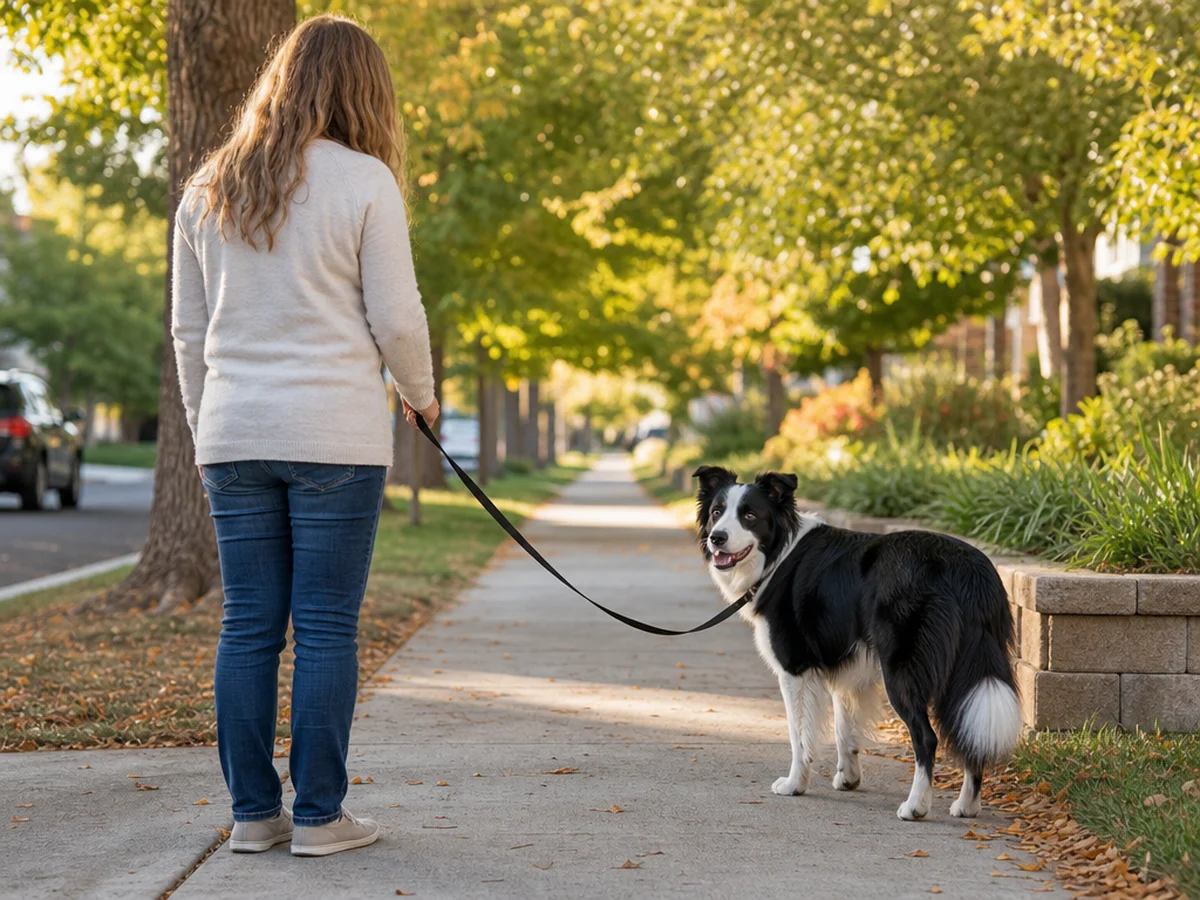
Stop forward progress when the leash tightens. Wait for your dog to shift back, turn toward you or otherwise create slack, then mark and move again. If stopping produces more leaning, turn onto an easier path and reward as they come with you. Loose-leash guidance from Best Friends similarly uses a change of direction followed by praise and a treat.
Forward Motion Is the Paycheck
Consistency matters more than distance. If pulling sometimes reaches the tree or doorway, the behavior still has a reason to continue. Plan shorter training routes where you can protect the rule. The walk does not need to be a straight march. Sniffing can be a reward once the leash loosens, which gives the dog a useful way to access the environment.
- Mark the first moment the leash forms a soft curve rather than waiting for a perfect heel position.
- Deliver food beside your leg so the next step begins from a useful place.
- Release your dog to sniff after several loose steps, making access part of the training.
- Turn before the leash reaches full tension when you can see your dog accelerating.
- End the practice while both of you can still repeat the same clear rule.
Some Border Collies move faster than the person even when they are not aiming at a trigger. Add frequent changes of pace on a quiet stretch. Reward the dog for noticing a slower pace and matching it, then release them to a comfortable walk again. This teaches attention to the shared movement without requiring a formal heel for the whole outing.
Loose-Leash Training Starts Before the Walk
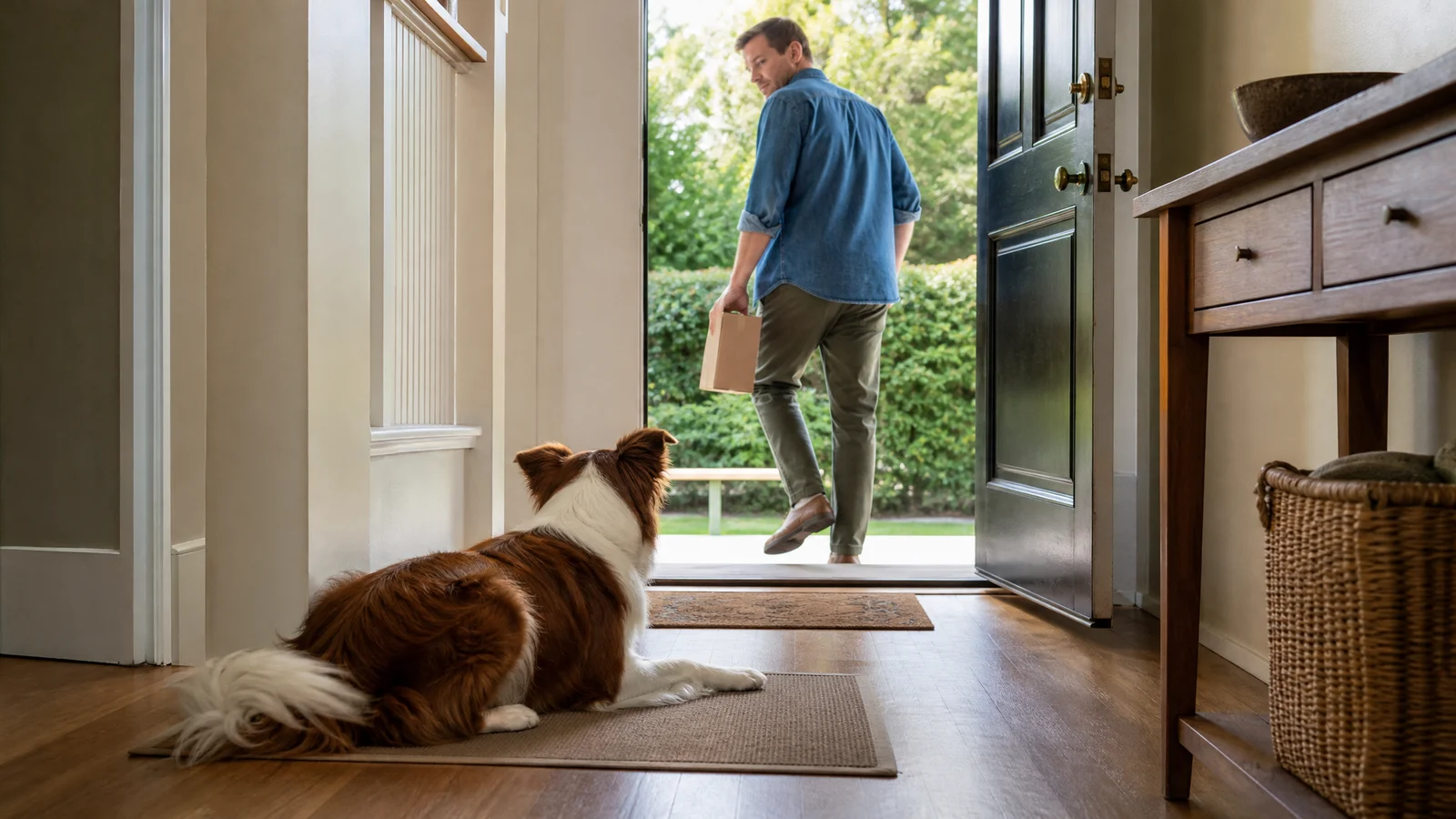
The doorway can predict the whole outing. If the leash appears, the dog races, the door opens during bouncing and the pair launches outside, excitement has already practiced the first tight steps. Begin in the house. Clip the leash on, reward four paws on the floor and wait for a voluntary glance toward you before approaching the exit.
At the closed door, reward a slack leash and a pause. Open it only as far as your dog can stay thoughtful. If they rush, close it gently, reset farther back and make the next repetition easier. The release through the doorway is a life reward, so use it to pay for the behavior you want at the start of every walk.
Continue in a quiet yard, hallway or driveway. Take a few steps, change direction and reward your dog for finding you. The goal is orientation, meaning they notice where you are while moving. A Border Collie can learn this pattern quickly in calm surroundings, but the skill still needs separate practice wherever the scenery changes.
Short sessions are enough at first. The breed profile describes a high-drive athlete who needs daily exercise beyond a simple block walk, but leash drills and total exercise are different needs. Meet the larger activity need through suitable outlets, then teach walking as a focused skill. Our complete Border Collie training guide explains how activity, thinking work and a practiced off switch fit the broader day.
Leash Training Around Bikes, Cars and Joggers
Moving objects create symptoms that ordinary pulling practice does not fully address. A Border Collie may notice movement early, lower their body, stare, speed up or lunge as the trigger passes. The breed's working history helps explain the attention to motion, but modern leash training should focus on safe observation and returning attention to the handler, not on rehearsing control of movement.
The Stare Comes First
A fixed stare is often the earliest useful signal. Far enough away for your dog to eat and turn, mark the moment they notice the bike or jogger, then reward when they look back. Do not wait for the body to tighten. Early payment teaches that noticing movement can lead back to you rather than forward into pursuit.
Stand where you have an exit route. A parked car, wide driveway or side path can give you space without requiring the trigger to change course. If your dog cannot disengage, move away in an arc and resume only after their body softens. Distance is part of the lesson, not a retreat from it.
Acceleration Needs an Earlier Turn
Some dogs skip the still stare and surge as movement approaches. Watch for a faster gait, closed mouth and weight shifting forward. Turn away before the leash tightens, mark the dog for following and reward after several steps in the new direction. Practicing the turn in a quiet place makes it available when speed appears.
Use the environment as a reward after recovery. When the dog can look back at the moving object without pulling, let them watch briefly from the safer distance, then move on together. The lesson is not that movement disappears. It is that calm observation keeps access open.
Lunging Changes the Route
A lunge means the current setup was beyond the dog's learning range. Create distance immediately and choose a quieter route for the rest of the walk. Repeating passes at the same distance usually rehearses the full sequence. The next session should begin farther away, where noticing and turning are still possible.
The Border Collie profile describes a highly energetic working breed, and the breed standard adds context about biddable stock sense and long work on rugged ground. Those facts explain capacity and attention. They do not mean a dog should be allowed to chase traffic or moving people.
After a trigger passes, allow a recovery loop rather than marching straight toward the next challenge. Walk away, scatter a few rewards in clean grass or pause for quiet sniffing. Resume the route when your dog can move normally and check in again. Recovery is part of the repetition, because it tells you whether the setup was truly manageable.
When Leash Training Needs More Distance
Use recovery to judge the walk. A dog within their learning range can take food, turn with you and resume sniffing after a trigger passes. A dog who remains rigid, scans for the next movement or cannot reconnect needs a quieter setting. Continuing through a busy route may add more trigger exposure without adding learning.
These symptoms call for a change in the plan. Treat any one of them as a reason to protect recovery rather than finish the route.
- Your dog stops accepting a reward they normally value in easier places.
- Their body stays low or rigid after the moving object is gone.
- Several triggers arrive too close together for full recovery between them.
- You cannot create enough room to turn away without entering traffic or another unsafe space.
- The reaction is becoming stronger or appearing around a wider range of ordinary movement.
Choose routes with visibility, cross early and use quieter times while skills grow. A qualified reward-based trainer can observe the sequence and help set workable distances. If behavior or movement changes suddenly, contact your veterinarian, and keep regular vet visits on the calendar. Comfort and wellbeing affect what a dog can learn on a walk.
Sniffing can help the dog gather information about the environment. The enrichment resource from the ASPCA describes nose use as both stimulating and calming. Offer sniff breaks in safe places, especially after a successful pass, so the outing is not one continuous demand for eye contact.
One Better Border Collie Leash Walk Today
Choose a quiet route where you can see movement before it arrives. Set one criterion for the outing: the first voluntary check-in on a slack leash. Mark that glance, reward beside you and allow a brief sniff before moving on. That single clean repetition tells your Border Collie more than a long walk spent pulling toward every destination.
If a bike, car or jogger appears, respond to the earliest symptom. Reward the look-away, turn before acceleration or add distance after a lunge. The next useful step depends on what the dog's body is showing, not on finishing a planned route. Loose-leash walking grows when handling, environment and reward timing all make the same calm choice possible.
 BehaviorSocializing a Reserved Border Collie in the Seven-Month Window
 BehaviorHow to Help a Noise-Sensitive Border Collie Stay Calm
 BehaviorTeaching a Border Collie to Settle Instead of Barking