 Border Collie

Many people who ask whether a Border Collie suits them are hoping for a clever, affectionate partner for daily life. That hope is reasonable, and it comes with a price that is easy to underestimate.
The American Kennel Club describes the Border Collie as a remarkably bright workaholic, maybe a bit too amazing for owners without the time, energy, or means to keep one occupied. It adds that these energetic dogs will settle down for cuddle time when the workday is done, and calls the breed one for an active owner, not for someone who prefers to stay indoors or travels away from home frequently.
The price is paid in training, mental work and patience every day, and that is the cost we measure here. By the end of this page, you'll have seen what an ordinary training week holds, which households should wait, and which months test an owner most.
A Border Collie Owner's Normal Training Week
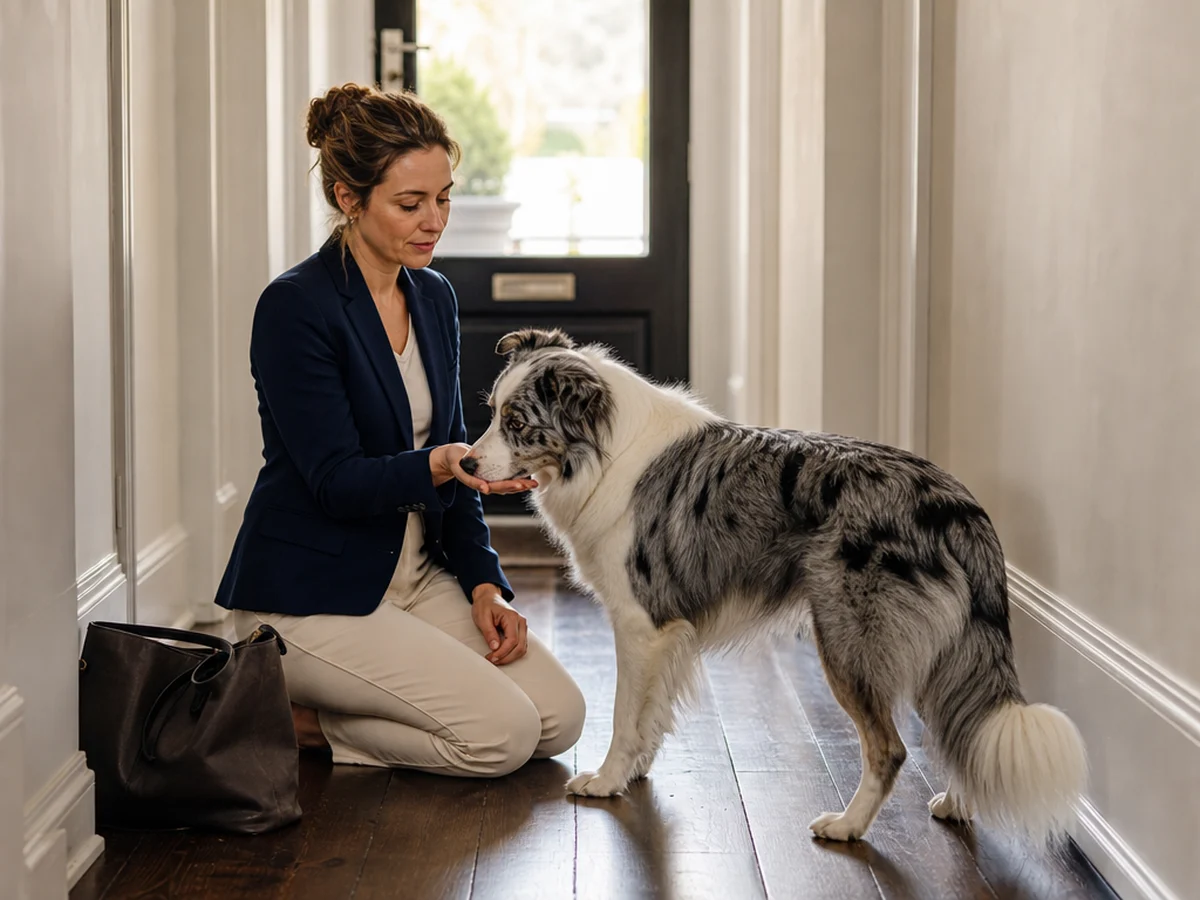
Training any dog well is mostly small, repeated moments spread across the days rather than one big effort on the weekend. An ordinary week holds four parts, and each fits around a job and a family if someone plans for it.
- Several short sessions each day in which the dog is paid with treats or play for doing what the cue called for, ending while the dog is still keen.
- One daily job for the mind, such as a puzzle feeder, a search for hidden treats or a new trick built in small steps.
- Exercise that matches the dog's age and fitness, planned as its own item and never counted as a substitute for the lessons.
- Practice at settling on a mat or bed, so the dog learns that doing nothing also earns attention and food.
PDSA says the amount of exercise a dog needs depends on the breed, and that some breeds need a minimum of one to two hours per day while others, such as working breeds, need significantly more. It also says training should be an essential part of every dog's daily routine, because it helps keep a dog's mind active, reinforces commands, prevents boredom and is a great way to bond.
Regular veterinary visits belong in every dog's year, alongside all of this. Amounts and brain games change with age, so we keep them out of this page and send you to our Border Collie exercise guide. Here we only ask whether the week has space for the daily teaching.
When the Week Has No Room for a Border Collie
Some households can love a dog and still lack the hours the work requires. Seeing that before the dog arrives is kinder to everyone, the dog included, than finding it out in the second month.
The American Kennel Club rates the Border Collie 5 out of 5 for energy level, mental stimulation needs, trainability and playfulness, 3 for good with young children, good with other dogs and watchdog or protective nature, and 4 for barking. Its description of the young-children rating adds that dogs should always be supervised around young children, or children of any age who have little exposure to dogs.
Weeks Built Around Absence
If your work, travel or commute keeps the house empty for long stretches, the training load lands on the few hours you are home. A dog left to work things out alone will still learn, just not the habits you wanted, and Border Collie trainability does not change that.
Ask honestly who will be home, who will feed, walk and train on a late night, and what happens during a trip. Our Border Collie alone-time guide covers how to build calm time apart, but it cannot create hours the week does not have.
Households With Small Children or Other Dogs
Every meeting between the dog and a small child, or between the dog and a resident dog, needs an adult who can watch, reward good choices and step in calmly before excitement builds. That is supervision time, and it comes on top of the lessons. If no adult can promise that attention on most days, the household is a poor match for this dog until the children are older or the schedule opens up.
The Early and Teenage Months for Border Collie Owners
The first year asks for more of an owner than the adult years, and it comes in two distinct pushes. The first is about showing a young puppy a wide, friendly world. The second arrives when that puppy becomes a teenager with energy and little self-control.
Puppyhood
The American Veterinary Medical Association says the best time to start socialization is between 3 and 14 weeks of age for puppies, when they are most open to learning about their environment, people and other animals. It advises rewarding positive or neutral engagement with praise, play and treats, and allowing a puppy to withdraw if they seem uncomfortable.
Our socializing a Border Collie guide gives the method, and early routines such as Border Collie puppy potty training take daily time as well. Plan for both before the puppy comes home.
Adolescence
The RSPCA says adolescence in dogs can start any time between six and 12 months and end between 18 and 24 months. It explains that hormonal changes can make adolescent dogs appear less obedient, when they are really more motivated to explore, interact and run, and that they find it hard to control impulses. For energy, it suggests structured play and exercise sessions, searching games, scent puzzles and long walks in quiet areas.
Border Collie Owner Doubts Worth Settling Before You Decide
Beyond the schedule and the early months, a handful of practical doubts tend to surface late in a decision. Each answer here stands on its own.
Sharing the Work
What if someone in the house is not keen on a dog who needs this much? Say so before the decision, not after. Ask the doubtful person which part worries them, whether it is the hours, the mess or the noise, and see whether a smaller plan answers it. A dog who joins a home where one adult resents the routine gets less from everyone.
Can a dog walker or daycare do the training for us? They can add outings and rewarded practice, but the learning that counts happens at home, with your own rules. If you hire help, ask what methods they use, accept only reward-based ones, and keep the daily lessons yourself.
Time and Space
Can we test our schedule before choosing a dog? Yes, and it is one of the cheapest ways to learn whether the plan is realistic. Book the parts of the ordinary week as appointments, using a bowl of treats and a puzzle toy as stand-ins for the dog. Note which parts get skipped, then ask whether your household could protect them week after week.
Does working from home solve the time problem? Not by itself. A home office puts you nearby, but calls and deadlines still compete with lessons, and a dog beside your desk all day still needs planned sessions, exercise and time resting apart. Count the hours you can truly step away from work, and protect them the way you would protect a meeting.
Do we need a fenced yard to train a Border Collie? No. Most lessons happen indoors or on a leash in short sessions where space makes little difference, and a yard replaces neither the daily exercise nor the mental work. It can make bathroom breaks and play convenient, but we would still plan outings and rewarded practice instead of leaving the dog outside alone.
Children and New Arrivals
Can an older child or teenager take over the training? They can take a real part, such as handing over treats, practicing a settle or running a short game, with an adult nearby. The adult keeps the plan, the supervision and the decisions, because a young trainer's interest can rise and fall from one week to the next.
What if a baby arrives after we have the dog? Plan ahead rather than react. Keep the lessons that matter most going, set up a gate or door that gives the dog and the baby separate spaces, and rehearse the new routine before the due date so the dog learns it while nothing is urgent.
Would a second dog share the training load? A second dog adds a second set of lessons, not a helper. Each dog still needs their own rewarded practice, and meetings between the two need the supervision described above. If the household is stretched by one dog, a second will stretch it further.
Time Away and the Long Run
Who keeps the training going when we travel? Write a short sheet for the pet sitter or boarding staff covering what the dog is learning, which rewards work and what to do instead of scolding. Ask how they handle training before you book, and pick the usual lessons back up on your return instead of testing everything at once.
Does training ever finish? The teaching finishes cue by cue, but the paying does not. A cue that is never rewarded can fade, so keep a few treats or a game ready for the moments when the dog does what you asked. Treat new places and busier settings as fresh lessons, and add small new tasks as the old ones become easy.
Reading a Behaviorist Title as a Border Collie Owner
Households that outgrow their own plan sometimes go looking for outside help, and one word in the listings deserves a closer look before anyone is paid. The American College of Veterinary Behaviorists says that veterinarians may only call themselves 'behaviorists' if they have achieved board certification by the ACVB. It adds that there are no such restrictions on trainers or others who are not required to have any education to call themselves 'behaviorists'.
Whatever a business card says, we would ask what education and hands-on training stand behind it, what a typical lesson looks like, and we would book only someone who teaches with rewards.
 Training basicsHow to Choose a Border Collie Trainer
 Puppy trainingBorder Collie Puppy at 8 to 12 Weeks: The First Month Home
 BehaviorHow to Fix Border Collie Separation Anxiety