 Border Collie
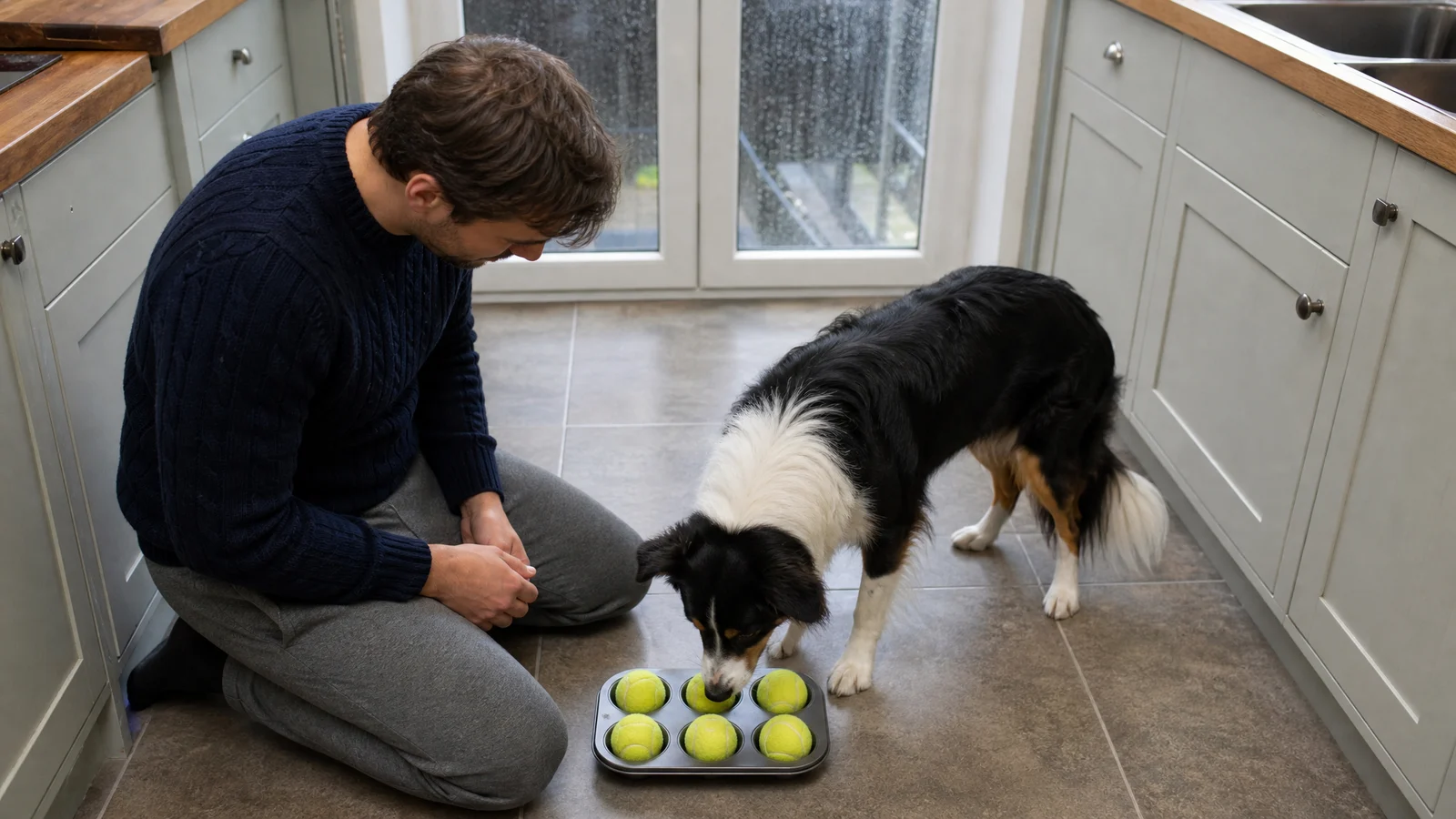
Cardboard boxes, a muffin tin, a paper towel roll and a bag of smelly treats are enough to start indoor games for a Border Collie. None of it costs much, and all of it fits in an ordinary room.
Indoor games matter most when the weather, the schedule or the dog's own comfort keeps everyone inside, and the best ones ask the dog to think rather than simply move. We stay in the house throughout and leave out anything that needs a yard or a field. Read on for the games themselves, the cue that names the best one and a simple way to choose between them on any given day.
Border Collie Indoor Activities Start at the Food Bowl
The food bowl is the easiest place to start, because the food is already on hand and so is the dog's interest. A bowl emptied in a few gulps is a game that never got going.
Can a Food Puzzle Count as a Brain Game?
Yes. The ASPCA calls every meal a chance for enrichment and says food puzzles slow eating and add mental stimulation. Its household recipes include a muffin tin with kibble in the cups and toys on top, three boxes nested inside each other with a smelly treat in the smallest, and a folded paper roll with treats inside. Supervise closely and take away any piece the dog tries to swallow.
The Border Collie Box Search
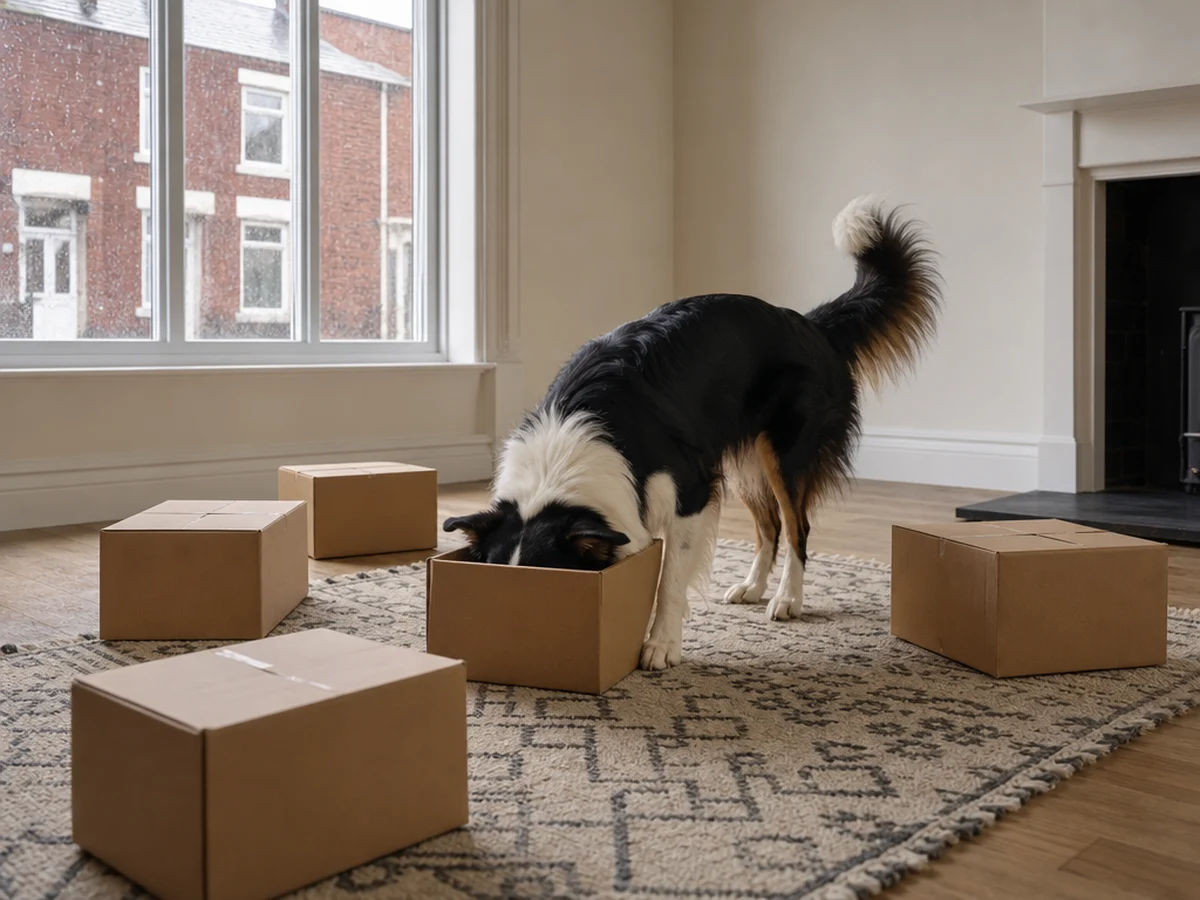
A box search is the anchor game for a rainy day, because the dog does the thinking while we only hide and reset. It also needs nothing beyond boxes and treats.
Best Friends Animal Society starts the search with about six cardboard boxes and a favorite treat. Keep the dog out of the room while the hiding happens, then bait at least half of the open boxes with smelly treats so the dog is rewarded by each find. Run three to five rounds of a minute or two, about 15 minutes in all, with a rest between rounds, and repeat for at least six sessions before making it harder.
While the dog works, we stay quiet and let the nose lead. A dog who sniffs a box, finds it empty and moves on is playing the game correctly, so there is nothing to fix. When a treat turns up, we finish the round right there and give the dog a break, so the next round is something to look forward to.
What If My Border Collie Stops Searching?
End the round, let the dog rest and build the next one with more boxes left open and a treat in plain view in the first. If the dog seems unwell or reluctant to move around, ask the vet, and keep up regular veterinary visits so any change is noticed early.
Charge a Border Collie Marker With Part of Dinner
A marker lets the dog hear "that was it" the instant a search is solved, even from across the room. We set it up before the first search, using only something the dog already likes.
Battersea suggests pairing the click with something positive first, in a calm place without distractions. Click, then give a treat straight away, and repeat several times. A food-motivated dog can work from part of their dinner so there are not too many extra treats, and a dog who understands the pairing looks straight to where the treats come from.
A short spoken word can serve as the marker for anyone without a clicker, and either way the marker only has to mean one thing: the search just paid off. We save it for the games, so the dog hears it only when a find is real.
Put a Find-It Cue on the Search
Say the cue just before releasing the dog into the room, not once the search is already underway. That way the words come to mean "the game starts now" instead of turning into background noise.
Toy or Treat as the Find
The AVSAB position statement says trainers may request a behavior with a verbal or visual cue, mark it with a clicker or verbal marker, and reward it with toys, treats or other appropriate reinforcers. For find it, the word starts the search, the marker answers a find, and what waits in the box is the reward. A favorite toy can be that reward as easily as a treat, so we pick whichever one the dog works harder for.
Pick the Border Collie Indoor Activity for the Moment
Each game above suits a different moment, and the right one often depends on how much time and space the household has. The list below pairs five common situations with the game that fits them.
- Dinner is being cooked and the dog keeps hovering, so hand over the muffin tin or the nested boxes and let the meal become the game.
- A rainy afternoon with a spare room is the moment for the box search, a few rounds with rests in between.
- Guests are arriving and the room is busy, so the paper roll game gives the dog a quiet task away from the door.
- The dog has just learned the marker, so say the find-it cue from the doorway and let them search two or three boxes.
- The evening is quiet and there is no time to set up, which suits a short search with a few open boxes to close the day.
Where Border Collie Indoor Activities Stop
The breed standard hosted by the Border Collie Society of America calls the Border Collie energetic, intelligent, keen, alert and responsive. That describes the breed on paper and does not set a schedule, so we decide when a game starts, how long it runs and when it is over.
These are house games, built for the room we are standing in. The daily balance of activity belongs to the Border Collie exercise guide, outdoor sports and specialist lessons to the Border Collie sports guide, and a dog who chews when idle is covered in the Border Collie boredom chewing guide. Everything we have described here stays inside the front door.
 Training basicsHow Smart Is a Border Collie? What Their Tenacity Demands
 Exercise and jobsHow to Start Border Collie Agility Training With Low Jumps
 BehaviorBorder Collie Stare and Stalk: What It Means and What to Reward