 Border Collie
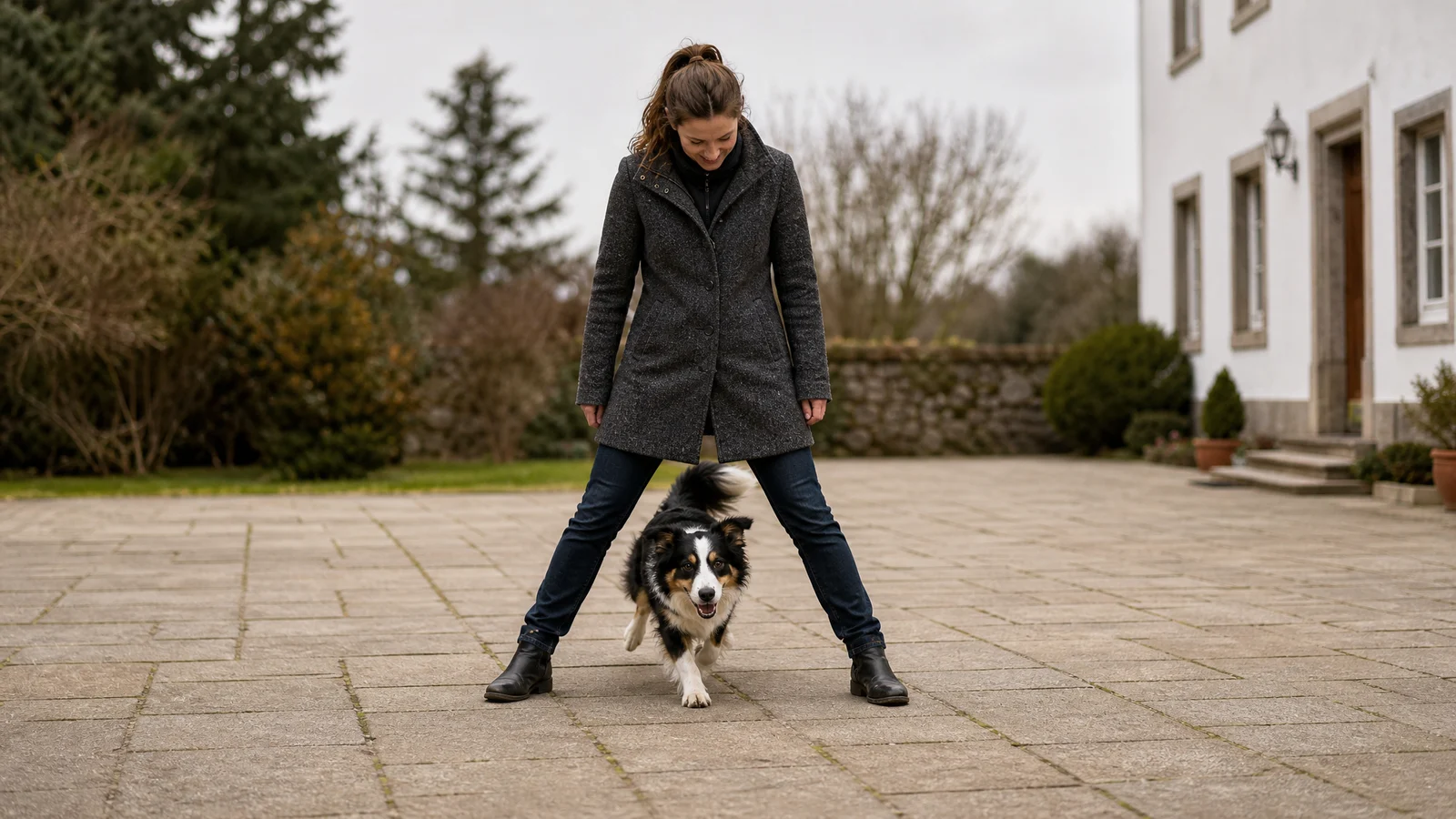
A leg weave is a figure eight drawn by your hand, so the first practice session happens without the dog: stand with your feet apart, trace the path with food held low, and notice where your own knees and feet get in the way. You'll see how that path splits into two loops, how far to lure before you pay, when a small signal can replace the food, and how to keep chained eights smooth. Working in that order keeps each pass short and easy to pay for.
This page teaches the standing weave only. Walking versions and obstacle work are different skills, and the dog's comfort decides whether a repeated tight turn belongs on their list of tricks at all, so that check comes first, before any loop is drawn.
Check Comfort Before Repeating the Border Collie Weave
The weave is a repeated tight turn, so look at how the dog moves before you stack up repeats. Footing matters too: a slick floor makes twisting harder for any dog, so use a rug or a non-slip surface.
Battersea begins its weave guide with "Holding a treat in each hand, start with your legs shoulder width apart and your dog in front of you." It also says that if a dog "suffers from joint pain, or any medical issues which might make this type of weaving movement uncomfortable," owners should look at other tricks instead.
Regular vet visits are where a dog's mobility gets looked at, so mention a trick that seems hard for them at the next one. If a weave ever looks like work for the dog, stop for the day and pick something else from the trick list.
Draw the Border Collie Weave as Two Loops First
Every pass is lure work, so picture the route before any food moves. The dog starts in the gap between your feet, travels around the back of one leg and out to the front, comes back into the gap, and then does the same around the other leg.
- Stand with your feet apart, leaving a clear gap, and the dog facing you, a treat in each hand.
- Bring your right hand low through the gap, around the back of your right leg and out to the front, so the dog's nose follows it.
- Pay from that hand as the dog arrives back in front of you.
- Bring your left hand, still holding food, around the left leg the same way.
- Pay from the left hand at the same spot in front of you.
Luring is a recognized part of reward-based teaching: the AVSAB position statement says that "Capturing, shaping, and luring may be used to teach desired behaviors."
Hold the treat at the dog's nose level and keep it close to your leg. A hand that drifts up toward your chest teaches the dog to look up instead of going around.
Reach Further Around One Leg in the Weave Before Paying
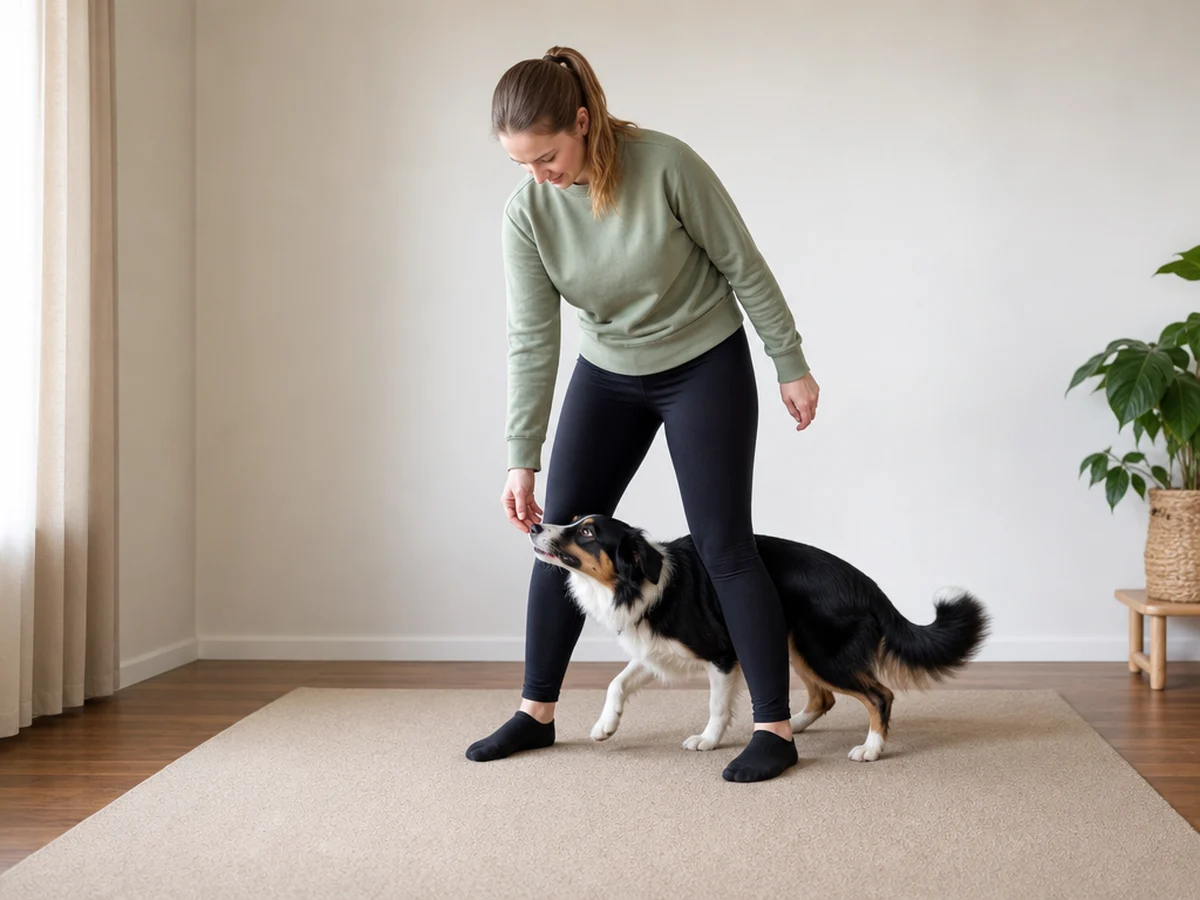
Work on one leg only at first. Start by paying the moment the dog steps through the gap, so they learn that following your hand is worth it, and keep every session short enough that the dog is still keen at the end.
The American Kennel Club lesson for a stationary weave puts the key step this way: "Lure your dog further and further around your leg each time before you click/mark/praise and offer the treat."
Is a walking weave the same lesson? No, this page covers only the standing figure eight. Weaving through legs while you move, and any agility course work, are separate skills, and our Border Collie sports guide is the place for obstacle work. The standing version is where the hand path gets clean first.
Pay each small step a little farther around, and keep your hips still while you do it. Pushing the dog's hips or guiding them with your leg turns a lure lesson into a wrestling match.
Join the Left and Right Loops of the Weave
Link the sides only after each loop is easy on its own. The switch happens where the dog arrives in front of you: pay from the hand that just led, then bring up the other hand with food so the dog moves straight into the second loop.
What if the dog cuts straight across the middle instead of going around the leg? Lower the hand and keep it closer to the leg, so the shortest route for the dog's nose is the full loop, and pay only when the loop is finished. A hand held out wide or high gives the dog a shortcut.
Your own feet matter here. Keep them planted while the dog is between your legs so the gap stays the same size and nobody gets stepped on. Bend your knees as the hand goes behind the leg, and if the gap starts to close, stand again in your wide stance before the next pass.
Once both sides flow, ask for the whole figure eight before you pay, not a single loop. Then swap the visible food in the leading hand for an open hand that points the way around each leg, and pay at the same spot in front of you. Say the word once as the dog starts, before your hand moves.
Keep the Border Collie Weave Smooth Eight to Eight
A single clean figure eight and a chain of them are different jobs. In a chain the dog arrives back in the gap and has to turn again at once, so the rhythm of your hand starts to matter as much as its path. Lengthen the chain only when the dog's pace matches your hand's, and keep paying at the same spot in front of you when each eight ends.
Move the hand at one steady speed, the way you would walk across a room. A hand that speeds up pulls the dog into wide, hurried turns, and one that stalls behind a leg leaves the dog standing in the gap with nothing to follow.
What if the dog hurries ahead of the hand and cuts the corners as the eights chain together? Slow the hand until it clearly leads again, pay a single loop for a few passes, and leave a beat in the gap between eights so the dog resets. Lengthen the chain once the dog stays with the hand through each turn.
 Training basicsClicker Training a Border Collie
 Exercise and jobsHow to Teach a Border Collie to Jump Over Obstacles
 Training basicsIs a Border Collie the Right Dog for You? What Training Takes