 Border Collie
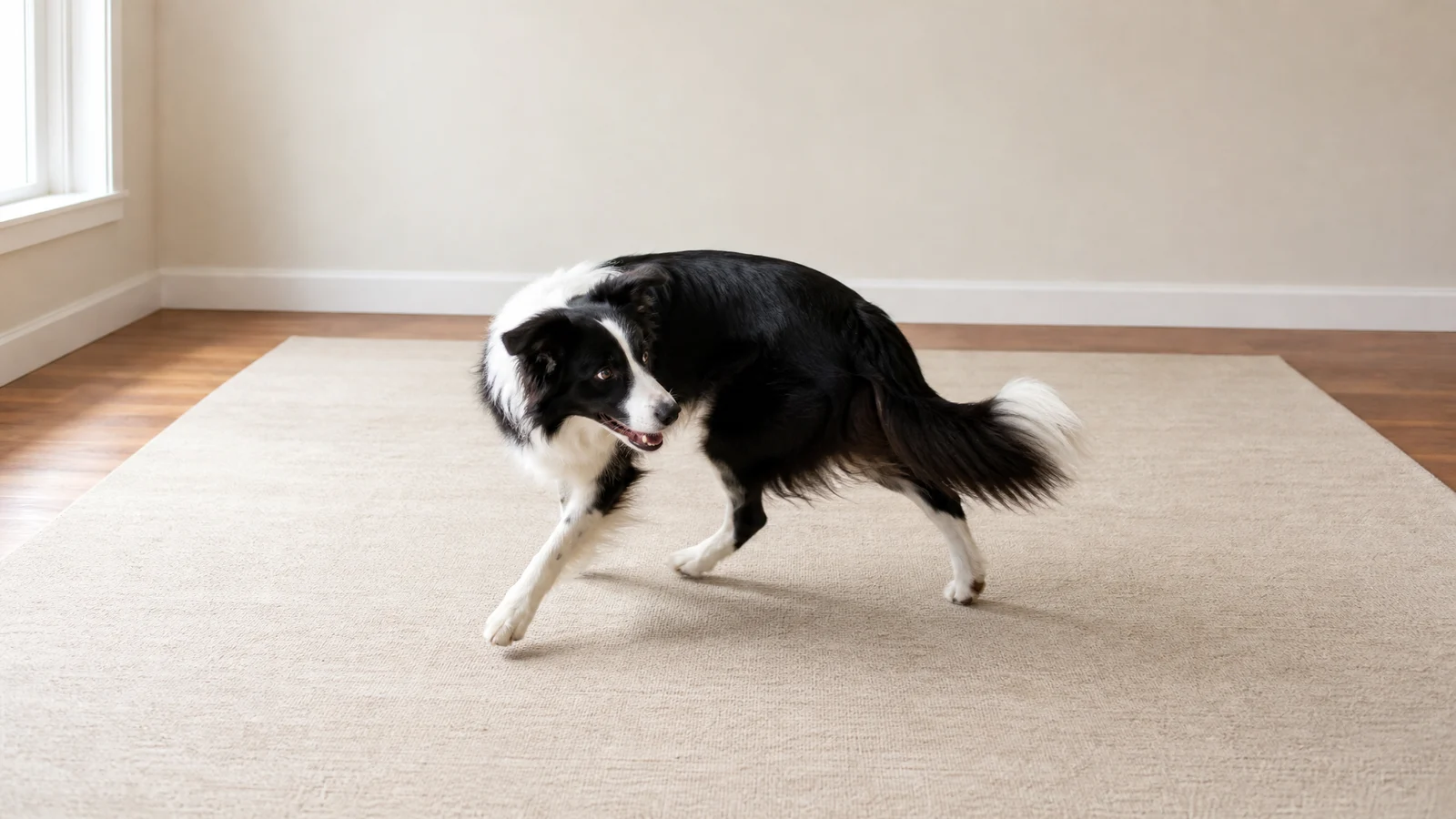
A spin looks like a small trick, but it teaches something bigger: how a cue travels from a treat in your hand to an empty hand, then to a small signal, and finally to a word. It also gives a dog a job to do in a quiet room. RSPCA says that dogs are intelligent animals and most love to learn, so training can be a great way of stopping them from getting bored.
You need a few small treats and floor space for one full turn. A spin is a short lesson and not a workout, so our Border Collie exercise guide covers daily activity. We'll show how one hand motion shrinks into a signal and then picks up a word, with your dog guided by a treat and never pushed.
Pick a Direction First to Teach a Border Collie to Spin
Decide on one direction first, because the whole lesson rides on it. Battersea's spin guide says to decide which way you want to teach your dog to spin first, "either to the left or to the right," and then "stick to this direction" until your dog has the hang of it. It also says to make sure your dog "doesn't have any medical or joint issues which might be made worse by the spinning."
Regular vet visits are the place to raise any worry about how your dog moves, and a dog who seems stiff or sore should be seen before any spin practice begins. Once you have the all-clear, set the stage with three things:
- A handful of soft, small treats your dog loves
- A floor with good grip, such as carpet or a rug, so paws do not slide
- A clear circle of space with no furniture, cables or other pets in the way
Lead a Border Collie Through the First Spin
Stand with your dog facing you and a treat in your hand. Let your dog sniff it, then guide the dog round with your hand. Pay the moment the circle is complete, and keep your own body still so the hand does the talking. The dog is always free to stop, which keeps the game friendly.
Should you pay for half a circle? Yes, at the start. Pay for what the dog gave you, then ask for a little more next time. A dog who gets paid for following the hand tends to keep following it, and a dog who is never paid has little reason to try.
AKC describes its spin this way: "Holding the treat in your hand, hold it above his nose and slowly move it in a large circle just above his head. He should follow your hand." It also advises that "after a few successful repetitions, use your hand motion without the treat so your dog does not become dependent on doing the trick based on whether he sees a visible treat."
Turn the Hand Into a Small Spin Signal
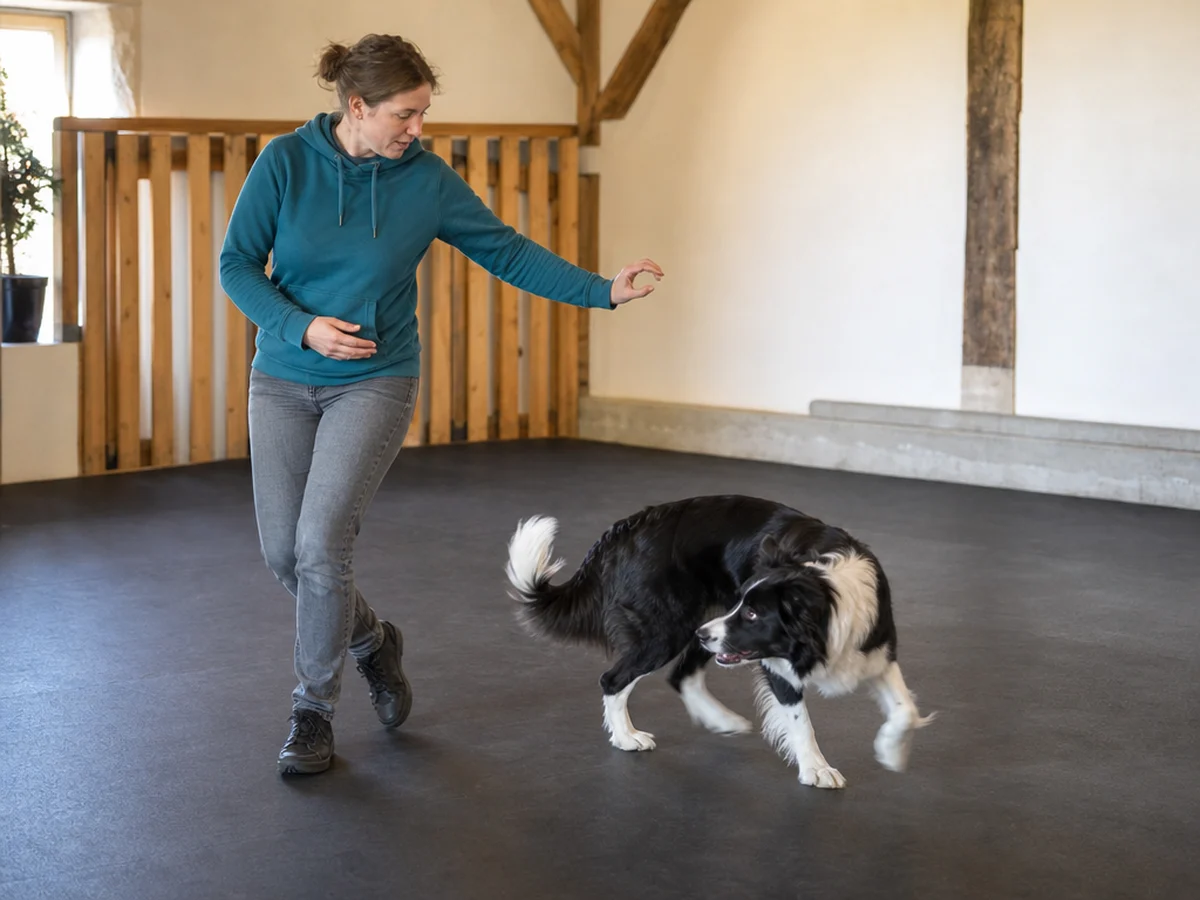
Once the dog follows an empty hand, the signal shrinks by changing one thing at a time. Keep the treat in your other hand and mark the finished circle with a word like "yes" before you pay. Then let the motion get smaller and quieter, bit by bit, until a flick of the fingers is enough. If the dog hesitates, make the motion a little bigger again and pay for that.
Keep the hand in the same spot relative to your body each time. A dog reads a hand that wanders as a different question, so a steady starting point makes the small version easier to recognize.
Does the other direction need its own lessons? Yes, treat it as a fresh start. Once the first direction is dependable, work through the same steps the other way, beginning again with the treat leading. Giving each direction its own build-up keeps both clear.
When to Teach a Border Collie to Spin on a Word
If a trick routine or sport is on your list, our Border Collie sports guide shows where such cues can lead. Until then, the word has one job: to predict the signal your dog already understands.
Why not say "spin" from the very first circle? Best Friends Animal Society says "When you begin training a new behavior, don't say anything." To teach a new verbal cue, it describes the process as "new cue, old cue": say "sit" (the new cue) and then give the hand signal to sit (the old cue).
For the spin, the word comes first, then your small signal, then the circle and the treat. Keep that order every time so the word becomes the thing your dog expects the signal to follow.
Teach a Border Collie to Spin With Hands Held Still
A word only counts once it works without help. Stand relaxed with your hands at your sides, say it once, and wait quietly. If the dog circles, pay well and celebrate. If the dog looks at your hands, go back to saying the word and then showing the signal for more rounds before testing again.
Test in the same quiet spot where you taught it, with the same treats ready. Keep each test brief and cheerful, and finish on a circle your dog does well. Change only one thing at a time after that, such as the room or how far you stand from your dog, so any hesitation tells you exactly which change was too big.
 BehaviorHow to Stop a Border Collie Pulling on the Leash
 Exercise and jobsIndoor Activities and Brain Games for a Border Collie
 Training basicsHow Smart Is a Border Collie? What Their Tenacity Demands