 Border Collie
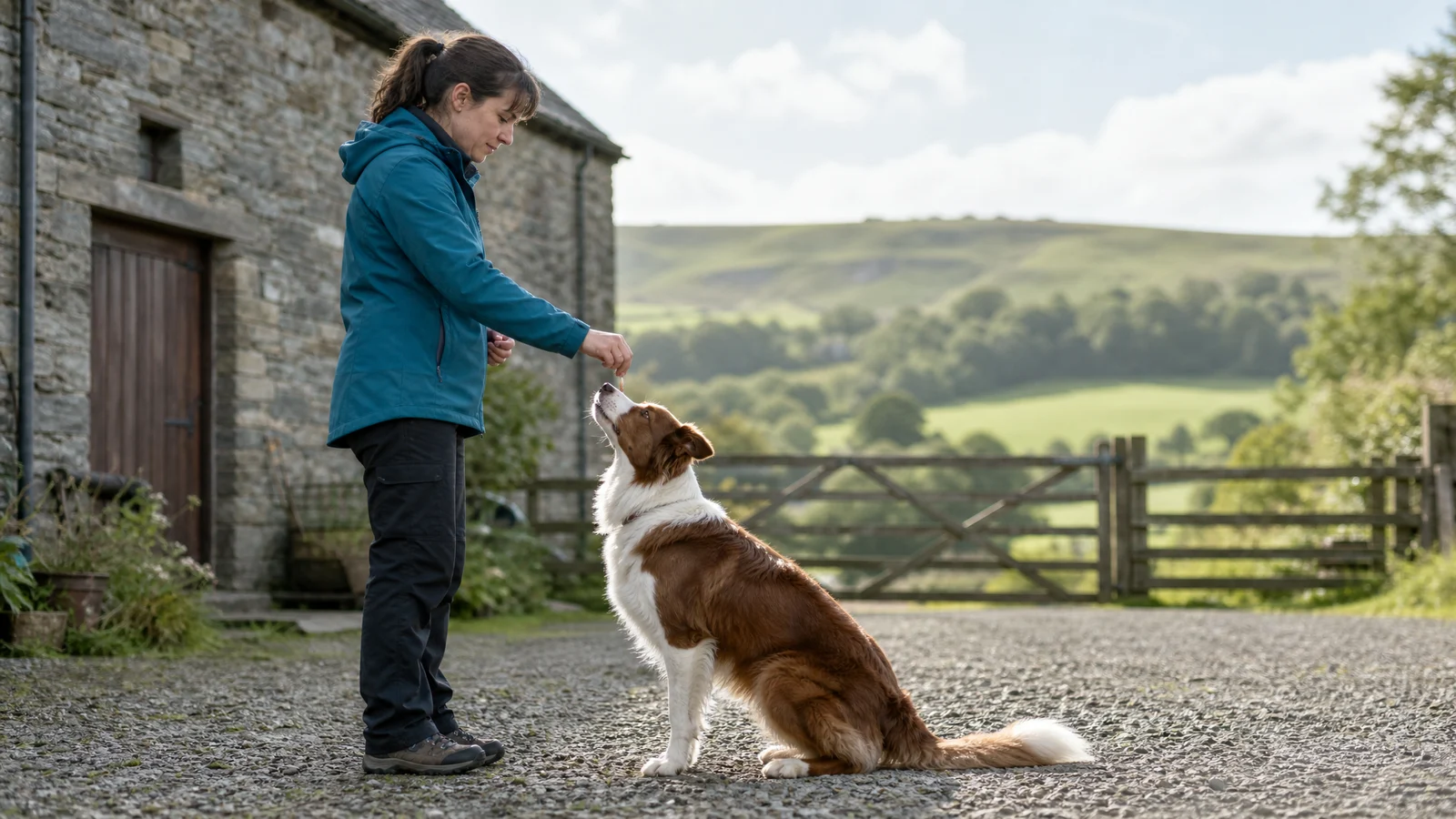
A dog who wants the treat in your hand may paw at it, nudge your elbow, hop up or circle behind you for a better angle. A sit is a simpler answer to teach them. It takes a floor, a handful of small treats and a few minutes, and nothing about it requires pushing the dog into position: they get there by following food or by offering the position on their own, and the treat arrives the moment their bottom touches down.
In this guide we teach the sit two ways, with a treat lure and by capturing a sit the dog already offers, so you can start from whatever your dog does now. Either way the finished sit looks the same: bottom on the floor, front feet planted, eyes on you, and a word of your choosing attached once the position is dependable.
Guide the First Border Collie Sit With a Treat
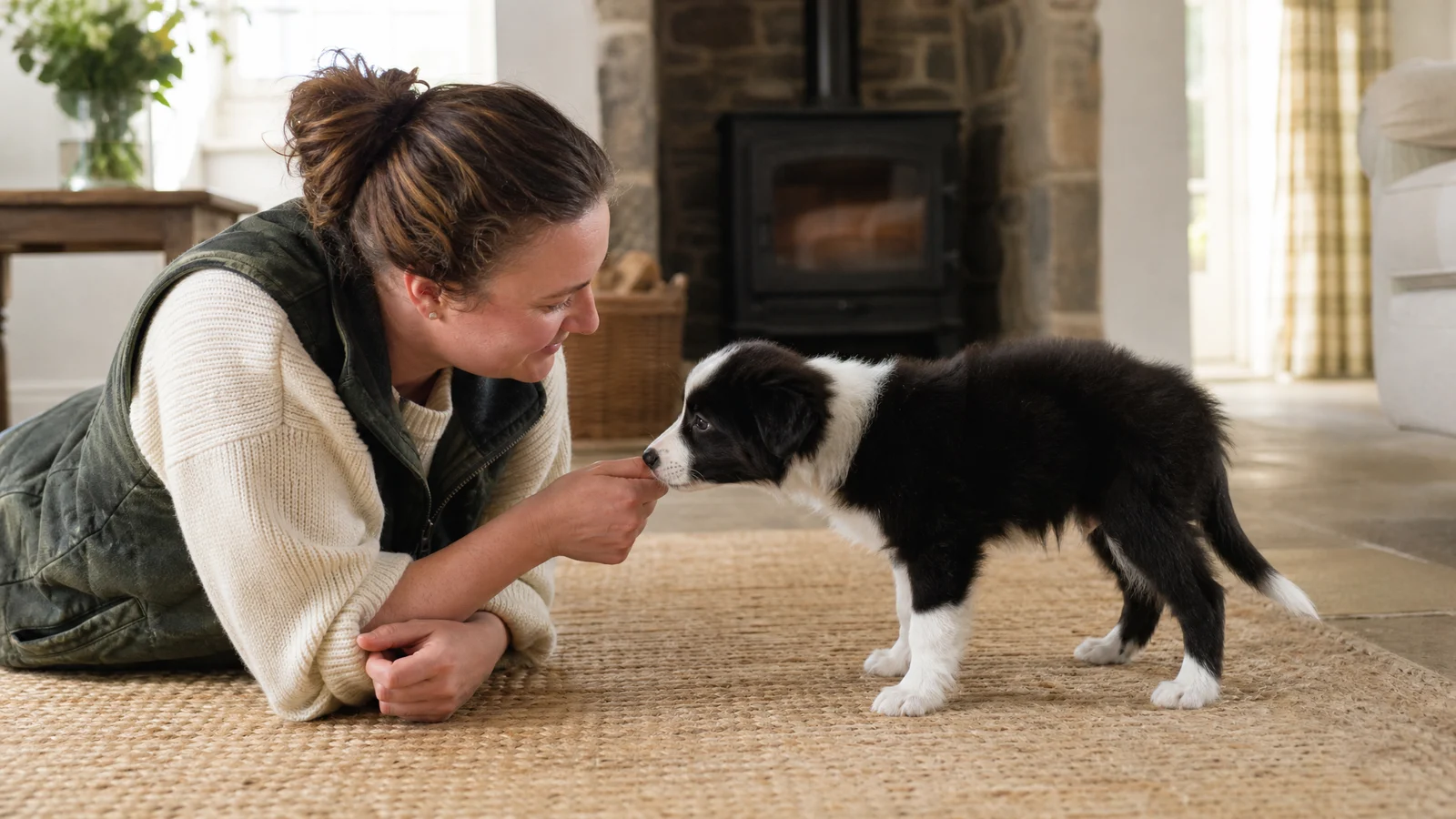
Pick a quiet room and a surface with good footing, since a dog on a slick floor will not want to fold their back legs. Hold a small, soft treat at your dog's nose without letting them take it. Then slide your hand slowly up and slightly back over their head, as if drawing a line toward the tail. The nose follows the food, the chin tips up and the bottom folds toward the floor.
The instant the bottom lands, say a short marker word such as "yes" and deliver the treat down low between the front paws. Step away so the dog stands, and repeat from the nose. Never press on the hips or back to hurry the fold. Regular vet visits are a good habit for every dog, and a sit that looks uncomfortable is worth mentioning at the next one.
What if the bottom will not go down? Check the footing first, then the height of your hand. A lure held too high makes a dog stretch up or jump, while one that moves too fast makes them back away instead of folding. Slow the hand, keep it close to the nose, and mark even a half-fold before asking for the full sit.
Capture a Border Collie Sit the Dog Already Offers
Some dogs sit on their own the moment you reach for the treat pouch. If yours does, there is no need to lure at all. Stand ready with treats, wait for the bottom to touch the floor, mark it and pay. A dog who keeps repeating the sit has made the connection, and you may start to see them drop into it before your hand moves.
Capture suits a dog who is already giving the sit and the lure suits one who is not. Mixing them is fine: lure the first few, then capture the ones that follow. Both routes arrive at one finished position, so the word in the next section works on either. Our Border Collie training guide shows where the sit fits among the first cues.
Add a Word to the Sit
Hold the word back until the sit arrives easily, because a word added too early gets attached to whatever the dog happens to be doing. Three checks tell you the sit is ready for one:
- The sit comes quickly on the lure, with no coaxing and no second try needed.
- The bottom is already on the floor before you deliver the treat, every time.
- The dog sits just as well in a second room, away from the spot where they first learned it.
Then say the word once, wait a beat, and show the hand movement. Over repeats the dog starts to answer the word before the hand has finished its job. Every sit ends on a release word, and teaching that word, along with holding a sit for any length of time, belongs to the Border Collie stay guide. Coming when called is a separate cue, taught in our Border Collie recall guide.
Why work on the sit, and what should pay for it? The RSPCA says teaching basic obedience such as sit, wait and coming back when called gives dogs the freedom to do things they like while being safe and under control. It also says to find out what your dog really likes, that favorite treats are often small pieces of meat or cheese, and that the better the reward, the more your dog will enjoy training.
Can an Older Border Collie Learn to Sit?
Age alone does not close the door on this lesson. Capture and lure both suit an older dog, with a rug or mat under their feet and a lure that stays low so they are not stretching up. Our Border Collie puppy timeline shows how training changes with age.
PDSA says, in its advice on teaching a dog to come when called, that it is best to start training when a dog is a puppy but never too late to begin teaching an older dog. That advice is about recall, so treat it as encouragement to start rather than a promise about any one cue.
A dog whose sitting has changed is a different case. If one who used to sit easily starts avoiding it, pause the lessons. For senior pets, the American Veterinary Medical Association lists difficulty sitting down or standing up among the signs of arthritis.
A Border Collie Sit When the Moment Gets Exciting
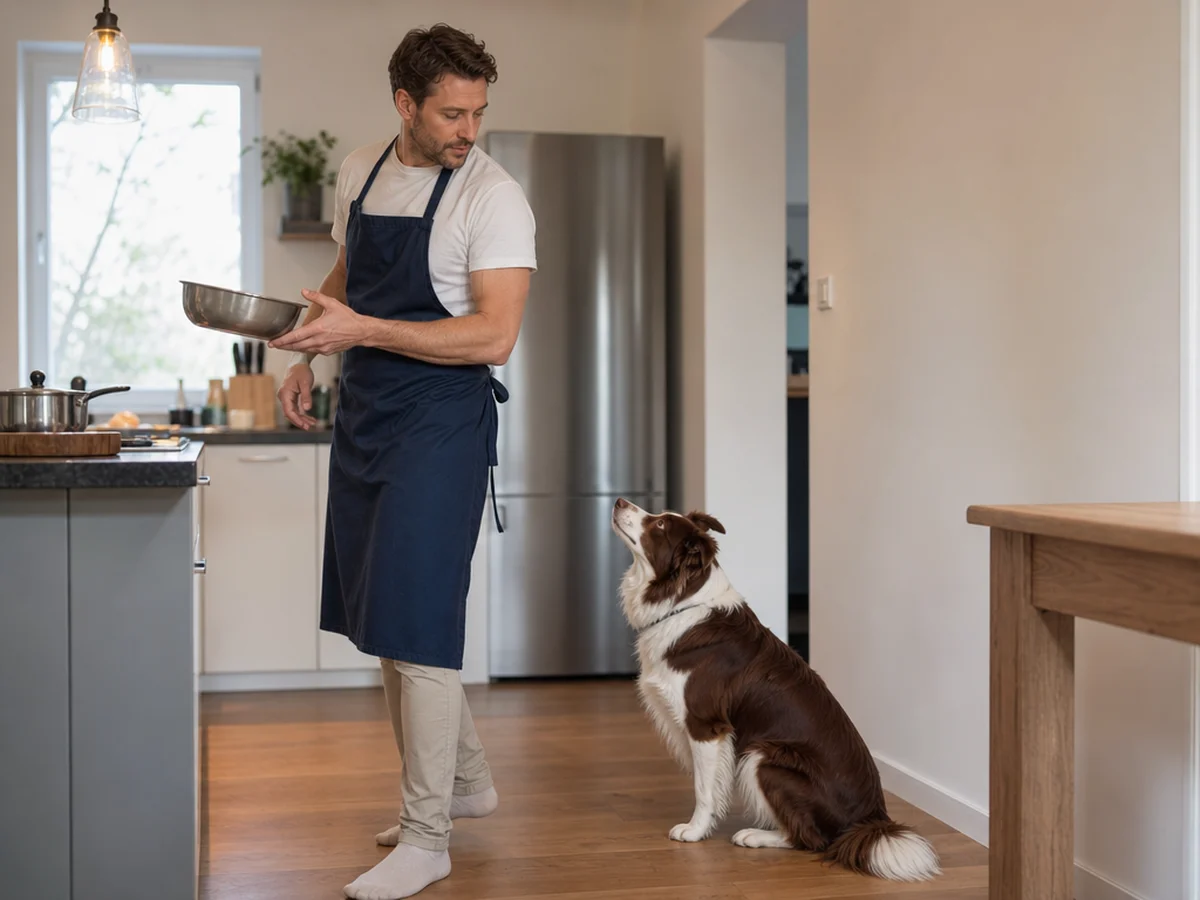
Cornell's veterinary college says keeping interactions with a puppy consistent helps them know what to expect, and a simple way to do that is to teach the puppy to sit before they get anything they want. For an adolescent puppy who reacts strangely to an exciting situation, it suggests a routine they know well, such as a sit or nose touch while standing quietly with you, followed by a treat and praise.
A sit your dog already knows is the tool for such a moment, so build it up in stages. Practice first where little is going on, then add a little more activity at a time: a toy bouncing across the floor, a vacuum running in the next room, a ball rolling past. The teenage Border Collie training guide picks up the adolescent years.
If the dog springs up, the step was too big. Pay a sit that actually happened, lower the excitement a notch and ask again. Sitting still in a lively moment is a harder version of the skill, so allow a few easy rounds before the next step up.
Fade the Treat From the Border Collie Sit Signal
Once the word works, the lure hand has done its job. Make the movement smaller a little at a time until a flat palm lifted a few inches is enough to signal the sit. If the dog hesitates, make the signal bigger for a round or two and then shrink it again.
Fade the food the same gradual way. Keep the treat in your pocket or a pouch instead of in the signaling hand, and pay from there after the sit lands. The reward stays the same, and only the place it comes from changes.
 BehaviorTraining an Older or Adopted Border Collie
 Exercise and jobsHow to Teach a Border Collie to Roll Over
 Puppy trainingBorder Collie Puppy: What to Expect and How to Start Training