 Border Collie
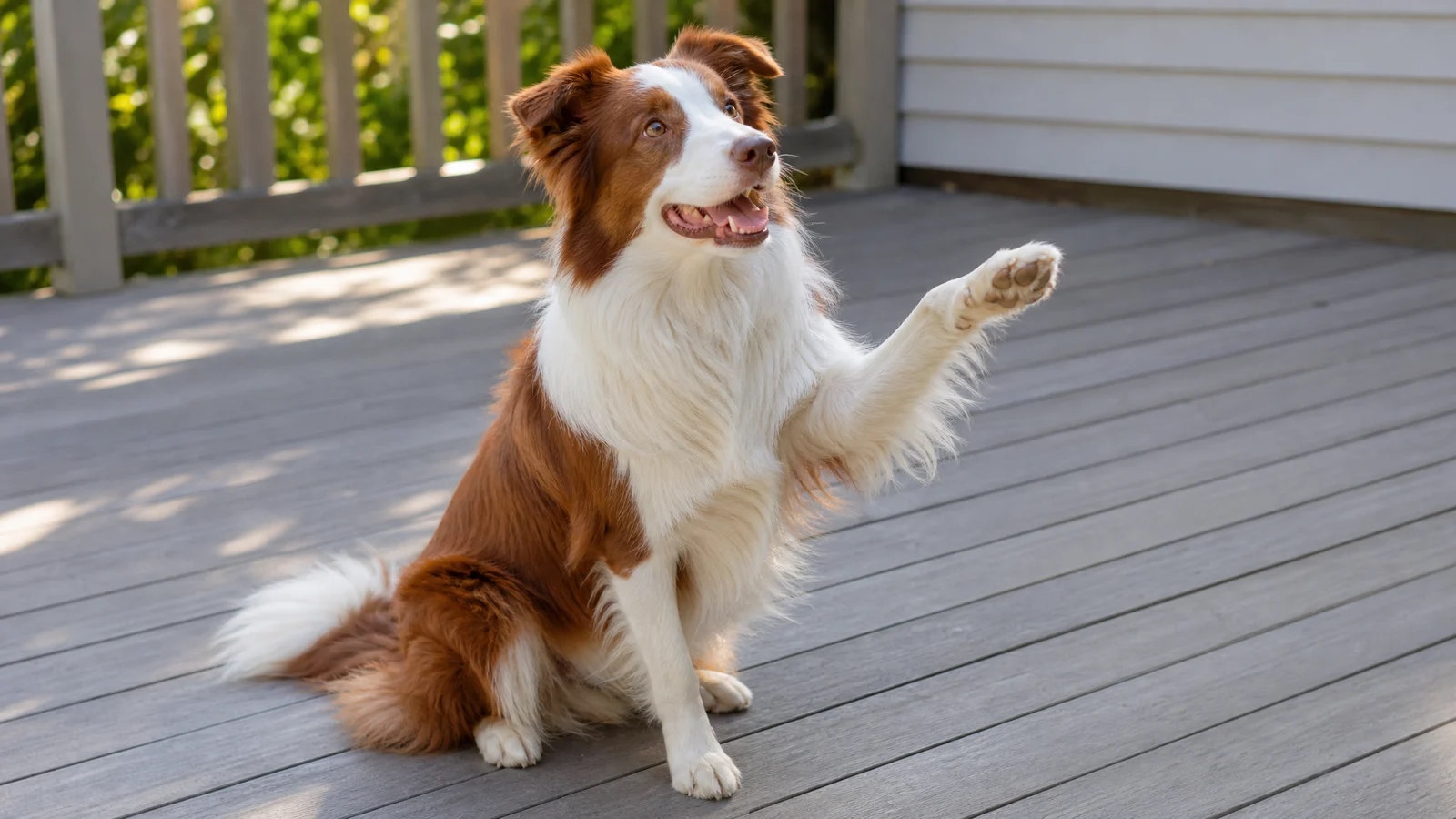
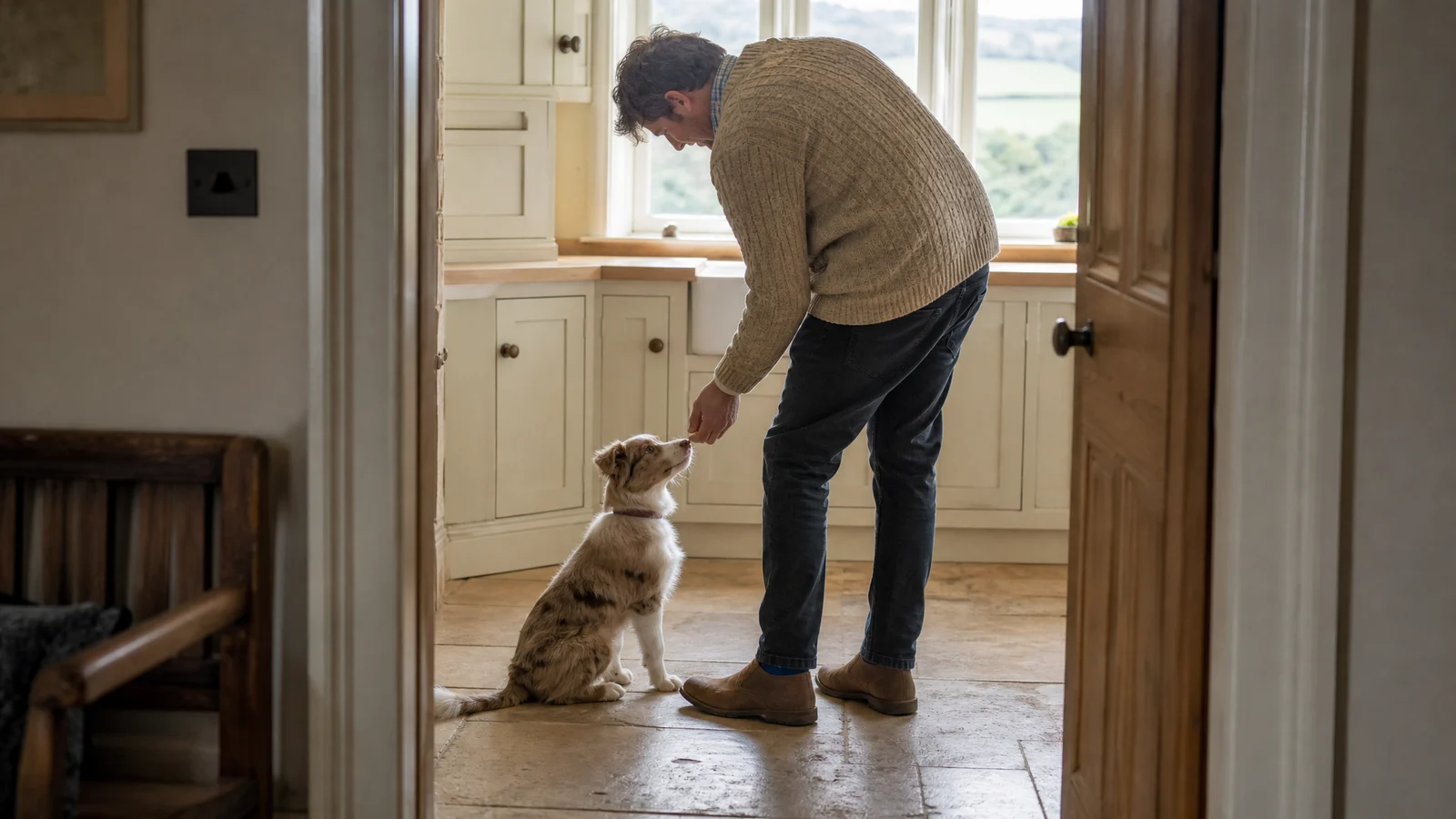
A paw that lands in your palm feels like a small win for both of you, and it only lasts as a trick when the dog decided to lift it. Nobody grabs a leg or pushes a paw into place. The dog does the lifting, and your job is to set up the moment and pay for it. That choice is what turns a cute accident into a trick the dog keeps offering.
The lesson starts with a treat in a closed hand and a dog who is already settled. Offering a paw as a trick is a different skill from accepting paw touch for trims and checks, which has its own plan elsewhere on this site.
In this article, the paw moves from a closed fist to a shake and then to a high five, with a plain answer on when the food can leave your hand. A spot with room to settle and a supply of tiny treats is all the setup you need.
Teach a Border Collie to Shake Starting From a Sit
Choose a quiet spot where the dog has room to get comfortable, and keep tiny treats within reach so every reward arrives the moment it is earned. Have a marker word or clicker ready, since this lesson uses a marker but does not teach one.
PDSA's paw guide opens with a sit: “Command your dog to sit. If they're already sitting, it'll be easier for your pooch to give paw.” It then has you hold a treat in a fist “near to your dog, so they can smell it,” and wait for the dog “to lift their paw in attempt to get the treat from your hand,” praising and rewarding “even if they only slightly lift their paw.”
The moment the paw leaves the floor, even a little, mark it and give the treat. Then wait for the dog to settle and present the fist again. Early lifts will be small and wobbly, and rewarding them is how a bigger, cleaner lift gets built.
Teach a Border Collie to Shake Using an Open Palm
When lifts show up again and again, slide your open palm under the paw as it rises so the paw lands on your hand. We keep one rule for every step of this trick: the dog places the paw, and we never pull, lift or position it. If no paw is offered, the rep simply ends, and the fist comes back when the dog is ready to try again.
Mark and reward the pieces you want, and let the rest pass without a marker. That is how the dog learns which part of the lift pays:
- Mark the paw rising toward your closed fist.
- Mark the paw landing in your open palm, then reward.
- Let a paw that drops before it touches your hand pass quietly.
- Let scratching at your hand pass as well, and offer the fist again once the dog is settled.
Which hand should the paw go to? Either one works. Pick one paw to begin with and always present your palm on the same side, so the picture stays clear. Once that side is reliable, teach the other paw from the fist stage in exactly the same way.
Regular vet visits are part of keeping any dog comfortable and healthy, and they are a good time to mention anything about the paws. If a paw lift ever looks uncomfortable or something changes suddenly, stop the lesson and ask your vet.
A paw offered for a trick is not agreement to being handled for trims or checks. Our Border Collie handling guide covers teaching those jobs separately, and the dog offers every touch there too.
Can You Teach a Border Collie to Shake Without Food?
At some point the closed fist stops being a hiding place for food and becomes a prompt. Once the paw comes up promptly and lands in the palm, you can start moving away from needing a treat in that hand.
Best Friends Animal Society writes this about its five basic dog training commands, not about paws: “Make sure you don’t get stuck in a rut of needing to have a treat in your hand before your dog responds to a cue.” Its fix is to “do the same motion with your hand without holding a treat,” and “That hand motion will become the signal that cues the dog to do the behavior.”
Carried over to the paw, offer the same closed fist with nothing in it and pay from your other hand or a treat pouch the instant the paw lands. Over time the fist can open into the palm, and that open palm alone becomes the signal. Keep paying every paw that lands while the signal gets lighter.
Picking a Shake Word and a High Five Height
Once an empty hand reliably brings the paw, the trick needs a name and a target height. The AKC Trick Dog evaluation guide defines Shake hands as the dog raising a paw “chest high” when the handler says “Shake,” “Paw,” or “Shake hands.” For the High five, it says the dog “raises one paw into the “high five” (chest height) position” when cued by the handler.
Should shake and high five share a word? Give each trick its own. The hand shape already tells the dog which one is coming, and two different words keep the pictures from blurring into one. Pick the word that suits you, say it as the paw is already on its way up, and let the dog's lift be what earns the treat.
Whoever asks for the trick in your home should use the same word and the same palm, so the dog never has to guess which version is wanted. For more ways to give a dog mental activity beyond one trick, see our Border Collie brain games guide.
Moving From a Shake to a High Five
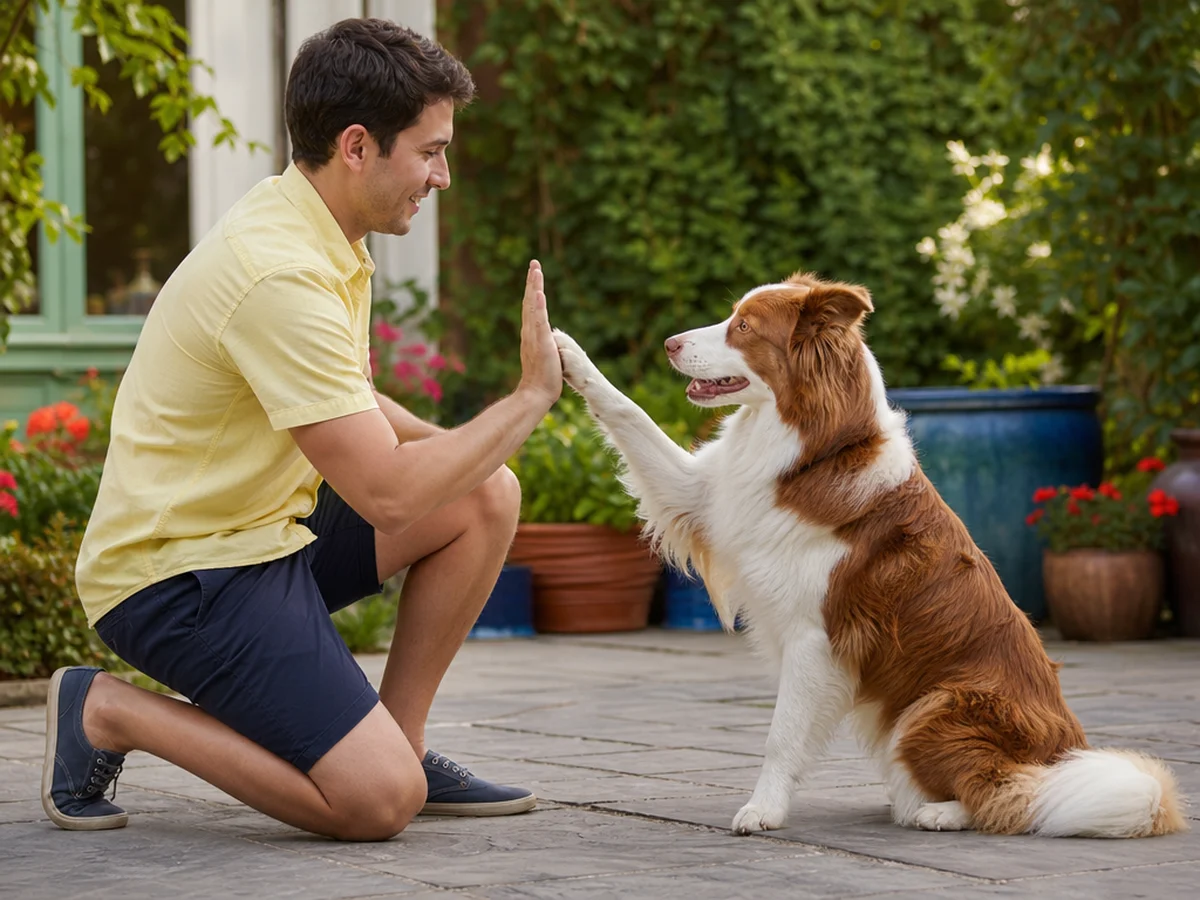
A high five uses a different hand shape. Hold your palm upright and facing the dog instead of flat and open beneath the paw. Start from a shake, then raise your palm a little between reps, paying only when the paw touches it, and use the high five word you chose while keeping the flat palm for shake.
Both tricks are meant as play. RSPCA ends its training tips with “Have fun” and says “training is a great way for you to bond with your dog!”
When the paw is reaching your upright palm, hold that palm still and let the dog bring the paw to it. Pay the contact, then end the rep while it is still easy, so the next one starts easy too.
 Training basicsHow to Teach a Border Collie to Heel
 Training basicsBorder Collie Temperament: What It Means for Training
 Puppy trainingBorder Collie Puppy at 4 to 6 Months: What Changes