 Border Collie
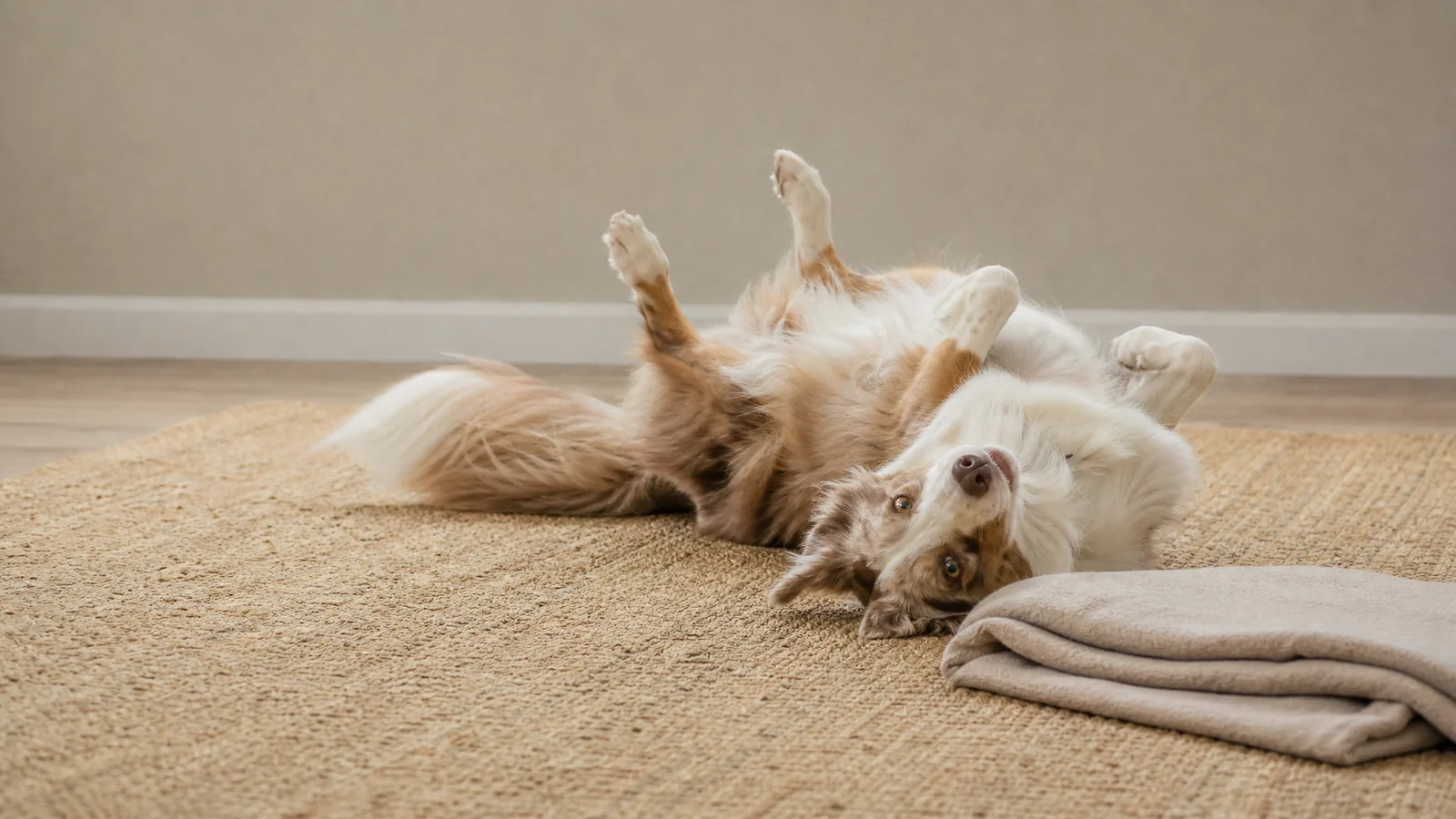
A finished roll over looks like this: your dog lies down, tips onto one side, passes over their back and ends flat on the other side, following a treat the whole way. Each of those positions can be rewarded on its own, so a lesson can end well at any of them. A pause on the side or the back is a complete result and not a half-finished one.
The trick is a chain of separate positions, which makes it easy to build in small pieces. You'll learn how to steer the lure, which stopping points count as a finished lesson, and how to add the cue. Some dogs stop at the side and stay there, and that is a perfectly good place for the trick to end.
Border Collie Roll Over Is Three Positions in a Row
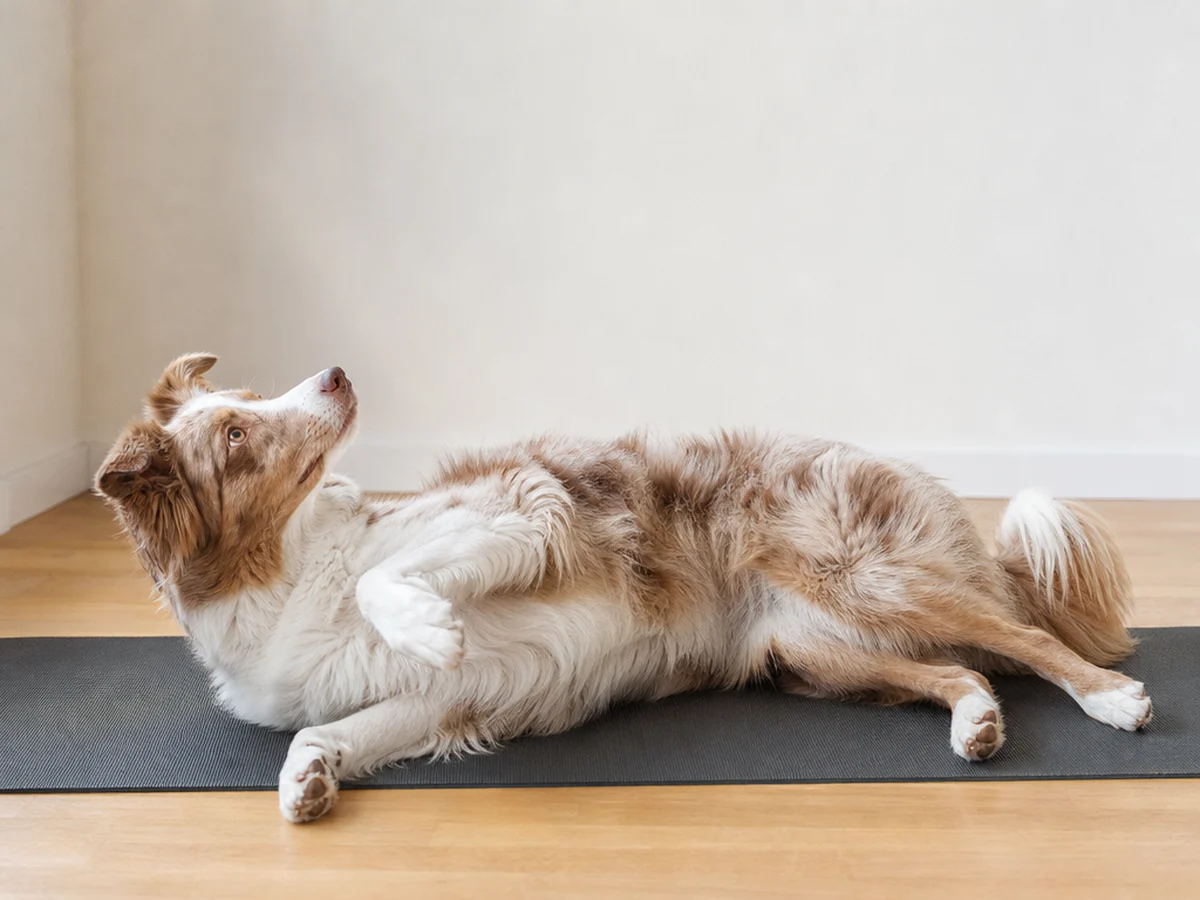
A full roll over passes through the side, the back and then the other side, one after another. Each position is a separate thing for the dog to get comfortable with, so it helps to think of the trick as a chain you can stop building at any link. Your hand steers the treat, and your dog's body follows it around.
The chain begins from a down, which is why we assume that cue is already in place. If your dog pops up or sits partway through, simply reset and lure the down again. Keep the treat small and the hand slow enough that their nose never loses it.
The American Kennel Club says it is helpful if a dog knows the "down" cue before you start teaching a roll over. It describes holding a small, yummy treat near the dog's nose and moving your hand from their nose toward their shoulder, luring them to roll flat on their side, and to praise and treat each time they follow the treat and lie flat with their head on the floor.
Stopping Points That Still Count as a Roll Over
Every position along the chain is worth paying for, and any one of them can be where a particular dog's trick ends. We treat these as finished lessons rather than failed attempts at the whole turn.
- Side-lying. The dog lies flat on one side with their head down and takes the treat there. This is a complete position you can pay for and give a cue of its own.
- The back, with a pause. The dog's shoulders tip over and they rest on their back for a moment while the treat is delivered, then return upright. Pay while they are in the position so the position itself earns the reward.
- The full roll. The dog continues over to the other side and ends lying flat again. Reward once the turn is complete, then let them get up on their own.
What if a dog keeps getting up as soon as they tip toward their back? The step was probably a little too big. Go back to the last position they held comfortably and pay there several times, then ask for a slightly smaller tip than the one that made them move. Small, frequent rewards at the easier point build the willingness to go further.
Adding the Roll Over Cue and Fading the Lure
The cue word comes late. Until your dog follows the treat all the way around without hesitating, saying it only attaches the word to a half-turn or a pause. Wait for a smooth, relaxed turn first, and then the word has something clear to mean.
Should the cue come before or during the lure? Before it, once the motion is reliable. Say the word once, give your dog a moment to start moving, and only then use your hand if they need it. Repeating the word over and over turns it into background noise instead of a request.
Fading the lure happens a little at a time. Make the hand motion smaller, then keep the treat hidden in your hand rather than at your dog's nose, and finally deliver the reward after the roll instead of during it. If your dog loses the turn at any stage, bring the bigger hand motion back for a few repetitions and fade again. Keep paying along the way, because the reward is what keeps the trick worth doing.
Once the cue works beside you, change where you kneel and which side you start from. A trick that only happens in one corner of the living room is not finished yet.
A Soft Spot for Border Collie Roll Over Practice
Choose a surface that is forgiving under the back and hips, such as a folded blanket, a yoga mat or a rug laid over a slick floor. On a hard or slippery surface a lure can turn into a skid, and a dog who slides once may not want to go back there. Clear the space around them as well, so a turning body does not bump a table leg or a toy, and keep other pets out of the room while you work.
Check your own position too. If you have to reach awkwardly over the dog, move to where your hand can travel in an easy arc. A smooth lure is easier to follow than a jerky one.
Regular vet visits are part of keeping any dog comfortable enough to train, and a roll over is a natural time to notice how they get down to the floor and up again. If your dog avoids lying on their side, seems stiff, or stops at the same point every time, pause the trick and ask your vet before trying again.
A Child's Turn at the Roll Over Cue
Can a child teach a dog to roll over? A child can be the one who gives the cue once your dog already rolls over for you. The adult builds the down, the lure path and the cue, and then the child asks for a roll over the dog already knows, hands over the treat afterward and celebrates. The early positions, where the dog is still working out what the hand means, stay with the adult.
The RSPCA lists this among its advice on children and dogs: teach your child how to play nicely with your dog, and your child can teach your dog some really fun tricks like shake a paw, play roll-over, for example.
Border Collie Roll Over Alternatives Worth Teaching
Some dogs will not enjoy the back position however gently it is built, and that is a fine outcome. The side-lying stage can stand as its own trick, and plenty of other behaviors earn the same cheerful treat and praise without asking a dog to lie on their back.
When the goal is more mental work rather than another trick, our Border Collie brain work guide covers ways to keep a dog's mind busy that need no rolling at all.
For a quick swap, a hand target works well, where your dog touches their nose to your palm for a treat. It uses the same follow-the-hand skill as the lure. A settle on a mat is another, asking for a calm down on a favorite spot instead of a turn.
 Puppy trainingBorder Collie Puppy: What to Expect and How to Start Training
 Training basicsHow to Teach a Border Collie to Lie Down
 Puppy trainingHow to Stop Border Collie Puppy Biting