 Border Collie
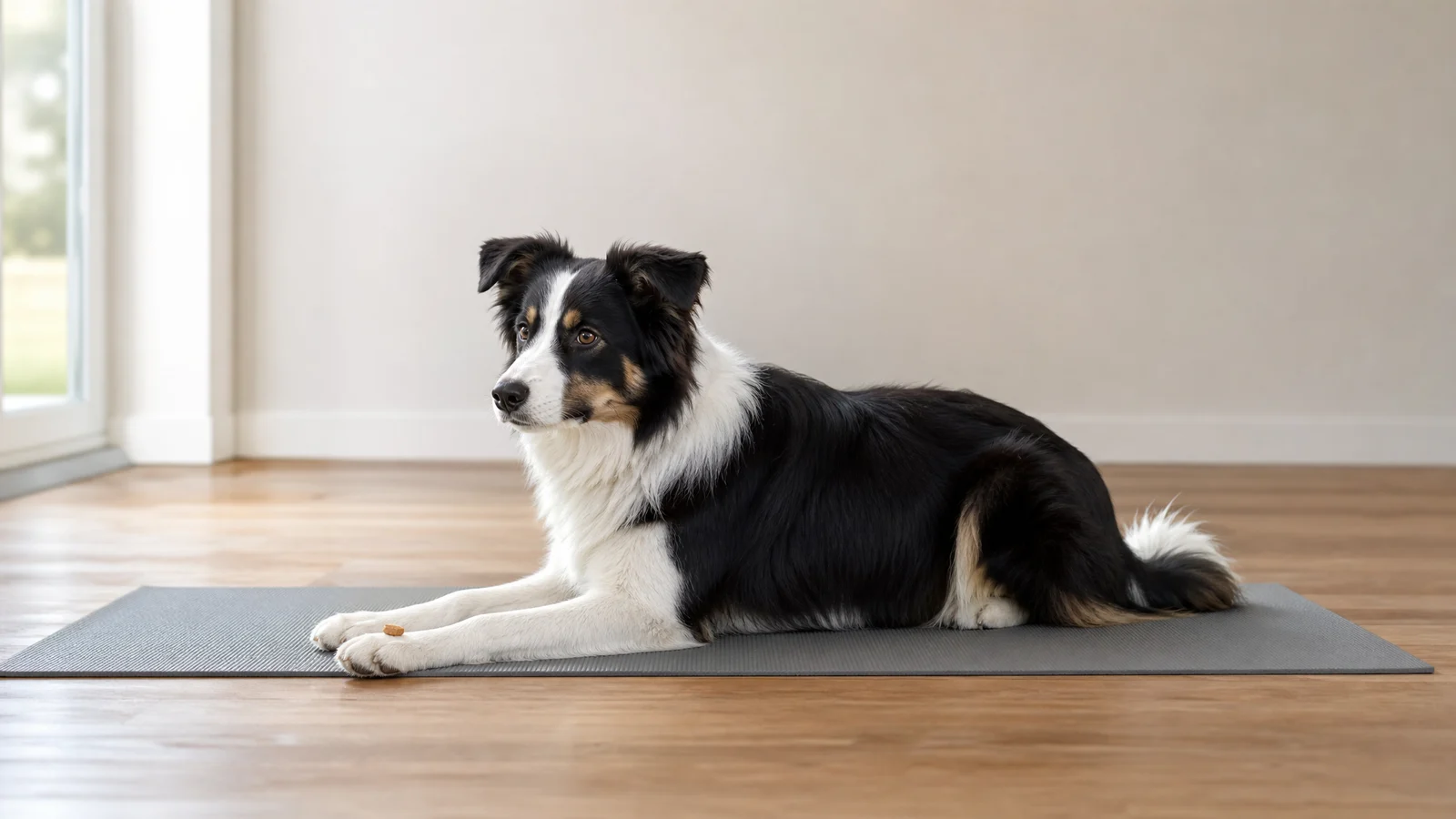
A lie-down puts a dog's whole body on the floor, so the floor is part of the lesson before any treat comes out. The short answer is to lure the nose straight down between the front paws, slide the treat forward along the ground until the elbows fold, and pay while the dog is still low. We never press or pull a dog into position. We'll cover the drop itself in some detail, because a down can stall halfway even when the nose is already low.
This guide assumes your dog already sits on cue, since the sit is where the first lure starts. If it still wobbles, strengthen it first. Then plan on calm sessions in a room your dog knows, with small treats in your pocket and a level surface underfoot.
Prepare the Floor for Border Collie Lie Down Practice
Choose the room before the treats come out. A dog lowering into a down on tile or polished wood may feel their paws slide, and a dog who feels unsteady may pop straight back up. A rug, a yoga mat or a carpeted corner gives the paws something to hold and the elbows something to settle on.
Keep the first sessions plain: one person, one familiar room, treats small enough to swallow in a second, and a sit that is already easy. Anything that makes your dog follow you around the room on their feet works against a movement that is all about getting low.
On the subject of footing, the RSPCA says that smooth, slippery floors can be difficult for older dogs to walk on, so it advises putting a rug or carpet down to give them something to grip.
Lure the Border Collie Down in Two Movements
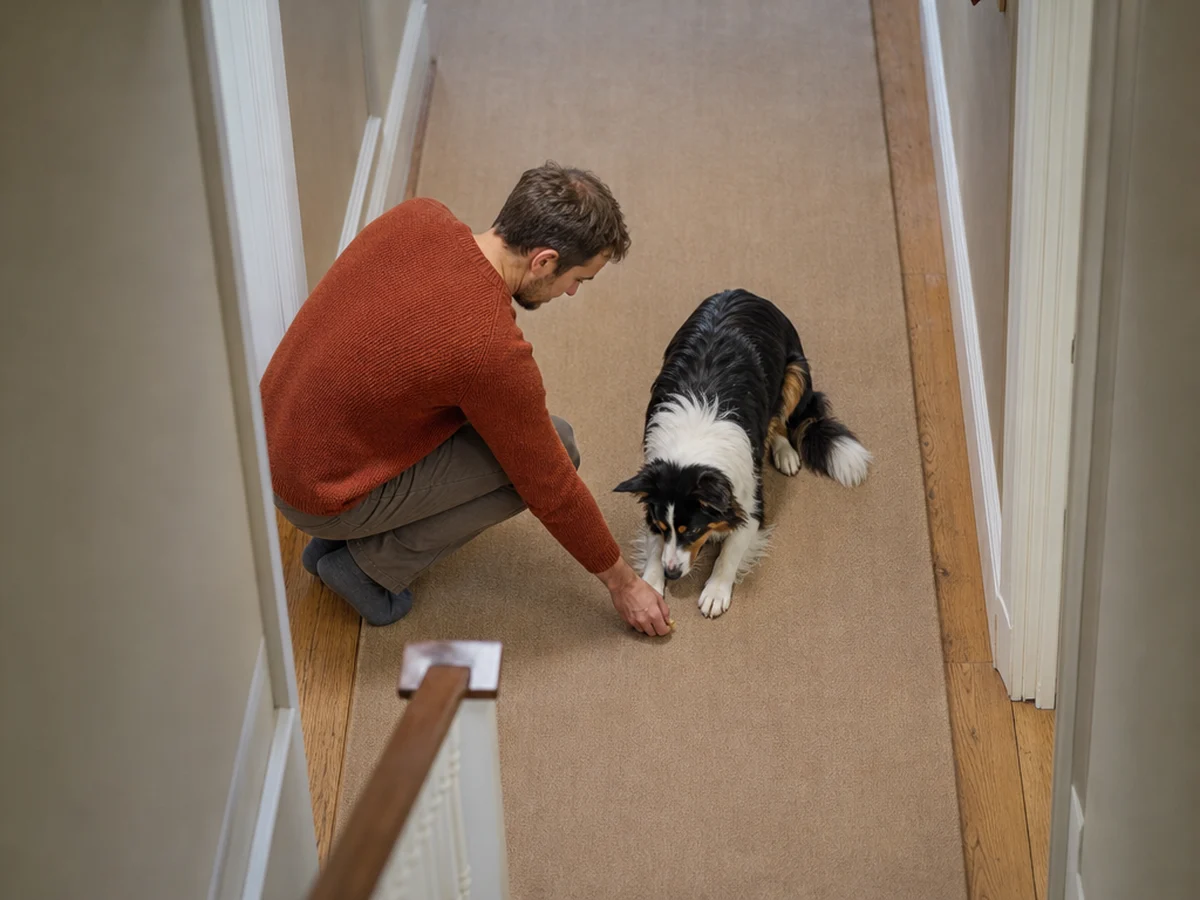
Start with your dog sitting in front of you and a treat held at their nose. Lower it straight down between the front paws, slowly enough that the nose follows rather than chases. Mark and pay any real lowering of the head at first, even a small one, because the head has to go down before the body can.
Then comes the second movement. Slide the treat forward along the floor, away from the paws, so your dog has to fold the elbows to keep following it. Mark the instant the elbows touch the ground and pay right there. Never press on the shoulders or back and never pull the front legs out, because a down your dog chooses is the only kind worth building.
If the head dips but the elbows stay high, pay the dip anyway and lure a little lower and a little further out next time. Rushing the slide can produce a dog who stands and steps forward instead.
Can a Border Collie Lie Down From Standing?
Yes. A down from a stand is a useful second route, and it is worth adding once the sit-based version is smooth. Ask for a stand, then use the same two movements: down between the paws, then forward along the floor. If your dog sits on the way down, mark and pay that, then try the lure again from the stand.
Battersea's lie-down guide says that if sitting isn't easy for a dog, you can start from a standing position: lure the nose toward the floor and hold your hand still, and many dogs will naturally fold into a down. It adds that hand movements should be slow and steady, because if you move too quickly, most dogs will simply step forward or backward. If a dog continues to look uncomfortable, it says to speak to your vet.
Pay the Border Collie Lie-Down at Floor Level
The marker lands when the elbows touch, and the treat is delivered to the floor between the front paws. A treat held high can invite a dog to stand up for it, while one placed low lets the head stay down. Once the movement is smooth, say the word down once before the lure begins, then lure and pay as before.
Does it matter which way the hips roll? Not for this cue. Some dogs tuck both back legs to one side and others stay square on their haunches, and either counts as long as the elbows and belly are on the floor.
Holding the position and the word that ends it are the stay lesson, so for now it is fine if your dog pops up after the treat. Pay again if they drop back into position, since the first goal here is only the movement.
Fixes for a Half-Finished Border Collie Down
A stalled down is easiest to fix by looking at what the body is doing, then changing one thing about the lure or the floor. Change only that one thing before the next try.
What if the treat does not seem to matter? Switch to something softer and more fragrant, work before a meal rather than after one, and end the session while your dog is still keen. A dog who is not interested in the lure will not follow it down.
- Elbows stay up while the nose is low: shorten the slide and pay the dip before asking for more.
- Your dog stands to follow the treat: slow the slide right down and mark earlier.
- Your dog sits back up or backs away: the treat traveled too far toward them, so keep the slide pointed away from their body.
- The paws skate on the floor: go back to the floor section and change the surface.
Regular vet visits are a good moment to mention it if lying down seems to bother your dog, and our Border Collie vet handling guide helps make those visits easier.
Putting the Border Collie Lie-Down to Work
Once the down arrives on the word alone, it becomes a position your dog can be paid in and a pause between other exercises. For longer, more relaxed lying, such as on a mat, our Border Collie settle guide teaches the voluntary relaxation that this page leaves out.
A study published in PLOS ONE looked at dog training schools near Porto, Portugal. Eight schools were contacted and seven agreed to take part, and the authors report that the type of behaviors trained was fairly standard across the schools and included teaching the dog to sit, lie down, stay and come when called.
Lying down inside a crate is its own job, and our Border Collie crate guide covers the crate itself. PDSA advises giving extra treats if a dog shows calm behavior like sitting or lying down inside the crate.
 Puppy trainingHow to Stop Border Collie Puppy Biting
 Exercise and jobsHow to Teach a Border Collie to Weave Through Your Legs
 Training basicsClicker Training a Border Collie