 Border Collie
Once an item is in a dog's mouth, the moment for leave it has already passed. The lesson works earlier, while the dog is looking at a treat, a toy or something dropped and has not yet taken it. If it has been taken, that is a trade, and our Border Collie food-guarding and trade guide covers it, along with guarding.
The teaching itself is short to describe. A plain treat stays in a closed hand while the dog works out that turning away is what earns a better one from the other hand, and the cue word is added only after the turn is quick. The practice items, the word and where it leads are all set out further down this page.
Start Border Collie Leave It With a Closed Hand
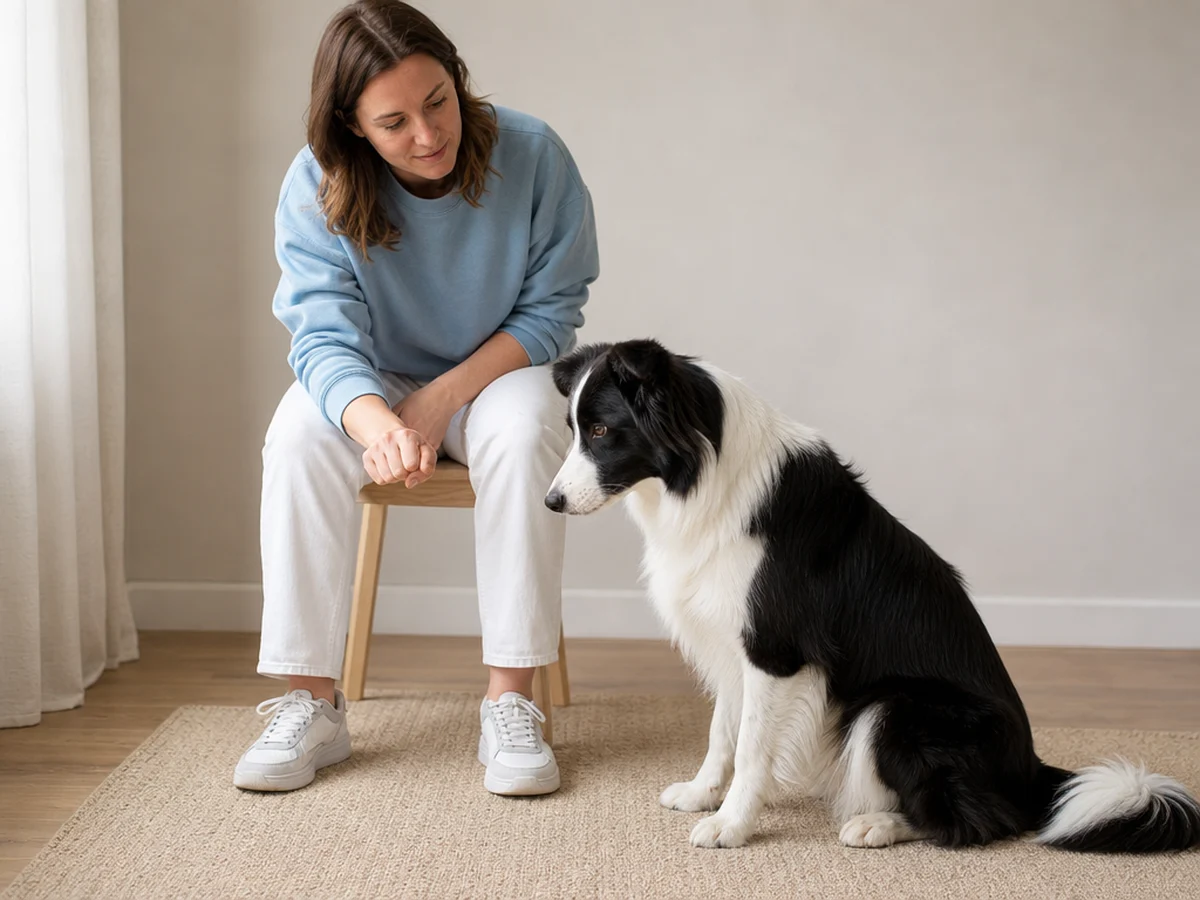
Hold one plain treat in a closed fist at the height of the dog's nose and keep the hand still. The dog will sniff, lick and nudge the fist, and none of that earns anything. The moment the nose or head moves away from the hand, even slightly, mark it with a short word such as "yes" and bring a better treat to the dog's mouth with the other hand. The closed hand does not open, and the dog never gets what was inside it.
In its page on dogs eating poo, PDSA is writing about stool eating, not about leave-it lessons, and its advice there is not to punish your dog or shout at them, because this will be unsuccessful and confusing.
The nose will not leave the fist. Now what? Keep the hand quiet and give the dog a moment. If the nose is still there, put a plainer treat inside for the next try, or hold the fist a little lower and further from the face. Then go back to marking the first move away and paying from the other hand.
Keep the first few repetitions brief. A dog who is still interested at the end of a lesson is easier to start again later than one who has wandered off.
Make the Reward Beat the Item in Border Collie Leave It
The dog turns away from something they want, so what they turn toward has to be worth more. Pay from the other hand, right at the dog's mouth, as soon as the mark is out. The treat in the closed hand stays an ordinary one, and the treat you pay with is better: softer, smellier or simply less usual.
The treat under your hand stays there or goes back in your pocket, and the payment is always a different item. A fist that sometimes opens teaches the dog to wait it out, not to turn away.
Where should the paying hand be before the mark? Out of sight. Pay within a moment of the mark, and keep that hand behind you or at your side until the mark comes, so the dog has nothing to follow but the closed fist.
Best Friends' leave-it guide says: "When rewarding with a treat, make sure it is something good, not plain old kibble." It also says that a moment of praise or play with a toy can be just as effective as a treat, and suggests squeaking a favorite toy and playing for a moment when the dog leaves the other item of interest.
Say Leave It First, Then Show the Hand
Once the turn comes fast, give the lesson a name. Say "leave it" once, in an ordinary voice, a beat before the hand closes over the treat, then wait. The dog turns, you mark, and you pay from the other hand. If the nose is already on the item when the word comes, the word came late, so count that try as a plain closed-hand try and say the word sooner next time.
Wait until the turn has come quickly several tries in a row, with both the closed hand and the treat on the floor, before the word enters at all. Until then, keep the lessons quiet and let the turn itself be what earns the pay. Calling the dog to you is a different cue with its own steps, which our Border Collie recall guide lays out.
PetMD's article on dogs who eat stool says that some people are successful by teaching their dogs a "leave it" cue and then a "come" or automatic "sit," using positive reinforcement. That is PetMD's statement about stool eating, not a complete leave-it lesson.
Choosing Practice Items for Border Collie Leave It
Pick practice items that are ordinary and harmless, such as a plain treat or a soft toy. Anything that could hurt the dog if it were swallowed has no place in a practice session. A dog who starts picking up or swallowing objects they used to ignore is worth mentioning at regular veterinary visits, and if household things keep ending up in a mouth, our Border Collie chewing guide has the longer answer.
On its page about stopping a dog's chewing, Humane World for Animals says that if you don't want it in your dog's mouth, don't make it available, and to keep clothing, shoes, books, trash, eyeglasses and remote controls out of your dog's reach.
Move Leave It From Your Hand to the Floor
Once the closed hand works, the practice items can start moving out of your hand. Work down this list one step at a time, and stay on a step until the turn comes quickly:
- A treat on the floor under a flat hand, with the fingers over it, so the dog can see it but cannot reach it.
- A treat on the floor beside your hand, with the hand ready to slide over it the moment the dog leans in.
- A soft toy lying still a step away, with you standing between the dog and the toy.
- A treat dropped from about waist height, with a hand or foot ready to cover it if the dog dives.
What if the dog gets the item first? Say nothing and carry on calmly. Next time, cover the treat sooner or go back to the step before, so the dog can earn the turn instead of racing for the item. Nothing in this lesson involves reaching into a mouth.
 Training basicsHow to Teach a Border Collie to Stay
 BehaviorBorder Collie at 1 Year and Up: When Do They Calm Down?
 Training basicsAre Border Collies Easy to Train? Smart or Stubborn