 Border Collie
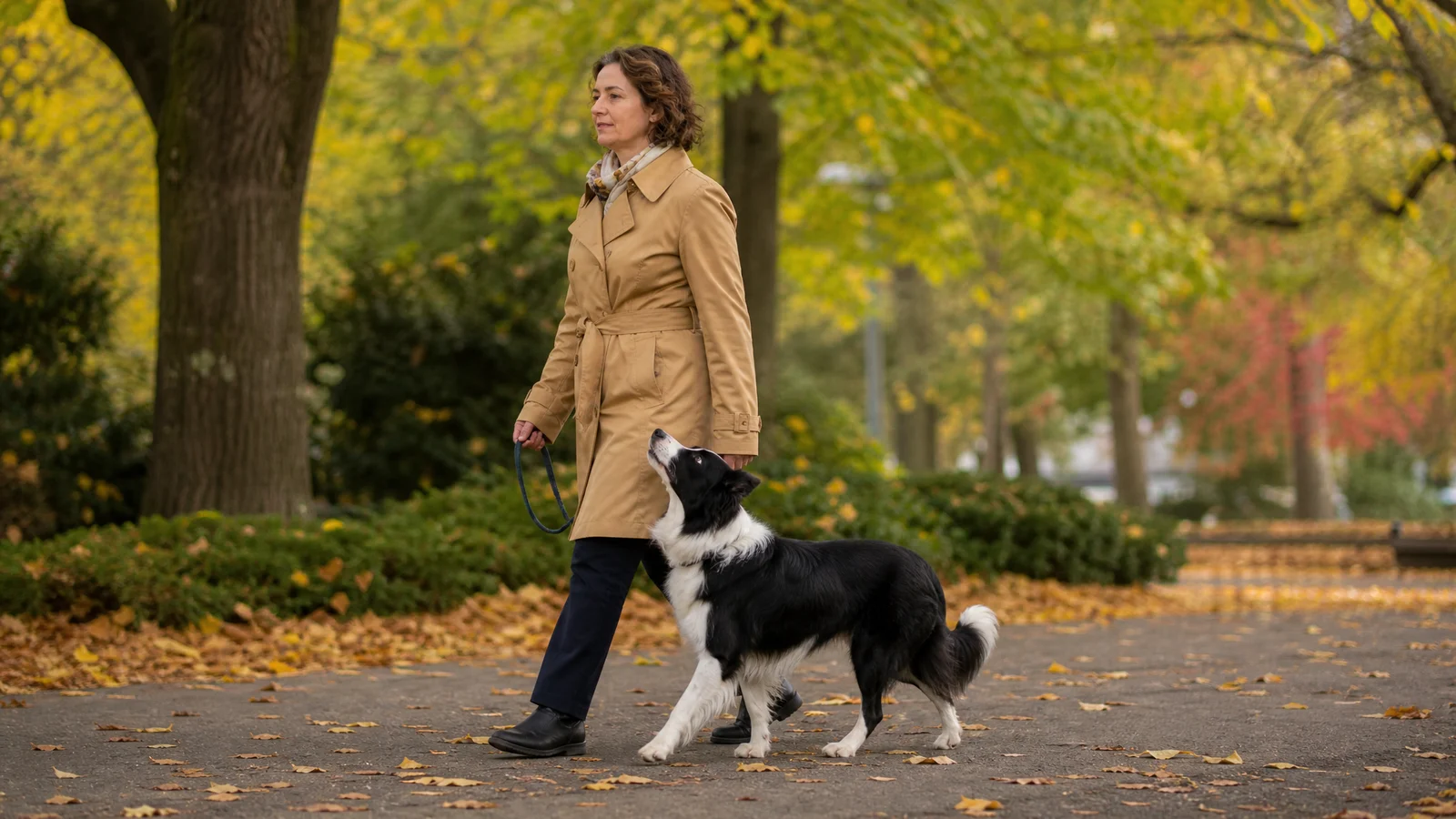
Heel is a small, exact job: a precise place beside your leg, held for a short stretch before your dog goes back to sniffing and wandering. For a Border Collie, that kind of structured task fits the breed's profile. The American Kennel Club describes the breed as highly intelligent and highly trainable, and says obedience that starts early and continues throughout life provides needed mental stimulation.
Below, you'll find how to mark and pay the position, a table of four short passes from standing still to a single turn, and answers to three snags that tend to show up mid-lesson. We keep each lesson brief and exact, because the aim is a position your dog can offer on purpose, not a long march.
What Heel Asks of a Border Collie
In our teaching, heel means your dog stands or walks with their shoulder near your leg, facing the same way you are, for as long as you ask and not a step longer. Pick one side and stay with it, because switching sides mid-lesson blurs the picture. Pick one cue word too. We use the word heel, but any short, distinct word works as long as it never doubles as something else. Add a separate release word so your dog knows when the job is over.
This is different from a relaxed neighborhood walk. On an ordinary stroll your dog can sniff, drift and pause, and the goal is simply a slack leash, which our Border Collie loose-leash guide covers in full. Heel is the brief, exact version you switch on for a doorway, a busy sidewalk or any short stretch where you want your dog close, then switch off with the release word.
Because the position is so specific, we teach it in tiny pieces. Everything starts indoors, where nothing competes for your dog's attention.
Mark and Pay the Heel Beside Your Leg
Reward-based training uses the same simple building blocks every time. The American Veterinary Society of Animal Behavior describes trainers using a verbal or visual cue to request a behavior, a clicker or verbal marker to mark it, and treats, toys or other reinforcers to reward it. For heel, the cue is your word, the marker is a click or a crisp "yes," and the reinforcer is a small treat.
Where the treat lands matters as much as when. We deliver it at your dog's chest, right beside your leg, so the position itself is what gets paid. A treat held out in front or tossed ahead invites your dog to leave the spot you are trying to teach. Three setup habits make that easier:
- Pick your heel side and deliver every treat with the hand on that side, down by your leg, so payment always arrives in the same place.
- Keep treats in a pocket or pouch rather than in your fist, so the hand you reward with stays empty until the moment you mark.
- Start in a quiet room your dog already knows, with the leash on but loose, so the only thing worth working for is the position.
Teach Border Collie Heel in Four Passes
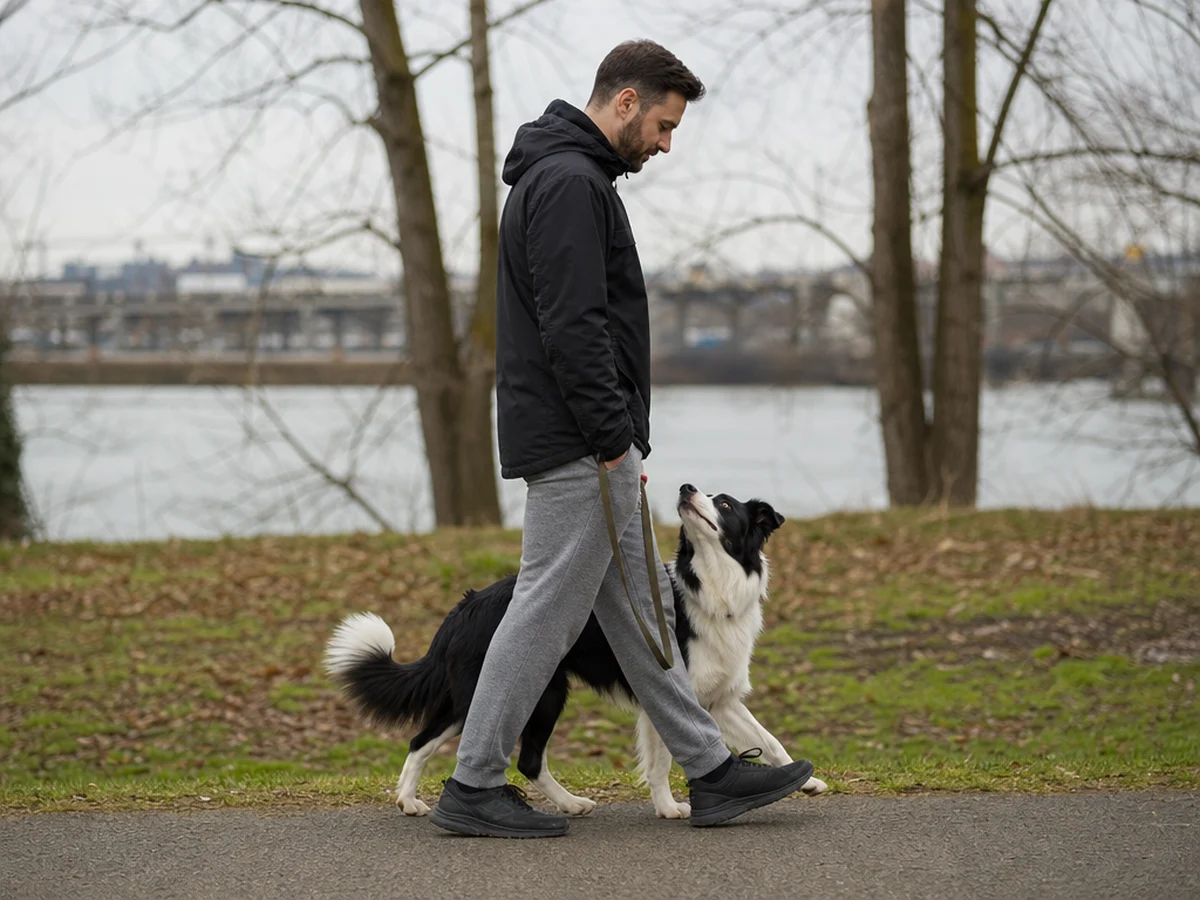
Each pass adds one small piece, and your dog earns the next one by being right on the one before. Move on only when a pass looks easy enough that your dog could do it while thinking about something else. A pass that keeps falling apart usually just needs to be cut into smaller bits.
| Pass | What you ask | What you mark |
|---|---|---|
| Pass one | Stand still with your dog beside your leg, both facing forward. | The moment your dog's shoulder lines up with your leg. |
| Pass two | Take one step, then stop. | Moving with you and stopping in place beside your leg. |
| Pass three | Walk a short line of steps, then stop. | Staying beside your leg the whole way and halting when you do. |
| Pass four | Make one gentle turn, then stop. | Turning with you and finishing beside your leg. |
Add the cue word only after the position shows up reliably on its own. Say heel just before the first step of a pass your dog already understands, so the word predicts a behavior instead of getting attached to a pile of confusion.
Once a pass feels easy, pay every second or third success instead of every single one, and go back to paying every time whenever a new pass begins. Keep each practice stretch short, a few tries at most, and finish with a treat and the release word.
Border Collie Heel Questions That Come Up Mid-Lesson
Some snags tend to show up once heel work begins, and each has a simple response. These three come up often enough to be worth answering on their own.
What if my Border Collie surges ahead?
Handle it the way PDSA advises for a dog who pulls: stop walking as soon as the leash tightens, never pull the leash back, and wait. When slack returns, reward your dog and carry on, and expect many stops and starts at first.
Best Friends Animal Society adds two points for the dog who keeps pulling. If your dog keeps going after you stop, turn and walk the other way, rewarding them as they turn with you and never yanking the leash. Stop every time, because stopping only most of the time teaches that pulling can still work.
What if my dog stares at the treat hand?
Keep the treat out of sight until after you mark, and pay from a pouch or pocket instead of holding it up. If your dog still watches your hand, mark and pay a moment sooner, while their attention is on the position. Practice a pass or two with your hand resting empty at your side.
How Long One Heel Session Should Run
We suggest a few minutes at most, with a handful of tries per pass, ending on a success while your dog is still eager. If the position looks uncomfortable, or your dog's movement suddenly changes, stop and ask your veterinarian. Regular veterinary checkups are a good habit anyway, and a vet is the right person to ask about any change.
Heel for the Short, Tight Moments
A few seconds of heel earns its keep where a loose leash alone is not enough: a narrow hallway, a doorway, the edge of a parking lot, a waiting room, or the moment you pass a stranger and a stroller on the sidewalk. Use it for the moment, mark the finish with your release word, and let the leash go back to relaxed.
If your dog enjoys structure and you want a bigger outlet for it, our Border Collie sports guide shows where this kind of precision can lead. The Border Collie training guide lays out the other cue lessons that fit around heel.
Before you leave the training room, decide on the one real spot where you will try heel first, such as the front door or the end of the driveway, and leave every other stretch to loose-leash walking.
 Training basicsBorder Collie Temperament: What It Means for Training
 Puppy trainingBorder Collie Puppy at 4 to 6 Months: What Changes
 Training basicsHow to Teach a Border Collie to Leave It