 Border Collie
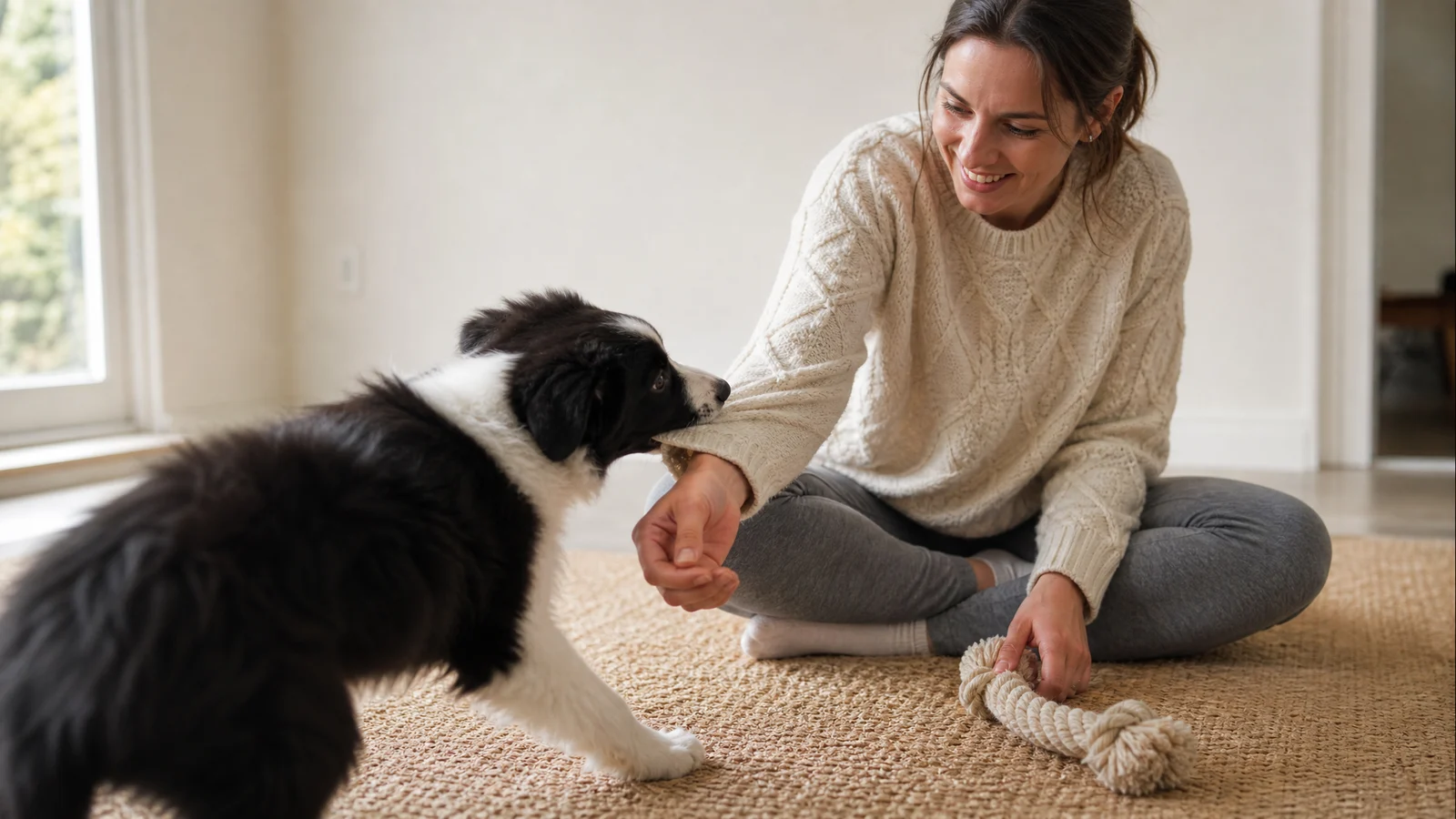
A Border Collie puppy who reaches for a toy when excited is the real aim, and the work behind it is smaller than it looks. Three habits carry most of it: stay still and calm when teeth land, hand the mouth something it is allowed to have, and pay the puppy for the calm moments in between. The goal is a gentler, better-aimed mouth, not a puppy who never uses one.
We'll go from that goal to the moment itself, then through the house, the games and the rest breaks that shape it. Nothing here needs special equipment or a perfect first day. It helps when everyone in the home reads the same plan, so share this page with whoever lives with your puppy.
Border Collie Puppy Biting Starts With Soft Mouths
We don't aim for zero mouth contact on day one. The first job is a softer mouth, because a puppy who has learned to control their pressure gives us something to build on, and a puppy who has simply been startled into stopping gives us very little.
The ASPCA describes bite inhibition as a dog's ability to control the force of their mouthing. It says some behaviorists and trainers believe a dog who has learned to use their mouth gently with people will be less likely to bite hard and break skin outside of play. Puppies usually learn this in play with other puppies, and the ASPCA suggests a good puppy class for supervised playtime.
In the first days, a softer mouth looks small. The teeth land with a little less pressure, the puppy lets go a little faster, and now and then they pick up a toy before reaching for a hand. Those small changes are the progress to reward, so notice them and pay for them with a quiet word and a short game. Bites that break skin are a reason to pause play and ask a trainer for help.
Can Border Collie Puppy Biting Wait Until Later?
Waiting it out is the weaker plan. Each bite that works, by getting a reaction or a game, is one more round of practice for the habit. That does not call for long training sessions. It calls for answering every bite the same calm way from the start.
Speaking about chewing on hands and inappropriate objects, Harmony Diers at Texas A&M says: “A puppy should not be allowed to chew on its owner’s hands or inappropriate objects because if they continue this behavior as they grow, it can become a bigger, more destructive problem that is harder to correct with training.”
Progress shows up in quiet ways: a quicker turn toward the toy, a puppy who lets go sooner and one who settles sooner after play. If those signs are not appearing, an experienced trainer can watch your puppy and your handling and adjust the plan. Regular vet visits are also a good place to mention biting that worries you.
Visitors who want to meet the puppy are a separate job, and our Border Collie socialization guide covers how to plan those meetings. Keep this page's routine for the everyday bites at home.
The Still Hand in Border Collie Puppy Bites
The plan for the moment teeth land is to do almost nothing, on purpose, and then to give the puppy a better thing to do with their mouth. It has three beats: still, wait, pay.
Best Friends Animal Society advises avoiding jerky movements, because a dog can see them as part of the game. Instead, take your hand away and leave it neutral at your side or behind your back, wait a few seconds for the dog to calm down, then reach out again. When the dog does not mouth your hand, offer praise and introduce a toy.
The toy is the payment, so make it worth having. Drag it low along the floor, let the puppy grab it and play for a moment. The puppy learns that teeth on a toy start a game and teeth on a hand end one. Then go back to calm touching, keeping each stretch short at first so the puppy can succeed.
Expect to repeat the sequence many times a day, and keep a toy somewhere you can reach it quickly. If your hand stays still and the puppy keeps grabbing, the toy comes out sooner, not later, so the puppy is never left holding a hand with nothing better on offer.
Set the House Up So Puppy Biting Has a Better Target
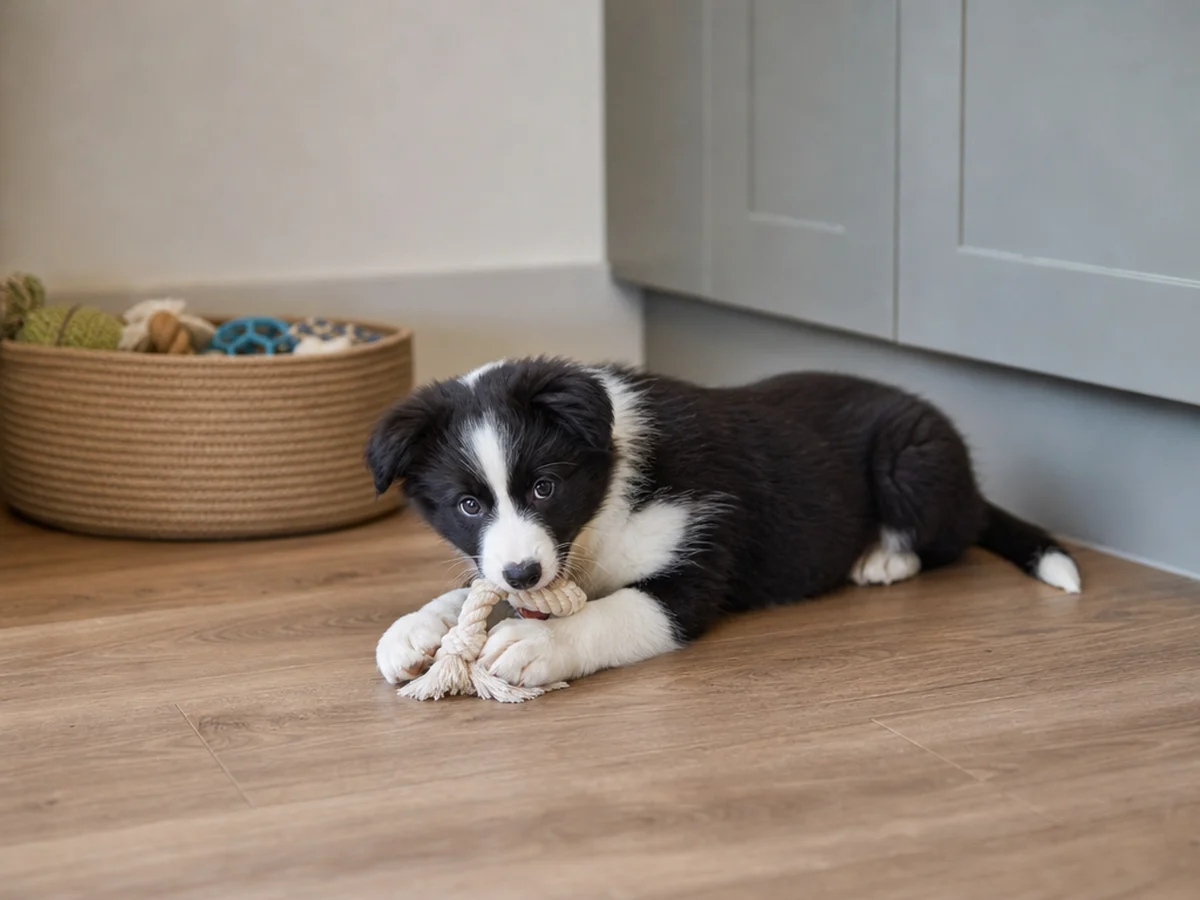
A puppy can only grab what is within reach, so prevention starts with what is lying around and what else is on offer. It runs through the whole day rather than living in training sessions.
In its guidance on chewing, Humane World advises giving dogs toys that are clearly distinguishable from household goods, rather than offering shoes and socks as toys and expecting a dog to tell their shoe from yours. It also suggests keeping a rotation of toys, because novel items are more fun than the same toy from last year.
Merck describes constructive activities that do not include mouthing or biting people, such as retrieving, walking and running, hide and seek, playing with other dogs, and training for rewards. It also lists chew toys, food-stuffed toys and food-dispensing toys, and says that when a puppy cannot be supervised, a crate, exercise pen or room provides a safe haven.
Where Each Chew Lives
Where a toy lives matters as much as the toy itself. These are the spots we would set up first.
- Beside the chair or sofa where you sit: a chew that is clearly a toy, so a puppy who wants something to mouth finds it before they find a sleeve.
- In the room where the puppy rests: one or two chews that only live there, so settling down and chewing start to go together.
- In the pen or gated space: chews and a food toy for the times nobody can watch, so the safe place is where something good happens.
- By the door or in a pocket: a small toy to grab the moment the puppy gets lively, before teeth find a hand.
Teeth that chase moving feet are a different job, and our Border Collie ankle-nipping guide covers that one. This page deals with hands, sleeves and play.
Border Collie Puppy Mouthing in Odd Moments
Grabbing also turns up in the small routines of the day, outside games and training. Here is how we would handle eight of those moments, all with the same idea: make the right choice easy and pay for it.
On the Move
What about biting at the leash on walks? Stand still with the leash held low and loose, and wait for the puppy to let go. The moment the mouth is empty, pay with a treat at your side and walk on. A small toy in your pocket gives the puppy something better to carry, and a trainer can help if the grabbing is constant.
How do we handle mouthing in the car? Keep the puppy in a secured carrier or crate rather than loose on a lap, with a chew that only comes out for trips. Pass nothing through the door for the puppy to grab, and keep early trips short so the chew is still interesting when you arrive.
What helps when the puppy mouths while being picked up or carried? Support the whole body, give a chew or a treat to hold before lifting, and set the puppy down while the mouth is calm so that being put down is the reward.
Down on the Floor
What if the puppy play-bites an older dog in the home? Watch the two together, and when the play turns rough or the older dog moves away, call the puppy to a toy or end the session with a short break. Give the older dog a rest space behind a gate that the puppy cannot reach. Stepping in early is kinder to both dogs.
What about grabbing hair, laces or loose clothing when you sit on the floor? These targets don't run away, so a still hand is hard to use. Keep a toy beside you and bring it out before the grab, or stand up and step away for a moment if the puppy keeps going. Tie back long hair and tuck laces away while the habit changes.
When the Day Slows Down
What if the puppy mouths you right after waking from a nap? Sit quietly nearby instead of reaching in, and let the puppy come round on their own with a chew within reach. Greet them calmly once they are up, and head to the toilet spot before any play starts.
What about mouthing at the bars of the crate or pen? Hand over a chew or a food toy as the door closes, so the mouth has something better to do than the bars. Open the door when the mouth is quiet, so coming out follows calm rather than chewing. If it carries on, shorten the stay and ask a trainer to look at the setup.
How do we handle mouthing during towelling or brushing? Keep each pass short and pair it with a chew or a lick of food, then stop while the puppy is still calm. Our Border Collie vet handling guide has the step-by-step practice for body handling.
When Play Itself Sets Off Border Collie Puppy Bites
A game that ends badly can leave a puppy frustrated and mouthy, so the way a game starts and finishes matters as much as the middle of it. Most of the fixes below are about structure, not about the puppy getting it wrong.
The RSPCA writes this advice about adolescent dogs, not puppies. It says some dogs may become frustrated when they can't get what they want, which can trigger behaviors including nipping. It suggests giving cues for when play starts and finishes, and ending by throwing the toy in the opposite direction or removing it and giving something to occupy them.
In its page on training dogs not to chew, PDSA says that when a dog chews something they shouldn't, you may react, and they might see being chased around the room as a fun game. It adds that this may be their way of getting your attention if they want to play or spend time with you.
So build one closing routine and use it for every game: the same cue word, the toy tossed away, then a chew or a few treats scattered for the puppy to find. If a grab happens mid-game, go still and let the toy do the work instead of chasing the puppy for whatever is in their mouth. When the grabbing is aimed at furniture and shoes rather than people, our Border Collie boredom chewing guide has more.
Short Breaks for a Tired Border Collie Puppy
Sometimes the best answer to a bite is a break from the game for a little while. A short pause costs nothing, and it keeps a lively session from turning into a string of grabs.
Battersea suggests briefly removing yourself by stepping out of the room or gently guiding the puppy to a safe space such as their pen or behind a baby gate, and keeping time-outs short and consistent. If you use a camera, it says to check whether the puppy has settled or fallen asleep, because they may simply be overtired and going back too soon could disturb them. Return when they're calm.
Pick the break place before you need it: the pen, a gated corner or a quiet room with a bed and a chew. Done calmly and without scolding, the break is simply the end of the game. Our Border Collie crate training guide covers building a rest place the puppy likes.
Pay for the Calm Between Bites
The quiet moments between bites are where a soft mouth gets built, and they are easy to miss because nothing seems to be happening. When the puppy is lying with a chew, resting near you or sitting calmly while the room is busy, say so quietly and hand over something nice.
A quiet reward keeps the moment calm: a low word, a gentle pat, or a treat set down between the paws rather than a burst of play. Save the lively games for the times you start them, so the puppy learns that quiet and play both come from you on a pattern they can count on.
Mix the rewards so the puppy is not working for only one thing. Sometimes it is a chew, sometimes a short game, sometimes just your company. Keep each one small and unhurried, so the puppy does not need to be excited to earn it.
 Exercise and jobsHow to Teach a Border Collie to Weave Through Your Legs
 Training basicsClicker Training a Border Collie
 Exercise and jobsHow to Teach a Border Collie to Jump Over Obstacles