 Border Collie
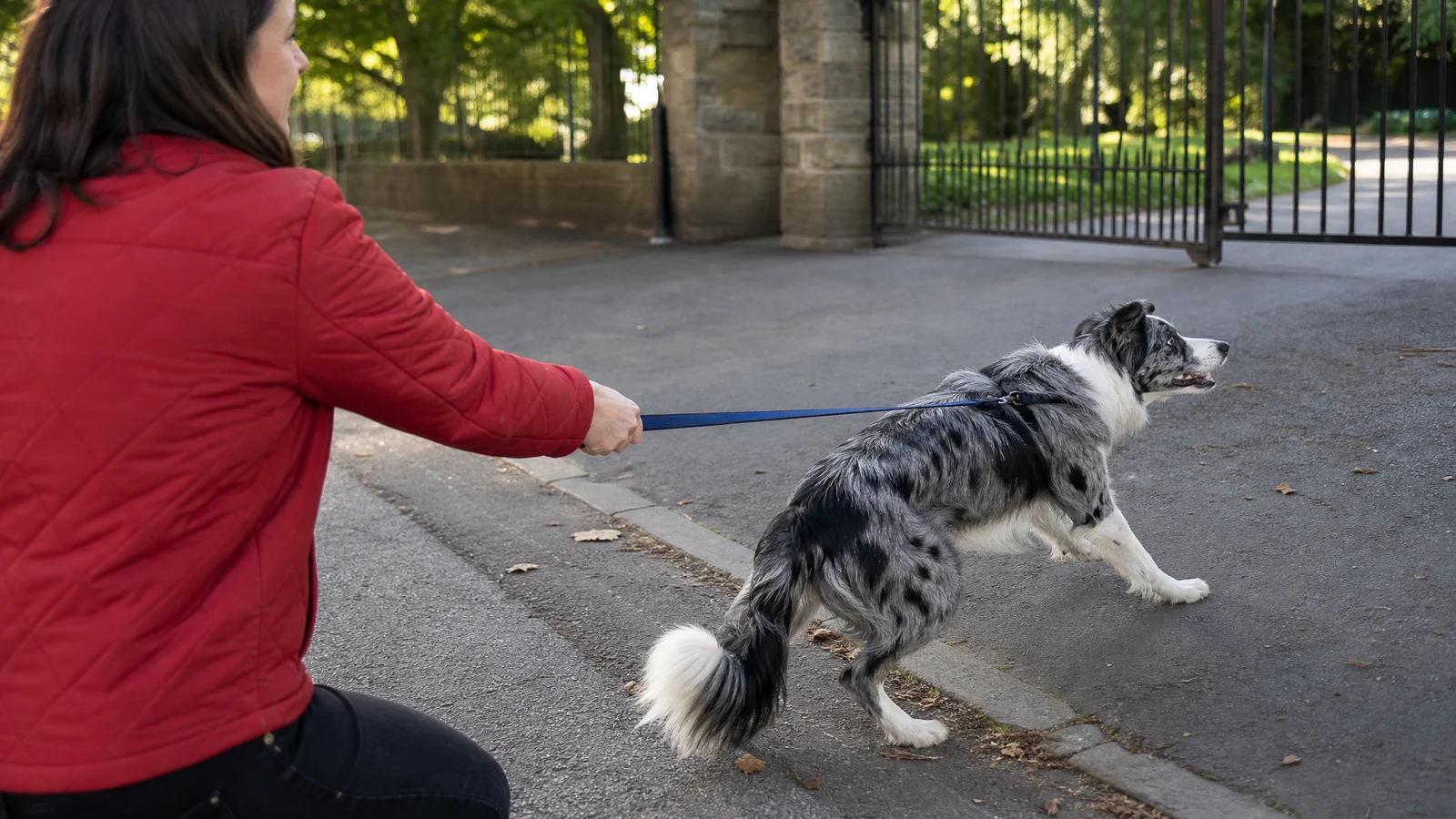
Before deciding how to fix a Border Collie's pulling, decide which of this week's walks are practice and which are not. A walk that is half training and half hurried errand sends mixed messages, and the dog on the other end of the leash is taking in something on every one of them. Choosing ahead of time keeps the repair small enough to carry out.
Pulling that has been going on for a while does not need a dramatic overhaul. It needs a handful of clear walks where the leash stays loose and the dog is paid for it. Further down, you'll see how to sort walks, map one stretch of leash, pay for slack, and answer the snags that surface along the way. The everyday walking skill itself has its own guide, so this page stays with the habit.
Pick Which Border Collie Walks Count as Pulling Practice
Start by sorting the week's walks into two kinds. Practice walks are the ones where the leash is the lesson and a slack line gets paid. Plain outings are the ones where the dog gets to sniff, wander and simply be outside. Mixing the two in one stretch of the same walk is how a signal gets muddy.
Battersea Dogs & Cats Home advises using clear cues or different equipment so your dog knows loose-leash walking means staying close, compared to free exploration when they can sniff and roam. It also says that if a dog is pulling to sniff, you can offer planned sniff breaks using your sniff cue.
Deciding Before You Leave
Make the call before you leave the house, not at the first interesting smell. Choose the signal, whether that is a particular piece of equipment, a phrase or both, and use it the same way every time so it reliably means one thing. Free-roaming time still belongs in the week, and an open space suits it better than a street does.
Our Border Collie running and recall page covers that side. Everything below assumes you have already said, clearly, that this walk is practice.
What a Long-Standing Pulling Habit Means for Repair
Dogs Trust explains that each time pulling gets your dog where they want to go, the behavior becomes stronger and more automatic, and that over time pulling becomes a habit. It adds that just one step forward when your dog pulls tells them it works.
Plan for a gradual repair instead of one dramatic walk. Blue Cross notes that most dogs who pull have learned to do so over a period of time, and the longer they have been doing it, the harder it will be for them to change.
That changes how to count success. Do not hold out for a walk with no tension at all, and do not promise yourself a date. Count the stretches of slack leash that got paid, and let those add up. Keep regular vet visits on the calendar too, and mention any sudden change in how your dog walks, so a physical cause can be ruled out by someone qualified rather than by more training.
One Leash Walk Written as A, B and C
Pick one stretch of one walk, the place where the leash goes tight most reliably, and treat it as a small case study. You are not trying to fix the whole walk in one go. You are trying to describe a single stretch accurately, in three parts, so you can see exactly what to change.
VCA Animal Hospitals says that to create a training plan, you must identify A, B, and C, and consider how A and C can be changed so B will change. It adds that each training plan is unique to the dog and the family, but most pulling can be prevented or reversed using a positive-reinforcement-based training approach.
- A is what happened just before: where you were, what the dog could see, smell or hear, and what you were doing with the leash and your attention.
- B is what the dog did: the moment the leash went tight and the way the dog moved as it did.
- C is what happened next: whether the dog got closer to what they wanted, or you stopped, followed along or changed course.
What to Change First
Once the three parts are written out, change A or C and leave B alone for now. Changing A can mean moving where the stretch begins or giving the dog something to do before it. Changing C means deciding in advance what slack earns, and that is the work of the next section.
Be plain and specific when you write it out. "Pulls a lot" says nothing about B, while "the leash goes tight in the first moments after the door opens" does. A precise description shows which part of A you can change before the leash ever goes tight, and which payment in C is missing. If you cannot describe the stretch, walk it once more with that question in mind and write it afterward.
If your dog also lunges or reacts to what is ahead, that is more than a habit, and a qualified reward-based trainer should look at it. Our Border Collie aggression guide covers the intensity side. The same three letters work on other everyday habits, and the Border Collie behavior problems hub shows where else to use them.
Paying a Border Collie for a Loose Leash
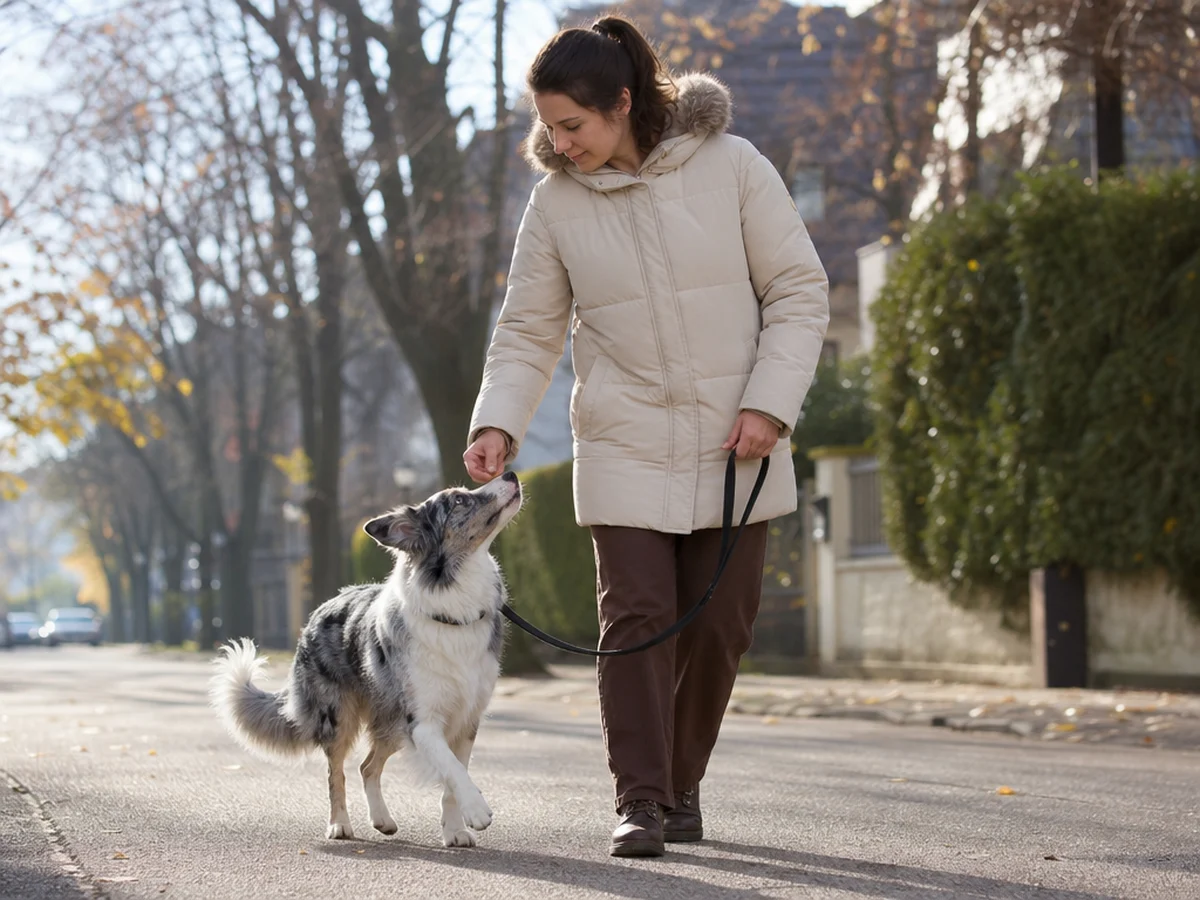
Decide the payment before you reach the stretch, not while the leash is already tight. It should be small and quick to deliver, so you can pay again and again without breaking up the walk. It should also arrive while the leash is slack, rather than only at the end of a flawless stretch. A single stretch of slack earns a payment, and the next one earns another.
Keep the payment within reach before the stretch begins, instead of fishing for it afterward. If you miss a moment of slack, let it go and pay the next one. A payment that lands while the line is still loose says the most about what you wanted.
What Counts as Payment
Best Friends Animal Society suggests that whenever your dog walks next to you, you reward them for being in position or for simply walking with a loose leash near you. It also notes the reward doesn't have to be a treat, since praise, petting and attention are also rewarding to dogs.
On a day when food is not what your dog wants, a happy word or a quick game may be worth more, so keep a few kinds of payment in mind. Frequent, ordinary payment is what makes the slack line worth choosing again. For the day-to-day skill, including equipment and what to do the moment the leash tightens, follow our Border Collie loose-leash walking guide. This page is about the habit and the payment.
Snags in Border Collie Pulling Repair
A few worries tend to surface once the plan is in motion. Each one gets a short answer here, starting with the quick fixes people are offered.
Is a pain-based collar a quick fix? Humane World for Animals says collars that rely on physical discomfort or even pain to teach a dog what not to do aren't a humane option. It says that while they may suppress the unwanted behavior, they don't teach the dog what the proper behavior is, and they can create anxiety and fear, which can lead to aggression.
Is paying with treats just bribery? A bribe is offered before the behavior to talk the dog into it. In this repair the dog makes the choice first, and the payment arrives afterward, so it works as a wage for a loose leash the dog already gave you. The payment is what makes the choice worth repeating, and it can shrink and change form as the habit settles. What you are protecting is the order of events: the dog chooses, then you pay.
When the Walk Itself Gets Hard
What if frustration builds halfway through a practice walk? Treat that as the signal to stop practicing, not to push through. Pulling the leash back or scolding has no place in reward-based work, so the moves left are to reset or to end the lesson. Switch to a plain outing, let the dog sniff, and finish the walk without a lesson in it. Start the next practice walk calm, and leave this one for another day.
Can you work on this with two dogs on one walk? Repair one dog's habit at a time. With two dogs on the leash, a practice walk is hard to keep clean, because you cannot pay two dogs for slack in the same second. Walk the dog in repair alone when you can, and treat the shared walk as an outing with its own signal. If both dogs need work, give each a separate practice time instead of splitting your attention between two leashes.
Slipping Back Into Pulling After Good Weeks
PetMD points out that in training class you probably learned that your dog's leash should always be slack, but the reality is that you probably let your dog pull you occasionally, like when you're in a hurry or when the weather is bad. It describes a pulling habit as a mix of muscle memory and the dog realizing that pulling works.
A lapse does not erase the weeks before it. Go back to paying the slack stretches, and keep practice walks clearly marked as practice. If a slip lines up with the teenage months, our teenage Border Collie training page covers training through that stage.
Plan for the walks that will not be practice. On a hurried day or in bad weather, make it a short, purpose-built relief trip with its own signal, so the practice cue stays clean for the days you can honor it. The dog still gets out, you still get where you are going, and the leash keeps one meaning during practice walks instead of two.
 Exercise and jobsIndoor Activities and Brain Games for a Border Collie
 Training basicsHow Smart Is a Border Collie? What Their Tenacity Demands
 Exercise and jobsHow to Start Border Collie Agility Training With Low Jumps