 Border Collie
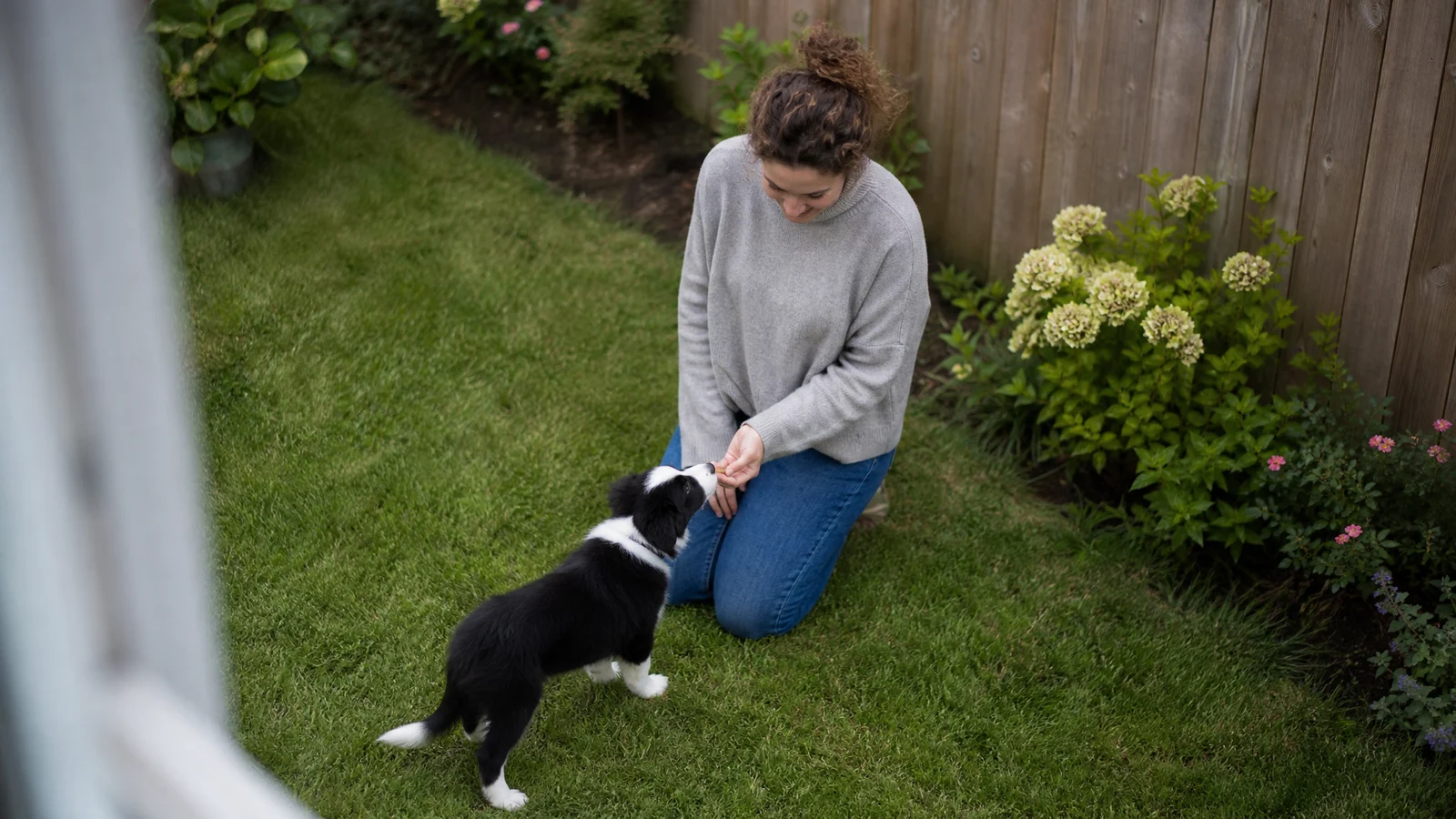
How quickly should a smart Border Collie puppy master potty training? Their trainability can make the routine easy to learn, but intelligence does not give a young body adult control. A puppy still needs many well-timed chances to reach the right place. Speed comes from repeating the same clear sequence, not from waiting for them to understand after an indoor accident.
We treat the first days as fieldwork. Use one exit, one outdoor destination, one cue and a reward delivered at the spot. Then note what happened before every trip so the routine follows the puppy instead of a generic clock. This guide covers the first-day route, early supervision, a simple event ledger, the move toward household freedom and the signs that potty training is becoming reliable.
The First Potty Route for a Border Collie
Begin by choosing a practical outdoor destination that you can reach quickly in bad weather and low light. Take the same route each time. The repetition makes the door, path and patch of ground part of one familiar behavior chain. Keep the trip quiet until your puppy finishes, because play can start after the useful behavior has happened.
Say the potty cue once when your puppy is already beginning to eliminate. The cue should label the action, not become background chatter while you wait. Mark the finish with a consistent word, then give a small treat right there. Returning indoors before rewarding can teach that the kitchen, not the outdoor choice, produced the food.
Reward the Outdoor Finish
Reward-based training gives a puppy useful information about what to repeat. The humane training statement explains that markers and rewards help teach the behavior you want. That clarity suits a Border Collie's responsive mind without turning normal learning errors into conflict.
Do not extend the trip into an exciting walk before your puppy finishes. When the puppy does not eliminate, go back inside with your full attention on them, pause briefly and offer the quiet outdoor route again. The purpose is to protect the next correct repetition. A long outdoor adventure followed by an immediate indoor accident usually means the destination was too distracting or the indoor freedom came too soon.
Choose a marker and reward that can be delivered without starting a chase game. Calm praise and a small food reward keep the sequence clear. Then offer play, sniffing or the return indoors according to what your puppy enjoys. The outdoor choice should produce several good outcomes, not signal that all outdoor time ends immediately.
Potty Training Through the Early Routine
Early potty training runs on transitions. Waking, eating, drinking, active play and a change from one room to another can all precede a need to go outside. You do not need a rigid minute-by-minute chart. You need to notice what your puppy just did and arrange the trip before their attention shifts into sniffing for a private corner.
Active Supervision Between Trips
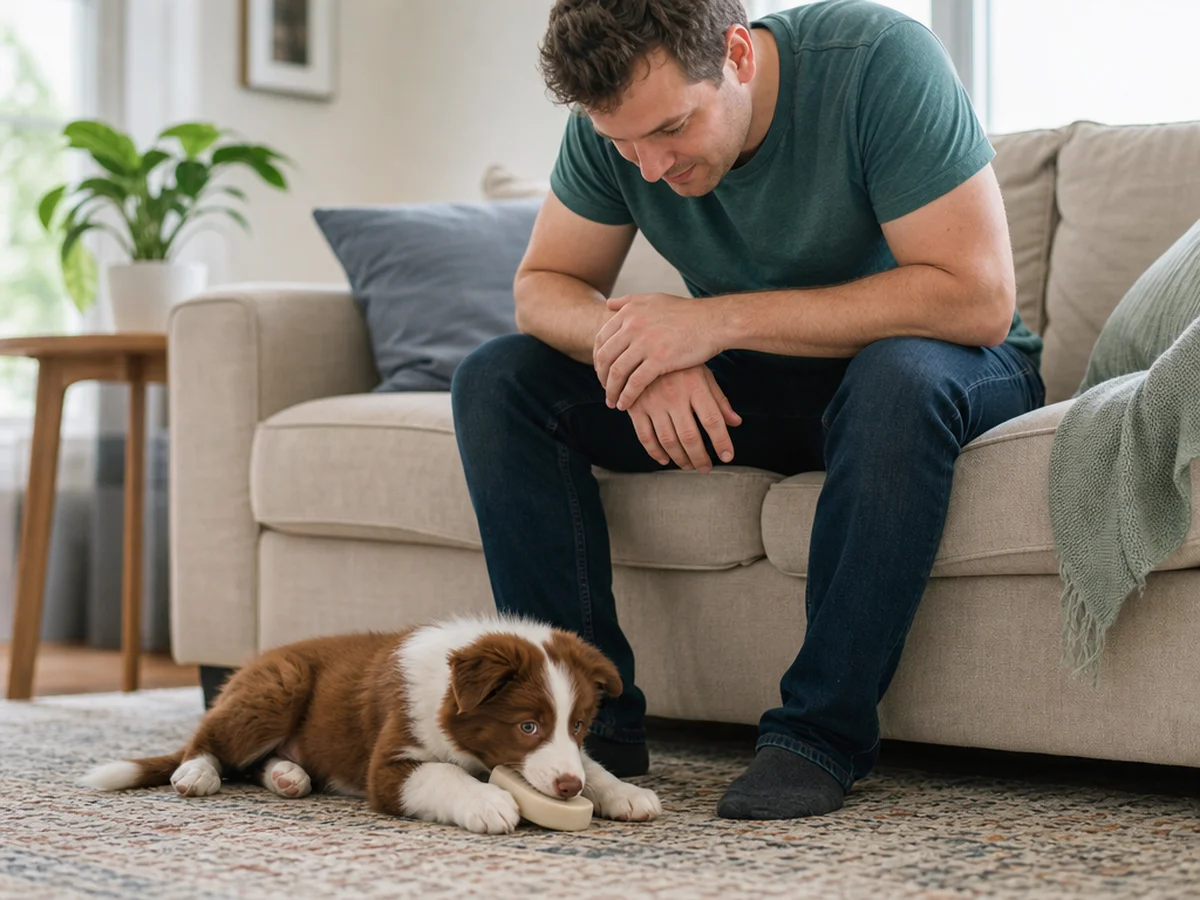
Active supervision means your eyes are on the puppy, not merely that both of you are home. Keep them in the same room and give them an appropriate activity near you. Watch for a sudden break from play, tight circling, focused floor sniffing, wandering toward an edge of the room or leaving the group. Treat the first change as the signal to go.
A lightweight leash held while you move around the room can prevent silent wandering, but it should not become a way to drag the puppy outdoors. Invite them along and keep the route brisk. As they learn the path, their own movement toward the exit becomes information worth noticing and reinforcing.
Short, regular teaching fits this breed. The training overview from the RSPCA recommends keeping sessions brief so dogs are not overwhelmed. Potty training is not one long session, but the same principle applies. A clear trip, a prompt reward and a return to ordinary life are easier to understand than a long wait filled with repeated cues.
Rest When You Cannot Watch
When you cannot supervise, use a puppy-safe area sized for rest rather than roaming. The goal is management, not expecting confinement to teach the full routine. Take the puppy out before the rest period and again when they wake. If the area repeatedly becomes a toilet, the timing, setup or duration needs to change.
A crate can be part of that plan only after it has been introduced positively. Our Border Collie crate training decision path separates comfortable rest from alone-time practice. Potty training should not depend on a puppy staying confined beyond what they can handle.
Coordinate the household before adding freedom. Everyone should use the same exit, destination and cue, and everyone should reward outdoors. If one person waits for a signal while another follows the transition routine, opportunities will be missed. A short note by the door keeps handoffs clear when several people share puppy care.
The Potty Training Field Ledger
A small record removes guesswork. Write down events for several ordinary days, including successful trips and accidents. Patterns often appear around transitions that were easy to overlook. The ledger is not a scorecard for the puppy. It is feedback on whether the household offered the right opportunity at the right point.
Use broad event notes rather than inventing a schedule from unsupported precision. This compact table shows what to capture and how each entry changes the next decision.
| Event | What to Record | Next Adjustment |
|---|---|---|
| Successful outdoor trip | What happened just before the trip and whether the reward landed outside | Repeat that route and sequence after the same transition |
| No result outdoors | Distractions, play and whether the puppy stayed focused | Return to supervision and offer another quiet opportunity |
| Indoor accident | Previous activity, location and the earliest signal you noticed | Move the next trip earlier in that same situation |
| Door approach | Whether the puppy paused, looked at you or moved toward the exit | Respond promptly so the signal continues to work |
Read the Miss, Not the Puppy
If you find an accident after it happened, clean the area and use the ledger to prevent the next one. The teaching moment is gone. Interrupt only when you catch the puppy in the act, and do so gently enough that they can follow you outside. Reward if they finish at the destination, because the correct final choice still deserves clear feedback.
Cleanliness matters because a lingering odor can make the same location seem suitable again. Block access while the area dries and supervise closely when it reopens. Moving a rug or closing a spare room is useful management, but the outdoor route and reward are what build the lasting habit.
The Border Collie standard describes intensity, energy and trainability as central qualities. That background helps explain why consistent patterns are learned readily, including patterns you did not intend. If the puppy gets several chances to disappear behind the same chair, the location can become part of their routine. Rearrange the environment before repetition makes the wrong route familiar.
Compare similar situations rather than counting every hour as equal. A calm afternoon after rest does not prove the puppy is ready for free access during energetic evening play. The ledger should show success through the household moments that previously caused misses. Reliability grows by context as well as by elapsed time.
Border Collie Freedom After Dry Stretches
Freedom should grow by area, not arrive all at once. Start with the supervised room where the routine is strongest. After a successful outdoor trip, open access to one additional space while you can watch. Close that space again before attention moves elsewhere. This makes freedom a planned part of training rather than a hopeful test.
Use these signs together before expanding the puppy's range. Treat the group as a readiness picture rather than a test of one isolated success.
- Your puppy follows the familiar route outdoors without getting lost in play on the way.
- They finish promptly enough that you can mark and reward the behavior at the destination.
- You are recognizing their early signals before urgent circling or indoor elimination begins.
- The current supervised area stays clean through its normal mix of rest, play and household activity.
- A missed trip leads you to tighten the plan calmly rather than assuming the whole lesson failed.
Freedom Must Match the Moment
An accident after freedom expands is schedule data. Reduce the area, return to closer supervision and identify the missed transition. Do not make the puppy prove reliability by roaming again immediately. A quick learner can also learn that a new room is a private toilet if the first mistake is followed by repeated access.
Keep daily activity balanced. A Border Collie puppy who is overexcited may race past subtle body signals, while a bored puppy may wander off to investigate. Brief training, appropriate play, rest and outdoor opportunities should support one another.
The breed standard supplies useful context about intensity, but it does not replace watching the individual puppy in front of you. Our complete Border Collie training guide explains how consistent criteria carry into other household skills.
When you open a new room, visit it soon after a successful trip and stay engaged with the puppy. Offer a toy, a brief training game or quiet companionship rather than letting them vanish behind furniture. Return to the established area before the next likely transition. This turns new space into supervised living space instead of an unobserved test.
Potty Training Progress You Can Trust
Reliable progress is visible in the sequence. Your puppy begins moving toward the usual exit, can stay focused on the route, eliminates at the destination and returns for the reward. You notice signals earlier, and the ledger contains more predictable transitions instead of unexplained accidents. Those changes matter more than a promised finish date.
Expect occasional setbacks when the household routine changes or access expands. Respond by restoring the last successful level of supervision. If elimination changes suddenly, happens with unusual frequency or remains difficult despite a careful routine, contact your veterinarian. Regular vet visits provide a useful baseline while your puppy grows.
Keep the cue useful by saying it only at the destination and only when elimination is likely or already beginning. Repeating it throughout the walk can make it meaningless. As the pattern strengthens, the familiar route and location will do much of the prompting, while the cue labels the behavior you are ready to reward.
Arrange the next success before urgency takes over. Open the familiar door, walk the familiar path, say the cue at the useful moment and reward outside. As that chain becomes ordinary, a Border Collie's quick mind works in your favor. The puppy is no longer guessing where to go, and you are no longer guessing when to offer the chance.
 Training basicsHow to Train a Border Collie: Turn Energy Into Good Habits
 Training basicsLoose-Leash Walking a Border Collie Who Herds Bikes and Cars
 BehaviorSocializing a Reserved Border Collie in the Seven-Month Window