 Border Collie
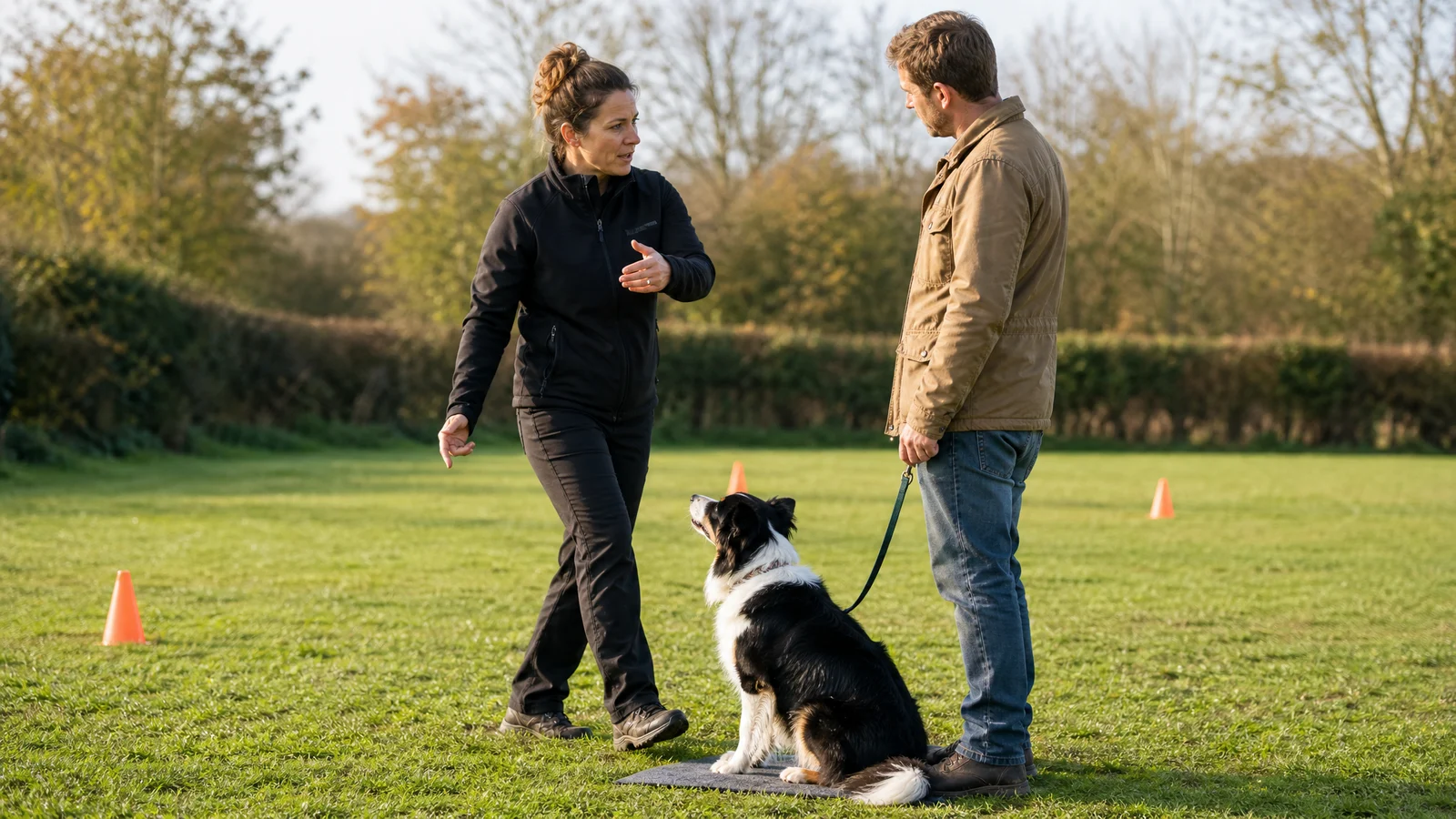
Hiring a trainer puts you in the client's seat, and that seat comes with more say than most people use. You may ask how lessons work, watch one before you pay for more, and stop when something sits wrong. If your first question is whether training will be hard at all, start with our Border Collie trainability page and come back.
We'll explain who to call first, what a credential does and does not prove, which methods should end a search, and what to ask and watch for before you book. Later sections cover choosing between private and group lessons, a handful of practical details people tend to overlook, and how to get the most from a trainer once you have one.
Trainer, Behaviorist or Vet First for a Border Collie
Start with what each role is built for. The American College of Veterinary Behaviorists says that good trainers have knowledge of behavior, but not at the depth or breadth that is expected of a veterinary behaviorist. It adds that while a trainer may teach an animal to perform certain actions in response to a command, obedience training does not usually get to the root cause of a behavioral issue or solve the behavioral problem.
That leaves three doors, and the problem decides which one to knock on. A sudden change, or any sign your dog may be uncomfortable or unwell, belongs with your veterinarian first. Behavior that worries you because of how intense it gets belongs with our Border Collie aggression guide before you book general lessons. Everything else, from cues to household manners, is trainer territory.
Regular vet visits stay on the calendar while lessons run, so your vet already knows your dog when a question comes up. For the many everyday goals this site covers, a trainer is the right first call, and the rest of this page is about choosing a good one.
What a Border Collie Trainer's Credential Actually Certifies
A credential on a website deserves a close read, because the wording behind it matters more than the letters. Think of each claim as a lead to follow up rather than a verdict.
The Certification Council for Professional Dog Trainers says that dog training is a science, but the industry is (as yet) unregulated with no licensing requirements or regulatory oversight. One of its designations indicates that a dog trainer has passed a comprehensive exam and has at least 300 hours of dog training experience. Another indicates a comprehensive exam and an objective skills-based assessment along with at least 300 hours of experience.
| Proof offered | Who can confirm it | What it still leaves open |
|---|---|---|
| A certificate or badge on the trainer's website | The organization that issued it | How the trainer actually handles a dog who struggles |
| Years of experience quoted in a bio | The trainer, and someone who has hired them before | Whether that experience fits what your dog needs |
| Membership in a professional group | The group itself, if it publishes a member list | Whether the group sets any standard for methods |
| A course or school completed | The school or program | How recent the course was and what it covered |
Ask the trainer for the exact name of whatever body issued a credential, then confirm it with that body directly rather than relying on the badge. A trainer who has earned something will usually be glad to be asked. Even a confirmed credential tells you what someone studied, so it works best alongside the methods and questions in the next two sections.
Methods That End a Border Collie Trainer Search
Some methods are reason enough to cross a name off your list, whatever hangs on the trainer's wall. You can learn a lot about methods before the first lesson, because a good trainer is happy to explain them.
The American Veterinary Society of Animal Behavior says in its humane dog training position statement that an appropriate trainer should avoid any use of training tools that involve pain or intimidation, and it names other methods to avoid as well. It also says the learner must always feel safe and have the ability to "opt out" of training sessions.
Our own guidance is to keep every lesson built on rewards. When a trainer answers a question about methods, listen for what your dog is asked to do and what your dog earns for it. These are our reasons to keep looking. A trainer who:
- will not describe, in plain words, what happens when your dog gets an exercise wrong.
- asks you to leave your dog with them while you stay out of the room or out of sight.
- brushes off your worry about how your dog is being handled, or tells you to stop asking.
- talks only about what your dog must stop doing and never about what your dog will earn.
Questions to Put to Any Border Collie Trainer
Take the same list to every candidate so the answers can be compared side by side. Each question comes with the reason it earns a place, so you can tell a real answer from a polished one.
- What do you do when the dog gets an exercise wrong? The answer shows whether the trainer changes the setup and rewards the next try, or simply repeats the demand.
- What do you use as rewards? Food, toys and praise all work for some dogs, and a trainer should be able to say how they find what your dog values.
- Can you watch a lesson before booking? A trainer who welcomes observers has nothing to hide, and you will learn more from watching than from any web page.
- How do you adjust when an exercise is too hard? Look for a plan that makes the step easier rather than a dog who is pushed to cope.
- What homework happens between lessons? Clear, small tasks you can repeat at home are a good sign, and vague homework tends to mean vague teaching.
- How will you show progress? You want to leave knowing what improved and what comes next, not a general feeling that things are going well.
- Can you speak with someone who has hired the trainer before? Their experience of the lessons, the communication and the results tells you what the website cannot.
When two trainers both seem fine, ask each the same questions in the same order and compare the answers afterward. The better fit is usually the one who explained things most plainly and made you feel most able to ask a follow-up.
Watching a Border Collie Trainer's Lesson Before You Commit
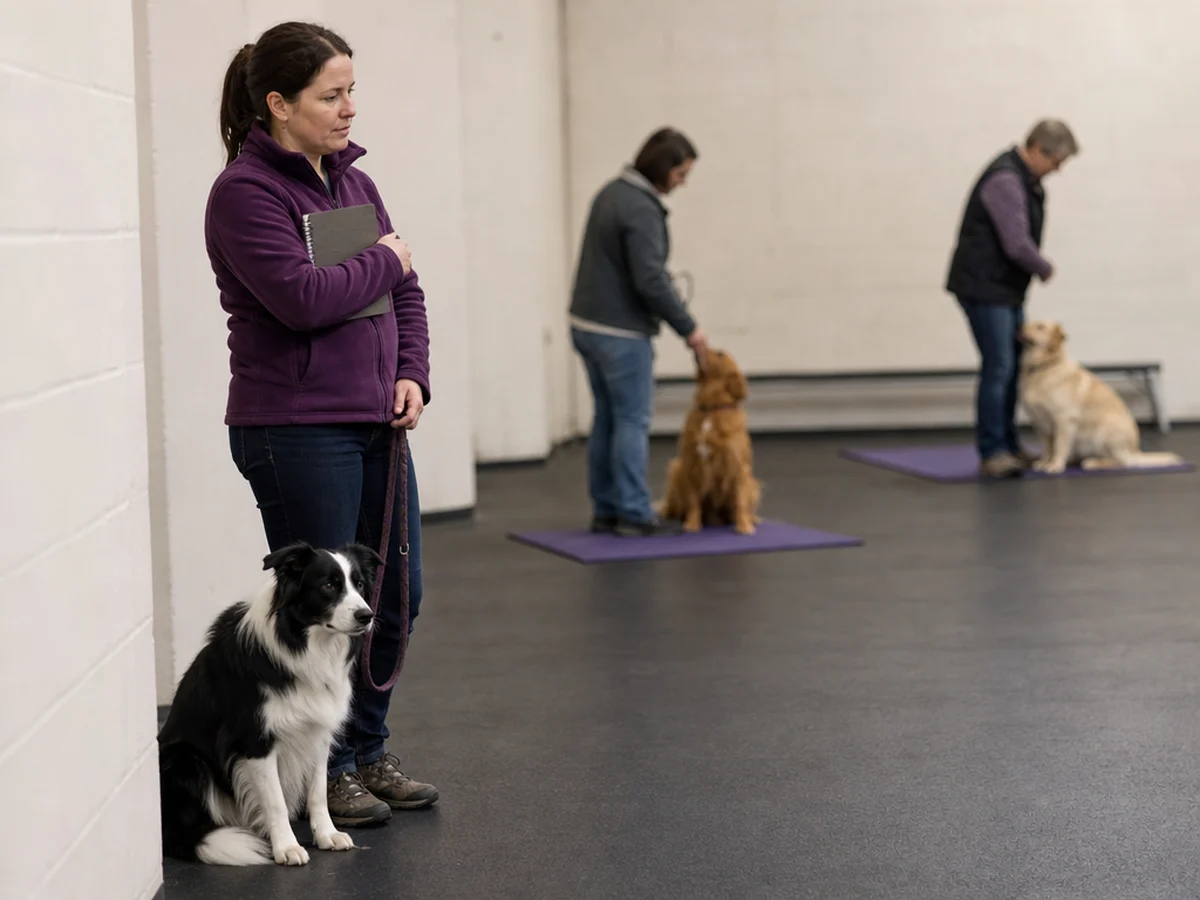
A lesson you observe is the closest thing to a test drive, and it shows what no website can. Prepare a little beforehand, then spend the lesson watching rather than joining in.
Before You Go
Ask whether you can sit in on a lesson with another dog, or whether a first meeting with your dog is possible without a commitment. Bring your question list and leave your own dog at home if observing is all you need to do.
During the Lesson
Keep your attention on how the trainer and the dog in the room work together, and let your notes wait until afterward. These are the things we would watch for:
- Whether the trainer explains the goal of an exercise before it starts, so the handler is never guessing.
- Whether the plan changes when the dog's responses change, rather than running the same script regardless.
- Whether the handler gets a turn to practice with the trainer's feedback instead of watching the whole time.
- Whether the dog is able to take a break or move off during a lesson without being pulled back.
Finding a Border Collie Trainer for One-on-One, Group or Both
Once you know how to judge a trainer, the next choice is the format. Your goal and your schedule should decide it, and one trainer may offer more than one.
In its advice on preparing a dog for a new baby, the ASPCA says that if someone in your family has time, consider taking your dog to a group obedience class or hiring a private trainer to show you how to teach the basics in your own home.
Ask yourself what you need to practice, because the answer points to a format. Think about who will be doing the practice too.
- A group class gives your dog company and distraction to work around while you learn.
- Private lessons let a trainer focus on your own handling and on the setting at home.
- Either way, decide who in the household must attend so everyone hears the same instructions.
If it is a sport you want rather than everyday manners, an instructor who teaches it may suit you better, and our Border Collie sports guide shows where to begin.
The Humane World for Animals resource guarding guide says in its home training tips that if you struggle with training yourself, you can consider searching for a qualified dog trainer. For guarding that has not changed after the home steps, it says your veterinarian can recommend a trainer or behaviorist who will work with you more rigorously, and to be sure to choose a professional who uses positive reinforcement only.
Keep the names that passed the earlier checks and book a single trial with each before you commit to a full package. Let how the session felt to you and your dog settle the choice.
Border Collie Trainer Details Worth Settling Early
A few practical questions come up after the shortlist is made and before lessons begin, and they are easy to overlook until they matter. Answering them early keeps small surprises from turning into reasons to quit.
Lessons, Money and Recording
Can lessons work online instead of in person? Some trainers coach by video, and the same questions apply. Ask how the trainer will see what your dog is doing, how feedback reaches you between calls, and what happens when your home setup makes an exercise hard to run. If those answers stay vague, keep looking.
What should you ask about paying for lessons in advance? Ask what happens to unused lessons if you stop early, whether a single trial lesson is available first, and how cancellations are handled. Get the answers in writing before you pay, so leaving a trainer who is not working out never costs more than you expected.
Can you film a lesson? Ask first, since some trainers have rules about recording. If it is allowed, a short clip helps you practice exactly what was shown and lets you show the trainer how a session went at home. Keep other people and their dogs out of the frame.
Whose Advice Counts
Does the trainer need to have taught Border Collies before? It is not a requirement. Experience with the breed can count in a trainer's favor, but a clear method matters more. Ask what kinds of dogs the trainer has taught and how the plan changes when a dog learns differently from the last one. A trainer who explains the method, the rewards and the adjustments clearly is worth a trial lesson either way.
Should you tell the trainer what you have already tried? Yes, including what did not work and how your dog responded. A trainer who knows the history can skip steps you have covered and avoid repeating them. Mention any rewards your dog ignores as well, since that saves a lesson of guessing.
What if your vet and the trainer disagree? Ask each to explain their reasoning rather than picking a side. A question about your dog's body, comfort or health belongs with your veterinarian, so follow that advice and tell the trainer about it. A good trainer will adjust the plan around what your vet said.
Can you use two trainers at once? You can, but two plans for the same skill can send your dog mixed messages about what earns a reward. Tell each trainer about the other, and give each a separate job, such as everyday manners with one and a sport with the other.
Getting the Most From Your Trainer at Home
Lessons only change your dog's habits when the practice carries into the rest of the week. Ask the trainer to finish each lesson by showing you the first step of what comes next, so you leave knowing exactly what to repeat and what to leave alone.
Keep everyone who lives with your dog on one plan, and share the trainer's instructions with them in the trainer's own words where you can. Stick to the exercises you were shown rather than adding ideas from videos, and bring those ideas to the next lesson instead.
If lessons turn to examinations and grooming, our Border Collie vet handling training guide covers that practice step by step. If your dog is in the teenage stage, our teenage Border Collie training page pairs well with the lessons.
When to Walk Away and Try Another Border Collie Trainer
A trainer can have every credential and still be a poor fit for you and your dog. Walk away when you keep leaving lessons unsure what to practice, when your questions get shorter answers each time, or when the plan stays the same after you have reported that it is not working.
Ending things does not need a speech. Thank the trainer, say plainly that you are going to try another approach, and pick up your remaining plans with someone new. You owe nobody a detailed explanation, and a fresh trainer will appreciate hearing what you have already learned.
You can also end a lesson that is already under way. If something being done to your dog worries you, say so, step in, and leave if you need to. You can raise your questions afterward or look elsewhere, because nobody has more say over what happens to your dog than you do.
 Puppy trainingBorder Collie Puppy at 8 to 12 Weeks: The First Month Home
 BehaviorHow to Fix Border Collie Separation Anxiety
 Puppy trainingBorder Collie Puppy at 3 to 4 Months: Teething and Mouthing