 Border Collie
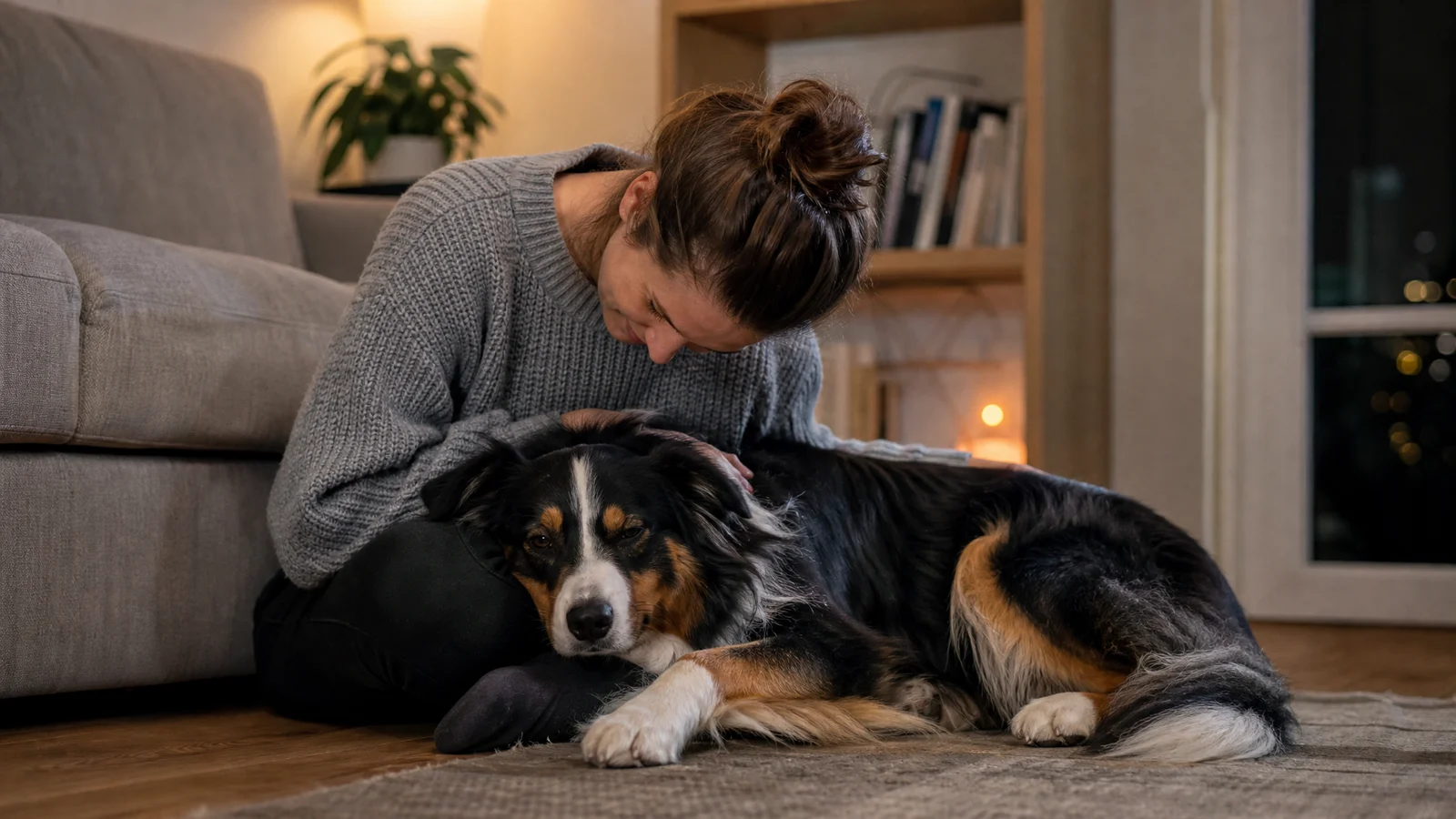
Most Border Collies hit their wildest stretch between the end of puppyhood and the early adult years, and the calm owners wait for often begins to show somewhere around 2 to 5. Plenty of dogs are still hurricane-like at 4 to 6, though, and a few were mellow from the start. The breed has a reputation for snuggling up happily once the day's work is finished, which tells you the calm follows work and has to be taught as well.
This guide covers exercise across the whole life of a Border Collie, from short puppy play and growing joints to the teenage surge, the slower midlife years and the mat settle that gives calm a place to happen. We have trained this breed for many years, and dogs who get enough body work, enough brain work and a taught way to stop are far easier to live with. Handled badly, that drive turns into pacing, chewing and a dog who cannot rest.
Exercise Timeline for Border Collies
Exercise needs climb fast, stay high through the prime years and ease only as the body ages. The cause is built into the breed. On the published breed profile, a Border Collie scores the top 5 of 5 for both energy and the need for mental work, and the breed standard says the intensity and energy that selective breeding produced matter as much as size and appearance.
The table shows how this tends to play out. The ages come from what owners report rather than from a fixed clock, so read them as ranges.
| Life stage | What exercise looks like | What to watch |
|---|---|---|
| Puppy, through about seven months | Short play bursts, sniffing, safe exploring, gentle introductions to people and places | Drive outruns the body, so you have to end the games |
| Adolescent, after puppyhood | The biggest surge: several outings a day, training and structured sport | Mischief rises when the work is only physical |
| Young adult, roughly 2 to 5 | Steady heavy work, with calm beginning in many dogs | Some dogs are still hurricane-like at 4 to 6 |
| Midlife, roughly 6 to 12 | Shorter outings, more nose work and training | Stamina dips while enthusiasm stays |
| Later years, 11 to 17 | Gentle play, sniff walks, brief bursts | Drive can exceed what the joints allow |
Endurance is the breed's trademark, and the UKC describes a free, smooth and tireless gait. A dog built to keep moving barely notices a walk around the block or a quick romp in the yard. The energy left over has to go somewhere, and it usually lands on your furniture, your neighbors' ears or your nerves.
None of this is guaranteed. Some dogs calm in the early years, others still need substantial exercise at 4 to 6, and a few were couch-potato-like from the start. Treat the table as a map of what is common and your own dog as the final word.
Border Collie Puppy Exercise Limits
A puppy's drive shows up well before their body can carry it, and that gap defines the early months. Growing joints generally do better with short, varied play than with long repetitive running, while the brain gets a real workout from simply meeting the world. Ask your veterinarian what suits your puppy's age and build, and keep regular checkups on the calendar as they grow.
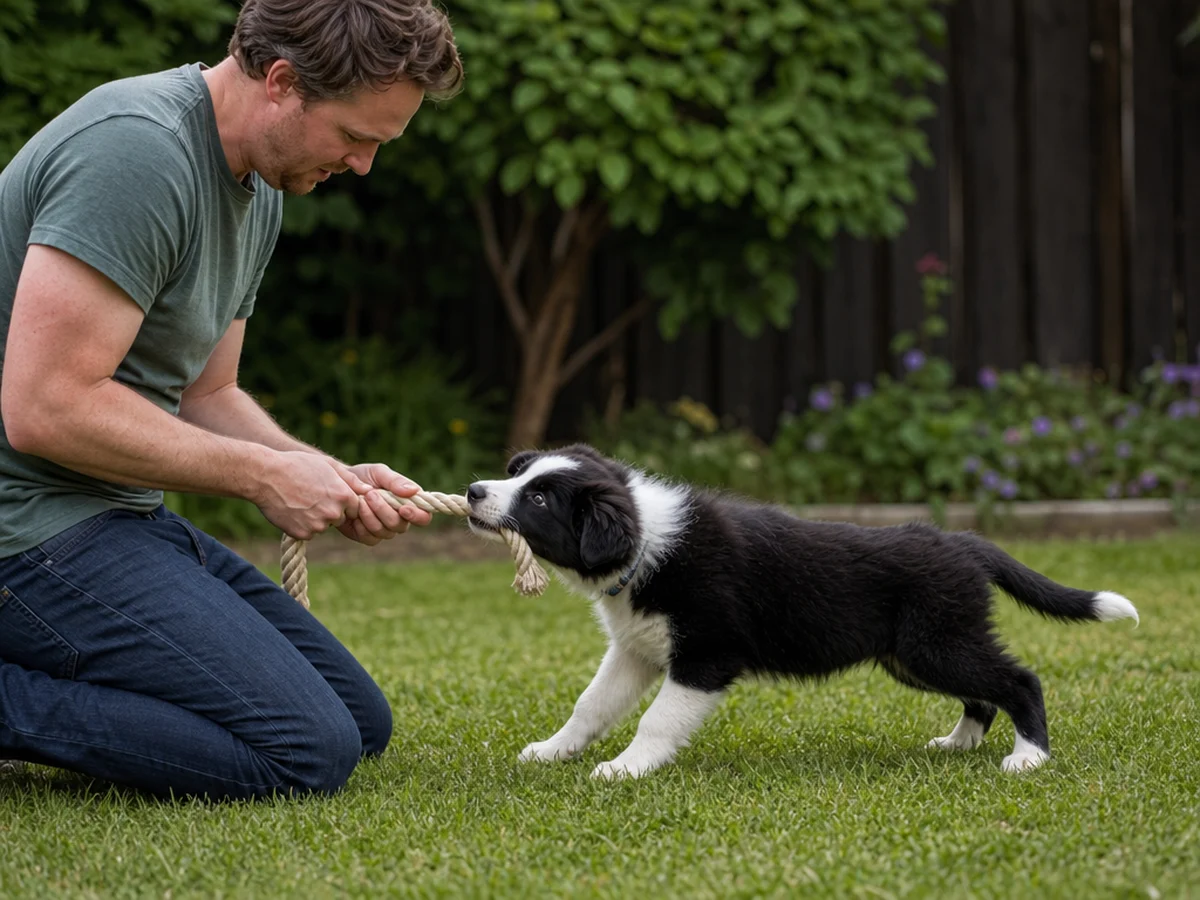
Ending Games Before They Do
Border Collie puppies rarely quit on their own. They chase, pounce and fetch until they flop, then bounce back after a short breather, so the end of the game has to come from you.
Stop while they are still keen and follow with a chew or a nap. Rotate tug, sniffing and gentle fetch so no single hard-running game takes over the day.
Exploring Counts as Exercise
Early socialization is especially vital in this breed, and it runs from early puppyhood through about seven months. Adults are described as sensibly reserved with strangers, so the aim is positive exposure to many people, surfaces and situations, with treats for calm curiosity. Outings like these tire the mind, and a tired mind makes naps come easily.
Toys Out of Sight
Simply seeing toys winds some dogs up, which is why many owners keep them put away between games. Bring a toy out, play, then finish with a cue such as all done, store the toy and hand over a chew on a mat. Because the cue predicts a clear stop every time, it becomes the first small lesson in an off switch.
Adolescent Exercise Surges
After puppyhood the body catches up with the drive, but impulse control lags behind, and that mismatch explains most teenage trouble. Owners describe heavy daily needs in this phase: multi-hour walks, miles of running, multiple outings every week, and a dog who still asks for more in the evening.
A popular belief says more miles fix a wild teenager. For this breed the results are mixed, and the likely reason is that extra running builds fitness without teaching the dog to settle. Regular exercise can soften unwanted behaviors but rarely cures them, and taking an already worked-up dog somewhere busy tends to add to the stress. Aim for a dog who can switch off, not one who is merely worn out.
Owners credit structured outlets such as agility, dock diving and long runs with calming a dog's unpredictability, though strong prey drive persists in some. Some Border Collies get extremely excited around other dogs, so chase play needs watching.
- Split the day into several outings so no single one carries the whole load, and end the last with sniffing rather than sprinting.
- Add a brief training session to every outing, since thinking tires a teenager faster than running alone.
- Choose one structured activity and practice it regularly, because predictable work gives energy a shape.
- Rehearse the mat settle daily, even on easy days, since the skill needs many repetitions before it holds when your dog is excited.
When Border Collie Calm Arrives
Calm is not a birthday. Owners report it starting around 2 to 5 in some dogs, still missing at 4 to 6 in others, and never being needed in a few who were mellow all along. What usually changes is the dog's ability to stop, and that ability can be taught.
What Calm Actually Looks Like
In this breed calm rarely means a lack of drive. Some dogs are quiet indoors but wild outdoors, and others lie down inside while still ready to play the moment you invite them.
Owners say a settle, an all done cue or a bed or crate routine lets dogs switch off after exercise. Learning to stop and relax can take months or even years for some, so judge progress by the season, not the week.
Teaching the Mat Settle
An off switch is a learned shift from alert to resting on cue. Use reward-based methods only, so the mat becomes the place where good things happen. A marker word is a short, consistent sound, like yes, that tells your dog the exact moment they earned a treat.
- Pick a mat you use only for settling, so it becomes a signal and not just a rug.
- Say your marker word the instant paws touch the mat, then deliver the treat on the mat itself, which teaches where the rewards live.
- Wait for a sit, then a down, marking and rewarding each step and dropping treats between the front paws so your dog stays put.
- Stretch the gaps between treats once your dog is lying there, and add extra rewards for relaxed signs such as flopping onto one hip.
- Add a release cue like all done before your dog leaves, so the ending belongs to the routine and not to wandering off.
- Practice when your dog is already pleasantly tired, then add distractions slowly, such as you walking around or a toy dropping nearby, and go back a step if your dog pops up.
Slowing Down Is Not Calming Down
Several owners notice slowing between about 6 and 12, with shorter outings, less stamina and a loss of puppy energy. That is usually the body, not the mind. Enthusiasm persists, and many dogs aged 11 to 17 stay keen to run, fetch and play despite arthritis, blindness, deafness or illness, often until shortly before the end.
Because drive can exceed ability, you become the brake once more. Limit running and rough play to avoid injury and pain, and lean toward sniff walks and short training games. Gentle play can help an older or ill dog feel more like themselves, so adjust the amount rather than cancel the fun. Regular veterinary visits keep those choices informed.
Brain Games That Count
Mental work tires many Border Collies as much as miles do, which matters when weather, heat, injury or age rules out a long walk. The breed was developed to reason and make independent decisions, so games that make your dog think suit their wiring. Obedience training that starts early and continues through life also supplies steady mental stimulation.
Search and Sniff Games
- Play hide and seek by hiding a person or a toy, then release your dog with a cue such as find so nose and brain work together.
- Scatter treats in grass or tuck them under boxes for sniff-and-find, a simple game that gives the nose a real task.
- Try basic scent work, where your dog learns to locate a chosen scent, if they enjoy structured searching.
Let Your Dog Help
Chores can double as exercise. Owners report that letting a dog help with a task such as shoveling snow tires them mentally and physically, especially when long walks are not possible. The dog gets a job, and you get a break from inventing games.
Rotate Before Boredom Sets In
Not every dog loves structured scent or puzzle work, and some lose interest fast. A minority are not toy driven at all, which makes toy-based games harder. When the novelty fades, rotate the options rather than repeating one, and move to something your dog does enjoy, such as short trick sessions or helping with chores.
Exercise Mistakes Owners Admit
Owners are candid about where plans go wrong, and the errors share one cause: strong drive hides fatigue, so the human has to supply the brakes.
Too Much Ball
Many Border Collies become obsessed with balls, fetch or flying discs, sometimes to the exclusion of other interests, and would keep going until exhausted. Dogs often continue while visibly spent, so watch for these signs.
Watch for heavy panting that does not ease when they pause, since that is one of the clearest signs a dog has had enough. Many dogs also flop beside the water bowl and then rejoin the game as soon as they have drunk, or lie down with the ball between their paws, still staring at you.
End the game before those signs appear, cap the length and swap in nose work. Putting the ball away is not unkind. It protects a dog who cannot protect themselves.
Too Little Rest
Some dogs stay ready to play at the slightest cue, even after a very long walk. Offer the mat in place of another game and reward the settle, so rest earns as much as play does.
Ignoring Heat and Water
Heat tires dogs faster than exercise does, even those who want to keep going, so shift hard work to cooler hours and carry water. Some dogs will play in water until they could drown, so use a life jacket or end the game early.
Rain and bad weather rarely deter Border Collies, so only extreme conditions are a real reason to stay in. On those days, lean on brain games.
Exercise Questions Owners Ask Next
The thread through every age is the same. A Border Collie is a high-energy, high-drive worker who needs daily physical and mental exercise, and calm arrives when that work is paired with a taught off switch, not when the dog is run into the ground. Meet the need, teach the stop, and the snuggly evening dog shows up on their own schedule.
Once that foundation is in place, owners tend to ask these questions next:
- What sport suits a dog with this much drive? Agility is a popular answer, and our guide to starting Border Collie agility with low jumps covers focus games and a first frisbee catch.
- How do you keep an older dog happy as their body slows? Shift to sniff walks, gentle play and short training sessions, and talk with your veterinarian about what their joints can handle.
- What if your dog still will not settle? Return to the mat steps in a quiet room, practice after exercise and give it time, since some dogs need months or years.
 Training basicsPotty Training a Border Collie Puppy With a Steady Routine
 Training basicsHow to Train a Border Collie: Turn Energy Into Good Habits
 Training basicsLoose-Leash Walking a Border Collie Who Herds Bikes and Cars