 Border Collie
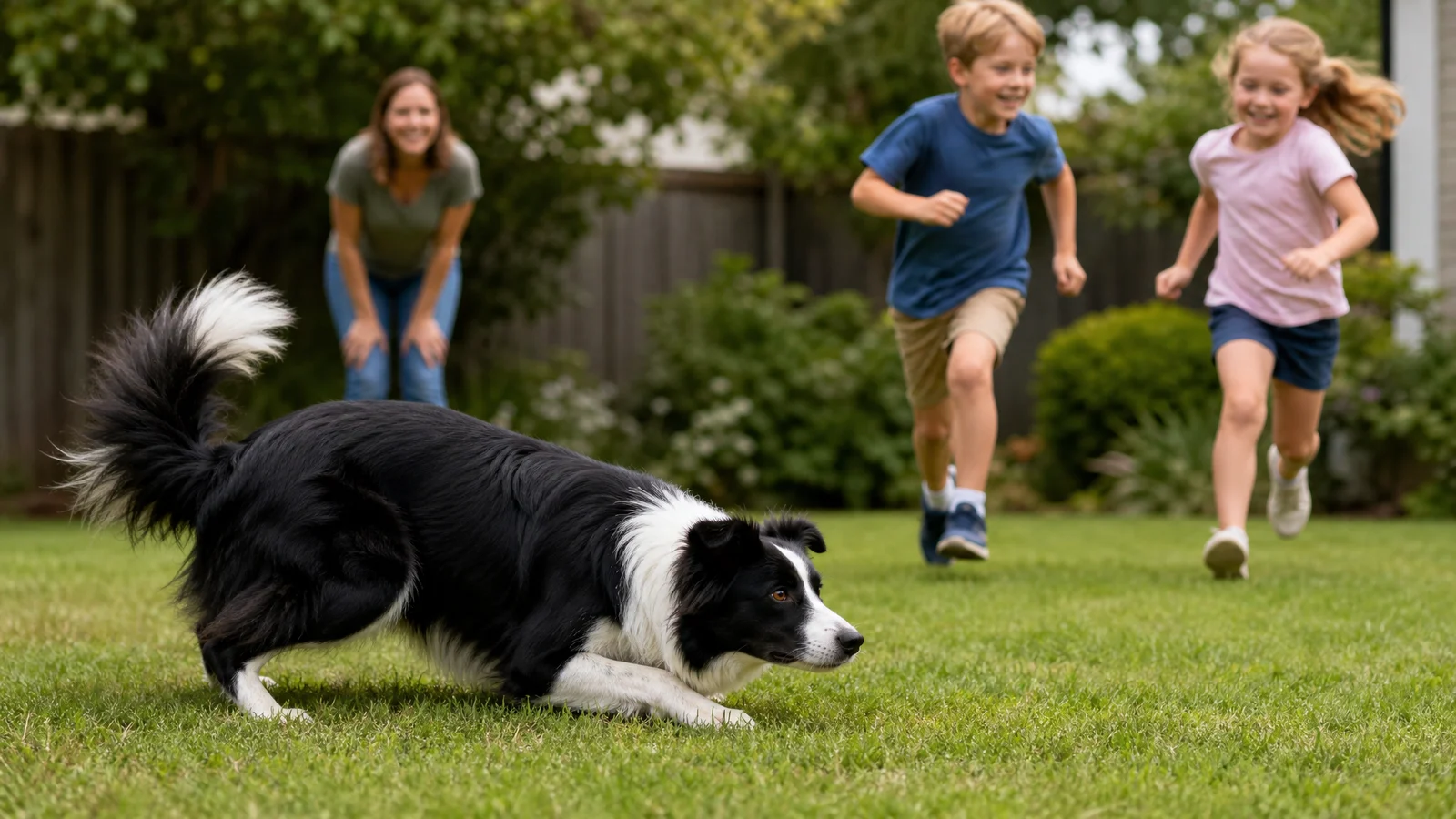
The kids are tearing around the yard, and your Border Collie has dropped into a crouch, eyes locked, belly low, creeping closer until one child bolts and a nip lands on a heel.
Owners describe this scene all the time, and the dog is rarely being mean. They are doing the job their ancestors were bred for, just with the wrong flock. The same wiring turns brooms, mops, and snow shovels into daily targets, and for many dogs a big ball is worth more than cooked chicken. Handled well, that intensity gives you a focused partner. Handled badly, you get a dog with no off-switch.
Below, you'll find where the instinct came from and how a century of sheepdog trials shaped it, including how to find real sheep lessons and what a first session looks like. We also cover herding ball games for home, with rules for safe play, and the signs that tell you the work is helping or that it is time to call a professional.
Border Collie Herding Began on British Hills
The breed comes from the Border country between Scotland and England, where shepherds wanted a dog with biddable stock sense and the stamina to work long days on rugged terrain. Older crosses between Roman dogs and Viking spitzes had already produced compact, agile herders suited to the hilly, rocky highlands of Scotland and Wales, and the Border Collie grew out of that line.
No shepherd could stand beside every dog on a hillside and issue orders, so the dogs who thrived were the ones who thought for themselves. The breed standard praises an uncanny ability to reason and a habit of working out of sight of the handler without commands. That is wonderful on a mountain and a little alarming in a suburban kitchen, because a dog built to decide things alone will happily decide things about your household.
Yard Tools Become the Flock
Out on the hill, anything that moved with purpose was stock, and your dog has not updated that list. Many owners report their dog herds or fixates on brooms, mops, vacuums, snow shovels, and lawn mowing, so chores turn into a daily trigger instead of a rare event. Some dogs get hurt, and a bloody lip from biting a shovel is the classic example.
Most owners solve it with management first. Some keep the dog indoors or behind a gate during yard work and shoveling. Others teach the dog to stay back from the tool and pay them with treats for it, so the chore becomes a cue to settle instead of a cue to work. Both approaches hold up. The dog is not misbehaving, they are working without a boss.
A Century of Sheepdog Trials Shaped Dog Sports
Border Collies have dominated competitive sheepdog trials in the British Isles for more than a hundred years. That long run of selection produced the working style the standard describes: gathering and fetching stock with wide sweeping outruns, then controlling it with an intense gaze called eye and a stalking style of movement.
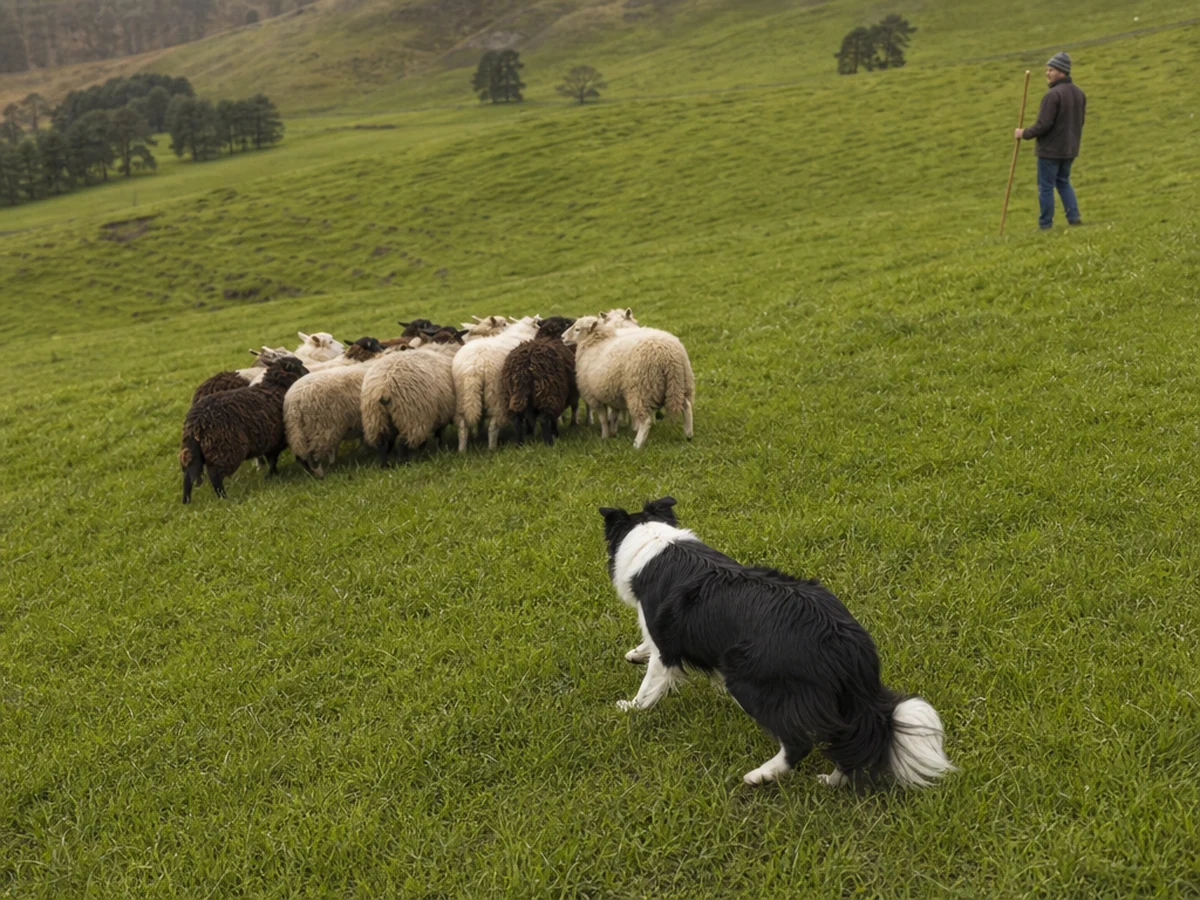
Notice what was being rewarded. Not a dog who merely chases, but a dog who controls movement with posture and stare. The standard says intensity, energy, and trainability matter as much as size and appearance, and you get all of it in one body. That explains the dog who can hold a flawless down for sheep and cannot hold one when the mail carrier shows up.
The same package made the breed a star in modern sports. Borders rule the championship levels of agility, and they often excel in herding events, obedience, rally, tracking, flying disc, and flyball. Rally is mentally challenging but moderate, which suits a dog who needs to think more than sprint. If agility sounds like your next step, read about starting Border Collie agility with low jumps and focus games.
The catch is the dog's own opinion of their job. The breed is a remarkably bright workaholic and can be too much for owners without the time, energy, or means to keep them busy. Plan structured work every day, because otherwise the dog will assign themselves some.
Why Does a Border Collie Herd Everything?
Because their bodies and minds were crafted for it, and they are naturally drawn to chasing and controlling the movement of animals. Your dog was never taught to herd, so you cannot simply tell them to stop. What you can do is give the drive an approved outlet and manage the rest.
Moving Things Count as Stock
Owners describe puppies stalking, staring, or dropping into a herding crouch toward other dogs, dogs retrieving balls, and people. Others report herding snowflakes, orange traffic poles seen from a car, and vehicles circled with barking and biting at the tires. Several owners say their dog singles out running dogs with a focus that is very hard to break.
Children are the classic target, which is why the breed does best with older, well-behaved kids. Some dogs creep toward walking children, and many owners report puppies who stalk, stare or drop into a crouch toward people and other dogs. Early, positive exposure to many people and situations through about seven months helps the dog sort out what is stock and what is just a person.
Misread Intent and Real Risk
Other people often mistake chasing or circling for aggression, even from a well-trained dog who circles a group with no bad intent. Some owners find the stalking appears only in certain settings, such as one-on-one with a familiar dog, and treat it as a teaching moment while the dog is controlled. When you see early stalking, you can call your dog and reward them with a treat for coming over, which gives the instinct a calmer way to end.
The risk is real, though. Herding focus can lead to conflict with other dogs, and a dog who stares down and corners a bigger dog can be badly hurt. Keep a leash or long line on until your recall holds, and read our guide to eye, stalk, and stance at home. Change goes at the dog's pace, and management protects that training, so use gates, leashes, and distance while skills build.
Finding Herding Lessons With Real Sheep for Dog Sports
Real sheep are the one thing nothing at home can copy, so if your dog shows any interest, a few lessons are worth the drive. Look for a qualified instructor who works with calm, suitable stock that is used to dogs. Calm sheep protect the animals and your dog's confidence, and they let the instructor teach instead of rescue.
Start With an Instinct Test
Ask local herding instructors about an instinct test, a short supervised look at whether your dog shows interest, eye, and the urge to circle. Herding drive varies a lot. Some dogs show weak or no herding, and some bought to work livestock turn out to fear the animals and become much-loved pets instead.
Plenty of young dogs with no obvious aptitude pick it up by watching parents or siblings, and experienced breeders report the same. Owners see herding, or the lack of it, at every age from puppyhood to adulthood. Common advice says to write the dog off if nothing happens by a set age, and that does not match what owners report. One cold session is not a verdict.
What a First Lesson Looks Like
Every instructor runs things a little differently, but a first lesson usually follows a pattern like this:
- The instructor talks with you away from the stock and watches how your dog handles excitement before anything starts.
- Your dog meets a few calm sheep in a small, enclosed space, on a leash or long line at first.
- The instructor watches for eye, stalking, wide circling, and whether your dog can think around stock instead of crashing into it.
- A stop or lie down is asked for, the marker word lands the instant your dog drops, and the reward is praise, a treat, or permission to go back to the sheep.
- The session ends early, while your dog is still keen and clear-headed.
Your homework is the stop, not the chase. Teach a lie down at home with a marker word and a reward until it is solid, so it still works when the sheep make everything harder.
Can a Herding Ball Stand in for Sheep in Dog Sports?
A herding ball is a large, sturdy ball your dog pushes and circles rather than carries. For a Border Collie it offers a moving target to stalk and control, with no kids, cats, or shovels involved. It is a good outlet and an excellent paycheck, but it is not a flock.
What the Ball Gives You
Owners report intense focus on balls and round objects, including nudging, chasing, and staring at a ball waiting for it to move, and bigger balls bring more excitement. That focus is useful. Some owners find their dogs rank a herding ball above cooked chicken, hot dogs, dried liver, and chicken jerky, and for some dogs a ball or frisbee beats food altogether. A pushed ball can pay for a calm stop or a fast recall when treats cannot compete.
Stand-in flocks help too. Some owners have their dog work around buckets and a lawn chair, and the ambitious build decoy sheep. It looks silly and it works, because the dog gets to circle and hold position around something that stays put.
What It Cannot Replace
Sheep push back, think, and teach a dog to read an animal, while a ball only rolls. Common advice says to wear a Border Collie out with endless ball chasing. We disagree, because that feeds the staring and fixation you are trying to soften. Use the ball for calm work, not volume.
Not every dog cares. A minority are not toy driven or lose interest in toys fast. If that is yours, try scent work, where the dog searches out odors hidden indoors and outdoors. Disc games, with you throwing and the dog catching, are another good way to burn energy and keep play exciting.
Herding Ball Games for Your Border Collie
Ball games work best when you treat them like a job with a clear start and finish. The setup matters as much as the game itself.
Choosing the Ball Size
Pick a ball too large for your dog to grab in their mouth, so they push it with nose and chest instead of fetching. Bigger balls prompt more excitement, so a very large one can spike an already intense dog. Start in the middle of the size range and watch. If your dog sits and stares at the ball waiting for it to move, store it out of sight between sessions.
Rules for Safe Sessions
- Keep sessions short and end them while your dog is still keen, not when they are frantic.
- Teach the stop first without the ball, then add the ball. Say your marker word the instant they drop, then pay with praise, a treat, or a push of the ball.
- Put the ball away when the game ends so it never becomes something to stare at all day.
- Play on grass or other forgiving ground, not slick floors or hard concrete, because skids and sharp turns are rough on joints.
- Use a fenced space free of children, other dogs, and traffic, because a dog in ball mode may herd whatever moves next.
- If your dog cannot stop, calmly end the game, put the ball away, and try again later with an easier stop.
Fast ball games ask for sudden turns and hard stops, and athletic work in general, such as agility, adds strain on the joints along with extra demand on the heart and lungs. Keep up regular vet visits and ask your vet before you ramp things up. For how much total activity is enough, see Border Collie exercise by age.
Dog Sports Progress and When to Call a Pro
Progress with this breed is easy to miss because you are measuring calm, not tricks. Judge by how the house feels and how fast your dog can switch off.
- Evenings get calmer, and your dog flops on the rug beside you once the day's jobs are finished.
- Stops on cue come quickly, even mid-excitement, and your dog drops for praise or a ball.
- Stalking breaks off when you call, and your dog comes over for a reward.
- Chores and yard work happen without a dog attached to the broom or shovel.
- Sessions with sheep or the ball end without whining or frustration, and your dog does not go looking for the next thing to control.
Call for help if fixation will not break despite your best efforts, if your dog nips people, or if there is no off-switch even after real exercise and mental work. Singling out and cornering other dogs, or any injury from a herding episode, belongs on that list too. When careful management still leaves home or walks feeling unsafe, a behaviorist's help is the next step, and muzzle training is another option.
The pattern across this breed is simple. They were bred to work all day with their minds switched on, so give them structured work every day, whether that is sheep lessons, ball games with calm stops, or a sport. Give the instinct a job, and the dog stops inventing one on your kids, your vacuum, and your tires.
 Exercise and jobsBorder Collie Exercise by Age and When the Calm Finally Comes
 Training basicsPotty Training a Border Collie Puppy With a Steady Routine
 Training basicsHow to Train a Border Collie: Turn Energy Into Good Habits