 Border Collie
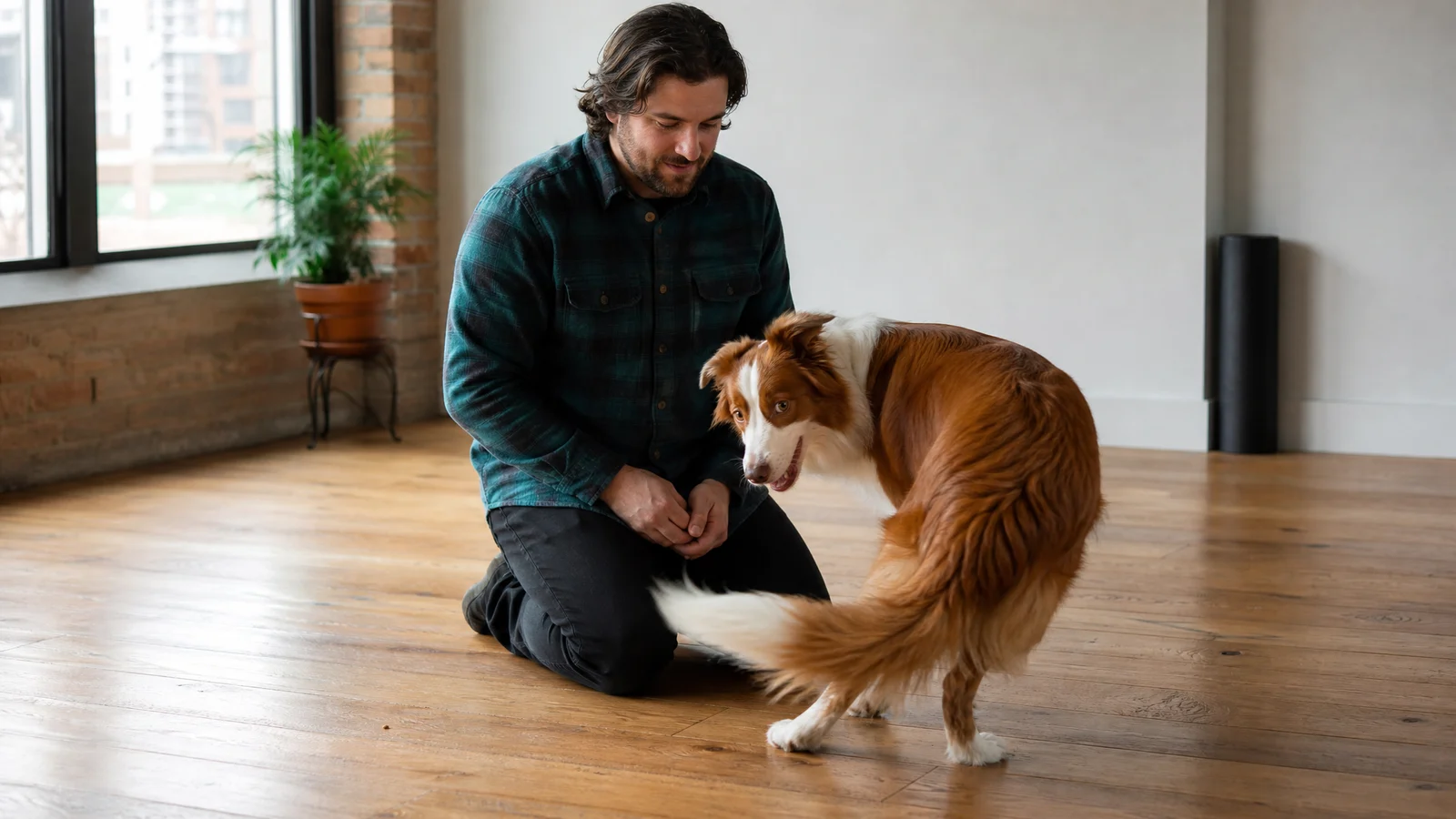
Trick lists are easy to find and hard to choose from. Spin, roll over, shake and a dozen more all look simple on paper, yet the right first one depends on the dog standing in front of you, the floor under them and how well the handler can time a reward. We wrote this page to make that choice quicker.
Every lesson also starts from a different place. One needs only a hand and a quiet moment, another needs open floor, a third needs an obstacle set low and safe. Matching the trick to the setup you actually have is half of making it easy.
Ahead you'll find a short screen that works on any trick idea, then the separate trick lessons sorted by setup. Treat the screen as a habit for every new idea, since the right answer changes from dog to dog.
What Makes a Border Collie Trick Easy for One Dog
The American Kennel Club gives the Border Collie the highest rating for trainability and for playfulness, and describes the breed as highly intelligent and highly trainable. Those are descriptions of the breed as a whole. They cannot say which trick a particular Border Collie will find easy, or whether they will enjoy every kind.
An easy trick, then, is one that sits close to something this dog already shows. A dog who sometimes lifts a paw, turns in a circle at the door or lowers into a down has already handed the handler a first step to reward.
Two Border Collies can face the same trick and offer different first steps. Watching what this dog does before choosing saves a lesson that has nowhere to start.
A Four-Part Border Collie Trick Screen
Before teaching anything, run the idea through four questions. Battersea Dogs & Cats Home advises deciding on the final behavior first and breaking it into small steps, each rewarded in sequence. It also notes that the marker must land exactly on the behavior, with the reward following within three seconds. Both points shape the screen.
- Does the first step already appear in this dog's day, so there is something to reward from the very first try?
- Can the handler mark that step cleanly, at the instant it happens, and deliver the reward in time?
- Does the finished movement suit this dog's body and the surface under them, with an easy way to skip it?
- Does the whole lesson fit inside a short session, with a finish the dog can actually reach?
Which trick comes first when this dog passes the screen on two of them? Begin with the one that asks for less setup and stay with it until the finish is easy to reach. Starting both at once splits the handler's timing between two sets of first steps, and the second idea will pass the screen again later.
A trick that fails a test has not been ruled out. It usually needs a smaller first step, a softer surface or a calmer moment, and the screen can be run again once one of those changes. When the failed test is about comfort, such as a movement the dog avoids, a different trick is the better answer.
Border Collie Trick Lessons Sorted by Setup
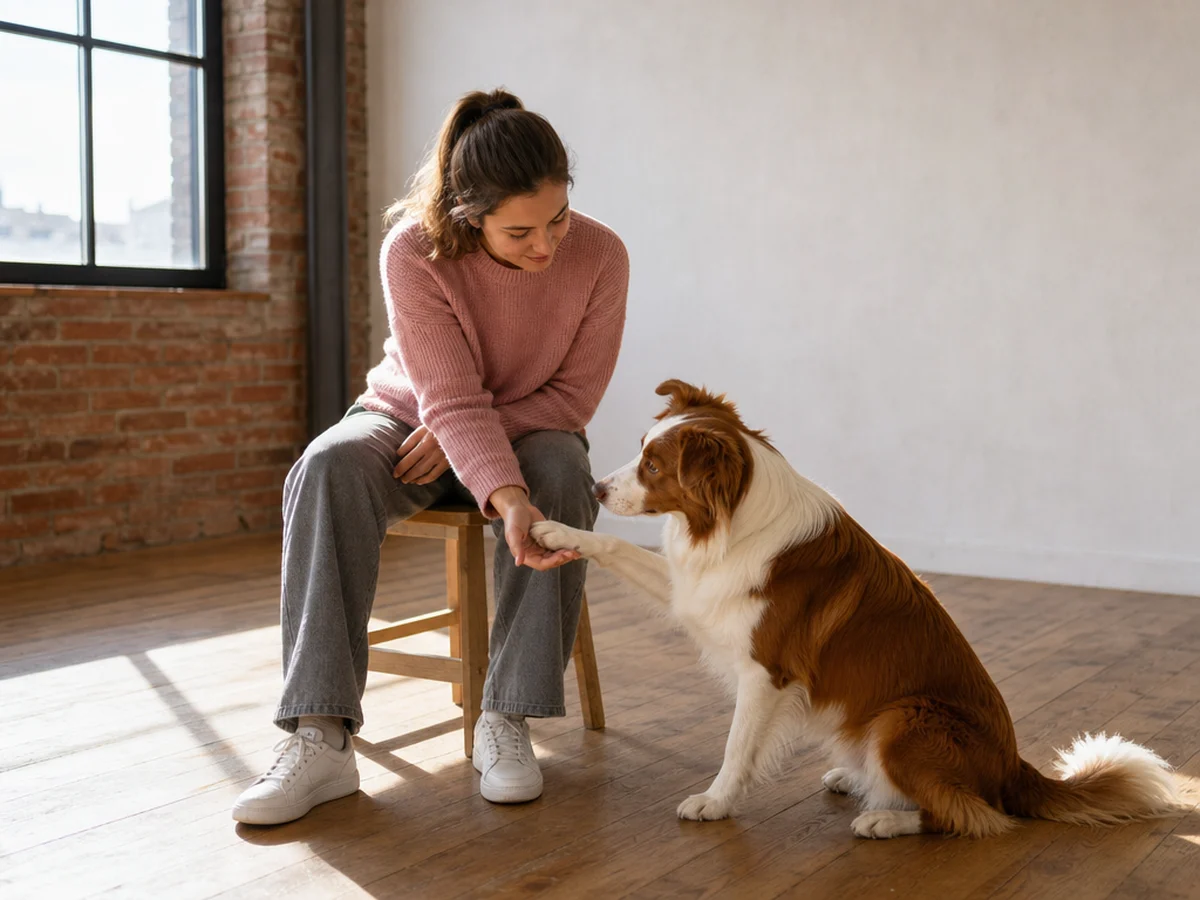
Setup here means what has to be in place before the first rewarded try, and it says nothing about which lesson is harder. Shake and high five need almost nothing, only a hand, a few rewards and a calm moment.
Spin and roll over come next because both need floor space. Spin wants room to move a few steps. Roll over also wants a comfortable, non-slip surface where lying down is easy and skipping the trick is always a fair choice. Weave through the legs asks more of the handler, who needs a stance that leaves a gap and room for the dog to pass without crowding.
Does the setup order mean a Border Collie should learn the lessons in that order? No. The order describes what has to be ready, not what suits a given dog. The screen and what this dog already offers decide where to start, and a lesson further down the list can be the right first one.
Jumping over a low obstacle sits at the far end because it needs an actual obstacle, kept low and stable, with clear space on both sides and a comfortable landing. A dog ready for something longer than a single trick can look at our Border Collie sports guide, which covers sustained activity.
Short Trick Sessions Across the Border Collie's Day
The RSPCA advises breaking training into short but regular sessions so a dog is not overwhelmed. For tricks, short means each session ends while the dog is still doing well, and regular means the lesson comes back across days.
Variety helps these sessions last. PDSA counts training as part of every dog's daily routine, one that keeps the mind active, reinforces cues and prevents boredom. A Border Collie who has repeated one lesson for several days can swap in a different trick from the setup list above and keep the routine fresh.
Does a Border Collie trick session need a particular time of day? Nothing in our sources ties tricks to an hour. What matters is that the handler can mark the step at the instant it happens and the reward is ready, with the floor and setup already in place. A short session in a quiet moment, rewards within reach, does that better than a perfect slot on the clock.
A dog who still seems restless or starts chewing after their tricks is worth a wider look. Our Border Collie exercise guide shows how activity is arranged across ages, and our Border Collie brain-work guide covers boredom in more detail.
Regular veterinary visits are part of looking after any dog who trains. If a movement looks uncomfortable for a dog, or their response changes suddenly, stop the lesson and ask the veterinary team before trying again.
Before the First Border Collie Trick
Most first tricks need very little: a few rewards within reach, a floor the dog finds comfortable, a handler who knows exactly which moment to mark and a quiet room. Gather them before the dog arrives and read the four questions through once. A hand, a clear floor and one marked moment are enough to begin.
 Exercise and jobsHow to Teach a Border Collie to Spin
 BehaviorHow to Stop a Border Collie Pulling on the Leash
 Exercise and jobsIndoor Activities and Brain Games for a Border Collie