 Border Collie
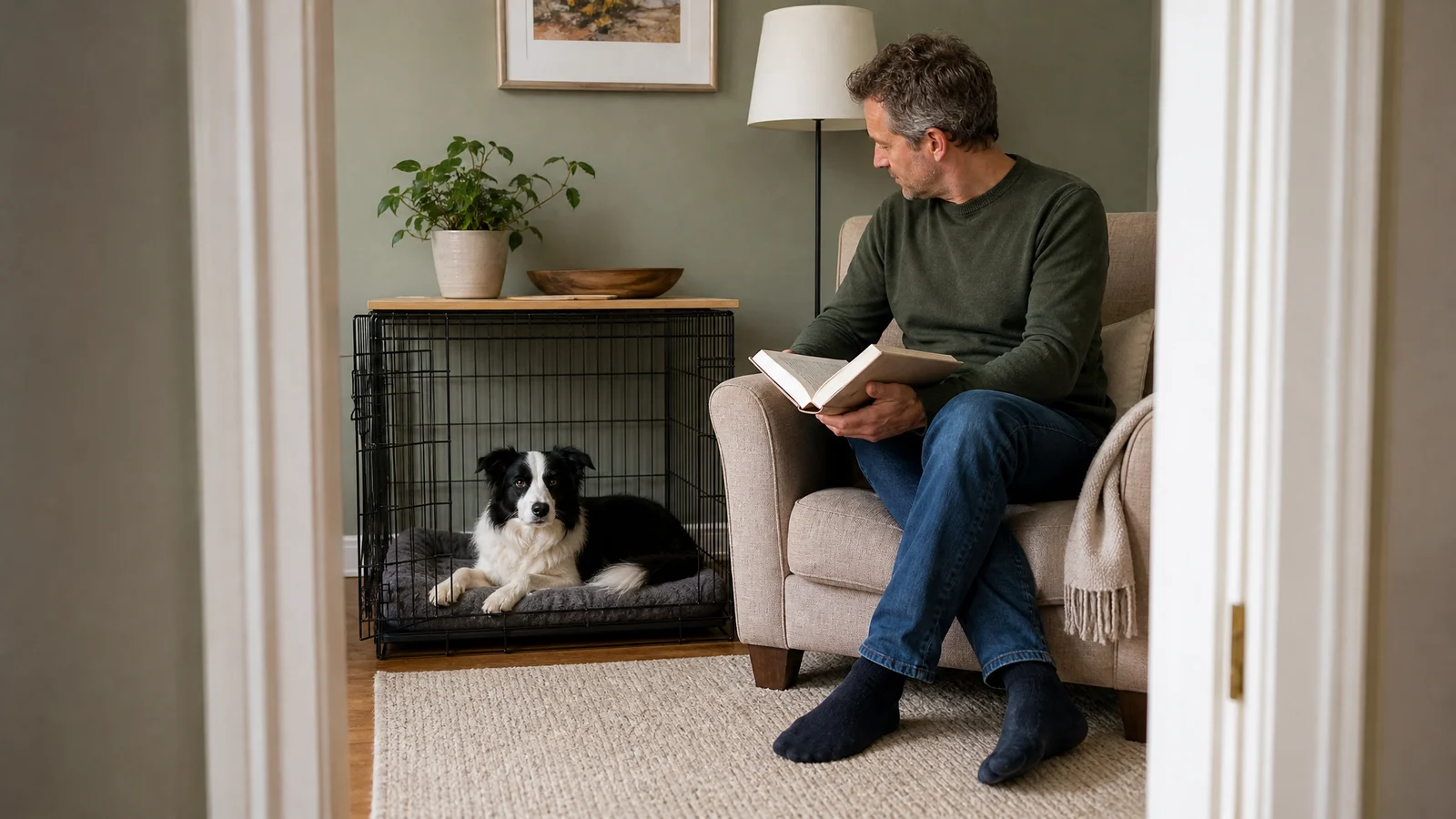
The most common crate mistake is asking for two new skills at once. A Border Collie is placed behind a closed door, then the person disappears. The dog has not yet learned that the crate is a comfortable resting place or that separation is safe. If they become worried, the crate and the departure can both start predicting trouble.
We recommend treating crate comfort and alone time as separate decisions. First build voluntary entry and rest while you stay nearby. Then add the door, distance and absence one small change at a time. This guide helps you choose a setup, read your dog's response, decide when to advance and recognize when a crate is not the right place for separation practice.
Choose the Border Collie Crate Setup
A crate should let your Border Collie stand, turn around and lie comfortably without providing a large pacing area. Place it where daily life is calm enough for rest but not isolated from the household. A quiet corner of a living room often works better than a remote room, because the first lesson is relaxation near you.
Add comfortable bedding only if your dog leaves it alone. Keep water available as appropriate for the length and setting of the session. The crate is a resting space, never a place used after unwanted behavior. The crate guidance from the RSPCA likewise frames introduction as short, positive work rather than all-day confinement.
The breed context matters, but it does not dictate the answer. Border Collies were developed for close, responsive work and need purposeful activity. A crate cannot supply that work. Meet physical and mental needs outside the crate, then use the crate to teach the different skill of settling. Our guide to daily Border Collie training habits shows how that balance fits the rest of the day.
Think about traffic around the crate as well as the crate itself. A dog who is repeatedly startled by feet, doors or household equipment may stay alert instead of resting. Give the resting area a protected side and a clear view of the room, then keep arrivals and departures quiet enough that the location does not become a lookout post.
Crate Training Begins With an Open Door
The first decision is simple: will your dog enter freely? Brace the open door so movement and noise cannot surprise the dog, scatter a few treats near the entrance and let your Border Collie investigate. Mark any voluntary approach, then deliver the reward where the useful choice happened. If only a nose crosses the threshold, that is the current step.
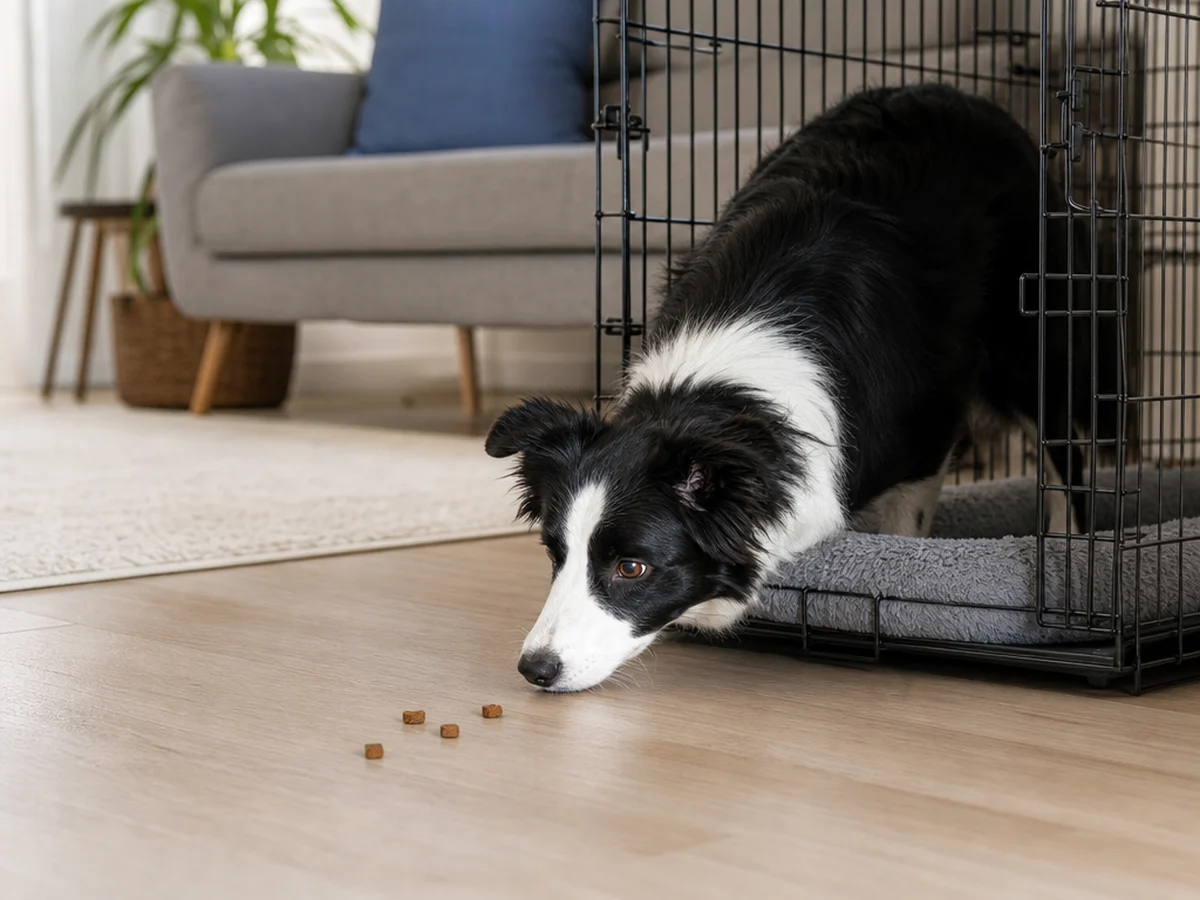
Build the final behavior through small pieces. Shaping in small steps means rewarding progress toward the full action rather than waiting for a perfect result. For a quick, observant dog, careful timing prevents the lesson from turning into frantic guessing.
Use this readiness checklist before touching the door. All of these signs should be present before the latch joins the exercise.
- Your dog approaches the crate without being guided by the leash or pushed from behind.
- They can step fully inside, eat a reward and turn around without rushing back out.
- They will pause, sit or lie down while the doorway remains completely open.
- Their body stays loose enough to take food gently and look around the room.
- They can leave when released, which keeps entry a genuine choice during this stage.
If any item is missing, stay with the open door. Feed a meal near the entrance, place a chew inside while you sit beside the crate or reward a quiet lie-down. Progress comes from making the current choice easy, not from trapping the dog until they stop moving.
Vary the reward once entry is easy. Sometimes place food inside before your dog enters, and sometimes deliver it after they choose the crate. That difference prevents the sight of food from becoming the only reason to go in. The useful habit is choosing the resting place even when the reward is not already visible.
Does the Border Collie Crate Stay Easy?
Closing the door changes the exercise even when you remain beside the crate. Touch the door, reward calm and open it again. Next move it partway, then close and reopen it before your dog asks to leave. Each repetition should finish while their body still looks much as it did with the door open.
Green Lights for Crate Training
A dog who can continue eating, shift into a comfortable position and glance away from you is coping with the step. They may notice the latch or watch you move, but they can return to the chew or settle. Stay at that level until the closed door becomes ordinary, then vary the duration gently rather than making every repetition longer.
Reward on the crate floor so the value stays inside. Open the door after a quiet moment, give the release cue and allow an unhurried exit. The goal is not a dog who bursts out the instant the latch moves. The goal is a dog who understands both staying and leaving as calm, predictable parts of the routine.
Signals to Make the Crate Step Easier
Repeated scratching, hard panting, refusing food, frantic turning or a sudden rush at the door means the step is too difficult. Open the door calmly and return to the last version your dog handled. That might mean a partly closed door, a shorter pause or simply resting with the entrance open again.
Do not wait for exhaustion to create stillness. A dog can be motionless and still distressed. Judge progress by the ability to eat, think, shift position and recover, not by silence alone. If the same worry appears at a very easy step, pause the plan and consider whether another safe resting area would suit this dog better.
Also practice ordinary life while the door stays closed. Sit down, stand up, carry a cup or open a cabinet, returning often to reward settled behavior. A Border Collie notices these small motions. Making them unremarkable prepares the dog for distance without turning every movement into a signal that you are about to leave.
Separate Crate Training From Alone Time
Distance is a new variable, and leaving the room is another. Add them separately. A Border Collie who rests while you sit beside the crate has not automatically learned to rest while you cross the room. Likewise, crossing the room does not prove that closing the front door will feel easy.
Follow this order only while your dog remains relaxed. Return to the previous item whenever their response changes.
- Stand up beside the closed crate, reward calm and sit down again.
- Take one step away, return promptly and place the reward inside the crate.
- Move around the same room while returning often enough that your dog stays settled.
- Step out of sight briefly, then come back before concern begins.
- Practice ordinary departure motions separately, such as picking up keys and putting them down.
Change only one part at a time. If you add more distance, keep the time easy. If you extend the time, stay closer. Mix simple repetitions among harder ones so your dog cannot predict an endless climb. Separation guidance from the ASPCA emphasizes keeping absences shorter than the point where distress begins.
Potty needs can interrupt even a well-planned session, especially for a puppy. Arrange an outdoor trip before practice rather than asking the crate to hold a puppy past their comfort. The Border Collie potty training routine can help you coordinate rest, supervision and outdoor opportunities.
Departure cues deserve their own easy rehearsals. Pick up a bag, put it down and remain home. Touch the doorknob, return to your chair and reward calm. When these actions no longer make your dog spring up, combine one cue with a very brief step out of sight. Keep the crate portion familiar while the departure detail changes.
When Crate Training Reveals Distress
Crate reluctance and separation distress are not the same problem. A dog may dislike confinement while staying relaxed alone in a room. Another dog may enter the crate happily while you are present, then become distressed as soon as departure cues appear. Test those pieces separately so you do not solve the wrong problem.
If your dog becomes upset only when alone, making the crate more attractive will not necessarily make separation easier. The same guidance notes that a crate suits some dogs during separation work and adds stress for others. A dog who tries desperately to escape, cannot eat or becomes more frantic in confinement needs a different arrangement, such as a dog-safe room with more space.
Rebuild the Separation Step
Stop rehearsing absences that exceed your dog's current ability. Arrange company when possible while you rebuild the skill at an easier level. A qualified reward-based behavior professional can help set that threshold and design gradual practice. Regular vet visits also matter, and a sudden change in comfort or behavior deserves a conversation with your veterinarian.
Do not use exercise as a test of whether worry is real. Appropriate activity can help a Border Collie arrive ready to rest, but fatigue does not teach safety. The breed profile describes a bright workaholic who may be a poor fit for homes without enough time to keep them occupied. That context explains the need for a balanced day, not a reason to force a worried dog through the crate lesson.
Record which piece caused the change. If worry began when you stood up, the next session belongs at that transition, not at the front door. If the closed crate is comfortable but a key sound is not, practice the sound without leaving. Breaking the problem apart keeps you from repeating the whole sequence when only one detail needs work.
Build the Next Calm Crate Repetition
The useful question is not how long another Border Collie can stay crated. It is which version your dog can complete with a loose body, a working appetite and an easy recovery. Choose that version, repeat it successfully and stop before the exercise becomes a test.
Measure progress by flexibility as well as duration. A dog who can rest after a small household noise, accept a different chew or settle while you change chairs understands more than a dog who succeeds only in one exact setup. Add that flexibility slowly, preserving the relaxed response that made the previous version useful.
Today might mean dropping a treat near an open door, closing the latch and opening it again, or taking one step away. Keep the next repetition easier than your ambition. When crate comfort, distance and absence grow as separate skills, your dog gets a clear path toward rest instead of one large problem they are expected to endure.
 Exercise and jobsBorder Collie Herding Work: Sheep Lessons and a Herding Ball
 Exercise and jobsBorder Collie Exercise by Age and When the Calm Finally Comes
 Training basicsPotty Training a Border Collie Puppy With a Steady Routine