 Border Collie
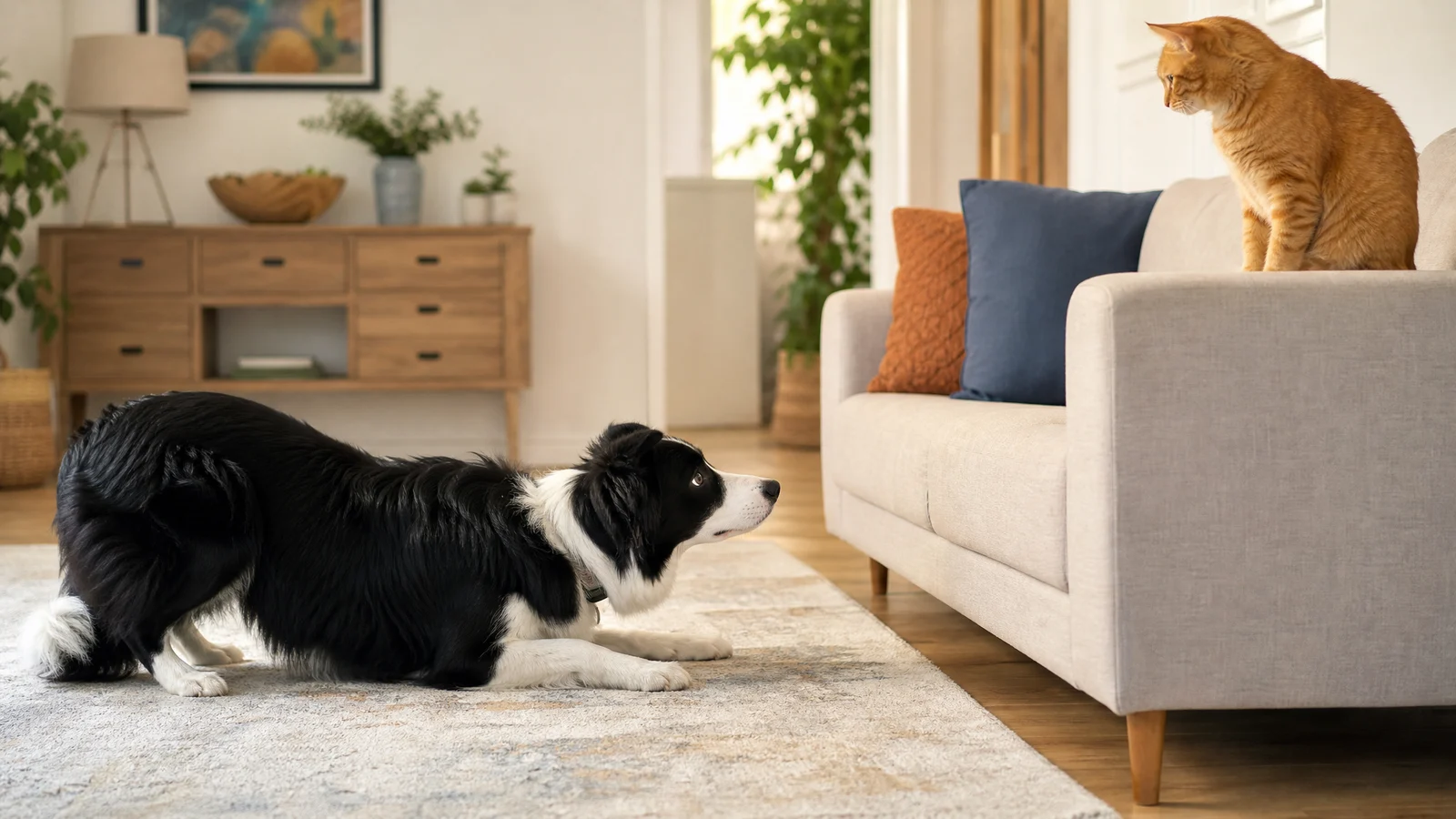
A Border Collie's hard stare, slow creep and frozen stance are herding instinct, not aggression, and you handle them by rewarding calm rather than trying to stop the look. Mark and pay for the moment your dog glances away, softens or sits, and easing off becomes the choice that earns the good things.
The reason goes back to the job. The AKC standard says the breed was developed to control stock with an intense gaze called "eye," joined to a stalking style of movement. In a house, kids, cats and vacuums stand in for the sheep, and helping owners through exactly that is what we specialize in.
Handled early, that focus becomes a dog who checks in with you. Left alone, it hardens into fixation. This article looks at training around the Border Collie's eye, stalk and stance, and shows you how to read the stare, reward a look-away, a sit or a settle, and manage herding of children, household tools and other moving things.
Reading Eye, Stalk and Stance in a Border Collie
Watch a Border Collie when something starts to move and the whole sequence plays out in seconds. The head drops, the stare locks, and the body slows into a low, deliberate creep that ends in a freeze, often with one front paw hovering. In a living room it looks eerie, and to people who have never seen it, it can look like aggression. It is the working style this breed was selected for.
The breed standard describes stock controlled with an intense gaze known as eye, together with a stalking style of movement, and that is what you are seeing. Eye is the hard stare. The stalk is the slow approach. Stance is the held posture between them, with a lowered head, a stiff tail and weight shifted forward. The standard also praises extraordinary instinct, so none of this needs teaching, and it attaches to whatever moves.
Telling Instinct From a True Problem
Instinct is orderly. Your dog fixes, creeps and freezes, yet can still hear you, and a treat or a cheerful call usually loosens the grip. Owners see it aimed at brooms, mops, vacuums, snow shovels and lawn mowers, and at odder movers such as falling snowflakes, traffic poles passing the car window and vehicles circled while barking at the tires. Chores become a daily trigger rather than a rare event, so plan for them.
A true problem looks different. Growling, snapping that breaks skin, a fixation nothing can interrupt or a sudden change in behavior all deserve a call to your veterinarian, followed by a reward-based trainer. Regular vet visits belong on your calendar anyway. Some collies show very little eye and make wonderful pets regardless, so a quiet dog is not a flawed one.
Training a Window-Watching Dog in a Small Apartment
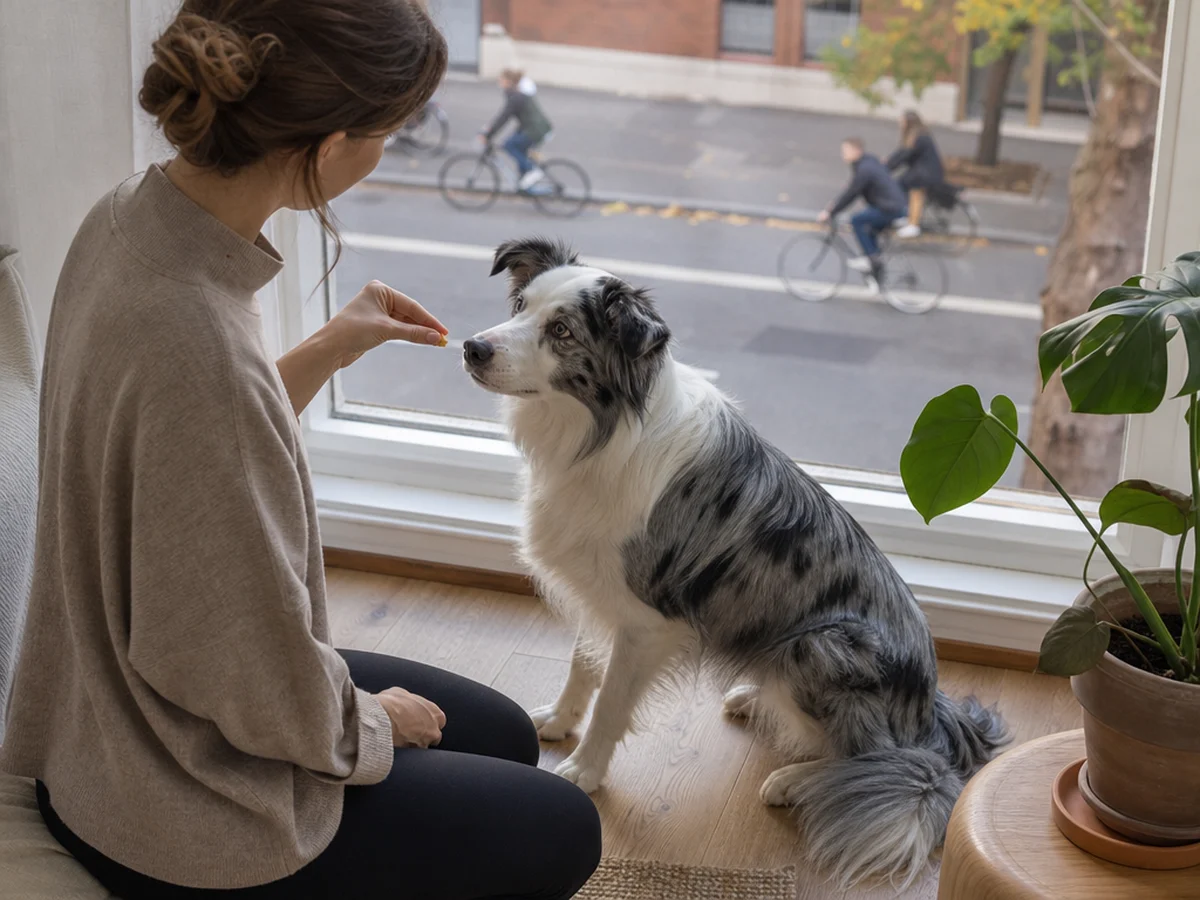
An apartment puts a herding dog behind glass with a nonstop show outside. Bikes whir past, joggers hold a steady pace, a bus idles at the corner, and every footstep in the hallway sounds like an arrival. A Border Collie may spend the day rehearsing the stare and the creep at the window, then carry that wound-up focus into the evening. They are not being difficult, just working the only flock available.
Marking the Look Away at the Window
Begin with the marker. Pair your word or click with food first, and follow the clicker training basics of giving the treat within 3 seconds of the click, over several quiet repetitions. Then stand beside your dog at the window. When they notice a passing bike and then turn away, mark it and pay. Pay again for the glance back at you, because that look is the habit you are building.
Between sessions, a strip of frosted film across the lower panes cuts down the rehearsal. You are not hiding the world, only shrinking the audience for a stare that grows with practice.
Hallway Noise and the Sidewalk
Hallway noise works the same way. Teach a wait at the door, with a look at you as the signal for release, and reward eye contact or a calm pause whenever footsteps pass outside. When the stare gets sticky, break it with a game. Bowl a treat underarm across the floor, or count and drop treats onto a mat one at a time.
For the sidewalk and the elevator, borrow from leash reactivity work. Approach a trigger only until your dog notices it but stays relaxed, then retreat and pay with praise, a toy or a treat. Repeat the exercise before they have a chance to react.
Rewarding Calm When Children Run Past Your Border Collie
Kids racing down a hallway are close to a perfect herding trigger. They move fast, change direction and squeal, and a Border Collie may drop low and creep after their sneakers or nip at heels as though turning a flock. Nobody is being mean. The dog is doing what the breed does, and a child can still get hurt, which is why a family with small children needs rules as well as rewards.
Border Collies tend to herd people as well as animals, so they do best with older, well-behaved children. That is not a verdict on your family. It means gates, supervision and clear house rules are a normal part of life with this breed. Our guide to socializing a Border Collie covers the early window that runs to about seven months.
Start with the child still. With your dog on a leash and far enough away to take a treat, have the child sit or stand quietly. Mark and pay for any glance away, sit or settle on a mat. Then let the child take a few slow steps, and add speed only while your dog stays loose. If the stare locks, you have asked too much, so add distance and try again.
Rules the Children Can Follow
A few house rules keep the practice safe and make the kids part of the team:
- Walk rather than run or squeal when the dog is loose in the same room.
- Freeze and let an adult step in if the dog starts to creep.
- Never chase the dog or grab at anything in their mouth.
- Toss a treat onto the mat only when an adult says so, and only for calm behavior.
- Save the wild games for outside or for times when the dog is behind a gate.
Wild play is the time for the baby gate. Pay your dog a handful of treats on their mat while the kids burn off energy, and the sound of running starts to predict a reward instead of a chase.
Training Calm Between Two Dogs Sharing One Home
When a second dog lives with your collie, that dog is the easiest flock of all. The Border Collie fixes on the other dog's trot across the yard, drops into a crouch and creeps closer, and the other dog answers by freezing, bolting or snapping. Many owners describe a collie who singles out a running dog and herds them with a focus that is very hard to break. Some owners find that other people read the circling as aggression, when it is herding.
Interrupting the Sequence Early
Interrupt at the first stare, not the last stride. Call your dog in a bright voice and treat the moment they turn toward you. Every time they choose to look at you instead of creeping closer, that is the habit to grow. Practice at low excitement first, with the other dog resting nearby, and bring the real thing closer only as your collie keeps succeeding.
Paying for the Pause
Any moment where your collie holds still without creeping, looks away or lies down while the other dog moves earns a marker and a treat. A mat in the corner gives them somewhere to go, and settling there while the other dog plays should be the best-paid behavior in the house.
Watch the flash points, because balls and round toys are the usual trigger. Many collies nudge a ball, guard it or stare at it waiting for it to move, and bigger balls bring more excitement. Put the ball away when both dogs are together, and use it as a reward for the calm dog's quick stop or recall.
For some dogs a ball outranks even cooked chicken, so it can be your strongest payment. Keep a long line on around unfamiliar dogs, since a collie who stares a larger dog into a corner can end up hurt.
Training Calm When the Owner Works All Day
Full days at the office leave a Border Collie with hours of unspent focus, and focus has to land somewhere. It might be the mail slot, the sounds from the next unit, or a ball that gets stared at, waiting for it to move. Then you come home, pull out the vacuum, and the whole day's pent-up eye goes to the machine. This is a breed for active owners, so long absences are a real challenge, and the plan has to make the most of the hours you control.
Small Rewards Before and After Work
A routine of small calm rewards does more than one heroic weekend. Before you leave, run a short training game, offer a food puzzle and settle your dog on a mat with a chew. A midday walker or sitter can break up the stretch and pay for a calm look-away on the sidewalk. Greet your dog quietly on return and reward a sit or a settle before anything exciting happens.
Chores Without the Fixation
In the evening, give the brain real work, then deal with chores deliberately. Teach your dog to stay back and look at you when the broom, snow shovel or mower comes out, and pay for watching from a mat or behind a gate. Some owners shut the dog indoors for yard work, which is sensible since a dog can hurt their mouth on a shovel.
The households that do well treat the evening settle as seriously as the walk. Once the day's work is done, these dogs will happily turn to cuddle time, and that calm is worth building on purpose.
A Two-Week Training Plan for Calm Over Eye
Pick up a treat pouch tomorrow and watch for one moment: your dog looks at something that moves, then looks away. Mark it and pay. Every case above grows from that single habit, and the sooner you start, the easier it gets, because calm that is rewarded early and every time becomes your dog's first answer.
Stay indoors with easy triggers. Mark and pay for calm glances at a rolling ball, someone walking past, a parked vacuum and the cat across the room. Practice the wait at the door with a look at you before the release, and add one short game a day, such as bowling a treat underarm or counting and dropping treats. Watch the stance, and pay as soon as the head lifts or the tail loosens. Midweek, add the mat and let the family take turns.
Now take the practice outside, starting far from the trigger. Kids on the sidewalk, a bike at the far end of the path, the other dog trotting across the yard: reward any look-away, sit or settle, and move closer only after several calm passes. Back off the moment the head drops. Keep a long line on near roads and bring out the herding ball for your best calm stops. If something feels too big, a reward-based trainer can coach you in person.
Do not expect the eye to disappear, and do not wish it away, because it is the breed's greatest gift. What changes is where it points. Because the focus runs so deep in this breed, Border Collie herding work with sheep is worth exploring too. Keep rewarding calm, and the eye is channeled, not erased.
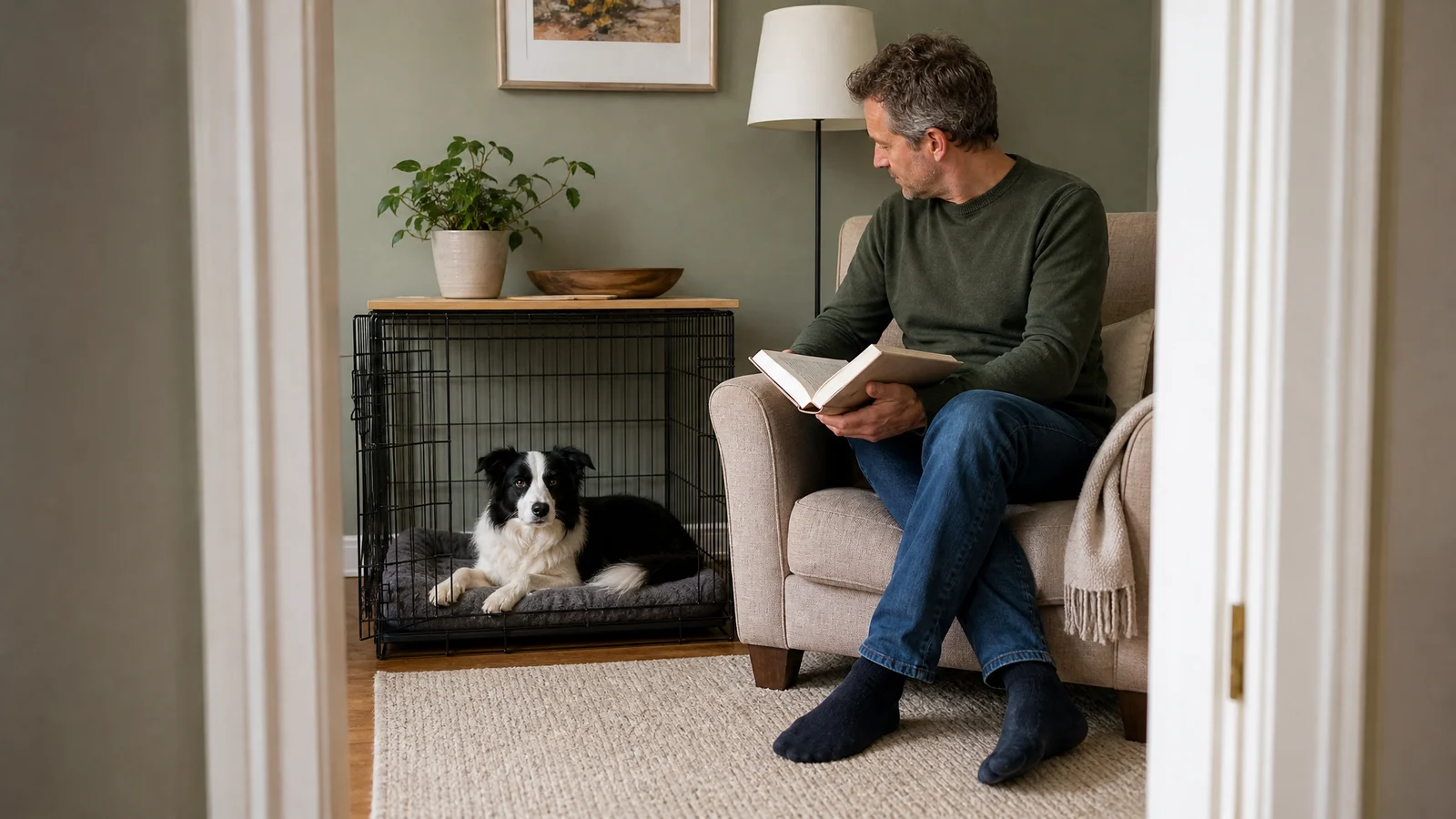 Training basicsCrate Training a Border Collie Who Shadows You Without Panic
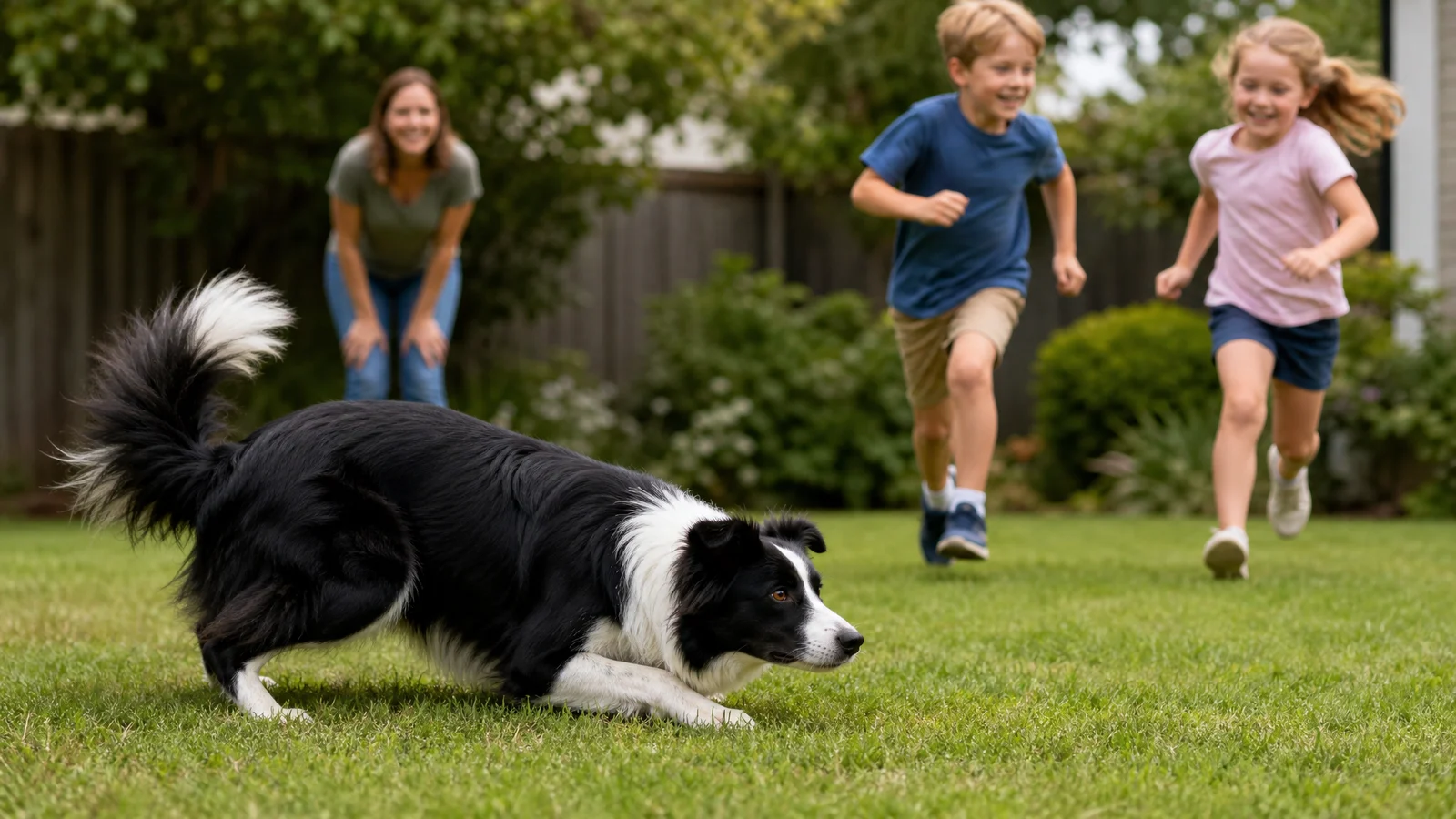 Exercise and jobsBorder Collie Herding Work: Sheep Lessons and a Herding Ball
 Exercise and jobsBorder Collie Exercise by Age and When the Calm Finally Comes