 Border Collie
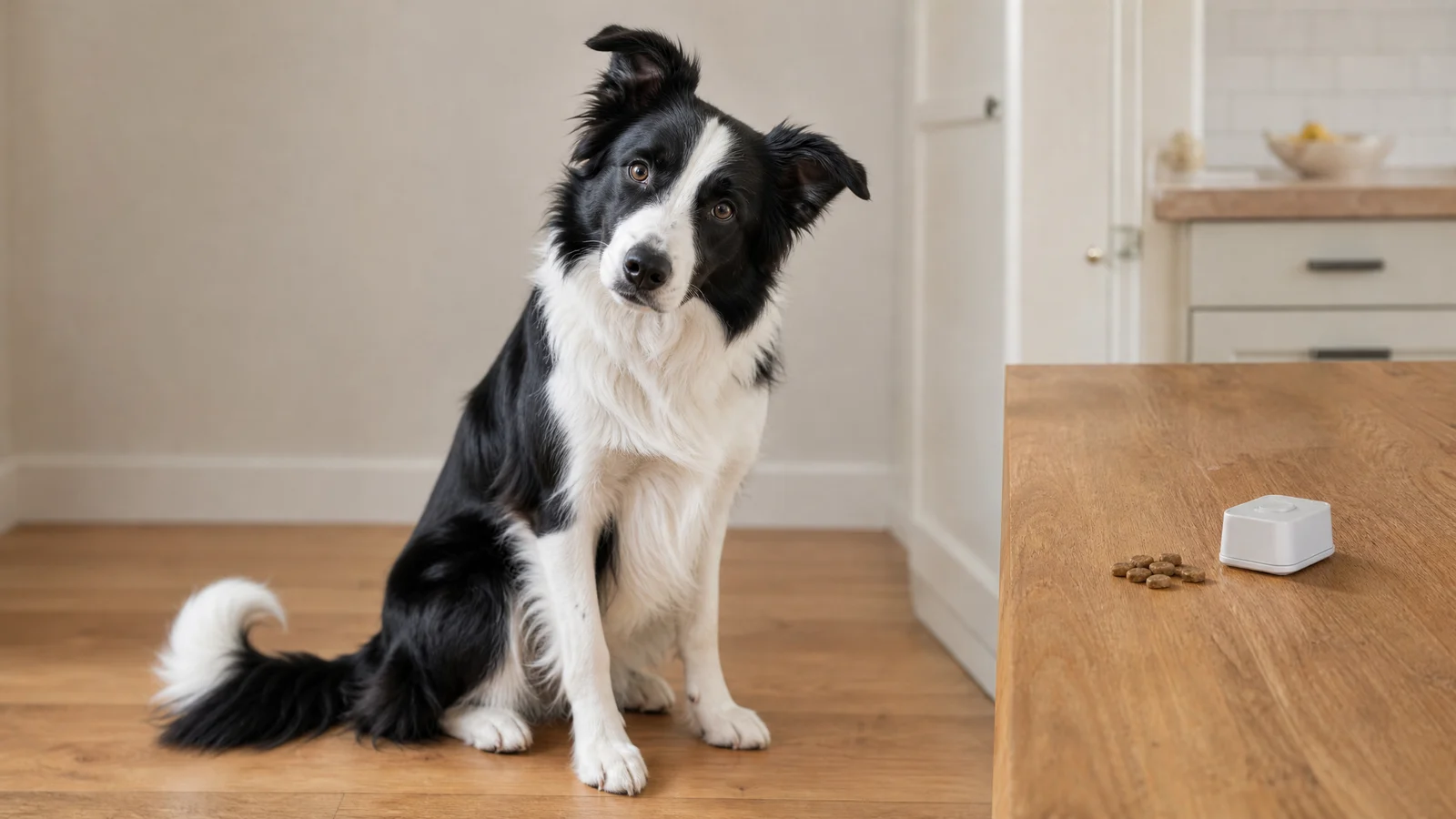
Before the first treat comes out, there is one choice to make: which sound will mean “that was it” to your Border Collie. Pick a single short sound, save it for training only, and pair it with food before it marks anything. Along the way you'll get the sound's job, a first lesson that asks for nothing, and a way to keep the click honest once the food is out of sight. Everything else in clicker work rests on those three.
Our cue lessons only remind you of the marker, so the click gets taught in full once, on this page. Teach it before you ask for a sit, a down or anything else, and every later lesson has the same sound to lean on.
A Border Collie Clicker Needs One Sound That Promises Food
Any short, distinctive sound can serve as a marker, and a clicker is one way to get one. What matters is the promise: every time it sounds, food follows, and it never sounds for any other reason. If a worried or noise-sensitive dog is on your mind, our Border Collie noise sensitivity guide covers the wider picture.
Everyone who trains the dog should use the same sound. If two people mark with two different sounds, the dog has two promises to learn instead of one.
Battersea says a marker word such as “Yes” can be used, but a clicker can be more predictable, and a dog will likely more strongly associate its sound with getting a treat. Marker words used all day outside training can be confusing, especially if not followed by a reward. If a dog is noise sensitive and the click is worrying them, it says you can muffle the sound by clicking from inside your pocket, and you should use a marker word instead if they are still scared.
Charging the Clicker With Nothing Asked in Return
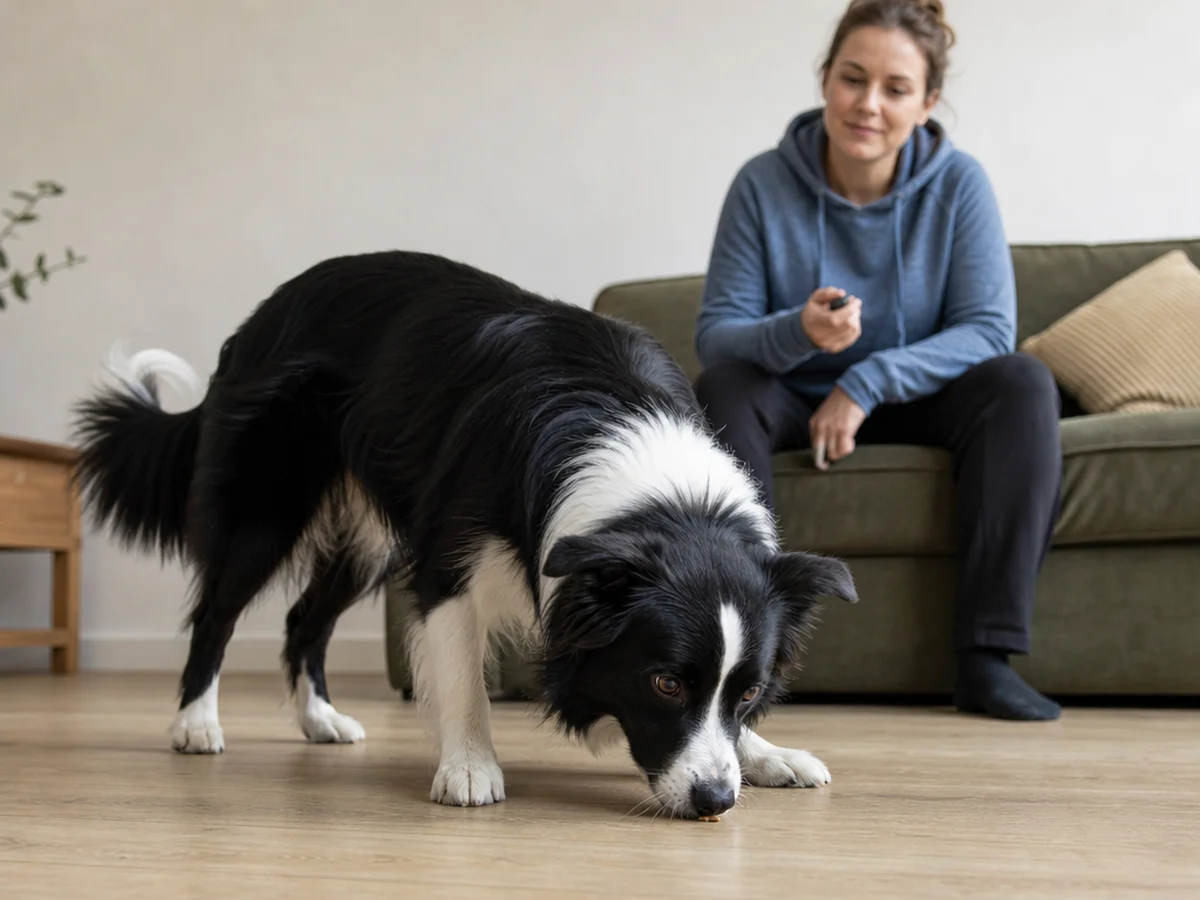
Pick a quiet room and let the dog wander, with no cue, no behavior to perform and nothing to get right. Hold the clicker in one hand and keep the treats in the other, out of sight, so that reaching for food never predicts the sound. Click, then deliver a treat straight to the dog's mouth height, and repeat in short bursts. Stop while the dog is still taking each treat willingly.
Once that goes smoothly, move to a second room and a second time of day. A click that only works in one spot is not ready to carry a behavior yet.
What if the dog ignores the click? Check the room and the treat first. A busy space or a plain treat can be the cause, so go back to a quieter spot with something better and run the charging again. An ignored click is a charging problem, and it does not mean the clicker is wrong for the dog.
Through all of it, the treat hand stays still until the click has sounded. A hand that dips toward the pouch early turns the movement into the signal instead of the sound.
Click First and Pay Second With Your Border Collie Clicker
The order never changes: click, then treat. The click ends the behavior and the treat is the wage, so hold the click for the thing you want more of rather than for a dog who is merely near it. Pay at the dog's mouth so that no extra movement picks up a reward by accident.
Best Friends Animal Society shows the marker at work in its sit lesson for a dog who jumps on people: when the dog's rear hits the floor, use a marker (click a clicker or say a word like “yes”), give the dog the treat, and praise them.
What if the dog moves before the click lands? The click is for what just happened, so if the moment has passed, let it go. Set up the next repetition and click that one. Never click a behavior that did not occur, since the sound then promises something the dog did not do.
Moving Food Out of Sight Once the Clicker Is Charged
A treat held in the open hand can turn into a lure, and then the food does the asking instead of the click. After the click, let the treat come from a pocket, a pouch or the other hand, never from the hand that is cueing.
While the click is still new, every click is paid, with no exceptions. The promise stays whole even though the food now arrives from somewhere the dog cannot see.
Change one thing at a time. First change where the treats are kept, then which hand delivers them, then the spot you deliver from. The click itself stays exactly as it was and is still paid promptly, because the sound is the part that never fades.
Alongside any training plan, regular vet visits stay part of a dog's routine. Back in the session, keep the pouch stocked and within reach of the delivering hand, so the food is always where your hand expects it.
Should a Border Collie Handler Take Clicker Classes?
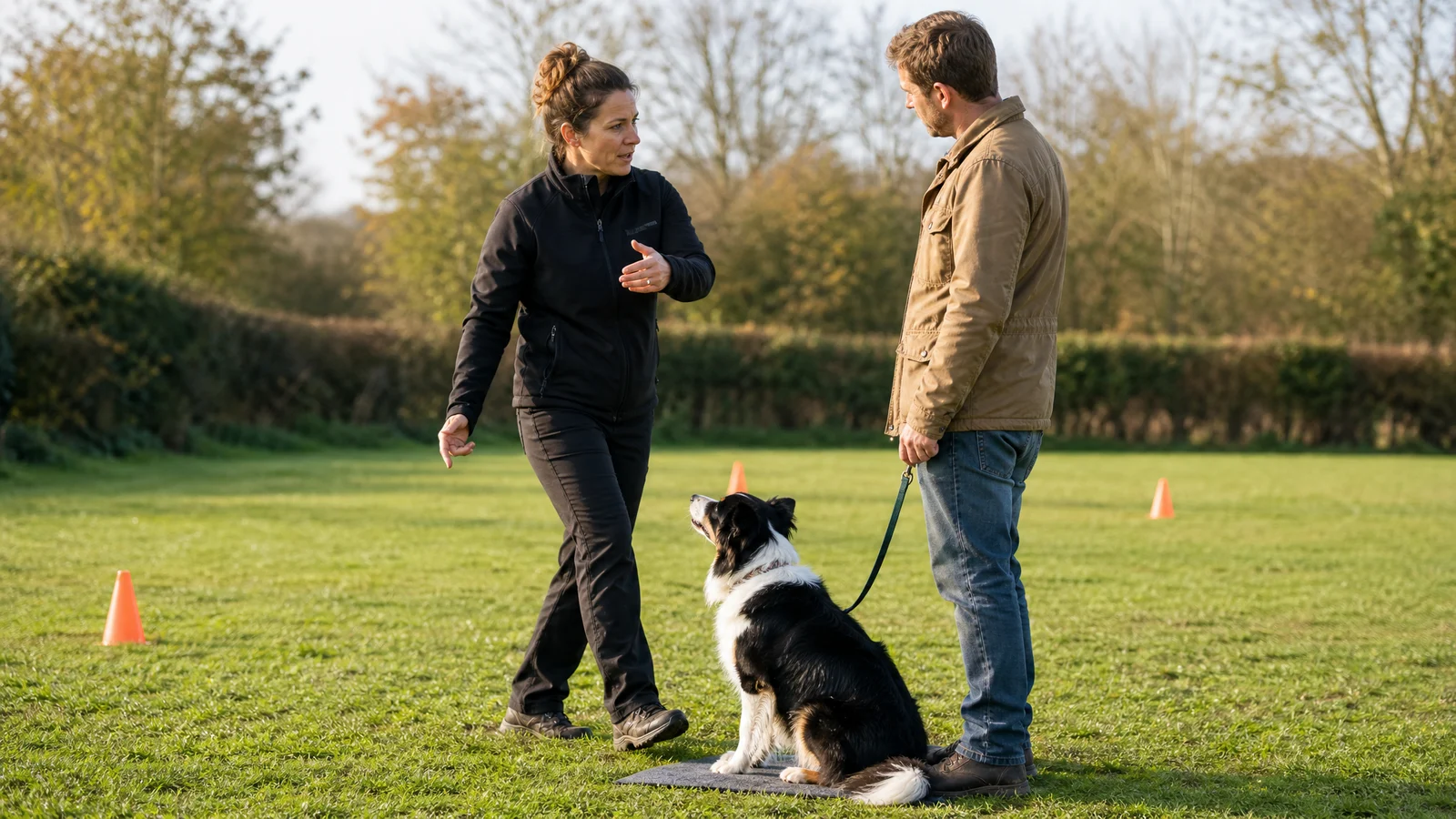
A written lesson goes only so far, and some handlers want a teacher beside them. Our Border Collie sports guide covers organized activities, and our Border Collie teenage training guide covers the adolescent months.
The RSPCA says its guides can help with the basics of how to train a dog, but it also recommends dog training classes, especially for more advanced methods, such as clicker training.
In its advice on mental stimulation for adolescent dogs, Cornell's veterinary college says to experiment with shaping and clicker training to encourage them to problem solve and be creative.
Common Slips in a Clicker Session and Their Repairs
A session that stops working is a signal to shorten the lesson, not to push on. Four slips are worth knowing by name, each with its repair.
- Clicking late: shrink the step you are asking for, then click and pay the next clean repetition.
- A treat that shows up before the click: keep the treats in a pouch, so the click always has to come first.
- A second click for the same behavior: use one click per behavior, then pay, and wait for the next repetition.
- A click with no treat behind it, from an empty pouch or an idle press: pay the click anyway when you notice, and stock treats before every session so the promise holds.
When a session has gone sideways, finish on a repetition the dog cannot miss. Click it, pay it and stop, so the day's last sound is one that was paid in full.
 Exercise and jobsHow to Teach a Border Collie to Jump Over Obstacles
 Training basicsIs a Border Collie the Right Dog for You? What Training Takes
 Training basicsHow to Choose a Border Collie Trainer