 Border Collie
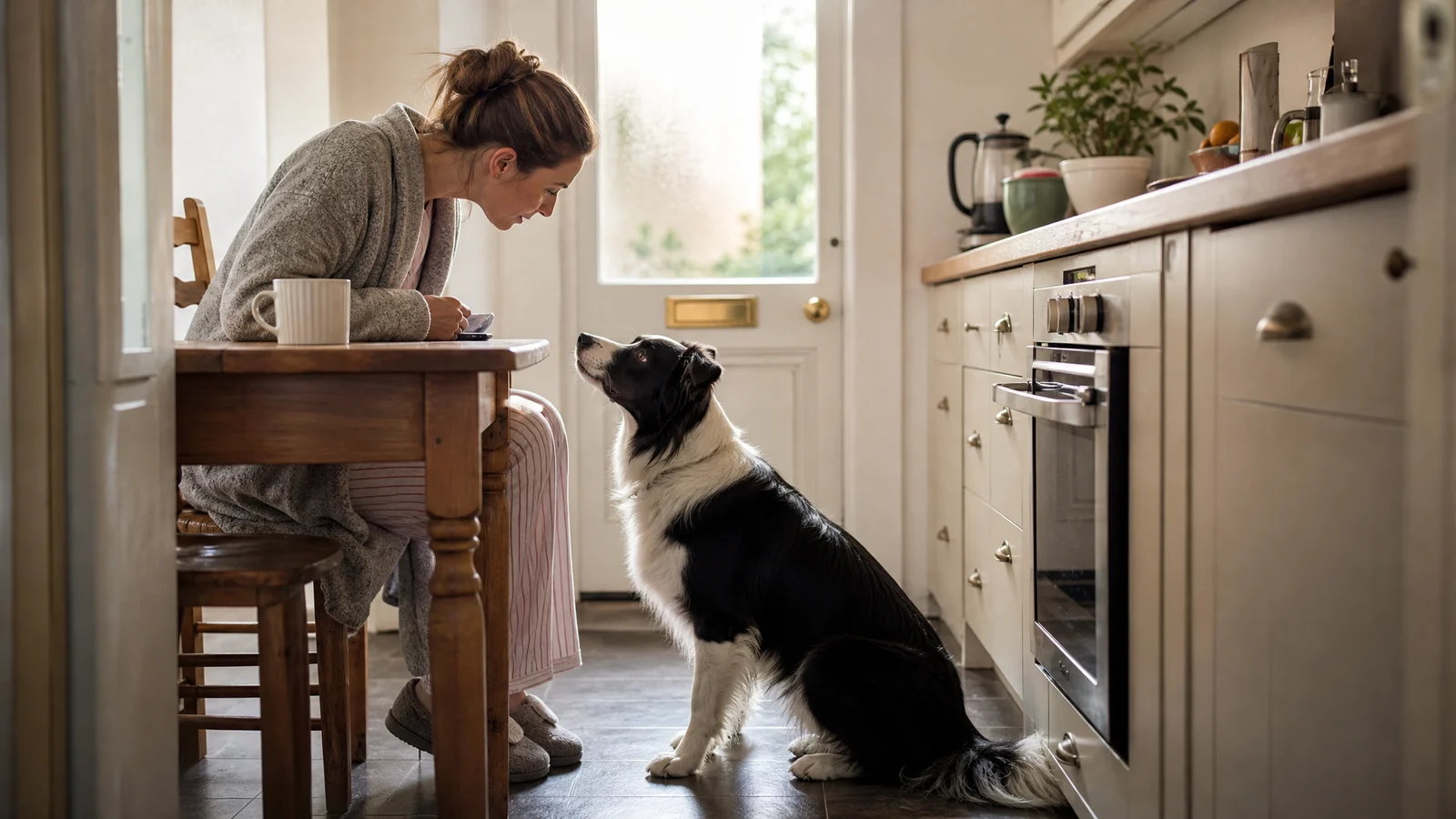
A breed profile can rate energy, mental stimulation, playfulness and trainability at the very top of its scale and still leave you alone with Tuesday morning and a dog who is already staring at the door. The ratings describe real traits, but a rating is not a plan, and nothing on the scale tells you how a top score becomes a leash walk, a training session or a quiet evening.
We read those ratings as working conditions rather than a personality portrait. Each one sets a requirement for how a Border Collie spends the day, and meeting it makes the training easier. Below, we sort the conditions into a handful of training choices and answer the questions a profile tends to leave open.
What Border Collie Temperament Ratings Ask of You
The American Kennel Club rates energy, mental stimulation, playfulness and trainability at the top of its scale and calls Border Collies remarkably bright workaholics who settle down for cuddle time when the workday is done. They may be somewhat reserved with strangers and do best with older, well-behaved children, thanks to a tendency to herd animals and people.
Read as a set, those lines describe a dog whose needs show up before any lesson starts. We treat each one as a condition to meet rather than a trait to admire, and the list below pairs each rating with what it asks of the person holding the leash.
- High energy asks for a physical outlet before a lesson begins, so the dog arrives at the session able to think.
- High mental stimulation needs ask for something to figure out every day, which means a short, structured exercise with a clear start and finish counts as part of the routine rather than an extra.
- High playfulness makes toys and games some of your strongest reinforcers, so save the best ones for the behaviors you most want repeated and keep them out of free play.
- High trainability is a rating about how a dog responds to teaching, so the quality of what you teach matters, and it pays to decide in advance which behaviors you will reward at the door, the table and the gate.
Whether that last rating means a Border Collie is smart or simply easy is a separate question, and the Border Collie trainability guide takes it up. Here the point is narrower. The profile reads best as a set of conditions you can meet, and the first one to plan is work, not commands.
Why Temperament Calls for Jobs and Not Only Exercise
Exercise is where most plans start, and it matters. PDSA notes that some breeds need at least one to two hours of exercise a day and that working breeds need significantly more. It counts daily training as part of the routine because it keeps the mind active and prevents boredom, and it adds that a good routine may improve unwanted behaviors but is unlikely to fix them completely.
That last point is why we separate exercise from work. A long run spends energy, but it asks nothing of the dog's attention, so whatever grew out of unused attention is still there when the run ends. A job is any short, defined task with a start cue, a clear action and a reward, such as a nose-touch to a target, a retrieve of a named toy or a scent search for treats hidden around the room.
In practice that means two kinds of effort on the same day. The physical outlet lowers the arousal, and the job gives what is left a direction. For how long and how hard the physical part should be at each age, the Border Collie exercise guide is the right place. What this page adds is that the mental portion needs a slot on the schedule too, in sessions short enough to finish while the dog is still interested.
Keen Border Collie Temperament and Short, Clear Sessions
Temperament shows up in how a dog takes a lesson as well as in how they spend the day. A keen dog notices everything you do, so the lesson needs to be easy to read, and the way a session is built matters more than how long it runs.
Keen and Responsive Needs Clear Signals
The United Kennel Club describes the breed as neither nervous nor aggressive but keen and responsive, with good body balance that carries them from high speed to a creep and from a stalk to a steady lift. It also credits them with an innate herding instinct and an almost hypnotic stare known as the eye.
The American Veterinary Society of Animal Behavior describes a simple sequence for reward-based training. A cue asks for a behavior, a clicker or verbal marker tells the dog the instant they got it right, and a treat, toy or other reinforcer pays for it. It adds that reward-based training is not permissive, because dogs learn best with structure, routine and guidelines taught without fear or intimidation.
For a keen dog, that means one cue per behavior, one marker word you always use the same way and a reinforcer the dog truly wants, which for a playful breed is often a toy or a short game rather than a treat. Run short rounds with a clear end and stop while the dog still wants more. Two or three crisp repetitions that finish well tend to go better than a long block that drifts, and the finish itself becomes something to look forward to.
Creeping, Stalking and Stopping Are Working Style
The creep and the stalk are ordinary movement for the breed, so a dog who crouches and freezes when a toy rolls away or a child runs past is using the style they were shaped for. We would not try to remove it. We would give it a place: mark the pause, reward it, then release the dog to the toy with a cue. The pause becomes a skill with a payoff, which is easier to live with than a habit nobody asked for.
Start with a toy you roll yourself, a few repetitions at a time, so the pause is practiced where nothing else competes for the dog's attention. Once the pause is reliable, add a little more movement before the release.
When Border Collie Herding Instinct Targets People
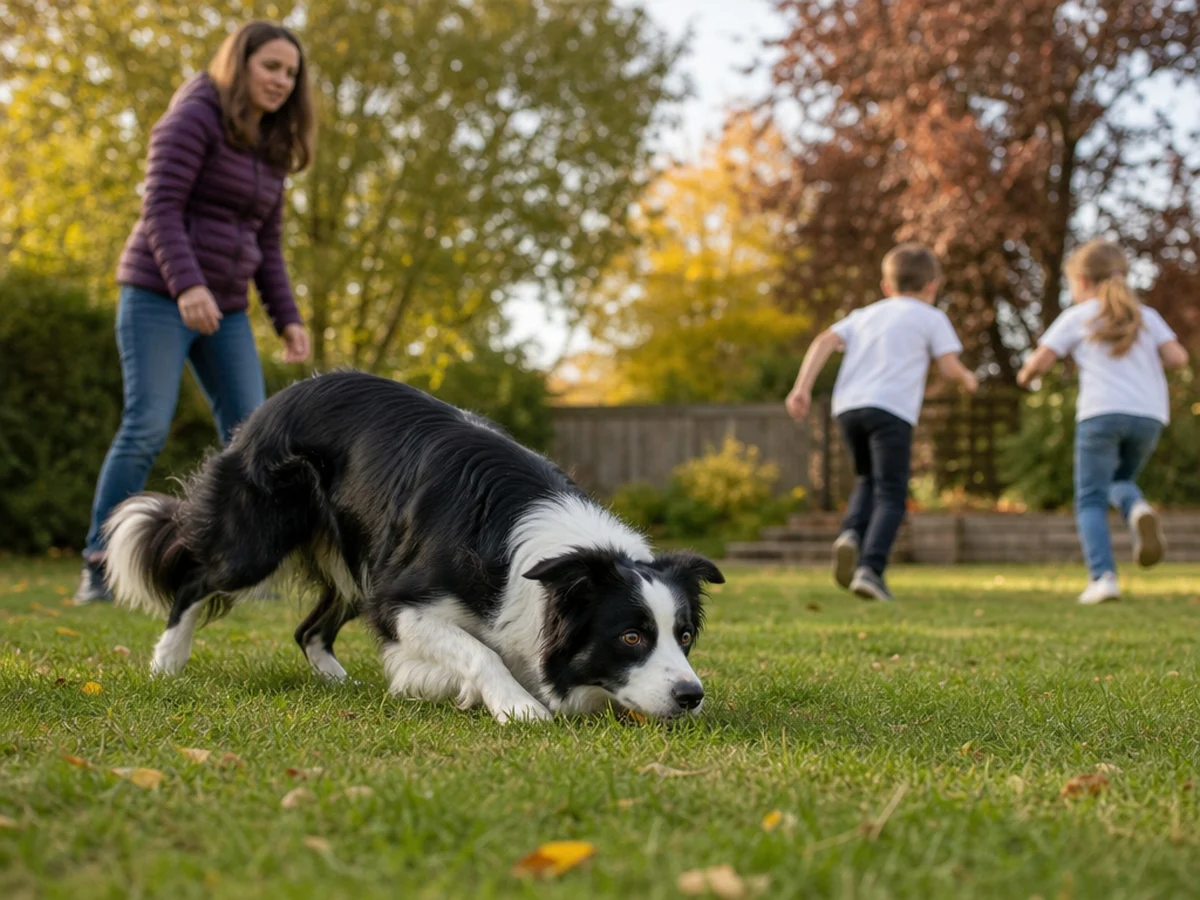
The herding instinct does not check who is moving. A child sprinting across the yard, a jogger or a visitor striding through the hall may look like stock to a dog whose instinct is to circle and gather. That is why the profile points toward older, well-behaved children, and it is why we plan around the instinct instead of hoping it fades with age.
Our plan has three parts. Manage the setting first, with a gate, a leash indoors or a separate space when children are running and the dog is already wound up. Next, reward calm behavior near movement, such as sitting or lying down while someone passes, so the dog earns something at the very moment the instinct would have taken over. Last, give the instinct a legal target, such as chasing a ball or a tug game that starts and stops on cue.
Nipping and heel-snapping have their own step-by-step plan in the Border Collie ankle-nipping guide. What belongs here is the reading. When a Border Collie herds a person, the temperament is doing its job in the wrong place, and an adult should supervise any time the dog and young children share a room.
Questions the Border Collie Temperament Profile Leaves Open
Ratings tell you what a breed tends to do, and they say nothing about the individual dog in front of you. The questions below are the ones where that gap matters most for training, and each answer stays short.
What Does a Reserved Border Collie Need From Visitors?
The profile's wording is somewhat reserved with strangers, which leaves room for a dog who greets everyone and a dog who hangs back, so read the individual. For a dog who hangs back, the American Veterinary Medical Association advises rewarding positive or neutral engagement, letting the dog withdraw when uncomfortable and moving at the dog's own pace.
In practice, ask visitors to ignore the dog and let the dog decide when to approach. If the dog does come over, reward calm sniffing and let them leave again, and end the greeting before the dog feels crowded so the next one starts easier. The Border Collie socializing guide covers the full method.
Is a Tired Border Collie a Trained One?
No. Tiredness lowers the energy a dog has to offer, but it adds no skill, and a dog who is worn out has not practiced anything. We plan sessions after a short warm-up walk rather than after the longest run of the day, so the dog is settled enough to focus and fresh enough to enjoy the work.
A Sudden Behavior Change Needs a Vet First
Temperament describes a breed's usual tendencies, so a sharp change in a dog who was calm last month is not temperament at all. If a Border Collie starts snapping, hiding or refusing food or exercise they used to enjoy, book a vet visit before changing the training plan. Regular checkups give your vet a baseline. Intense fear or aggression toward people or other dogs calls for a qualified professional who uses reward-based methods.
A Daily Order for Temperament That Needs Work
Temperament does not fit into a single session, so we find it easier to hold one order for the day and let the details change. The sequence below puts the physical outlet first and the quiet period last, with the work in between.
- A short, brisk walk or play session first, enough to take the edge off without wearing the dog out.
- One training round on a single behavior, using the cue, marker and reinforcer from earlier and ending while the dog still wants more.
- A short second round later in the day, either the same behavior with a small change or a new job such as a nose-touch or a scent search.
- A settle period on a mat or bed with a chew or a food toy, rewarded for lying down, because the breed settles once the day's work is done.
- A slow sniffing walk or a scatter of treats in the grass or around the room, the quietest item of the day.
The ASPCA lists play, chasing, smelling, chewing and scavenging among the things dogs need, and notes that unstimulated dogs find their own outlets, which owners tend to see as unwanted behavior. It also describes using the nose indoors or on walks as both stimulating and calming, which is why we place the sniffing item near the end of the day.
Adjust the order to fit your schedule. What matters is that the day holds a work block, a quiet block and some way for the dog to use their nose. If the second round slips, shorten it instead of skipping it, because a short round still counts as the job.
Where Border Collie Temperament Leaves Your Weekday
Many behaviors that look like problems in a working breed trace back to unused ability. A dog who circles children is herding, a dog who barks at the window may be working with nothing to do, and a dog who shreds a cushion may have run out of things to figure out. Reading the behavior that way changes the question from how to stop it to what it was trying to do and what we can offer in its place.
That is the habit we hope this page leaves you with: read the temperament as a request for structure, then answer it with something specific, such as a cue, a game or a quiet place to land. The full route from first cue to reliable habits is in our Border Collie training guide, which builds on everything here.
 Puppy trainingBorder Collie Puppy at 4 to 6 Months: What Changes
 Training basicsHow to Teach a Border Collie to Leave It
 Training basicsHow to Teach a Border Collie to Stay