 Border Collie
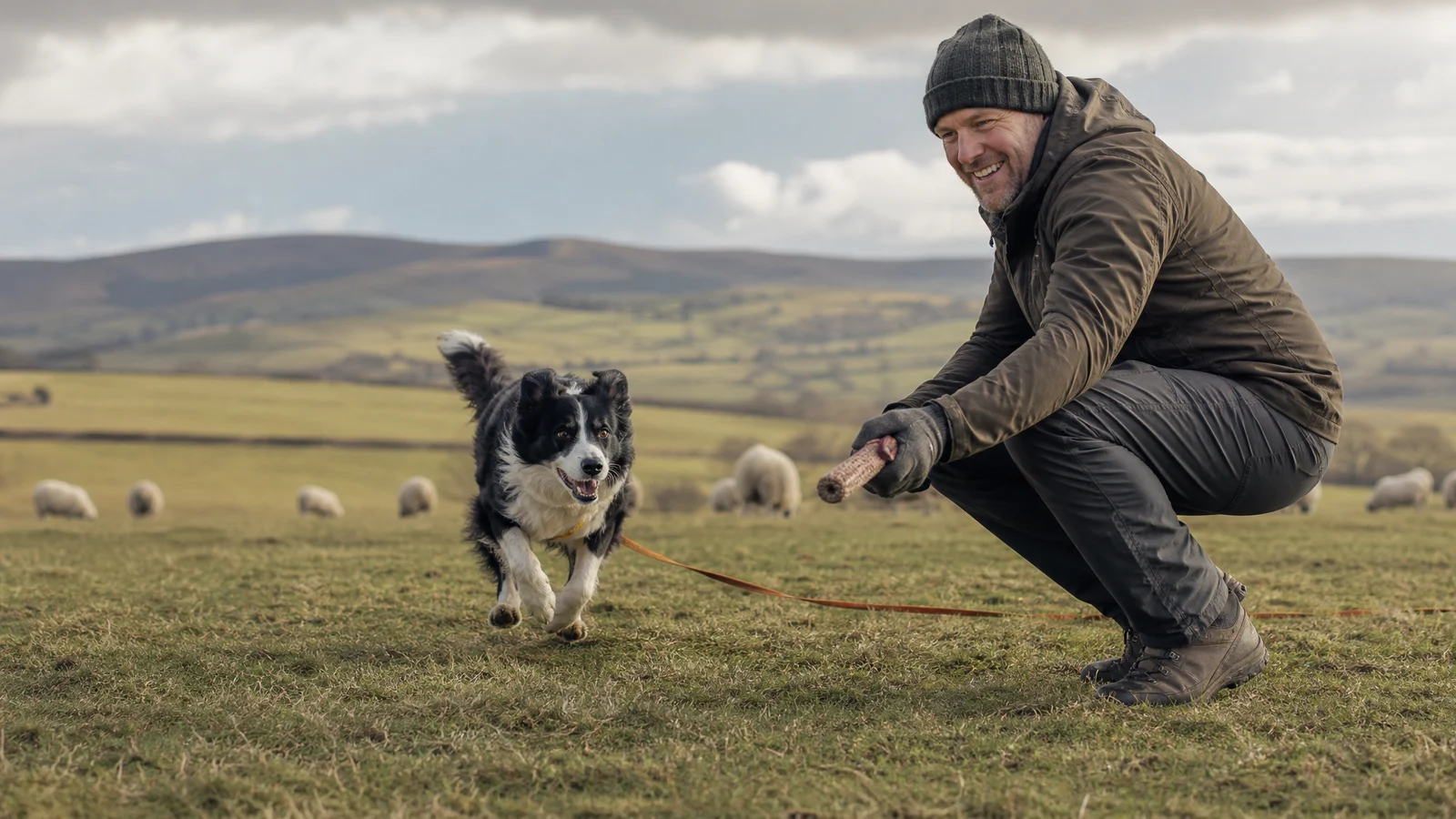
Teach a Border Collie to come by making the cue a happy, rewarded event that starts in quiet rooms and moves outward one small step at a time, and keep a long line clipped on until the cue holds. Pay with the best treat, tug or chase game you own, because out in open space you are competing with movement.
The reason is in how they were built. Border Collies were bred for wide sweeping outruns and a stalking, watching style of work, so a runner's stride, a passing bike or a flock on a slope can switch their whole attention in a heartbeat. A recall that fails there is a safety problem, and a recall that holds gives you a dog who can enjoy big spaces beside you.
Read on for what each recall problem looks like, from the dog who hears you and carries on to the dog who circles just out of reach, with the cause and the fix for each, plus an honest look at livestock and one rep to do today.
When a Border Collie Ignores Recall in Open Spaces
You call, your dog's ears flick, and they keep right on doing what they were doing. This is rarely defiance. A Border Collie hears you perfectly well and is simply running the numbers: what has this word meant before, and what is on offer right now? Two causes account for most of it, and both live in the dog's history with the cue rather than in their character.
Why the Cue Went Flat
The first cause is a weak cue history. If the word has been repeated over and over, shouted from the door, or used right before a bath, a crate or the end of a great walk, it now predicts nothing good. The second is low reward value. A piece of dry kibble cannot outbid a squirrel zigzagging through the grass, and an intelligent, driven dog does that math instantly. Both problems feel the same from your side of the leash: a dog who hears and carries on.
The Quiet-Place Restart
Start over with a fresh word nobody has used, so the old one carries no baggage, and rebuild it where nothing competes with you. Make the first responses easy and worth repeating.
- Pick a quiet room, load your pouch with tiny, soft, smelly treats, and bring the energy of a surprise party.
- Wait until your dog is a few steps away and relaxed, say the new word once in a warm, rising voice, and back away.
- The instant they turn toward you, mark with a bright yes, and feed at your knees so arriving close to you is what pays.
- Release them with a separate word and let them go back to whatever they like, so coming never means the fun is over.
- Vary the payment from round to round with a burst of tug, a quick chase where you run away, or a favorite toy, so the cue stays thrilling.
Keep rounds short and many, scattered through the day, and stop while your dog is still asking for more. If a once-reliable recall suddenly slips, mention it to your veterinarian at your next regular visit, because behavior changes can come from pain, vision or hearing changes as well as plain training gaps.
Why Does a Border Collie Freeze at Sheep?
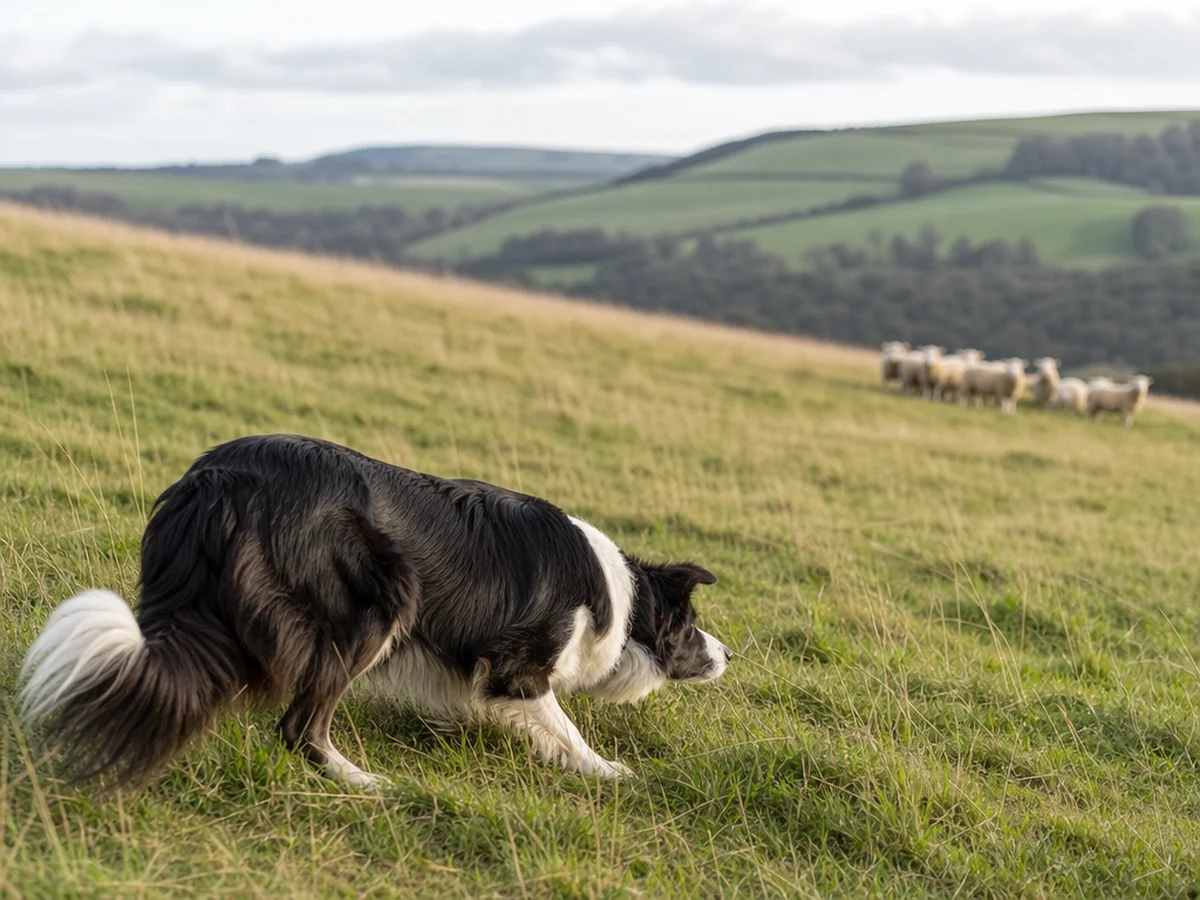
Crouching, a dropped head, a fixed stare and a body gone still as stone: that is what you see when a Border Collie locks onto stock, and it is not a glitch. It is the breed's signature working style showing up exactly as designed, and a recall cue spoken into that moment often goes unheard.
What Eye and Stalk Really Are
Selective breeding gave this dog a way of controlling stock with an intense gaze called "eye" and a stalking style of movement, and the breed standard describes the body as built to change from high speed to a creep.
The stare grows tighter the longer it runs. The sequence usually looks like this: the dog notices, the head lowers, the pace slows to a stalk, the gaze fixes, and then the body is committed. The earlier you catch that sequence, the easier the interruption.
Interrupt Early and Reward the Break
Call at the noticing stage, before the stare sets. If you see the head drop, add distance first, then ask. Begin where your dog has spotted the animals but can still take a treat and think, the same distance rule behaviorists use when they feed great treats at a range where the dog has noticed a trigger but can cope.
When your dog tears their gaze away, even for a heartbeat, mark it and pay richly, then run backward and turn the payoff into a chase game with you as the prize. You are rewarding the break itself. Keep a fence or a long line between your dog and the animals, get the livestock owner's permission, and shrink the gap over many sessions. The aim is a calm choice to leave stock alone, not any kind of work with them.
Fixing a Slow Border Collie Recall in Open Spaces
Some dogs do come, but in a leisurely trot, stopping to sniff on the way or looping in a wide arc that brings them to you eventually. That curve is the outrun showing up again. The breed was shaped to sweep wide around things, so a direct approach toward a person standing and staring at them can feel like pressure. Slowness also grows when arriving has meant the party is over, or when the payoff never reflected how hard the dog worked to get there.
Three Changes for Faster Returns
Fix it in three moves. First, change your own picture: turn sideways, crouch, or run away from your dog so the straight line to you is open and inviting. Second, pay speed. Reward the fastest recall of the day with a jackpot of several treats in a row or a burst of tug right at your legs. Third, add distance gradually, so each step in the ladder is only slightly harder than the last.
| Step | Setup | Payoff for a fast arrival |
|---|---|---|
| Close | Quiet yard, line slack, a few steps apart | Soft treats and praise |
| Farther | Dog sniffing at the end of the line | Several treats in a row |
| Facing away | You turned, sitting or behind a tree | Tug or a short chase |
| Big field | Quiet field, line trailing | Best treat plus favorite toy |
The Long Line as a Bridge
The long line is your bridge. Clip it to a well-fitted harness, let it trail while your dog explores, and pick it up only when you need to stop them from rehearsing the habit of ignoring you. The reward does the pulling. The line is a safety net, nothing more. Change one thing at a time, whether that is distance, place or distraction, and drop the others back to easy when one goes up.
Many outings to open spaces should be about fun alone. Shelter programs use visits that are just fun to make clinics pleasant, and the same logic works in a field: arrive, feed, play and go home without asking for anything hard. The place then predicts good things.
Recall in Open Spaces When Movement Triggers Bolting
Then there is the explosion: your dog is beside you, a cyclist rounds the bend, and suddenly they are gone. Border Collies were made to notice and pursue movement, and the standard calls them agile enough to change speed and direction suddenly. So the bolt is rarely a recall failure at its root. It is a drive that fires before your cue can arrive.
Management comes first. Keep the long line on in any space where movers appear, pick wide-open paths where you can see trouble coming, and carry the best treats you own. Then teach a trade-for-attention drill.
When your dog notices something moving at a distance where they can still think, wait for them to glance at you, mark that glance, and feed. Over many sessions the sight of a mover becomes a cue to check in with you, which is the habit you want to be firing first.
Bikes and Cars
Wheels move fast and silently, and they are among the hardest triggers. Begin far from the path, keep your dog on a line, and reward each time they turn their head back toward you. Our guide to Border Collie loose-leash walking around bikes and cars goes deeper on this trigger.
Joggers
A jogger's rhythm is catnip for a herding dog, and the pattern of footfalls matters as much as the speed. Ask a friend to jog well away while you reward your dog for noticing and turning back. Close the gap only after repeated easy successes, and always release them back to play with a word of your own.
Birds and Wildlife
Birds lifting off and small animals darting through grass trigger the chase with almost no warning. Keep the line trailing, pause when you spot animals first, and call before your dog commits. If they do bolt, a happy tone and a retreat of your own works far better than a frantic repeat of the cue, and the line gives you a calm way to stop the rehearsal.
Can Border Collie Recall Hold Off-Leash Near Livestock?
Honestly, for most pet Border Collies the answer is not reliably, and not soon. Livestock is the single hardest distraction for this breed, because sheep are exactly what they were bred to control.
A recall that is perfect in the park is a different achievement from a recall beside a flock, and you can be proud of both without confusing them. Around stock, keep the line on until the recall is proven, and be ready to keep it on long term, even for a superbly trained dog.
Before you even try a trailing line near animals, with the livestock owner's permission and a fence in place, you need proof. Look for these signs across many sessions and many places:
- Your dog turns and comes on the first cue, even while sniffing or busy with something else.
- They break off a stare at something moving and come to you rather than staying locked on.
- The cue holds in several different locations, not only in one favorite field.
- The recall survives a mild distraction at a distance, such as a person standing at the edge of the space, and recovery is quick.
- Your dog arrives close, accepts a collar touch and looks to you for the payoff.
One piece of common advice deserves pushback here: run your dog until tired before you practice. Endurance is the trademark of this breed, so you rarely reach the bottom of the tank, and a wound-up dog in a stimulating field is the hardest place to start.
We have trained this breed for many years, and the reliable route is the opposite: build the habit when the stakes are low and raise them slowly. Our complete Border Collie training guide shows how recall fits in with the rest of their skills.
Dodging the Collar After Recall in Open Spaces
Some dogs come racing back and then stop just out of reach, bowing, circling or sidestepping your hand. They did the recall, yet something about the final moment feels risky. The usual cause is a collar grab that ended the fun: the hand closes, the leash clips on, the park is over. A dog this quick learns the pattern in a handful of repetitions and decides to arrive at a safe distance instead.
Watch the body for early signs. A dog who licks their lips, shows the whites of their eyes or pins their ears back as your hand reaches out is showing the subtle fear signs that appear before anything louder, and it tells you the grab is the problem, not the recall.
Fix it with touch games away from any outing. Reach slowly toward the collar with a treat already in your other hand, touch gently, then feed. Gradually make the touch longer, add a light hold, then a gentle clip of the leash, and each step pays every time. On real recalls, reward on arrival first, treat at your knees, and only then touch the collar. Many times, touch and release without clipping on, so the collar becomes a predictor of snacks rather than an ending.
Never lunge, chase or reach over your dog. Turn sideways, stay low and let them come the last bit on their own. That one habit rebuilds the trust the recall depends on.
Start Recall in Open Spaces With One Rep Today
Everything above rests on one small habit, so start with it today in a quiet room with the best treat your dog has ever tasted. Put a handful in your pocket, wait until your dog is a few steps away and relaxed, then say the cue once in your happiest voice, step backward and let them race to you. Mark the arrival, feed at your knees and touch the collar gently.
Success looks like a dog who turns quickly, arrives close and looks up at you expectantly. Release them with a toss of one treat, play a single round again, and stop while they are still hoping for more. This breed was built to notice movement and chase it for hours.
A recall that is rich, joyful and well rehearsed in a quiet room is the foundation that will one day let you compete with that pull, so play it once tonight, end on a win and let the open field wait until the cue is truly ready.
 Puppy trainingKeeping a Teenage Border Collie's Training on Track as Drive Grows
 BehaviorBorder Collie Leash Reactivity: What Helps
 Training basicsAre Border Collies Good With Kids?