 Border Collie
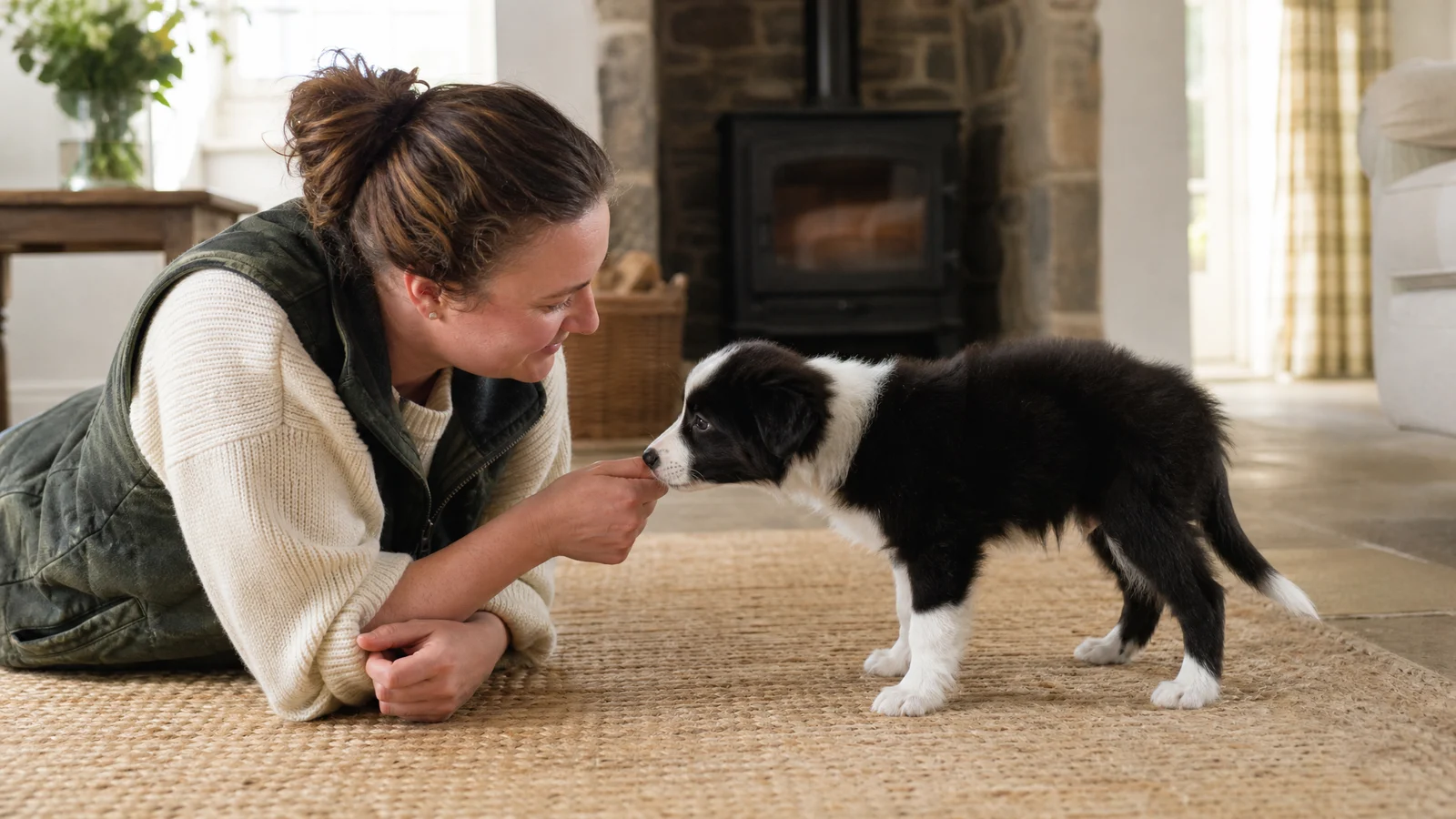
A Border Collie puppy can start learning the day they come home, and the early lessons are modest: where the toilet area is, what a reward feels like and how it feels to be handled. Bigger skills such as stay, recall and leash walking each have a guide of their own, so this page covers the part that comes before them. Reward-based methods run through all of it, and we leave out anything that relies on pressure or fear.
Further down, you'll learn how one short lesson runs from start to stop, where lessons fit in an ordinary day and how to approach early outings while vaccinations are unfinished. We also cover the house rules and gear to sort out, plus first handling practice for care and vet visits.
A First Border Collie Puppy Lesson, Start to Stop
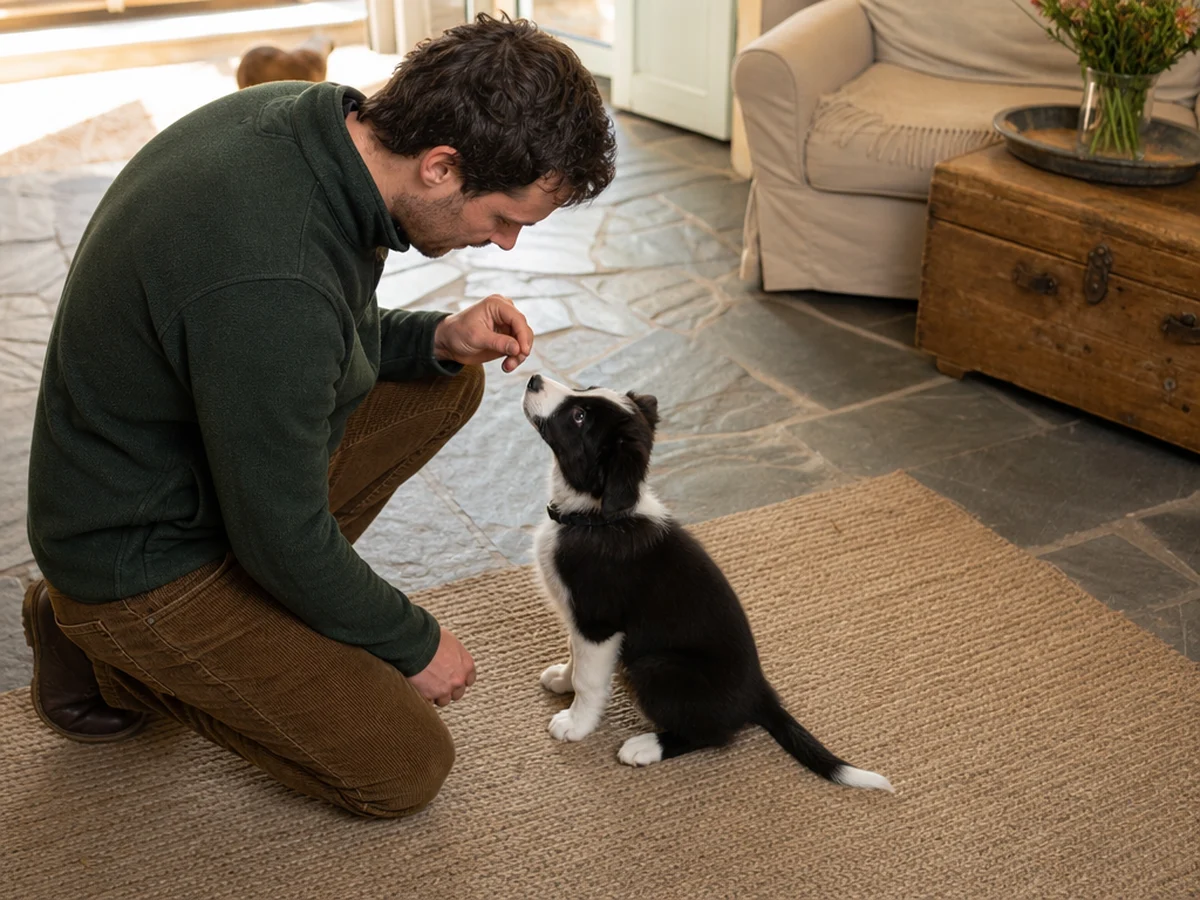
A session is small enough to describe in five moves. Run through them in the same order each time, so the puppy learns the pattern as well as the behavior.
- Choose a quiet spot where the puppy cannot wander off, and carry a few soft treats in a pouch or pocket.
- Ask for one easy behavior the puppy already knows, or wait for the puppy to offer it.
- Say a short marker word at the instant the behavior happens, then hand over the treat.
- Repeat in small steps, leaving a pause between repeats so the puppy has time to think.
- End while the puppy is still keen, give a final treat and let them walk off or settle down for a nap.
Stopping early is the step that is hardest to follow, because a keen puppy makes one more repeat tempting. One more can tip a good session into a messy one, and a puppy who ends on a success is ready to start again later.
Treats for the First Lessons
Can a second lesson follow a good one on the same day? It can, as long as the puppy has had time to eat, toilet, play and sleep in between, and arrives for it keen rather than tired. Treat each lesson as its own small start and finish, with a fresh handful of treats. If the puppy seems flat or distracted, skip it, because a missed lesson costs little and a forced one teaches the puppy to avoid you.
Can lesson treats come out of the puppy's regular meals? Often, yes. Setting aside part of a meal to use as rewards means lessons do not add extra food on top of what the puppy already eats. Ask your vet how much the puppy should eat each day and which treats suit them, then count anything given for lessons toward that amount.
How should we hold a treat so the puppy does not grab? Keep the treat low and close to your body, hand flat or fingers closed around it, and give it only after the puppy's feet are on the floor. A puppy who jumps up or snatches gets nothing for that moment, and the same treat arrives a second later when they are calm. Small, soft pieces make this easier to repeat.
Fitting Border Collie Puppy Lessons Into the Day
Most days include sleep, toilet trips, play and meals, and a lesson works best when it sits between two of those instead of competing with them. A spot right after a toilet trip and before a play session is easy to repeat. The Border Collie potty training guide and the Border Collie crate guide cover the routines that surround it, and the Border Collie puppy timeline lays out what each stage usually adds.
Does a lesson have to happen at the same time every day? No, though tying it to a regular event such as the end of a toilet trip makes it easy to remember. What matters is that the puppy is awake, comfortable and not just back from a hard play session.
What if there is no time for a lesson today? Skip the formal session and pay for something the puppy does anyway, such as settling on their bed or walking calmly through a doorway. A missed lesson is easy to recover from, while a rushed one in a distracted house can go badly.
What should happen right after a lesson ends? Let the puppy settle without a fuss: a toilet trip, a drink of water or a rest on their bed all work. A big burst of excitement right after the final treat can wipe out the calm that the lesson built, so save wilder play for a little later.
When a Puppy Is Not Up for It
What if the puppy falls asleep in the middle of a lesson? Then the lesson is over. Let the puppy sleep somewhere quiet, and try again after they wake, perhaps a little earlier in the next stretch between naps. A sleepy puppy cannot take much in, and treats offered to a drowsy mouth teach very little.
What if the puppy wanders off in the middle of a lesson? Let them go. Walking away tells you the lesson has run too long or asked too much, so the next one should be shorter and easier. Call the puppy back only for something pleasant, and finish on a behavior they already do well.
Words, Names and Getting Started
How do we keep cue words the same across the family? Agree on one word and one hand signal for each behavior before anyone starts, and keep them short. If one person says sit and another says sit down, the puppy faces two puzzles for one behavior. Whoever runs the lesson uses the agreed words, and everyone else waits for a turn instead of adding cues from across the room.
Do we say the puppy's name before every cue? Use the name to gain attention, then wait for the puppy to look your way and pay for it. After that, give the cue. Saying the name before every request wears it down until it stops meaning anything, so keep it for moments you want a response and make sure good things follow.
Can lessons begin before the first vet visit? Yes, at home. The lesson above needs only a quiet spot, a few treats and a few minutes of attention from someone, so it can start while you wait for the appointment. Keep outings to what your vet says is safe, and mention any questions about food, treats or the puppy's health when you go.
Border Collie Puppy Outings Before the Vet Clears Them
The line between safe and unsafe outings depends on a puppy's vaccination status, and only your vet can read that. Keep each outing short, bring treats and end it before the puppy has had enough. Our Border Collie socialization guide has the fuller plan.
Battersea says a puppy can safely experience the world from your arms, a carrier or a blanket on the ground before they are fully vaccinated. Your vet confirms when walking on the ground and meeting dogs is safe, and most puppies reach that stage a couple of weeks after their second vaccination, though timings can vary. Battersea adds that not every dog needs to be a greeting opportunity, and that learning to walk past calmly is just as important as socializing.
This page is general training guidance, not veterinary advice. Your vet can tell you when your puppy's vaccinations are complete and when outings beyond the home are safe, so ask at each visit.
The American Veterinary Society of Animal Behavior says it believes it should be the standard of care for puppies to receive socialization before they are fully vaccinated. By that it means exposure to as many new people, animals, stimuli and environments as can be achieved safely and without causing over-stimulation, shown as excessive fear, withdrawal or avoidance behavior. It also says owners of puppies who show fear should seek veterinary guidance.
House Rules and Gear for a Border Collie Puppy's Arrival
A handful of yes-or-no questions need answers before the puppy walks in, and each answer has to hold for every person in the house. Some are about space, and others are about what the puppy may climb on, chew or beg for.
PDSA advises deciding house rules, such as whether the puppy may use the sofa or bed or enter certain rooms, before the puppy comes home, and making sure everyone sticks to them, because it is much harder for a puppy to break a habit than to make a new one. On arrival, it suggests taking the puppy to their toilet area first, and it recommends against giving them the whole house on day one, as too much too soon can leave them over-excited or stressed.
Writing the answers into a sheet makes them easy to share. The rows below cover four decisions, with the choices that are open for each.
| Rule to decide | Choices to pick between | Who needs to hear it |
|---|---|---|
| Sofa and bed | Never, only when invited, or always | Every adult, child and regular visitor |
| Rooms | Gated off, open only when someone is watching, or open | Anyone who opens or closes a gate |
| Food and treats | Which people hand out food, and whether plates are off limits | Everyone who eats in the house |
| Doors and yards | Which exits the puppy may use, and on what signal | Whoever lets the puppy outside |
Say each answer aloud once, with everyone in the room, instead of trusting that people will pick it up by watching. If two adults disagree about the sofa, settle it now. A rule that changes with whoever is holding the puppy is hard to follow.
Gear and the First Car Ride
Which gear is needed before lessons can start? A short list covers the first lessons: a soft collar or harness that fits, a pouch or pocket for small treats, a bed or mat and a baby gate. Check with your vet or a qualified, reward-based trainer before buying anything that claims to fix a behavior.
How do we introduce a collar and ID tag? Put the collar on for a few moments while the puppy eats treats, take it off, and repeat on later days, leaving it on a little longer each time. Choose a fit that is snug but leaves room to slide fingers underneath, and check the fit again as the puppy grows. Once the collar feels ordinary, clip the tag on and let the puppy get used to the small sound it makes.
How should the first car ride go? Plan a short trip to somewhere pleasant, with the puppy secured in a carrier or crate that is fastened in place. Bring a towel and a few treats, and keep the radio low. If the puppy seems unwell during rides, mention it to your vet before the next outing.
Handling a Border Collie Puppy for Care and Vet Visits
Best Friends Animal Society says the best place to start touching most dogs is on the chest or shoulder, since most dogs do not like being touched on the face or paws at first. It advises touching for only a few seconds while the dog eats treats, stopping once the treats are gone and going slowly. If a dog shows signals of stress or anxiety, such as lip licking, pursed lips or yawning, it says to back up to a previous step.
Short touch sessions fit between meals and lessons, and each can stay as simple as a hand on the shoulder and a treat. The same idea carries over to the clinic, so keep up regular vet visits and treat the waiting room as a place where good things happen. Our Border Collie vet handling guide builds this into a full routine.
Pausing counts as progress too. Stop the touch when the treats run out, let the puppy walk away if they want to, and return to it later in the day when they are calm.
 Training basicsHow to Teach a Border Collie to Lie Down
 Puppy trainingHow to Stop Border Collie Puppy Biting
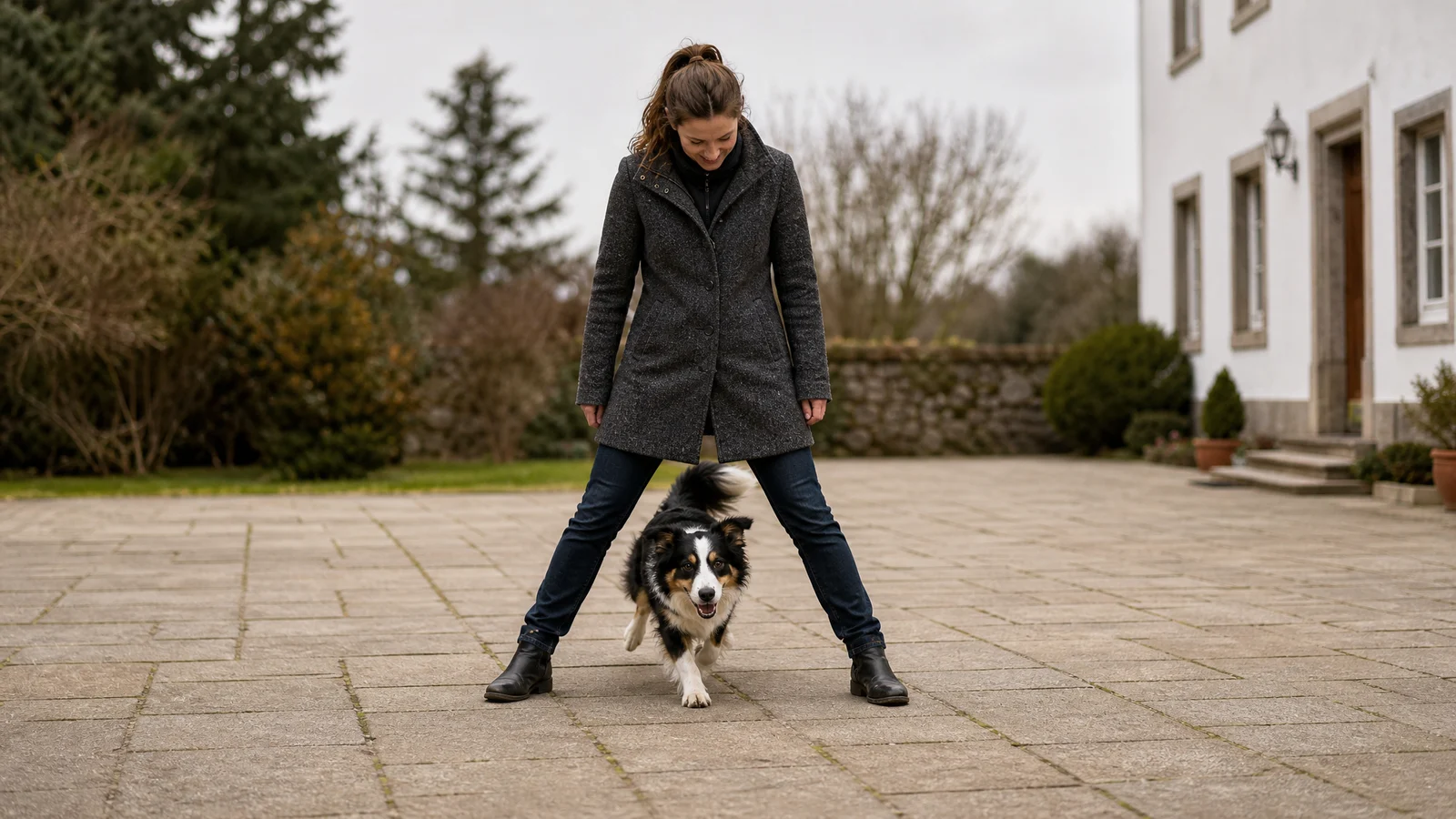 Exercise and jobsHow to Teach a Border Collie to Weave Through Your Legs