 Border Collie
By the second weekend the puppy has stopped hiding behind the sofa, and the list of things worth doing together grows faster than they can take it in. Below, you'll find the room, outing, toilet and lesson decisions that matter before twelve weeks. The useful skill in this first month is rationing: fewer rooms, fewer new things at a time and lessons small enough to finish.
Every age range in the sections ahead describes puppies of all breeds, and we say so each time one comes up. The Border Collie sources we rely on give no breed schedule for these weeks, so we do not make one up. Treat each range as a rough guide to what is typical, not a deadline.
A Border Collie Puppy's Own Space in the First Weeks
Before any lesson, the puppy needs a place that belongs to them and to nobody else. Toilet trips, handling and early lessons all get easier once that place exists.
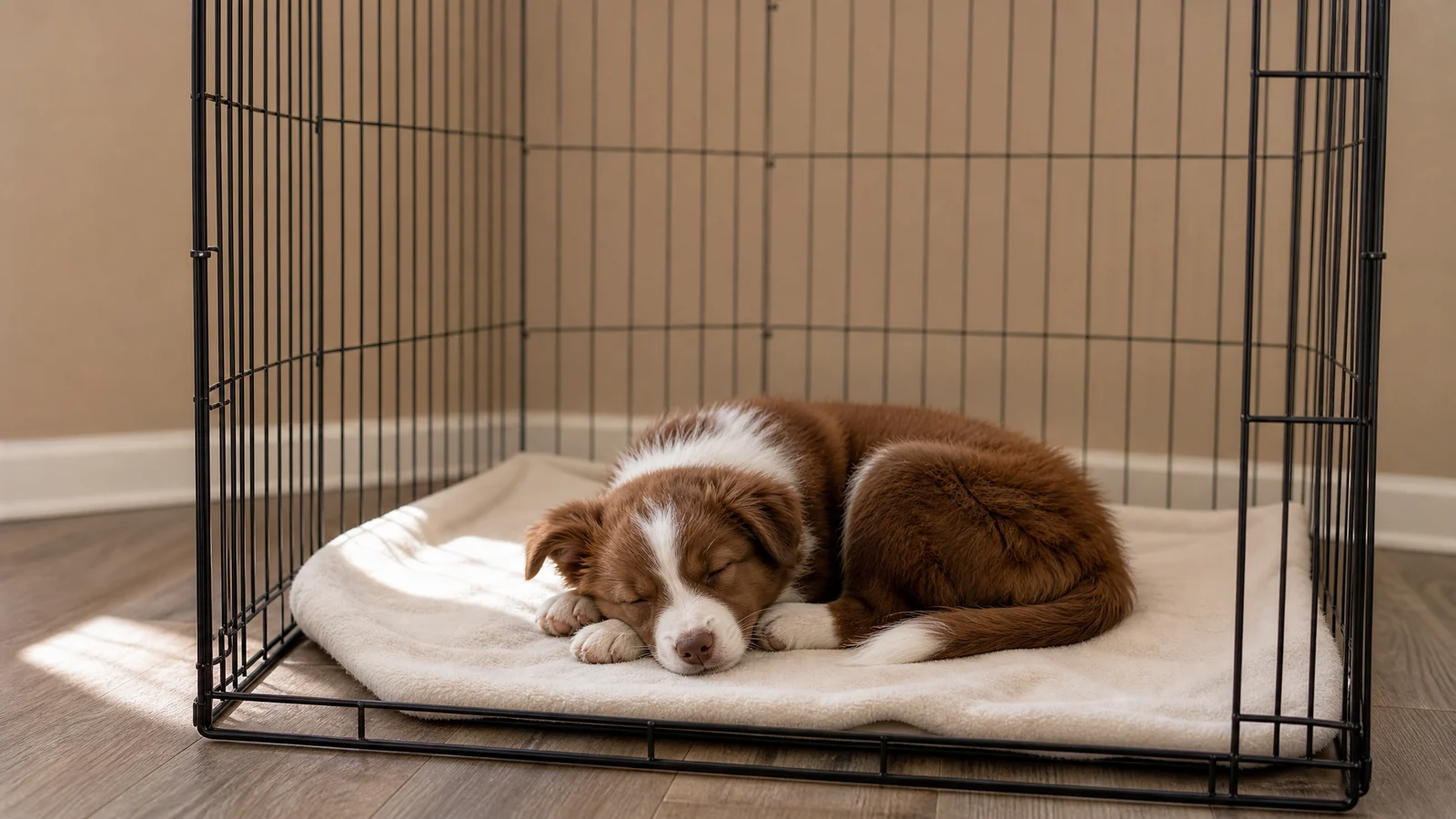
PDSA suggests giving a new puppy their own space to settle into, and says to probably avoid visitors for a few days while they adjust. Baby gates can then introduce the rest of the house slowly.
A crate, a pen or one gated corner all work, as long as the bed, water and a chew stay in the same spot every day. Put the gates up before the puppy arrives, and agree with everyone in the house which doorways stay closed. Our Border Collie crate guide covers building the space and the first stretches alone.
Border Collie Puppy Outings Until the Vaccinations Finish
This is the one part of the month with a hard edge, because the line between safe and unsafe outings depends on vaccination status, and only your veterinarian can read that. Everything else here can be adjusted by feel.
Is a Puppy Class Possible Before the Shots Finish?
The American Veterinary Medical Association suggests considering well-managed puppy socialization classes. It also advises keeping a puppy who is not fully vaccinated away from animals of unknown vaccination status and from places those animals may have been, such as outdoor parks. Your veterinarian can map out the plan.
So the first step is a phone call, not a booking. Ask what your puppy can do now and which classes your veterinarian trusts. Until you have that plan, the house supplies plenty of new experience on its own: different floors, household sounds and a calm visitor sitting on the sofa all count.
This is general information, not medical advice. Your veterinarian decides what is safe for your puppy, and regular veterinary check-ups through the first year keep that plan current.
Toilet Timing in a Border Collie Puppy's Early Weeks
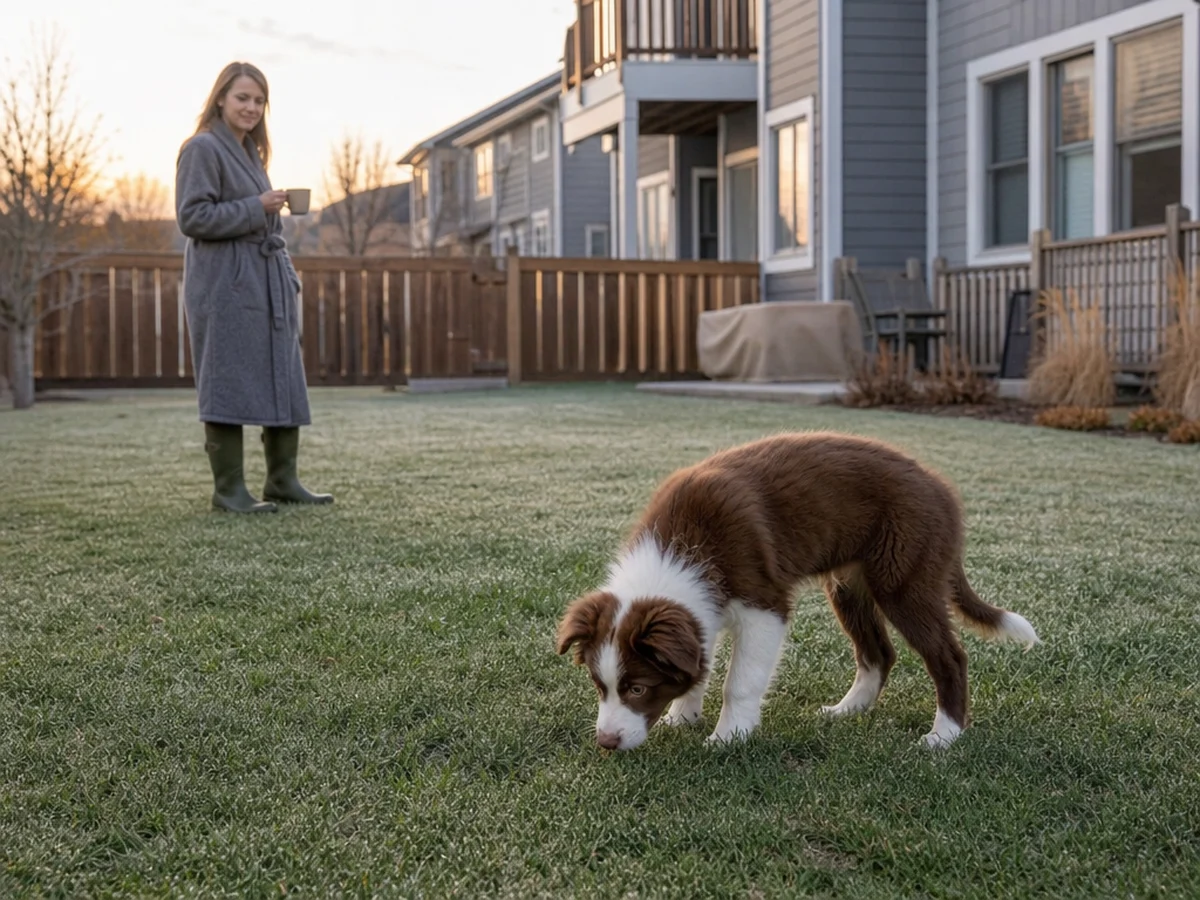
Toilet trips fill more of these first weeks than any lesson does, so they earn the first routine. Timing matters more than technique, and the timing depends on how young the puppy is.
Humane World for Animals suggests taking a puppy on a leash to one consistent outdoor spot, using a cue word while they go and rewarding right after they finish. Accidents are never punished. A puppy may hold their bladder for about one hour per month of age, so a 3-month-old may need to go about every 3 hours.
At the young end of this window, that means short gaps between trips and a calm, uneventful walk to the same spot, with the reward in your pocket before you open the door. The Border Collie potty guide has the full method, including what to do after a missed trip.
Handling, Meetings and Sudden Worries for a Border Collie Puppy
Exposure to the world is something to ration, and in these weeks it mostly means small amounts of handling and a few brief meetings. Both work best when each one is short and ends while the puppy is still curious, long before they have had enough.
UC Davis Veterinary Medicine describes a critical social development period of roughly 3 to 14 weeks in puppies generally. It suggests handling from the first day at home, touching ears, feet and mouth, and removing the puppy if signs of stress appear, such as a tucked tail, lip licking, yawning, shaking or ears held back. Early encounters should stay brief.
One new thing per outing is a workable limit, and a single adult who is calm around puppies makes a better first meeting than a crowd. Our Border Collie socialization guide lays out the longer plan for children, other dogs and strangers.
Is a Sudden Fright of Something Familiar Normal?
Yes, according to Battersea, which says puppies can go through normal fear periods, often around 8 to 11 weeks and again from about 6 months. Separately, it says puppies can go through short stages where familiar things may suddenly worry them, and that this is normal. It advises keeping life steady, giving the puppy space and letting them choose how close to go.
When the puppy stops at the vacuum or a once-ordinary doorway, reward any glance toward it and let them decide when to move on. Nothing about the plan above needs to change for a few days.
How a Border Collie Puppy Learns in Weeks Eight to Twelve
Lessons at this age are small on purpose. The aim in the first month is a puppy who likes the routine, not one who can show off a long list of cues.
Do all puppies learn at the same speed? No. The RSPCA says dogs learn at different rates, and that new lessons should start in a quiet room away from distractions. It also advises always ending with something the dog already knows, so a session finishes on a success.
A first-month session can be as plain as three beats, and the shape stays the same whether the puppy picks things up quickly or slowly. Here is the sequence we suggest:
- Choose one small thing for the day, such as answering to their name, settling on their bed or taking a treat gently.
- Pay the instant the puppy does it, while they still know exactly what earned the reward.
- Stop after a few repetitions, before attention drifts to the rug, your shoelaces or the dog next door.
Our complete Border Collie training guide holds the cue methods, and the Border Collie puppy timeline shows where longer lessons arrive in the later months. Until then, a settled puppy who enjoys these short sessions has everything the longer methods will build on.
Herding Design in a Border Collie Puppy's Home
The Border Collie Society of America describes Border Collies as having herding bodies and minds, naturally drawn to chasing and controlling the movements of animals. It adds that many owners bring one home without knowing what the dog was bred for.
For a puppy in the first month, that background is a reason to plan rather than a problem to solve. A rolling ball, a cat crossing the room and children running past all bring moving things into the puppy's day. Keep them far enough away that the puppy can still look, take a treat and look away again, and skip games that ask for chasing.
None of this has to be settled by twelve weeks. A quiet room, short gaps between toilet trips, brief meetings and lessons that end on a success are enough to carry into whatever the next stage asks.
 BehaviorHow to Fix Border Collie Separation Anxiety
 Puppy trainingBorder Collie Puppy at 3 to 4 Months: Teething and Mouthing
 Exercise and jobsEasy Tricks to Teach a Border Collie