 Border Collie
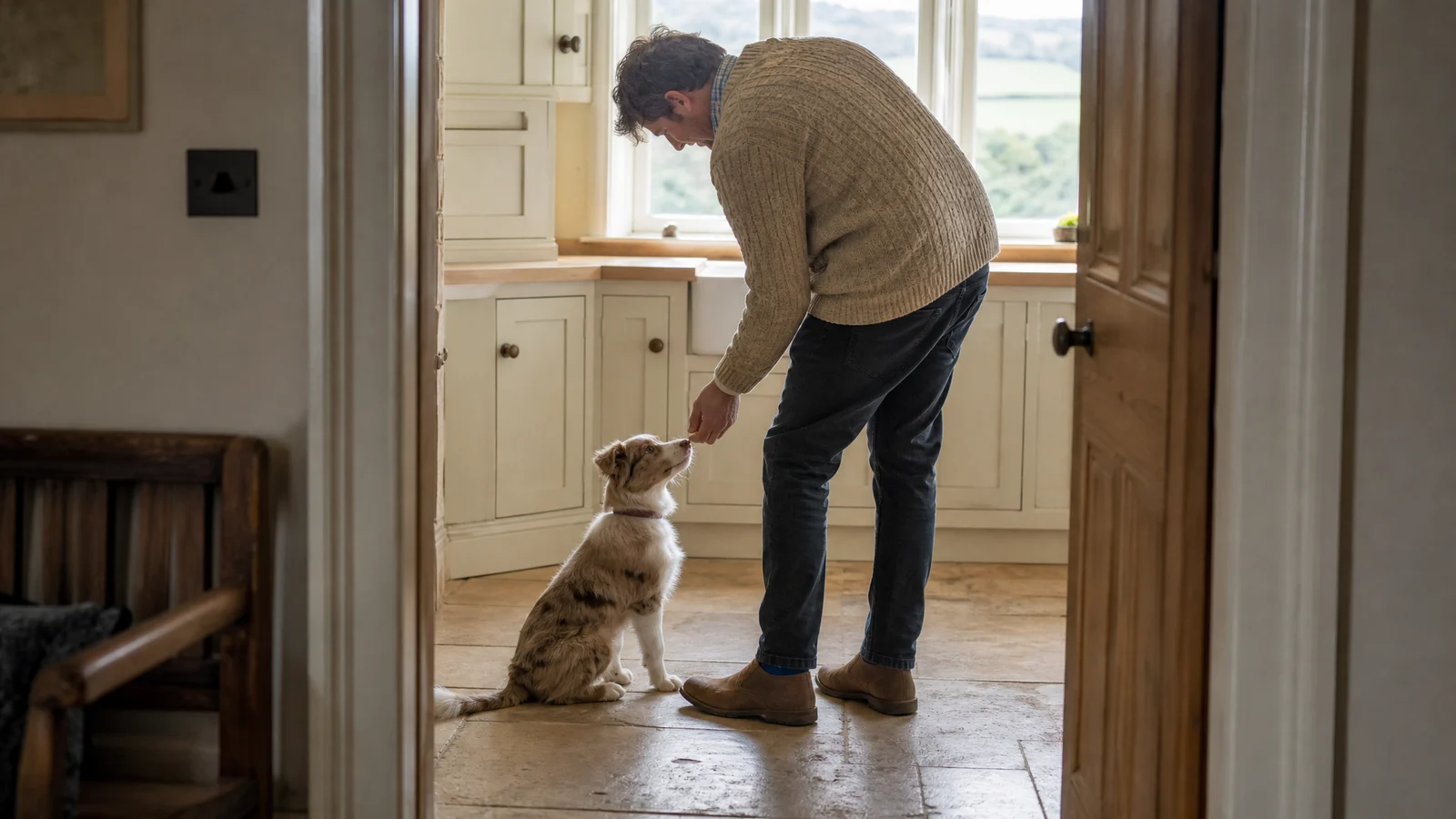
Four to six months is when a puppy's body and curiosity tend to outrun the manners learned so far, and a settling toilet routine rarely keeps pace either. The teenage months may start soon after this window, much later, or somewhere in between, so the useful work is the same in every case: keep teaching, keep the house safe and keep the toilet routine steady.
Read on for how the learning window changes, what early adolescence can look like, which parts of the house need another look and how long house training really takes. Each section comes down to something you can do with the puppy in front of you.
The Learning Window Narrows for a Border Collie Puppy
What follows is general dog development, not a Border Collie milestone. The Merck Veterinary Manual describes a stretch, lasting until about 16 to 20 weeks, when dogs are at their most receptive to learning how to handle new situations. Afterward they keep learning from exposure, it says, but at a much slower rate and perhaps in a different way.
A puppy just past four months may still be inside that stretch, while one nearing six months has most likely left it, though neither is beyond learning new things. New people, surfaces and places still count, but each one may need more repeats, smaller steps and better rewards than it would have a few weeks earlier. For the step-by-step method, see our Border Collie socialization guide.
Does a slower window mean new experiences stop mattering? No. The American Veterinary Medical Association advises continuing to reward calm or playful responses to social interactions throughout a dog's life.
In everyday terms, that means paying attention to the small moments. When a bicycle rattles past and the puppy glances at it and then back to you, a treat for the glance teaches more than a treat saved for a finished lesson. The same goes for a calm look at a new person across the street: reward the calm, then add distance or time as the puppy shows they are ready.
When Does a Border Collie Puppy Start Acting Like a Teenager?
No calendar can say which week a particular puppy tips over, and nobody can promise it will happen inside this window. What the sources offer is a range, so the useful skill is recognizing the start of the change without alarm.
The RSPCA says adolescence can start any time between six and 12 months, with dramatic hormonal changes and a reorganization of the brain. It says these changes can make adolescent dogs appear less obedient when they are really increasingly motivated to explore, interact and run.
Because that range begins at six months, a puppy at four or five months is, by this measure, likely still ahead of it. If a cue that worked last week starts to wobble anyway, keep the rewards coming and make the next request easier to get right. Our teenage Border Collie training guide covers handling once the phase does begin.
Behavior that changes suddenly, or seems out of character for your puppy, deserves a call to the veterinarian before anyone decides it is only a phase, and regular veterinary visits are the place to raise smaller worries. To see where these months sit among the others, our Border Collie puppy training timeline lists every stage in order.
Border Collie Puppy-Proofing That Keeps Up With Growth
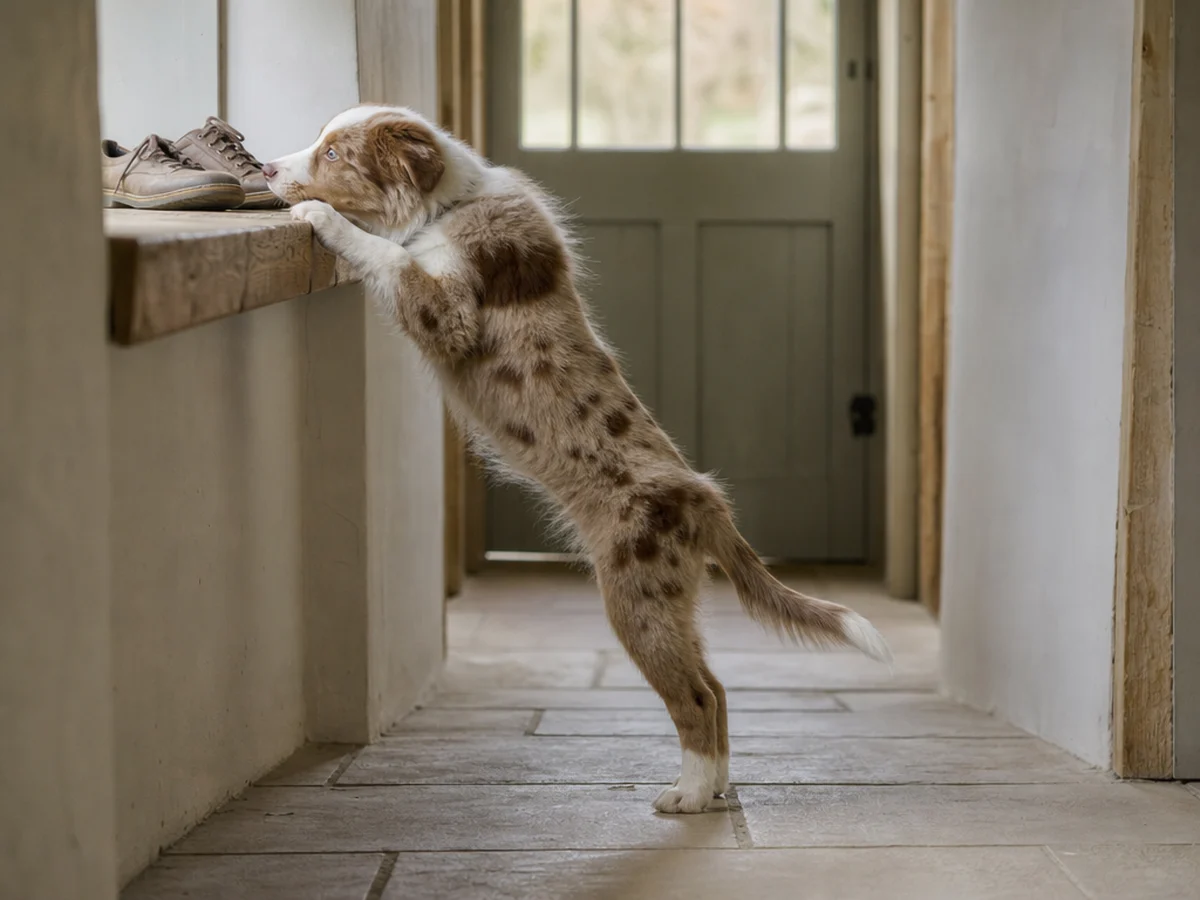
A taller puppy can reach places that were safe a month ago, so the house may need another look. Management does a lot of the work here, because a puppy who cannot reach the cushion never gets practice at chewing it.
The Cornell University veterinary college says puppies explore with their mouths, and growth lets them reach places and objects that were out of range when they were younger. It suggests moving tempting items to secure places, using baby gates to limit roaming and crating a puppy who cannot be supervised, because even a perfectly house-trained puppy might not be ready to resist the urge to destroy things.
A short walk through the house is enough to turn that into a plan, and four changes cover most of it. Each takes only a few minutes, and the last is our own suggestion rather than Cornell's.
- Look at each room from the puppy's height and move anything tempting to a cabinet or a higher shelf before it becomes a favorite.
- Put up gates so the puppy's free space shrinks to the rooms where someone is paying attention.
- Stock the crate with something worth chewing, so going in feels like the start of a treat rather than the end of the fun.
- Plan a few quiet minutes with the puppy at the same times each day, so gate and crate time is not the only calm part of the day.
The crate is only as useful as it is welcoming, and our Border Collie crate training guide covers building comfort and the first stretches alone. Leaving the door open at other times lets the puppy wander in by choice, so the crate stays an ordinary part of the room.
How Long Border Collie Puppy House Training Can Take
A puppy who has been reliable for days can still have a lapse, and it helps to know that house training is measured in months rather than weeks. Owners who expect it to be finished by a certain age tend to read a lapse as failure, and that reading is rarely accurate.
Is a puppy who has been clean for a while fully house-trained? Not necessarily. Humane World for Animals says house training a puppy typically takes 4 to 6 months, though it can vary with the puppy's size, age and previous house-training habits. It adds that crate training can be a helpful tool. That is a length of training, not a deadline set by the puppy's age.
A lapse is a reason to tighten the routine for a few days, keep the puppy where you can see them, use a gate when you cannot watch, and clean up calmly without any fuss. Our Border Collie potty training guide has the full routine.
Counting in months also keeps expectations fair. A puppy who came home with different early habits, or who is much smaller or larger than a friend's puppy, may reach a steady routine on a different timetable, and neither pace says anything about how well the owner is doing.
Keeping a Border Collie Puppy's Known Cues Worth Answering
By this age a puppy usually has a few cues that mostly work at home. Keeping them worth answering is easier before they start to slip than after, and it costs far less effort than rebuilding them.
PDSA says studies show adolescent dogs are less likely to follow commands given by their owners, and that the loss seems to apply to owners rather than other people. It advises patience and continued reward-based training. That describes adolescence in general and does not put the change in this window.
Pay at once and generously for cues the puppy already knows, and ask only when you can help the puppy get it right. When a cue wobbles, lower the bar for the next try instead of repeating it louder. The cue methods themselves are in our complete Border Collie training guide. Food, a short game with a toy or calm praise can each do the reward's job. A cue that gets answered and paid today is a cue still worth answering next month.
 Training basicsHow to Teach a Border Collie to Leave It
 Training basicsHow to Teach a Border Collie to Stay
 BehaviorBorder Collie at 1 Year and Up: When Do They Calm Down?