 Border Collie

If petting, tug and passing feet all end with teeth on skin, it is easy to decide the puppy is being pushy. We read it another way. A Border Collie at this age has a busy mouth and only a rough idea of what is allowed in it, which makes this a job for planning rather than for scolding. This page looks at what is changing, what to put in that mouth first and where the limits sit.
The steps are small and repeatable, and they work best when everyone in the house does them the same way. A puppy who learns early that hands are for petting and toys are for teeth is easier to live with, and easier to bring along to the vet, the groomer and friends' homes.
Border Collie Mouthing Moments and the First Move for Each
Mouthing is not one behavior. It shows up at a handful of predictable moments, and each has a simple first response worth deciding before the next episode, because a puppy mid-chomp is a poor time to improvise. These three come up often, and every one uses a toy and a reward instead of a raised voice.
- Petting that turns toothy. Stop stroking, keep your hand still and relaxed, and bring in a chew toy for the mouth to take over. Pet again for a moment once the puppy is holding the toy.
- A game that gets wild. Pause the play and wait for all four paws to be on the floor, then restart with a toy between you and the teeth. The restarted game is the reward for the calm moment.
- A tired puppy late in the day. End play before the puppy is worn out, and offer a chew somewhere quiet. Rest is part of the plan, not a consequence.
Teeth chasing moving feet is a different problem with its own sequence, so a puppy who goes after ankles, or after a child running past, belongs with our Border Collie ankle-nipping guide. Here we stay with hands, clothes and play, where a toy can replace the target quickly.
Spend a few days noticing when the mouthing clusters. If it bunches up after a walk, when the household gets home or just before dinner, schedule a short toy game ahead of that time so the puppy's mouth already has a job when the busy moment arrives. Predictable moments are the easiest ones to get ahead of.
Teething and Mouthing Overlap at 3 to 4 Months
Battersea Dogs & Cats Home lists exploring, play, excitement and avoiding handling as reasons puppies mouth, plus teething, with adult teeth coming through around 16 weeks. Most puppies, it says, "start to grow out of mouthing by around five to six months," and mouthing should be steadily reducing. Every dog is different, but with consistent training most puppies improve over a few weeks.
The Texas A&M veterinary school puts the juvenile stage at 3 to 6 months, when puppies test boundaries and adult teeth should be fully in place by 6 to 7 months. It suggests soft rubber, ball or stuffed toys and none with small pieces that can choke, and for a puppy chewing on a person it advises gently replacing the hand with a toy and praising the chewing on the toy.
Those ages are general ones for puppies, not a schedule for any one Border Collie, so your own puppy may run a little ahead or behind. If anything about the mouth worries you, such as a sore gum or a tooth that seems to bother the puppy, ask your veterinarian, and keep regular vet visits on the calendar. Our Border Collie puppy training timeline shows where this window sits among the others.
Give the Mouth a Better Job First
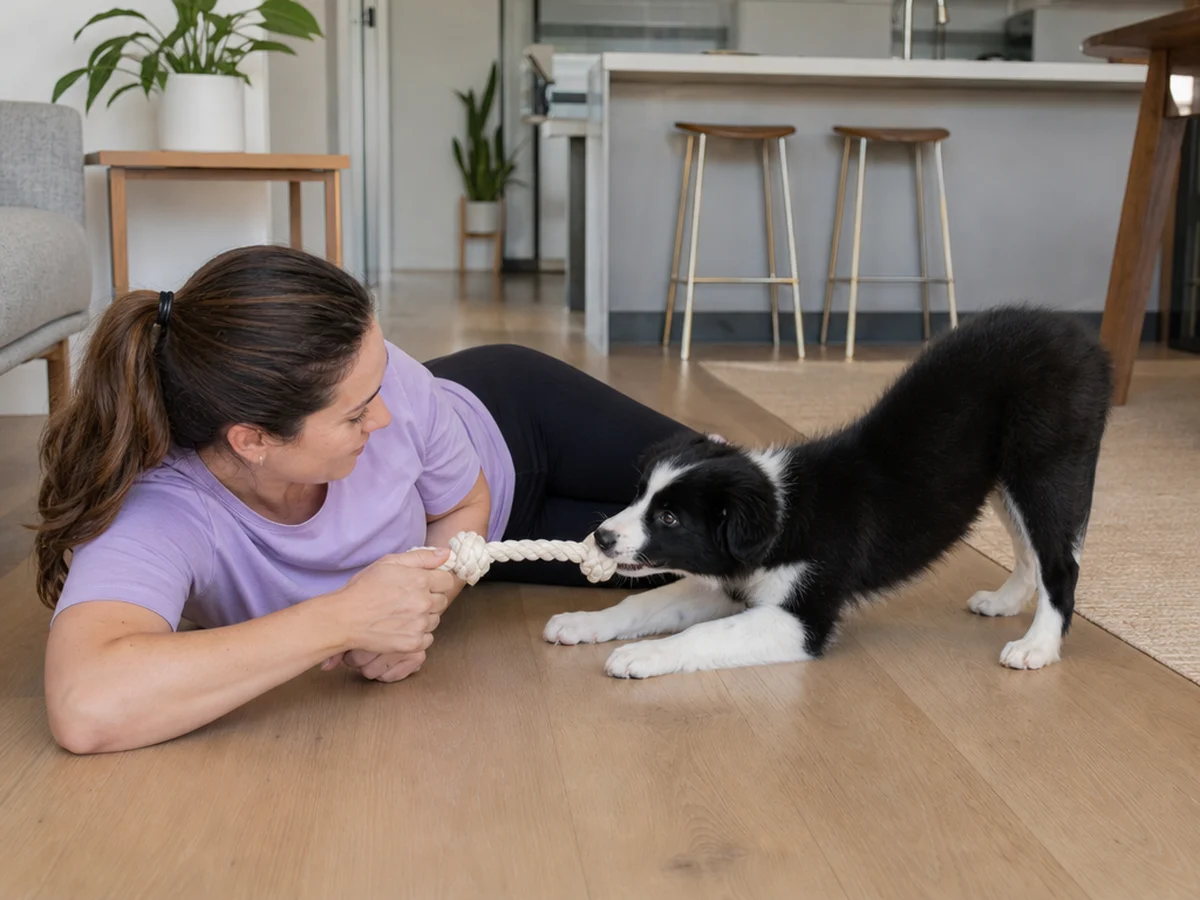
To cut mouthing on people, make the allowed options better than the forbidden one. Keep a toy within reach in every room the puppy uses, say a happy marker word the moment the mouth closes on it, and pay with play or a treat. A puppy who is paid for choosing the toy keeps choosing it.
Humane World for Animals suggests freezing a rubber toy for a teething puppy, because the cold soothes sore gums, with supervision so no pieces are chewed off and swallowed. When the puppy grabs something off limits, it recommends trading for a toy or treat, since pulling items out of a mouth can lead to guarding or running away.
PDSA calls chewing a natural part of being a dog and says puppies often chew as part of their development. A bored puppy, or one short on exercise and playtime, is more likely to chew things that are off limits. Redirect to a safe toy and praise instead of punishing, which can make a puppy scared of you and teach them to hide the chewing, and see the vet if chewing habits change.
Chewing that carries on long after the teething stage is a different job, and our Border Collie boredom chewing guide covers the brain work that helps. For now, a few well-chosen chews beat a basket of toys the puppy has stopped noticing.
Limits for Border Collie Puppy Mouthing
Limits at this age are about what the puppy is allowed to hold, taught calmly and the same way every time, with a reward for the right choice. A Border Collie puppy is not expected to stop all mouthing yet, only to be learning where it goes. That means a clear answer to what the mouth may do, offered every time, and no frightening ways of making a point. Calm, predictable handling keeps the lesson simple.
What about visitors and children? Everyone who handles the puppy needs the same response, and Best Friends Animal Society warns against mixed signals, such as allowing mouthing on some people but not others. Tell guests the one rule before they come in and hand them a toy to hold. Children do best with an adult close by, and our Border Collie socialization guide covers planning those meetings.
Do Rough Games Keep the Mouthing Going?
They can. The ASPCA encourages noncontact play such as fetch and tug-of-war over wrestling and rough play with the hands, and says that once your puppy can play tug safely, a tug toy kept within reach lets you redirect the mouth at once.
That fits a breed the Border Collie Society of America describes as naturally drawn to chasing and controlling the movements of animals, since a thrown ball gives the chase somewhere to go that is not your sleeve.
Can Mouth Handling Start With a Border Collie Puppy Now?
Yes, in small, friendly steps. Touch the muzzle, lift a lip for a second, then reward with a treat and stop before the puppy objects. Keep each try to a few seconds and end it while the puppy is still relaxed, then build up slowly over days. Short, pleasant practice now teaches the puppy that a hand near the mouth predicts something good, not something to grab.
The full step-by-step method for paws, ears and mouth sits in our Border Collie vet handling guide, so we will not repeat it here. What a puppy accepts from you at home is also what your veterinarian will find easier to check, and regular vet visits are the best place to raise any worry about teeth.
 Exercise and jobsEasy Tricks to Teach a Border Collie
 Exercise and jobsHow to Teach a Border Collie to Spin
 BehaviorHow to Stop a Border Collie Pulling on the Leash