 Border Collie
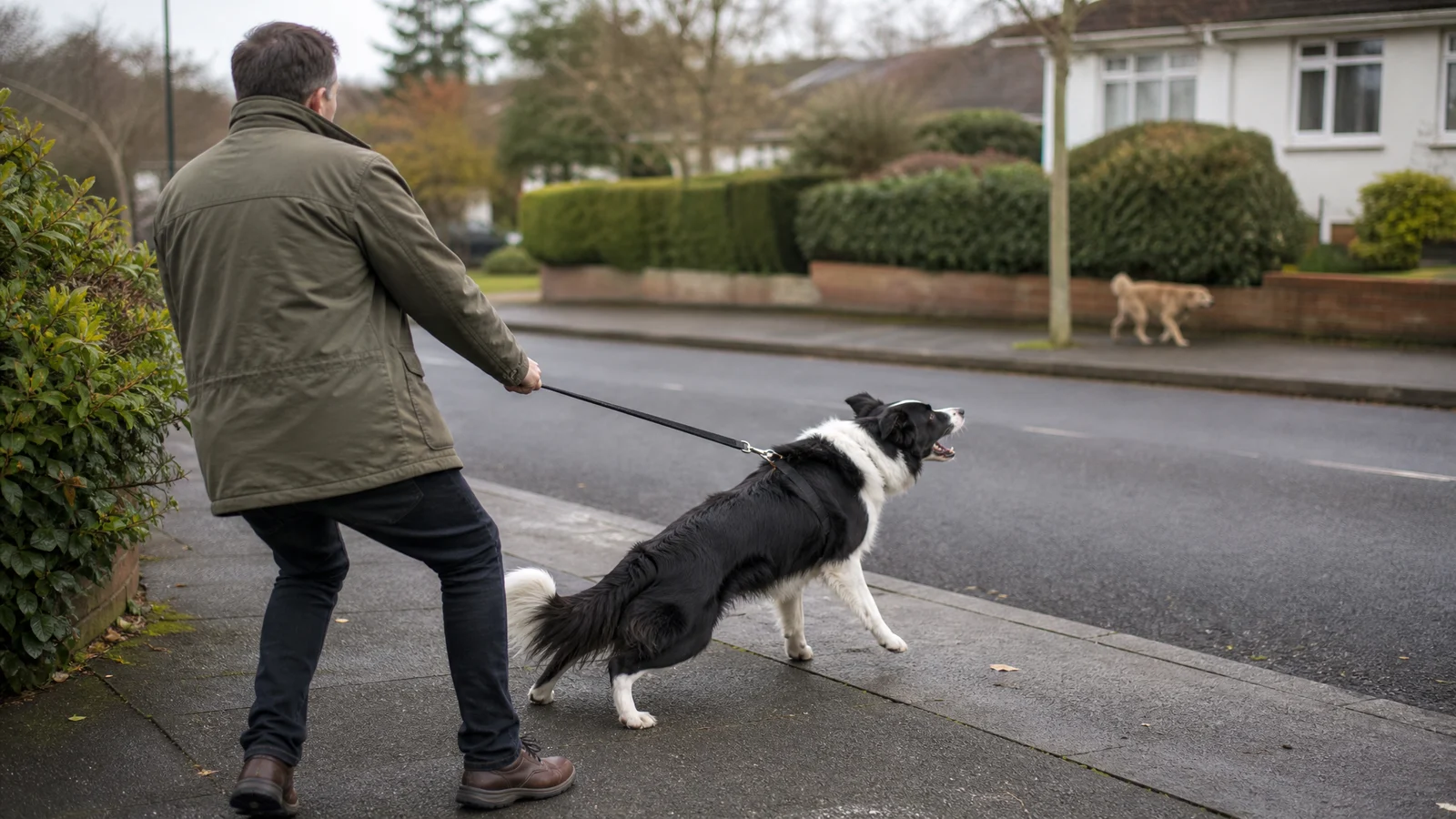
When another dog, a jogger or a bike comes into view and your Border Collie starts barking or lunging, the walk turns into a scramble to get past it. The fix is rarely a piece of equipment. What helps is distance your dog can handle, rewards that arrive while the trigger is still in sight, and a plan for the moment of passing.
This page stays on reactivity itself. Everyday pulling and steady walking live in our Border Collie loose-leash walking guide, and a dog whose reactions look like aggression belongs with the Border Collie aggression guide.
Walks with a reactive dog are easier to manage when the plan is settled before the leash comes off the hook. Nothing here needs a special location, only a clear idea of where your dog's limit sits. Below we cover that limit, the practice that changes how your dog feels about triggers, and the awkward moments no plan sees coming.
What Border Collie Leash Reactivity Is Trying to Do
From the dog's side, a reaction on leash is a behavior with a job. Whatever has appeared gets pushed away, or at least held at a distance, and the dog has an outcome they can point to afterward. Seeing it that way changes what we ask of ourselves as handlers.
The plan on this page keeps the useful part of the behavior, which is getting more room, and hands it a calmer route. Your dog gets space because you moved them, or because you stood back at the right distance to begin with, not because they barked and lunged.
Best Friends Animal Society describes barking, snarling or lunging as often successful solutions for dogs who are frightened, insecure, or trying to keep other dogs away from their people on leash. In the dog world, it says, these are distance-increasing behaviors designed to keep the unwanted dog, person or bike away. Until new skills become habits, it advises avoiding walks where unpredictable encounters might occur.
Finding Your Border Collie's Reactivity Threshold
A reactive dog has a point where a trigger is noticed and nothing happens, and a nearer point where everything does. Practice only works on the calm side of the second point, so finding it comes before any training.
Where the Bubble Starts
Battersea Dogs & Cats Home defines threshold as the distance at which your dog can remain non-reactive away from the trigger. All dogs, it says, have a "bubble" where they can be around the trigger but remain relatively relaxed, and when the trigger enters that bubble your dog will begin to react. It adds that you can work out your dog's threshold by monitoring their behavior.
Landmarks make that monitoring practical. On a route you walk anyway, notice the fixed spots, such as a mailbox, a driveway or a lamppost, where your dog last stayed relaxed and where they first reacted. Those two landmarks are your working range for that trigger, and they may shift from one outing to the next.
When Practice Goes Too Fast
A session can go wrong because it moved too quickly, and that is a mistake in the plan rather than in the dog. Ending a session early is the handler's adjustment, and the next one can start from a landmark farther from the trigger.
In a general guide to desensitization and counterconditioning, VCA Animal Hospitals says not to continue with a session if your pet shows signs of fear or arousal. It names one sign of moving too quickly: a pet who is no longer readily taking treats or settling on cue. It also warns that continuing exposure when a pet is uncomfortable can result in an exaggerated response during a future exposure.
When Border Collie Reactivity Needs a Vet Workup
Reactivity that is new, that keeps getting worse, or that arrives alongside other changes in your dog deserves a conversation with the vet before any training plan. Regular vet checkups are also a natural place to bring up walking behavior, so mention it even when it seems minor.
The MSD Veterinary Manual explains that because behavioral diagnoses cannot be made on the basis of a one-time event, pet owners can complete a questionnaire at each visit to mark the patterns of the dog's behavior. It also asks owner and veterinarian to consider the "ABCs" of the problem: what happens prior to the behavior (the Antecedent), what the Behavior is, and what happens immediately afterward (the Consequences).
This page is general training information, not a veterinary diagnosis or treatment plan. Questions about pain, health or medication belong with your veterinarian.
When reactions are intense, keep getting worse, or leave you unsure that everyone stays safe, ask your vet about a referral to a veterinary behaviorist or a qualified reward-based trainer. Ask any trainer to explain their methods before the first session, and walk away from anyone who relies on pain or fear.
Setting Up Practice Passes for a Reactive Border Collie
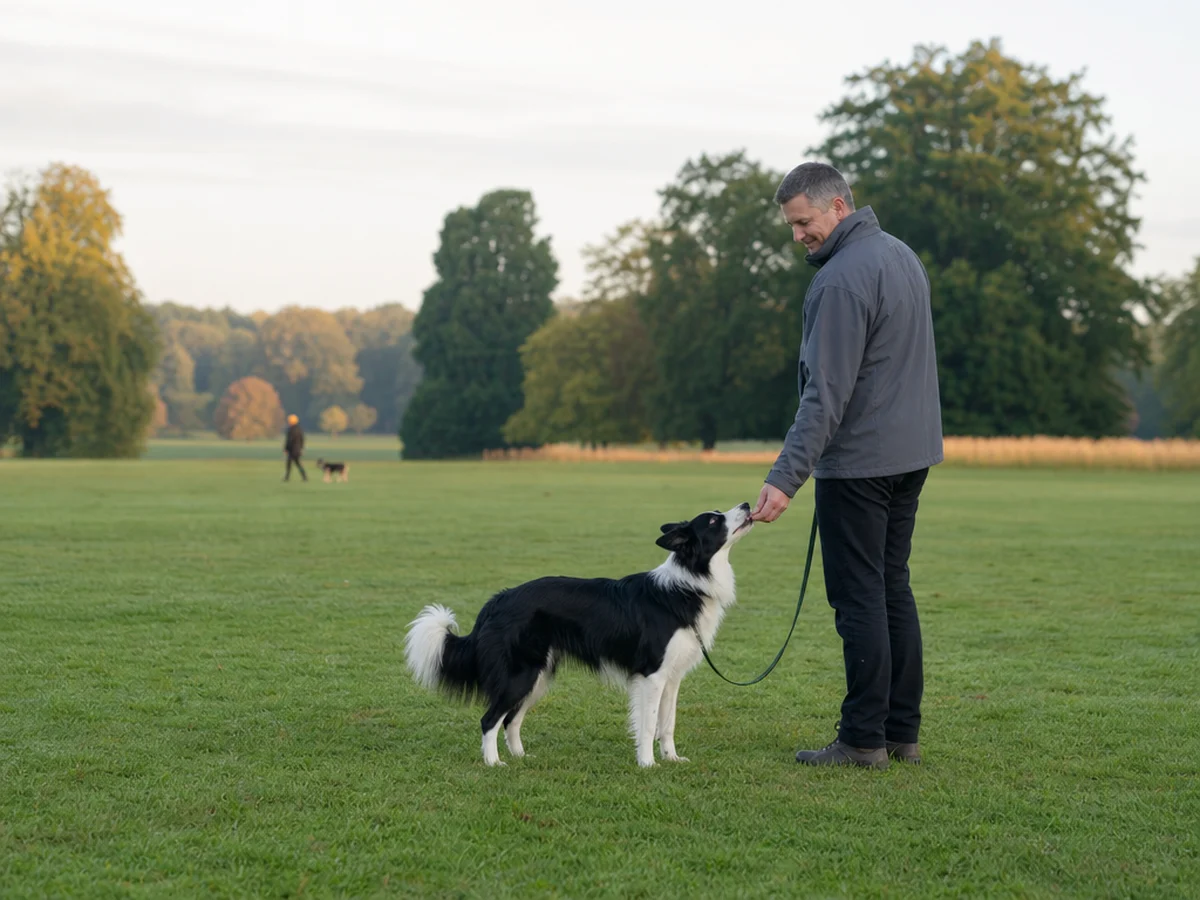
Quoting Dr. Katherine Houpt, Cornell University advises: "Reward the dog as soon as the trigger appears." At first, the article says, you will want to give the reward at a safe distance from the trigger, if possible, so that your dog feels comfortable. For helper practice it adds that if your dog remains quiet and focused on you, the friend can move a little closer, and if your dog starts to get stressed, the friend can go farther away.
A practice pass goes better when the decisions are made before the trigger shows up. These are worth settling first:
- A helper who has their own dog under control on leash and who agrees to stop the moment you ask.
- A place open enough that you can see the trigger first and change the distance in either direction without a scramble.
- Treats that are small, soft and valuable to your dog, already in your hand or pouch before the trigger is in sight.
- A word or hand signal for the helper that means halt now, agreed in advance and used without discussion.
- An ending planned for while your dog is still managing well, rather than one more try after the session has gone as far as it should.
Keeping the setup the same each time pays off later. When only the distance changes from one session to the next, it is much easier to see which change helped.
A Border Collie Distance Ladder From Easy Passes to Real Streets
Distance is the one thing you adjust, and the table turns it into a ladder. Each rung changes a single detail, and you climb when the rung you are on feels uneventful.
| Rung | What you do | What you pay | Move on when |
|---|---|---|---|
| Still trigger, far off | Stand at a landmark well outside your dog's bubble while a helper's dog stays put. | Treats for as long as the trigger is in view. | The rung feels dull to both of you. |
| Trigger moving, same distance | The helper and their dog walk across your line of travel at that same landmark. | Treats from first sight until the trigger is gone. | Your dog goes back to ordinary walking as soon as the helper has passed. |
| One landmark closer | Repeat the same pass starting a little nearer than before. | Treats, with a better one at the closest point. | Repeat passes at this distance stay as dull as the first. |
| Familiar street, quiet hour | Walk a road you know at a time you expect few triggers, and use the same landmark idea. | Treats from the first sight of anything new, then a small reward on the way past. | You can predict where a trigger will appear and your dog handles that stretch. |
| Busier street | Try a busier stretch that has space to adjust, once the quiet street is dull. | The same treats, at the same timing. | This stretch becomes part of an ordinary walk. |
Streets are less tidy than a practice setup, so the lower rungs of a real walk are worth repeating even after they feel easy. A pass you planned can turn into one you did not, and the more times your dog has done an easy version, the better that moment goes.
Equipment Facts for a Reactive Border Collie on Walks
No collar changes how a dog feels about a trigger, and fit and everyday handling belong to the loose-leash guide. Three narrower points matter here: when one kind of collar makes sense, what to avoid, and what pain does to a walk.
Humane World for Animals says the martingale collar is also useful for a dog of any breed who is adept at slipping out of their collar, or for fearful dogs who may try to retreat while on a walk.
PetMD notes that leash reactivity may be due to an underlying medical condition such as pain, discomfort, or illness, and that it is always important to chat with your veterinarian about anything related to your pet's health and behavior. It also advises avoiding punishment, yelling, yanking, choking, or other forms of aversion, as this can increase fear and anxiety, which can make the behaviors worse over time.
In its advice against collars that cause pain, the RSPCA states that being in pain when walking creates fear, distress and anxiety, and that those negative feelings can trigger negatively motivated behaviors in dogs with high levels of arousal, including aggression.
Awkward Moments on Border Collie Walks
A practice plan does not stop strangers from walking up or neighbors from leaving gates open. Four situations are worth deciding about ahead of time, so the answer already exists when one of them happens.
When Someone Heads Straight for You
What can you say to a stranger who wants to say hello? Something brief and cheerful, such as "Not today, thanks, we're practicing," gives an answer without inviting a longer conversation. Keep walking while you say it, and pay your dog for walking on past.
What if an off-leash dog is coming toward us? Call out early, in a clear and friendly voice, that your dog needs space, and ask the person to call their dog back. Then follow the plan you would use for any trigger ahead.
Dogs Trust advises that if you see a trigger ahead, you should calmly turn around, change direction or move behind a visual barrier, like a car or fence. It also says to keep the leash secure but relaxed, because tension on the leash can make a dog feel trapped and make reactions worse.
When the Route Itself Is the Problem
Is crossing the street every time just avoiding the problem? It depends on whether the crossing is the whole plan or protection while the plan runs.
The American Kennel Club says management will prevent your dog from practicing lunging, but it won't improve their behavior or ease their emotional state. It also says you can try positioning your dog at a set distance from a pathway or street, so you can predict when your dog sees passersby but control how far they are.
What about dogs behind fences along our route? Treat them like any other trigger: find the distance where your dog still notices them and walks on, and pay for passing at that distance. A fence line can make the usual distance impossible, so crossing to the far side of the road or choosing another stretch for now is a sound answer.
One Ladder Per Trigger for a Reactive Border Collie
A dog who passes another dog calmly has not necessarily learned anything about a bicycle, a stroller or a stranger in a hat. Each kind of trigger has its own bubble, so each one gets its own ladder, and the first rung for a new trigger sits farther out than the last rung you reached with the old one.
Think of dogs on leash, dogs behind fences, people on foot, bikes and strollers as separate beginners. Your dog may breeze through one and need the whole ladder for another, and that difference says nothing about how the practice is going overall.
For triggers nobody can stage, such as a passing car or a loose dog in a yard, the ladder happens on real walks. The landmarks you marked while finding your dog's threshold do the work a helper would do there.
 Training basicsAre Border Collies Good With Kids?
 Exercise and jobsHow to Teach a Border Collie to Shake and High Five
 Training basicsHow to Teach a Border Collie to Heel