 Border Collie
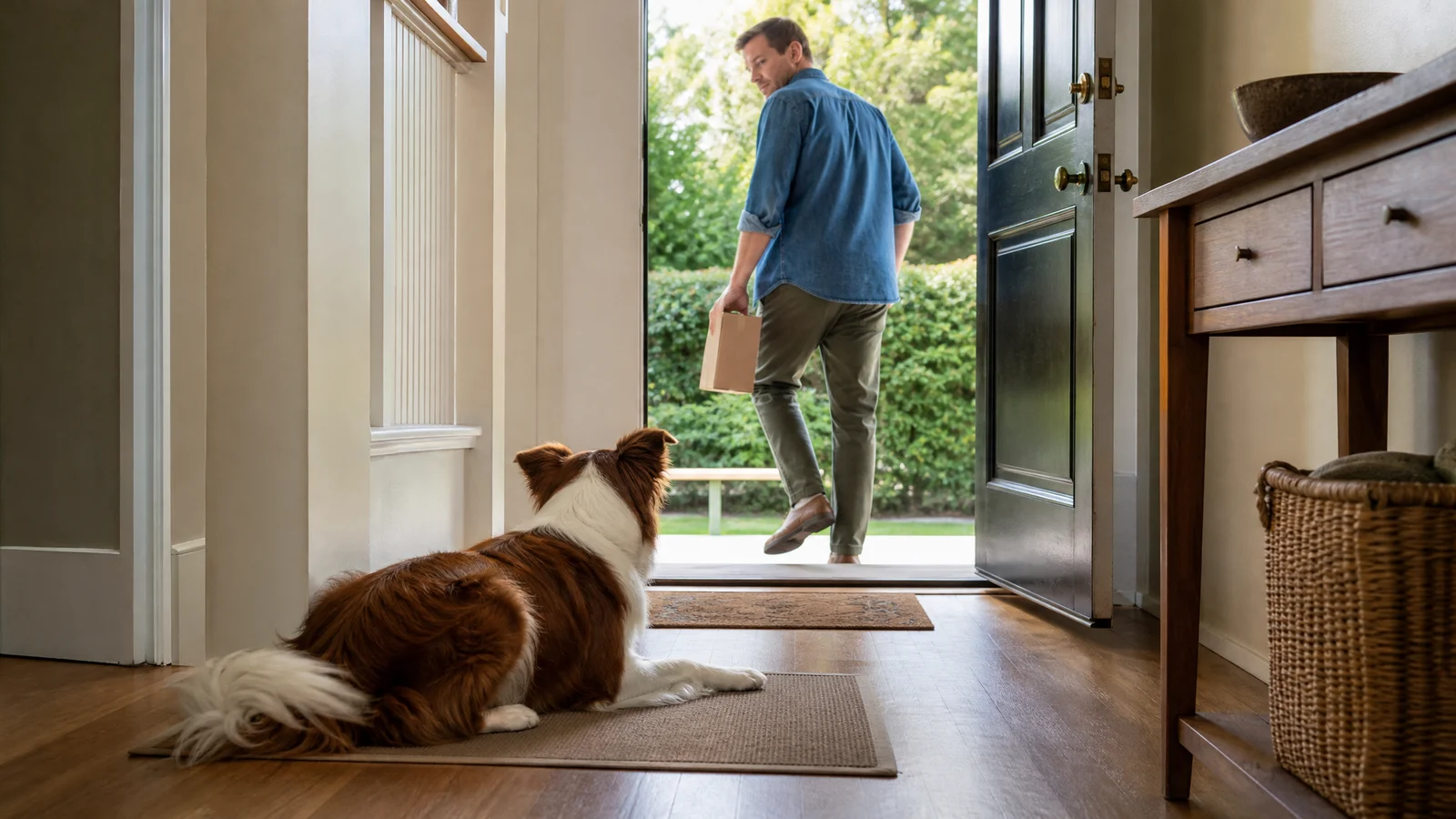
A delivery driver walks up the path, and before the package touches the porch your Border Collie has crossed the house at a sprint, planted at the door, and started barking in a steady rhythm you can't talk over. You stand there flustered, holding half a signed form and apologizing to someone who has certainly heard it before.
Nothing in that scene is a malfunction. This is a breed with a watchful, reserved streak and a great deal of mental energy with nowhere better to go, so the door becomes the best event of the day. The visitor also leaves after the barking, which the dog reads as success.
We have trained this breed for many years, and the order below is the one we would follow. First comes how to pay for quiet, then a mat cue that takes the place of barking, then the gear and room layouts that help, and finally the daily mental work that lowers the urge.
Rewards That Make Quiet Worth a Border Collie's Effort
A Border Collie barks at the door because it works, and a dog bred to notice what pays will repeat anything that pays. The fix begins with a reward menu good enough to compete with the thrill of a stranger on the porch. Food, play and calm attention each have a job, and the skill lies in knowing which to reach for and when.
Three Rewards and Their Jobs
Food comes first because it is quick, precise and easy to deliver in volume. Use tiny, soft treats, and teach a marker word such as yes by pairing the marker with food. Hand over a treat no later than 3 seconds after you say the word, and practice that again and again in a calm, quiet room before you ask for anything near a door.
Play is the second currency, and in a breed rated 5 of 5 for playfulness it can outrank food. Use it carefully, though, because a fast game of tug can wind up a dog who is already keyed up. Save toys for after the visitor has gone or for the far side of the room, and let food pay for the quietest moments.
Calm attention is the third and the most underrated. A slow stroke along the chest, a soft word, or simply sitting beside the mat tells a dog who lives for your approval that the quiet version of them is the one you enjoy. Excited praise does the opposite, so keep your voice low. If a particular treat makes your dog tense or possessive, teaching a Border Collie to trade keeps rewards peaceful.
Paying for Quiet Looks at Visitors
A reserved, watchful dog looks first and decides second, and that gap is where you work. When a person passes the window or stands at a distance outside, wait for your dog to look at them, and mark the instant the look is quiet. Deliver the treat at your side or on the mat, so the dog turns back toward you and learns that spotting a stranger predicts a snack.
Start far from the trigger, with a helper walking by at a distance where your dog can notice without erupting, and reward nearly every quiet look. As the pattern holds, close the distance and ask for a little more calm before the treat arrives. Pay for the pause and the pause grows.
The Mat Cue That Replaces Barking
Telling a Border Collie to stop barking leaves a gap, and a dog with this much drive will fill it with something else. A go-to-mat cue fills the gap on your terms, handing them a job at the exact moment the doorbell would otherwise start the sprint. Teach it somewhere quiet first, in small steps, and move on only when each one is easy.
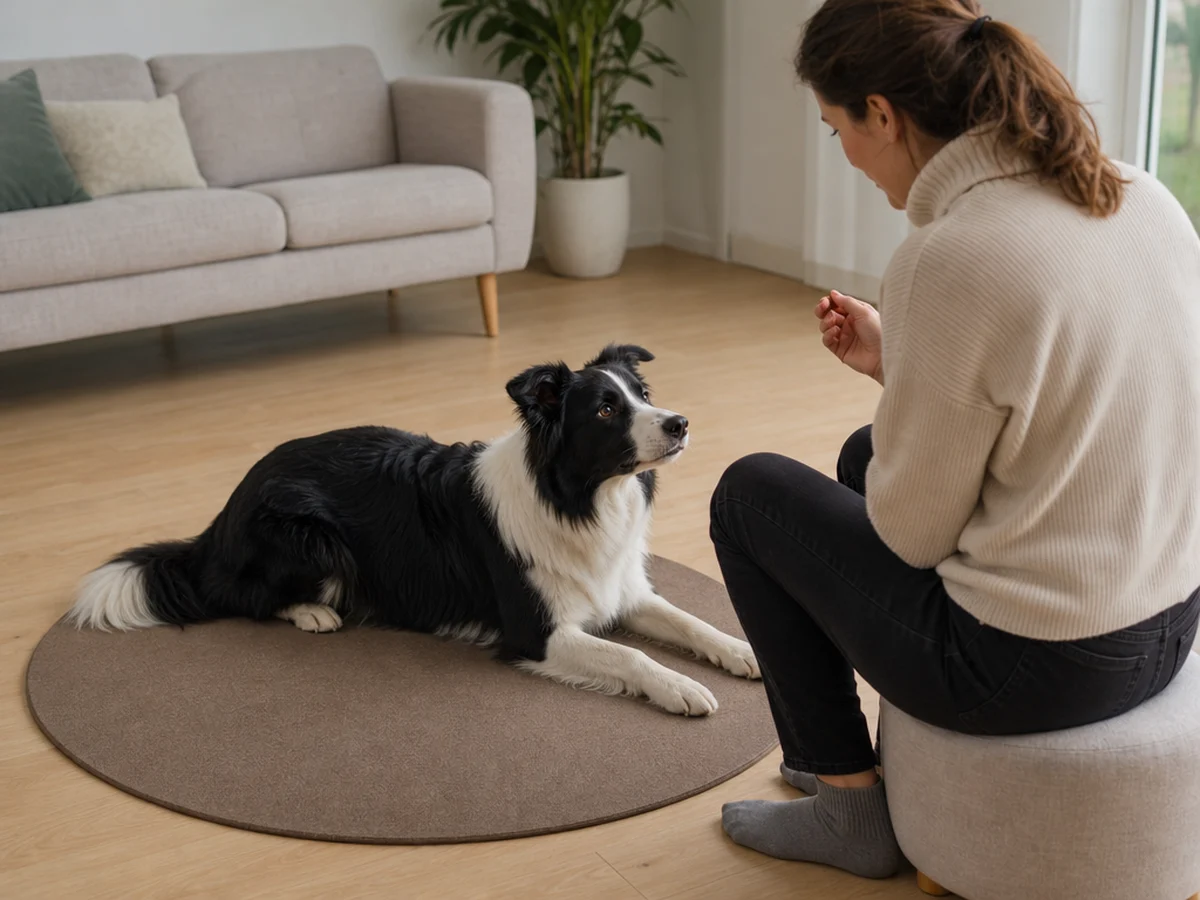
- Put the mat on the floor, wait for your dog to look at it or step on it, then mark and treat on the mat so the reward always arrives in the same place.
- Repeat until they approach the mat with purpose, then wait for all four paws to land before you mark.
- Reward longer stretches lying down on the mat, so that settling and not just standing becomes the behavior.
- Add your cue word just as they start moving toward the mat, then fade any hand signal or lure.
- Build distance by cueing from a few steps away, then from across the room, then from the hallway.
- Add a quiet knock or recorded doorbell, cue the mat, and pay generously for staying there until you give a release word.
Most of the real work sits in the last two steps. A dog who flies to the mat in the kitchen may forget it entirely when the knock arrives, so keep the sounds soft at first, keep treats flowing, and plan on many short sessions rather than a few long ones.
A quiet cue can work beside the mat as a backup, and the usual route is teaching a quiet cue. When your dog barks, speak the word in an even voice, then feed a steady trickle of tiny treats the moment the noise stops. The word takes several days or longer to gain meaning. The mat stays the better default, because it gives your dog something to do instead of something to stop.
Gear That Eases Barking Without Punishment
The right gear for a barker does one of two things. It makes the calm choice easier, or it keeps a trigger from building before you can respond. Choose tools that give your dog something to do and a reason to do it, which is also where the evidence points, since current research backs only reward-based methods for training of every kind, including the treatment of behavior problems.
This is general information, not medical advice. Check with your veterinarian before any medicine or diet change.
Mats, Beds and Tether Stations
Pick a mat thick enough to be comfortable and distinctive enough to be recognized, and keep it for settling only. A second mat lets you keep one near the door and one by the window. Wherever the mat lives, it should be the softest, most rewarding spot nearby.
For a dog who cannot yet hold a stay, a short tether station beside the mat can help. Use a sturdy anchor and a flat buckle collar or harness, stay in the room, and pair it with treats and a chew. Treat it as a brief rehearsal for settling and never as a place to park the dog.
Gates and Chews
A gate or pen placed across the hallway interrupts the sprint to the door and buys the few seconds you need to cue the mat. It also keeps a watchful dog from patrolling the front room while you are busy, which removes many chances to rehearse barking in the first place.
Chews and stuffed food toys give the mouth a task. Hand one over on the mat before a delivery is due and the quiet gains a flavor.
A Border Collie is built to change speed and direction in an instant, so the dash to the door is easy for them to rehearse, and a chew on the mat gives them a better place to put that energy once the gate has slowed them down. Choose durable items in a size that suits your dog, supervise, and pick them up when finished so they stay special.
Why Does My Border Collie Bark at Visitors?
Because the breed was made to watch, notice and react, and a stranger at the door is the most noticeable thing in the house. The AKC rates barking at 4 of 5, where 5 means very vocal, and rates openness to strangers at 4 of 5 as well. That points to a dog leaning friendly but who is not everyone's best friend automatically.
Those two numbers sit together more comfortably than they seem to. The breed standard asks that a Border Collie stand their ground when approached, alert and interested, never showing shyness, fear or resentment. It also says they should be neither nervous nor aggressive, but keen and responsive. That describes a dog who looks hard, thinks, and often comments, which is sensible reserve and not a flaw.
Watchfulness in this breed is rated only 3 of 5, so you are not working against a dog built for constant alarm. The goal is not to erase the alert but to shorten it and give it somewhere to end.
- Accept a brief announcement and mark the moment it ends, rather than waiting for total silence that your dog may never offer.
- Send them to the mat before the visitor comes in, so the greeting happens from a settled position.
- Ask guests to ignore your dog at first, then reward your dog for staying put while they sit down.
- If your dog stiffens, stares hard or lunges, increase the distance and read about reactive or intense behavior before the next visit.
Spaces That Cut Down Window and Door Barking
Border Collies sort the world by movement, and a window facing a sidewalk offers a nonstop feed of it. Every pass of a jogger or a car is another chance to rehearse barking, and rehearsal strengthens habit. Arranging rooms so the mat is always within reach and the triggers are harder to see does a surprising share of the training for you.
Windows
Frosted film on the lower panes lets light in and keeps the street out of view. Failing that, use curtains or shades, and move couches and chairs away from the sill so the furniture does not become a lookout post. When you are out, close the door to the front room or gate it off, and leave a chew in a back room.
The aim is fewer rehearsals, which means less to undo later. Management therefore stays part of training.
Entryways
Place the mat several steps inside the door and out of the line of sight of the glass, so your dog can settle without watching the porch. Keep a jar of treats on a nearby shelf, and put a second mat in whichever room your dog uses to watch the street. A note asking drivers to leave packages without ringing the bell removes a trigger altogether.
If fast movement at the door also sets off chasing or nipping at heels, redirecting Border Collie ankle nipping covers that overlap. Practice both skills with the same calm setup.
Can Mental Work Reduce Border Collie Barking?
Yes, and the reason is built into the breed. Mental stimulation needs are rated 5 of 5, described as needing a job or activity. A dog without one will invent work, and in a house that work is often patrolling, watching and announcing. Barking that comes from boredom needs a mental answer.
Many people suggest wearing your dog out with a long run, but exercise alone tends to produce a fitter dog with the same restless mind. Physical outlets matter, yet they work best alongside real thinking time.
Puzzles and Scent Games
Food puzzles, snuffle mats and treats hidden around a room turn dinner into a task. Scent games are especially useful, since sniffing slows the pace and absorbs a clever mind. Scatter treats in the grass, then hide them under cups or in boxes, and let your dog work out the search at their own speed.
Short Training Sessions
Spread brief sessions across the day rather than relying on one long block. Teach new tricks, name toys, practice the mat in a different room, and end each round while your dog still wants more. Schedule one just before the time of day when barking usually peaks, so the energy has a legal outlet before the trigger arrives.
Keep up regular vet visits, and mention any sudden change in barking so a health cause can be ruled out. Pain or sensory changes can alter behavior quickly.
What a Quiet Border Collie Looks Like Years Later
The dog you are raising now does not have to stay at this pitch forever. With consistent practice, barking tends to become more manageable and far more predictable, because you learn your dog's triggers and they learn that the mat pays better than the door. As a general rule of reward-based training, consistent early practice usually does most of the work.
Expect a watchful dog to remain a watchful dog. They will still announce a knock, a strange car or a new voice, and that is the same reserve the standard describes. What changes is the length of the announcement and how quickly they settle once you cue the mat. Recovery tends to get quicker.
That outcome depends on keeping the routine alive through adulthood. Keep paying for quiet looks, keep the windows and entryway arranged sensibly, and keep feeding a mind that needs a job. A Border Collie whose thinking is met every day has little reason to invent their own work at the door, and will speak up only when something actually deserves it.
 HealthVet Handling Training for a Border Collie
 BehaviorBorder Collie Boredom Chewing and the Brain Work That Helps
 Exercise and jobsBorder Collie Running: Open-Field Time With a Reliable Recall