 Border Collie
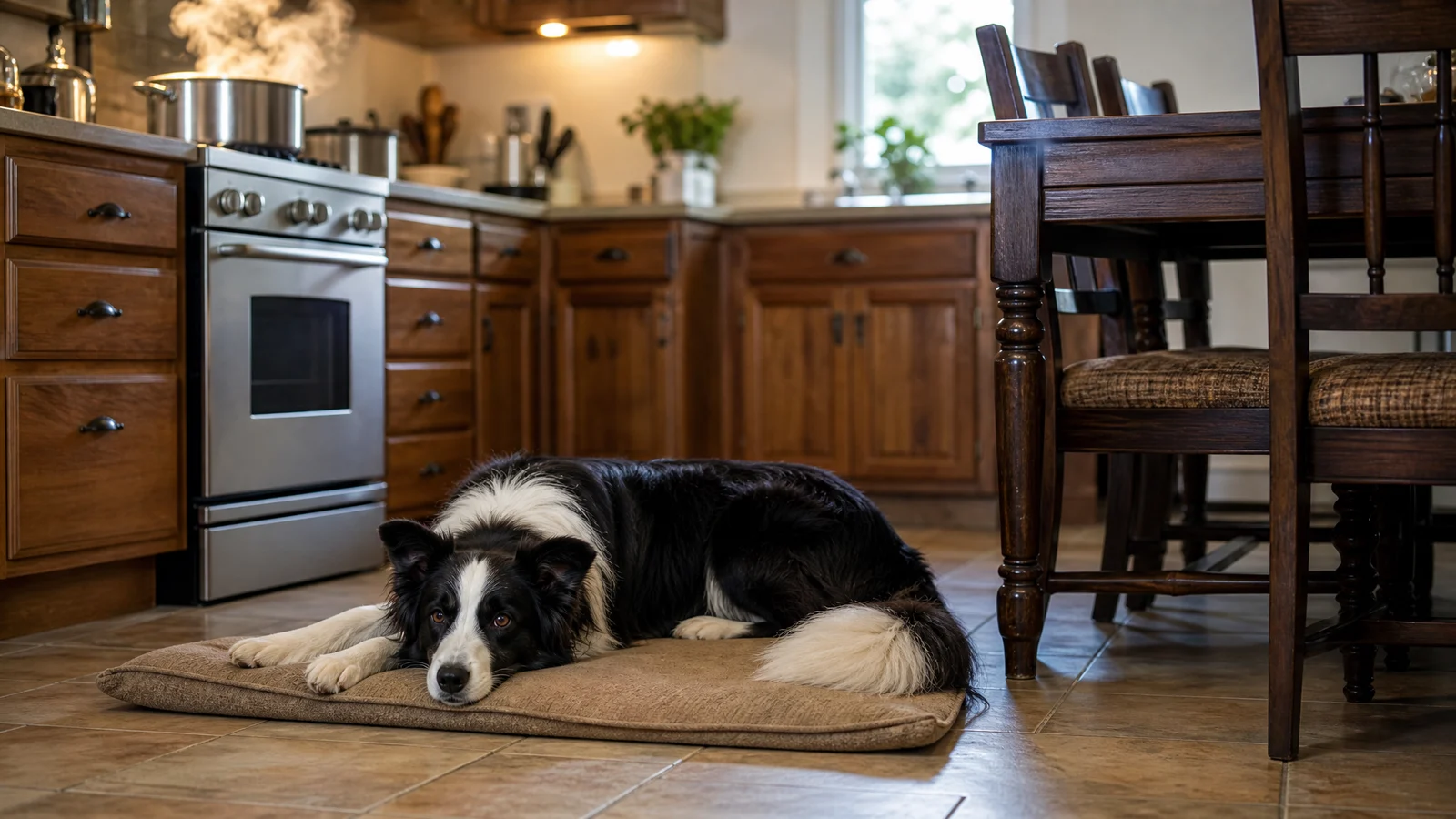
A one-year-old dog trots back and forth between the kitchen and the window while dinner is being made, and the family wonders whether the puppy months are really over. By now the questions are familiar. Will this end, when will it end, and is anything being done wrong in the meantime?
We cannot put a date on it for a Border Collie, and a page that gave one would only be guessing. This page sets out what the general age ranges for dogs can and cannot tell you, and what is worth practicing while you wait. Start with the calm that already shows up, because that is the part you can pay for today.
Pay for the Calm a Border Collie Already Offers
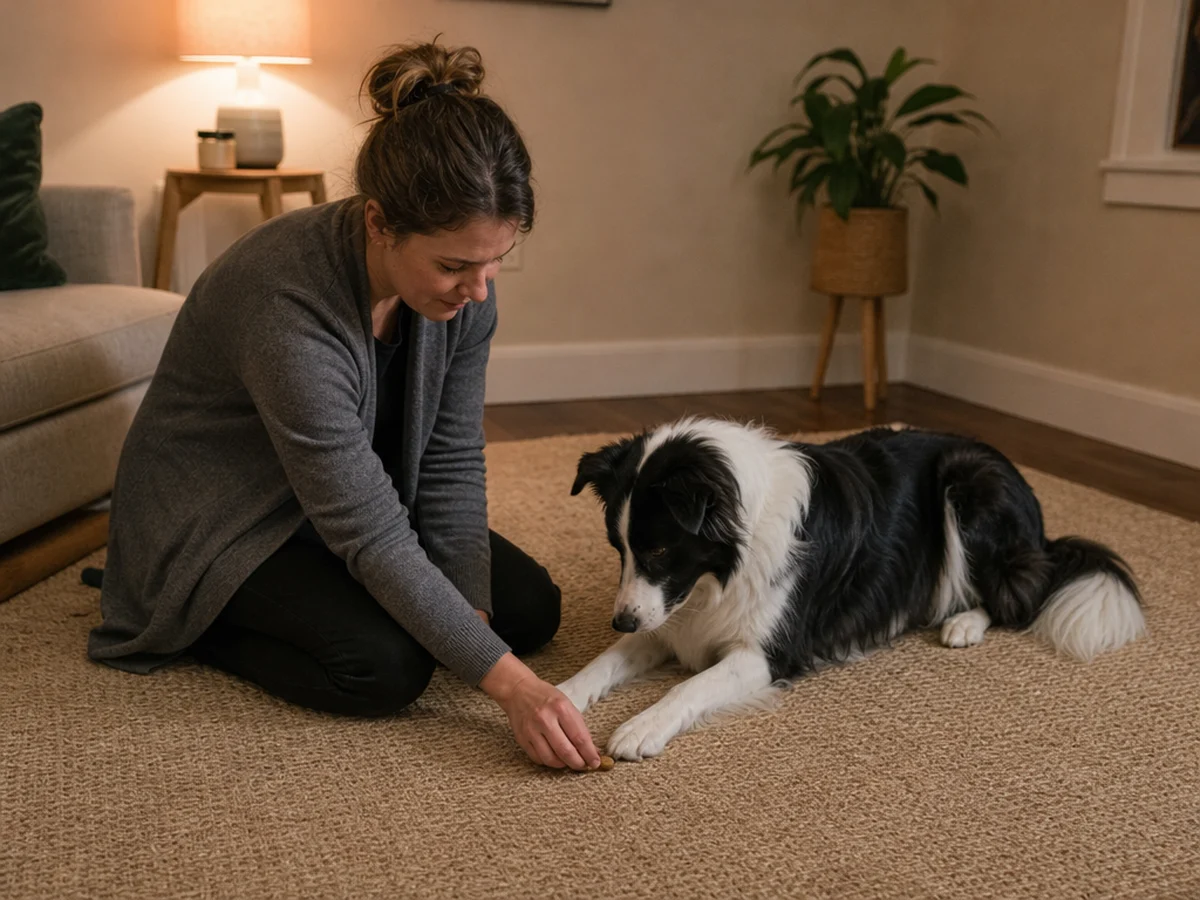
Calm does not have to wait for a particular birthday to be trained. Look for the moments when the dog lies down without being asked and the room goes quiet around them. Those moments are the raw material, and paying for them teaches the dog that settling is a good way to spend time.
When the dog lies down on their own, or lets their shoulders drop and their breathing slow, say your marker word quietly and deliver a treat at floor level, between the front paws if you can. Paying low lets the dog stay down to collect it. If the treat has to be taken from a standing hand, the dog gets up, and getting up becomes the thing you paid for. Four everyday moments are worth watching for:
- Right after a walk, when the dog drops onto the floor and starts to breathe more slowly.
- During the family meal, when the dog stretches out beside the table instead of circling it.
- While a visitor chats in the doorway and the dog stays settled a few steps away instead of joining in.
- At the end of a work session at a desk or table, when the dog has stopped waiting for the next game.
Paying on ordinary days gives calm a history before the harder moments arrive. If settling has only ever been requested when the house is loud, the dog has little reason to believe in it. When you want the behavior on a cue, our Border Collie settle cue guide builds the mat version step by step.
Why Dog Adolescence Ranges Do Not Date Calm
Age ranges get quoted as if they were calm dates, but each one measures something specific. The two below date adolescence in dogs as a whole, not in Border Collies in particular. Each range answers a narrower question than the one owners are asking.
According to Cornell University, adolescence generally ends around 18 months of age, but can go until 2 years old depending on the breed or dog. Adolescent puppies are often more impulsive than their adult counterparts because the prefrontal cortex, the region that handles self-control, problem solving and social interactions, is still developing.
Texas A&M places the adolescent stage between 6 and 18 months of age, again for dogs in general. The two ranges meet at about 18 months as the far end, and both describe when adolescence happens, not when a dog becomes easy to live with.
For the whole sequence from 8 weeks to 2 years, with what changes along the way, our Border Collie puppy timeline is the place to look. It is the stage-by-stage overview, and this page stays with calm.
Training a One-Year-Old Border Collie Toward Calm
A dog of one year looks like an adult, which makes it easy to expect adult manners. On the adolescence ranges above, a dog of one year is still inside that stage, so the useful target is a dog who can pause before acting, not a dog who has stopped wanting to move.
Owners often interpret a teenage dog's change in behavior as stubbornness, but the RSPCA says the dog is finding it difficult to control their impulses. It also says teenage dogs learn better than adult dogs or puppies, and it recommends putting some of their energy into structured play and exercise sessions such as searching games and scent puzzles.
Because the dog is still learning impulse control, ask for adult-level calm only in places where it has already been paid for many times. At home, on the usual mat, with the usual people, you can expect a lot. At a busy store entrance, expect less, shorten the ask, pay more often, and count a quick glance away from the distraction as a success.
Using the Habit You Already Have
Does a one-year-old need new cues for calm? No. The mark-and-pay habit from the first section stays the same, and the only things that change are the setting and how long the dog waits before the treat arrives. Add that wait one second at a time.
Month-by-month training for the teenage stretch is covered in our Border Collie teenage phase guide, so we leave its methods there. This page stays with the calm side of the same work.
Does Calm Wobble as Social Maturity Arrives?
Social maturity is a different yardstick from adolescence, and the ranges for it run later. Here is what they say, and what to do with the answer.
The Merck Veterinary Manual says social maturity develops at 12 to 36 months of age. It also says this is the time when problems with aggression and anxiety develop.
PDSA notes that most dogs do not reach full social maturity until around three years old, and that if you are not sure whether a dog has a problem or has simply reached adolescence, it is safest to get the dog checked. For ongoing or serious problems, it advises speaking to your vet and an accredited behaviorist, since many behavior problems get worse over time and early help is key.
When a New Problem Shows Up
For aggression specifically, the American College of Veterinary Behaviorists recommends professional help from a veterinary behaviorist for any dog showing aggressive behavior, because the potential consequences and liability are so serious. It adds that aggression that is mismanaged or not addressed early often worsens.
So if the new behavior includes growling, snapping or lunging at people or other dogs, treat it as aggression and call a veterinary behaviorist before anything else. Our Border Collie aggression guide can be read alongside that help.
For milder worry or edginess, make the setup easier by adding distance, moving somewhere quieter and asking for less, and pay for the easier version. Regular veterinary visits, which every dog needs, are also the natural place to mention any change in behavior.
Border Collie Calm at Home and Away From It
Calm built on the living-room rug does not travel by itself, because a new place is a new question. Start the move outward in the easiest spot available, such as a quiet corner of the yard, a parked car or the far side of an empty lot. Pay more often than you did at home and ask for less. Add one new thing at a time: a new surface, then a few more people, then less distance from the activity. If the dog cannot take the treat at all, go back one step.
Will the cue work for everyone in the household? Not automatically. Each person has to pay for settling in the same way, and each one needs to start at home before trying it elsewhere. Agree on the marker word and on where the treat is delivered, and the dog gets one clear message instead of several.
How much running, searching and play the dog gets around these practice sessions is covered in our Border Collie exercise guide. The sessions described here fit around that daily running and play. Calm that has been paid for at home is the calm that gets asked for in harder places. The mat and the marker word come first, and the quiet corner, the parked car and the doorway come after, each built on the one before it.
 Training basicsAre Border Collies Easy to Train? Smart or Stubborn
 Training basicsHow to Teach a Border Collie to Focus on You
 Training basicsHow to Teach a Border Collie to Sit