 Border Collie
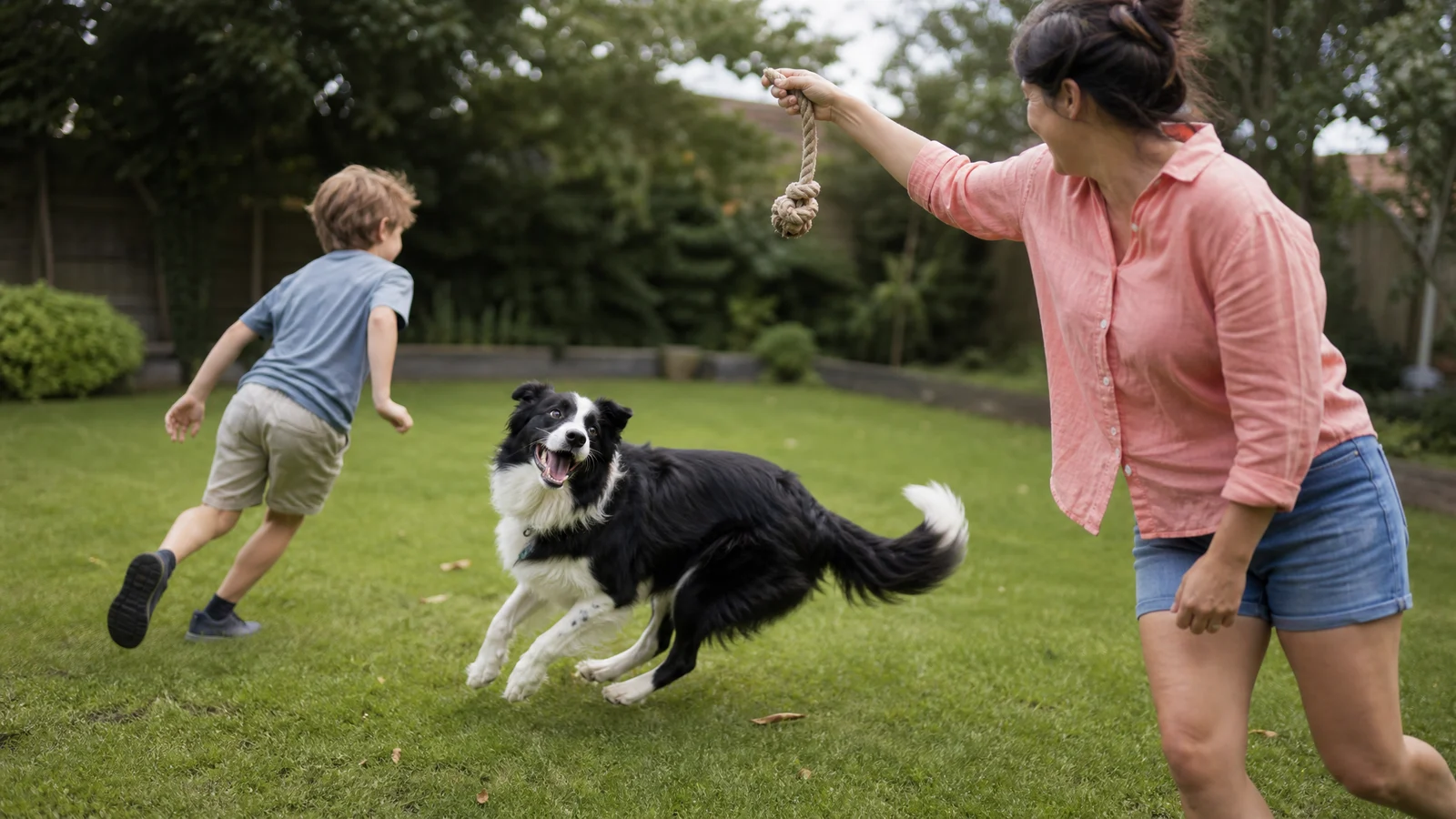
Redirect the nip to a sit or a fetched toy and reward it every time, because a Border Collie who nips ankles and herds kids is acting on herding instinct, not meanness. Done early and calmly, this turns a chasing habit into a dependable cue. Done late or not at all, the dog rehearses nips each time a child runs past, and the habit gets stronger with every repeat.
These dogs were shaped over generations to control moving stock, so a running child, a swinging ankle or a squealing game looks like work to them. We have trained this breed for many years, and we know how much easier family life gets once a dog has an alternative job to do.
This guide starts with the herding sequence and the aggression distinction, then builds the sit replacement into child and daily-practice cases. Finish with early exposure and progress checks.
Border Collie Heel-Nipping Sequence
The nip makes sense once you know the job behind it. The breed standard traces the Border Collie to the Border country between Scotland and England, where shepherds bred for biddable stock sense and the ability to work long days on rugged terrain. Selective breeding built intensity, energy and trainability, which the standard ranks as equal in importance to physical size and appearance.
That selection produced a distinct working style. A Border Collie gathers and fetches stock with wide sweeping outruns, then controls the animals with an intense gaze called eye and a stalking style of movement. Chasing and controlling moving animals is what their bodies and minds were crafted to do, and nobody has to teach them the sequence.
The Sequence Inside Your Home
Inside a house, that sequence only needs a target. A child sprinting down a hallway, a teenager on a skateboard or an adult jogging across the yard all produce fast, erratic movement. The gaze locks, the body lowers, the chase starts, and the nip lands on whatever part of the target is closest to their mouth, usually the heels. Children trigger it most because they run, stop, swerve and shriek without warning.
The cost arrives later. Each nip that makes a child squeal or scramble pays the dog with more movement, so the habit feeds itself. A bright dog without enough daily work also invents some, as our guide to Border Collie instinct at home explains. The nip is a job with no boss, so your fix is a better job.
Border Collie Heel Nipping or Aggression?
Almost always, no. A herding nip and an aggressive bite come from different motivations, and the response you choose depends on telling them apart. A herding nip belongs to the stare, stalk and chase sequence. It follows movement, it is aimed low at heels, and it fades when the target stops. Aggression or fear is tied to the dog's discomfort, so it appears when a person is still, approaching, reaching or cornering the dog.
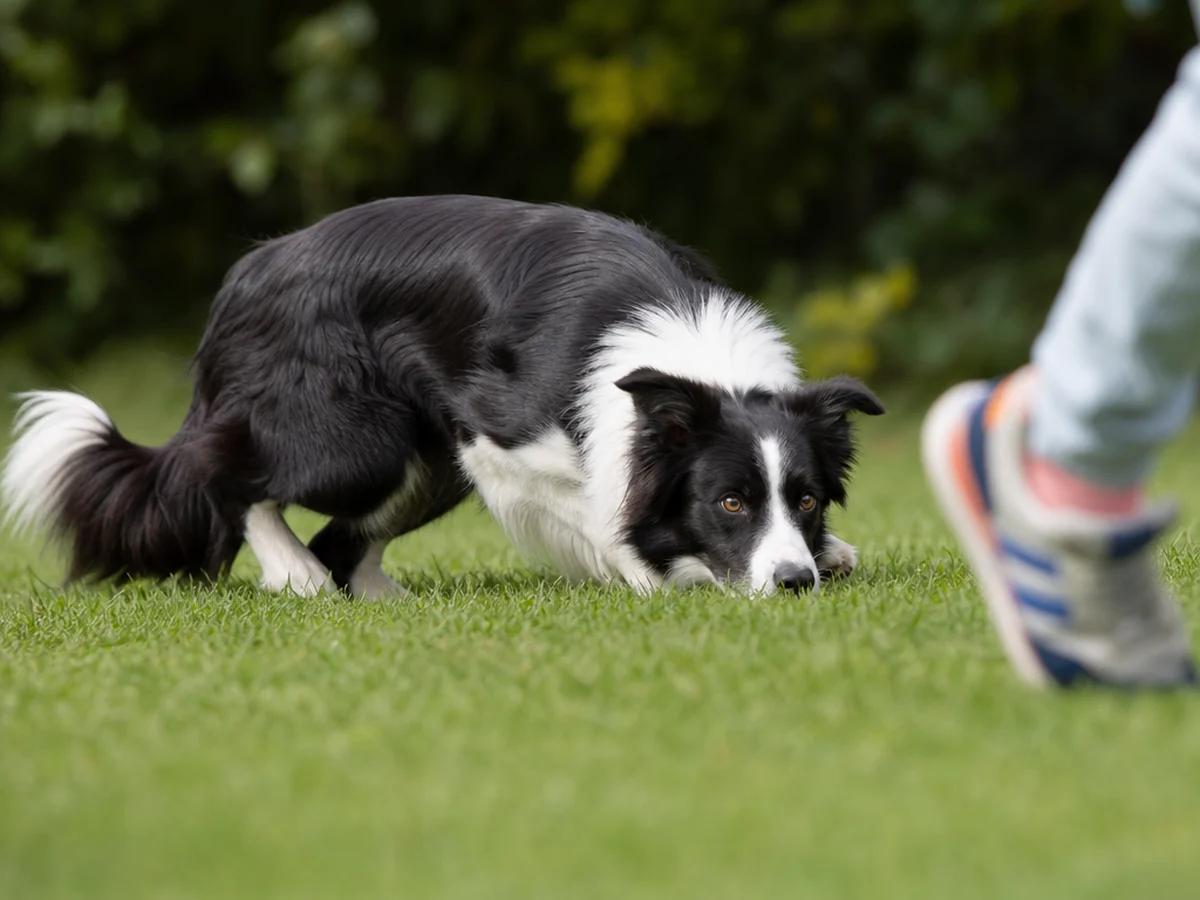
We specialize in Border Collie behavior and training, and the comparison below is where we start. Use it as a guide only, since individual dogs vary and the whole picture of body language matters more than any single sign.
| Signal | Herding nip | Fear or aggression |
|---|---|---|
| Trigger | Running, swerving or fast-moving people | Approach, reaching, cornering or touch |
| Body language | Fixed stare, low stalking posture, keen face | Stiff body, growling, tucked tail, backing away |
| Target | Heels, ankles and clothing of moving people | Anywhere, including still people |
| When movement stops | Dog pauses, drops or looks for the next move | Tension continues |
| Mood afterward | Loose and eager to continue | Wary, tense or avoiding |
Getting this wrong has a price. Treating a frightened dog as a herder means pushing more exposure than they can handle, while treating a herder as aggressive can lead to needless isolation. If your dog fits the right-hand column, create distance, pause exposures and bring in a qualified behaviorist before anything else. If they fit the left-hand column, the plan in this guide applies.
A Sit During Socializing
A sit works as a replacement because a dog cannot sit still and chase in the same instant. A seated dog has a still body, a broken stare and a task to finish. Only reward-based methods belong in this training, and a trainable breed repays them quickly. Build the behavior in stages:
- Teach the sit in a quiet room with a marker word and a treat, until the dog sits at your cue without a lure.
- Reward staying seated by delivering treats to the dog's mouth while they remain in position, before you add any movement.
- Add your own movement, such as a step sideways, a slow circle and then a light jog, marking and rewarding each time the dog holds or returns to the sit.
- Bring in a calm helper, an adult first and an older child later, walking past at a distance while you reward the sit as the movement goes by.
- Teach a toy as the second option, so that when movement starts you can cue a sit or ask the dog to fetch a favorite toy, then reward with tug or a game.
The toy gives chase drive an acceptable outlet. A ball or tug gives the dog something to carry or pull instead of an ankle, and a game of tug is a reward they can earn for choosing the right behavior. If a nip still happens, stop the game, calmly lead the dog away for a brief pause somewhere quiet, then resume once they settle. A rewarded sit, repeated until it becomes the first answer to running feet, is what replaces the nip.
Border Collie Socializing With Running Feet
Because of their tendency to herd animals and people, Border Collies do best with older, well-behaved children. The reasoning is practical rather than sentimental, and it should shape how you plan every contact.
Why Calm Older Children Suit the Breed
Older children can follow instructions. They walk instead of sprint, stand still when asked, hand over treats without squealing and stay out of the dog's space. That gives the dog a predictable setting where a sit is easy to earn. Toddlers and young children move unpredictably and cannot yet follow rules, which hands the dog constant triggers, and sudden shrieks can also rattle a dog with noise sensitivity.
Supervised Mixed-Age Contact
Supervise every interaction and treat each age as a separate stage. With younger children in the home, keep them apart by default using baby gates, a pen or closed doors. Bring them together only in short, planned sessions when an adult can watch the dog and nothing else. With older children, give a clear job: walk calmly, drop a treat when the dog sits, and play tug only when the adult says so.
Management does much of the work here. Each nip the dog rehearses makes the next one likelier, so the cheapest training you will ever do is a gate that prevents the mistake. Keep sessions brief, finish before the dog gets wound up, and give them a quiet place to rest afterward.
Daily Heel-Nip Socializing Practice
Keep daily practice short and frequent, and fit it around your dog's life stage rather than whatever time is left over. A few brief sessions beat one long one, because the dog stays keen and each repetition stays high quality.
The Shape of a Daily Session
Begin where the dog already succeeds: a quiet room, treats ready and movement the dog can ignore. Cue a sit, reward, add a small amount of movement, reward again, and stop while the dog is still eager. Exercise comes first, since a Border Collie needs daily activity beyond a walk around the block or a quick romp in the yard, and a dog who has had enough real work settles more easily.
Raising Distance and Difficulty
Change a single variable at a time. If the movement gets faster, keep the distance generous. If a child moves closer, keep the pace slow. Advance only after the dog sits readily on repeated tries at the level you are working on, and drop back a step whenever they stare, lower their body or start to stalk.
A sensible progression runs from your own steps to an adult jogging far away, then an older child walking at a distance, then that same child closer, with real play only at the very end. Each level should feel easy before the next begins. Over months this builds a dog whose first reaction to running feet is a glance at you.
Border Collie Heel Nipping Before Seven Months
Instinct sets the engine, and early experience decides how it gets steered. Early Border Collie socialization is especially vital in this breed, meaning positive exposure to a wide variety of people and situations from early puppyhood through about seven months. For a Border Collie the goal goes beyond meeting friendly people. The puppy also needs to watch fast, noisy, unpredictable movement from a comfortable distance and learn that watching pays better than chasing.
The standard describes the breed as affectionate toward friends but possibly sensibly reserved toward strangers. That reserve is normal, and careful, rewarded exposure keeps the reserve from turning into wariness.
Plan the window in stages: calm visitors and household noise first, then people moving at a walking pace, then bikes, strollers and children playing at a distance. The method mirrors preparing a dog for a new baby, with gradual, reward-paired introductions to each sight and sound.
Timing carries a trade-off. Effort spent early pays back, because a puppy who has learned that moving children predict treats has little reason to practice stalking them. Rushed or overwhelming exposure can backfire, so choose quality over quantity and end every outing while the puppy is still relaxed.
After about seven months the work does not stop, it only changes character. Obedience training that starts early and continues throughout life keeps a Border Collie happy and mentally occupied, so treat socializing as a standing habit rather than a puppy project.
Progress in Border Collie Socializing
Judge progress across weeks and months, not single days, because a young Border Collie will have good and bad stretches, especially through adolescence. These signs show the redirect is working:
- Nips become less frequent and lighter, and the dog stops quickly when you cue a sit.
- The dog offers a sit or grabs a toy on their own when children start to run, without being asked.
- The dog can watch moving children from a closer distance while staying loose and willing to take treats.
- The stare and stalking posture appear less often, or break when you say the dog's name.
- Calm, older children can share the room with the dog without constant intervention.
Some signs need more than patience. Regular vet visits belong in any behavior plan, and handling practice from our guide to calm vet handling practice keeps those visits smooth. Ask a qualified trainer or behaviorist when you see any of the following:
- A nip breaks the skin or draws blood.
- Intensity escalates, with harder nips, longer chases or a dog who cannot be interrupted.
- Biting happens when people are still, or the dog growls, stiffens or snaps when approached or cornered.
- You cannot keep the dog and children safely managed at home or on walks, which is when a qualified behaviorist can help, and teaching a muzzle may be part of the plan.
- Consistent practice over several months is producing no change.
Underneath all of this is the breed's design. A Border Collie is an intense, intelligent worker who needs structured mental and physical work every day, and nipping heels is what that drive does when it has nowhere better to go. Meet those needs with exercise, brain work and a rewarded sit, manage the setting so rehearsal stops, and you keep the family safe while giving a dog built for work the one thing they want most, a clear job.
 BehaviorBorder Collie Food Aggression: Teaching a Trade Instead
 BehaviorReactive or Intense? Border Collie Aggressive Behavior Help
 BehaviorIs a Border Collie Good With Cats and Farm Animals?