 Border Collie
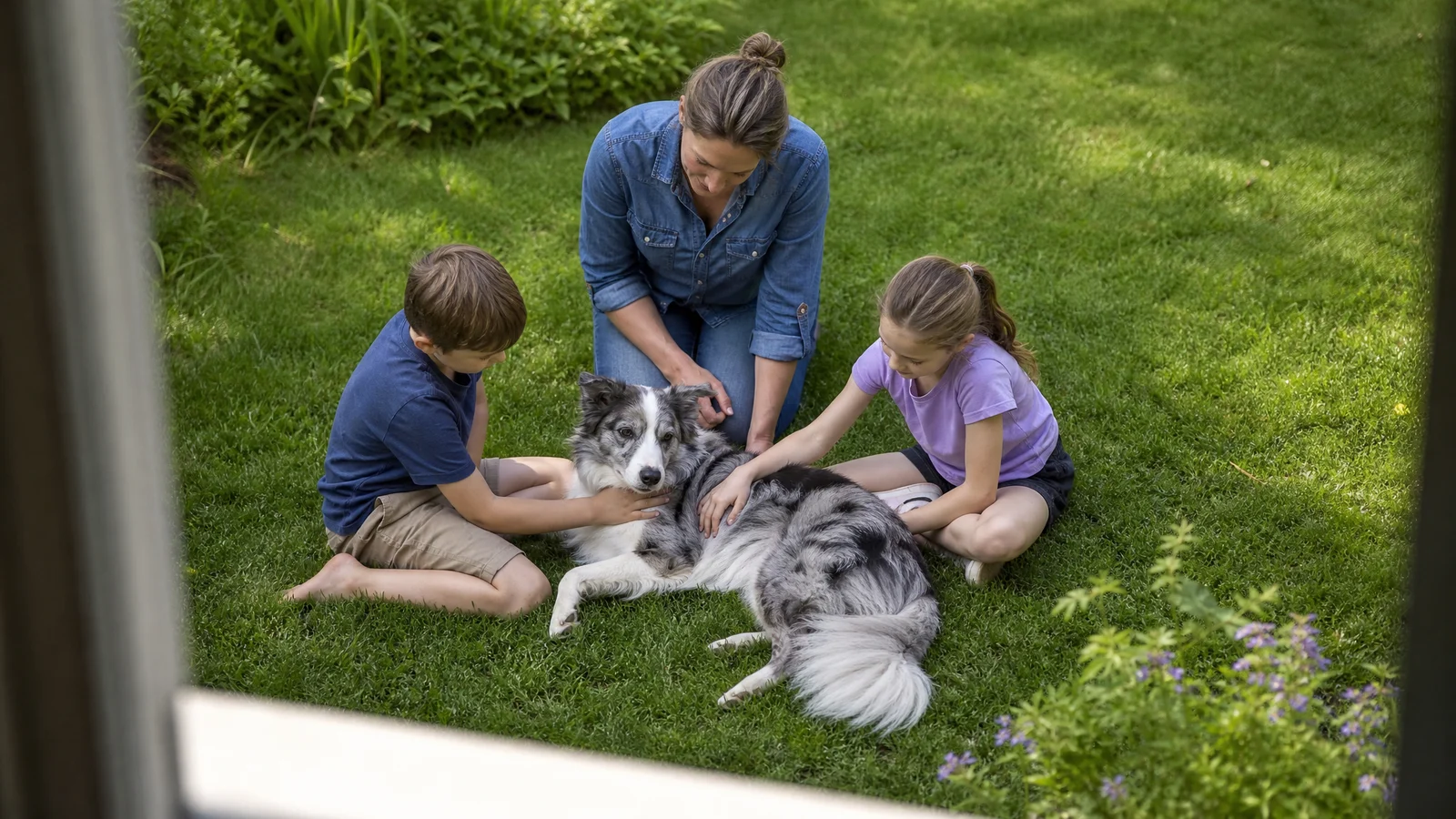
A child and a dog get along better when the adults have taught both of them how the household works. That part can be built on purpose, one routine at a time, and it is where this page spends its time. We'll cover gentle handling, the jobs that belong to the adults, a place for the dog to retreat to, and what helps a nervous child.
Nothing here promises that one particular dog and one particular child will always get along. What follows is a set of daily habits. They give the child a clear way to behave, they give the dog room to opt out, and they put an adult in a position to notice trouble early. Each habit is small, and most of them cost nothing but attention and a few treats.
Whether Border Collies Are Good With Kids Starts With Gentle Handling
Children learn how to treat a dog the way they learn anything else. An adult shows them, they try it, and someone notices when it goes well. Waiting for a child to work it out alone puts the dog in the position of teaching the lesson, and that is not a fair job to hand them.
Start with what the lesson is for. The ASPCA advises: "Teach your children to treat your dog gently and with respect, giving the dog their own space and opportunities to rest."
Teaching it looks ordinary. The adult shows the child what a slow, quiet approach looks like, lets the child practice with a hand resting over theirs, and says out loud what the child did well. Praise works on the child's side of the relationship too, and a child who hears "that was gentle, thank you" learns what to repeat much faster than one who only hears what to stop.
Phrase each instruction as something to do rather than something to stop. "Gentle hands" and "quiet voice" give a child an action to take, while a bare "don't" leaves them guessing what the adult wants instead.
Keep the lessons short and cheerful, and keep the dog free to walk away from any of them. When a child's running or squealing sets off nipping, the Border Collie ankle nipping guide covers that separately, and the Border Collie behavior problems page shows how to reward calm while children rush past.
When Border Collies Are Good With Kids, Adults Have Three Jobs
The jobs that belong to adults do not shrink as a child gets better at gentle handling. Children are still learning, and a dog cannot explain a boundary to them, so the adult is the one who can. The most useful of those jobs is stepping in, and it works best when it is calm and early.
Calling the dog away in a cheerful voice and paying them with a treat ends the moment with nobody in trouble. So does steering the child toward a different activity. Scolding the dog for something an adult could have prevented does not help, so we leave it out of the routine completely.
Dogs Trust says that when children learn how to behave safely around dogs, it helps dogs see them more positively, and it sets out the adult's side in three parts:
- Stay close enough to spot anything from the child that might worry the dog.
- Step in and intervene as soon as you notice a problem.
- Use baby gates, play pens, highchairs, or even different rooms to give the child and the dog the separation they need.
A Retreat Space and Choice Around Children for a Border Collie
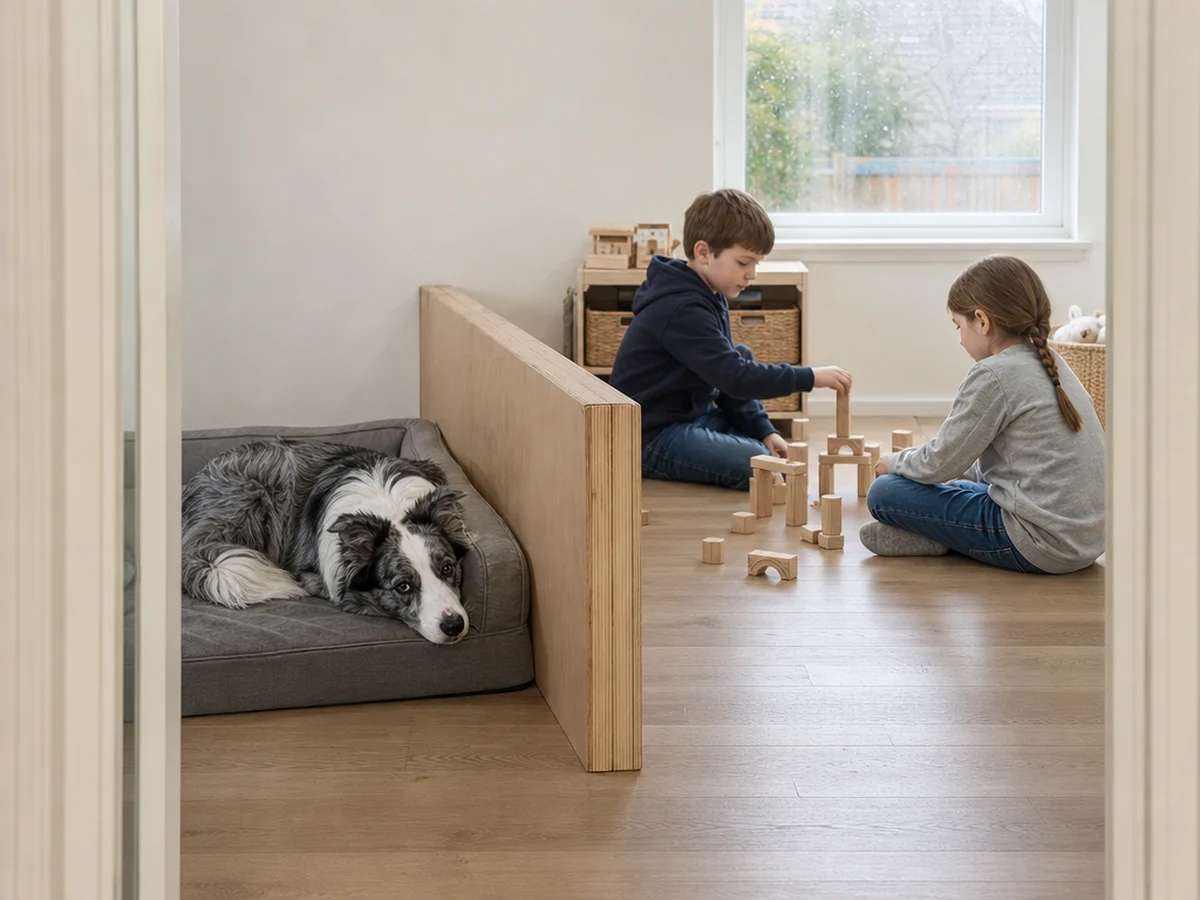
Giving a dog a choice about contact is part of how a household is set up, and it starts with a place where the dog can be left alone. Cornell recommends that families "provide a safe retreat space where the dog can go to relax." It also says that "running, screaming, or chasing should also be avoided, as these actions can startle some dogs or trigger a chase response, potentially leading to an accident."
Advice for Visiting Children
Blue Cross wrote its guide for visiting children rather than for a family's own, so we state it that way. For visitors, it advises that when the dog is awake you "call them to you as opposed to approaching them," and teach children "to give dogs space and let the dog choose whether they want to interact." It also says: "Separation should always be a positive experience for your dog, never a punishment."
Keeping the Retreat and the Choice Working
A retreat space only works if it keeps working. The adults decide where it is and keep it in the same place, so the dog always knows where to find it. A bed in a quiet corner, a crate with the door left open or a spot behind a gate can all do the job, as long as the dog can lie down comfortably there.
The same idea can shape a family's own days. When the dog walks away from the children, the children let them go and do not follow. When the dog heads for their resting place, it becomes off limits to everyone until the dog comes out on their own.
Regular vet visits belong in the routine of any dog who lives with children, and a sudden change in how a dog reacts to being touched is worth mentioning at the next one. The teaching a Border Collie to settle guide covers teaching a mat so the dog has a place that means rest.
Are Border Collies Good With Kids? Bite Risk and Each Dog
No routine on this page can promise that a dog and a child will never have a bad moment. What a routine can do is make a bad moment less likely and easier to catch, and that is worth doing every day, not only on the days that feel risky. Every dog also brings their own history into a household, so the routines that suit one dog may need adjusting for the next.
The American Veterinary Medical Association says: "Remember, it's not a dog's breed that influences whether the animal will bite, but rather the dog's individual history and behavior." It also advises that families "Teach children, including toddlers, to be careful around and respectful of pets."
If a dog ever growls, snaps or bites, the Border Collie aggression guide explains what to do next. A qualified reward-based trainer or a veterinary behaviorist can also look at the individual dog in person, and that is the right call for any bite.
A Nervous Child and a Border Collie
A child who is nervous around dogs does not need to be convinced, and pushing makes everything harder. Let the child set the distance. Standing beside a gate, in a doorway or next to an adult, and watching the dog do ordinary dog things, counts as taking part.
The adult does the active work. They toss the treats, ask for cues like sit, and keep the dog's attention on them, so the child's only job is to watch from wherever they feel comfortable. Nobody needs to push a pat, a look or a hello, and a child who says "not today" has given a perfectly good answer.
Small wins matter more than big ones. A child who watches a treat toss from across the room, and on another day from a little closer, has made progress they can see for themselves. When the child wants to try something, the adult can help them drop a treat from a distance they pick, and stop the moment they say so.
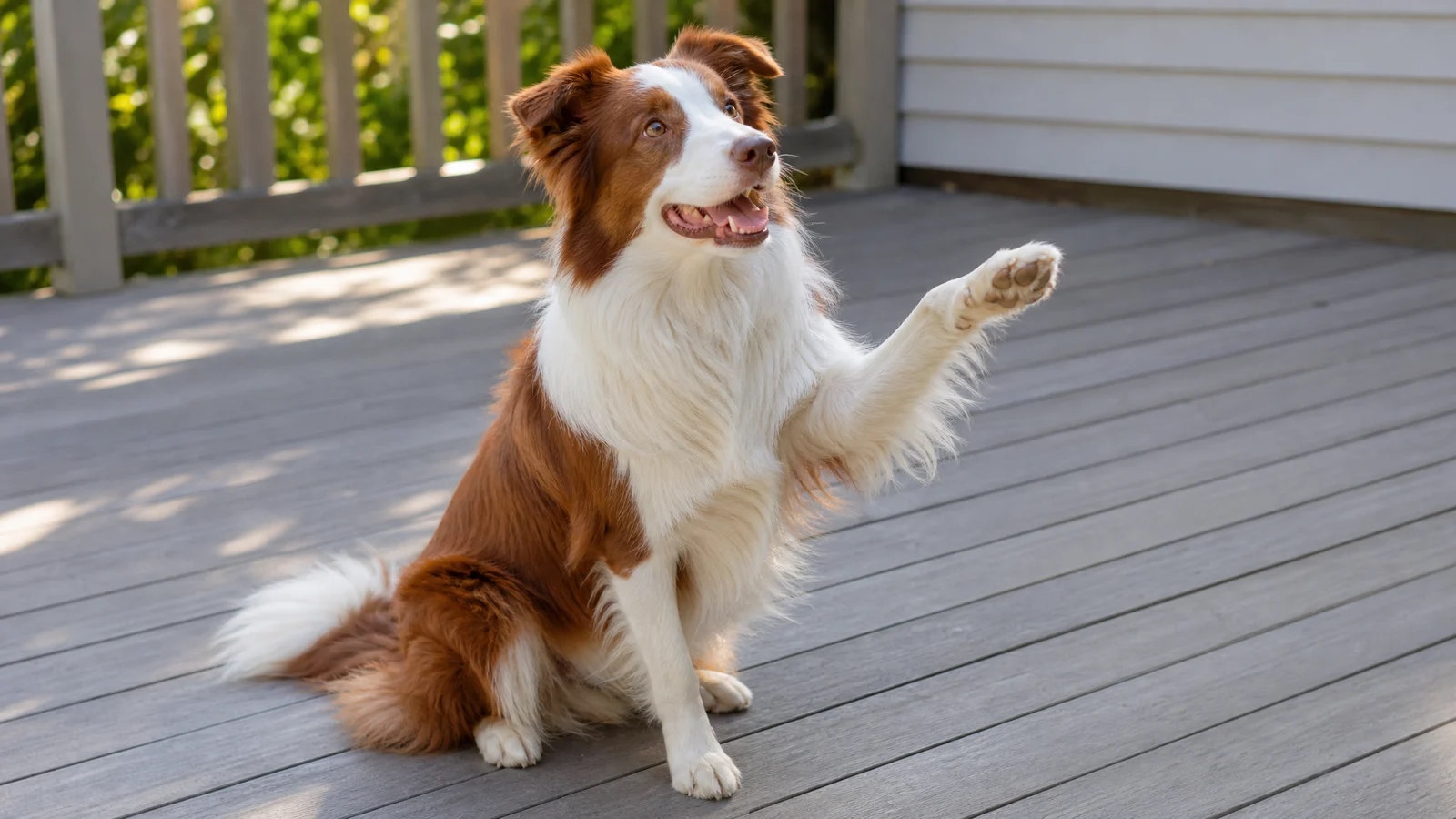 Exercise and jobsHow to Teach a Border Collie to Shake and High Five
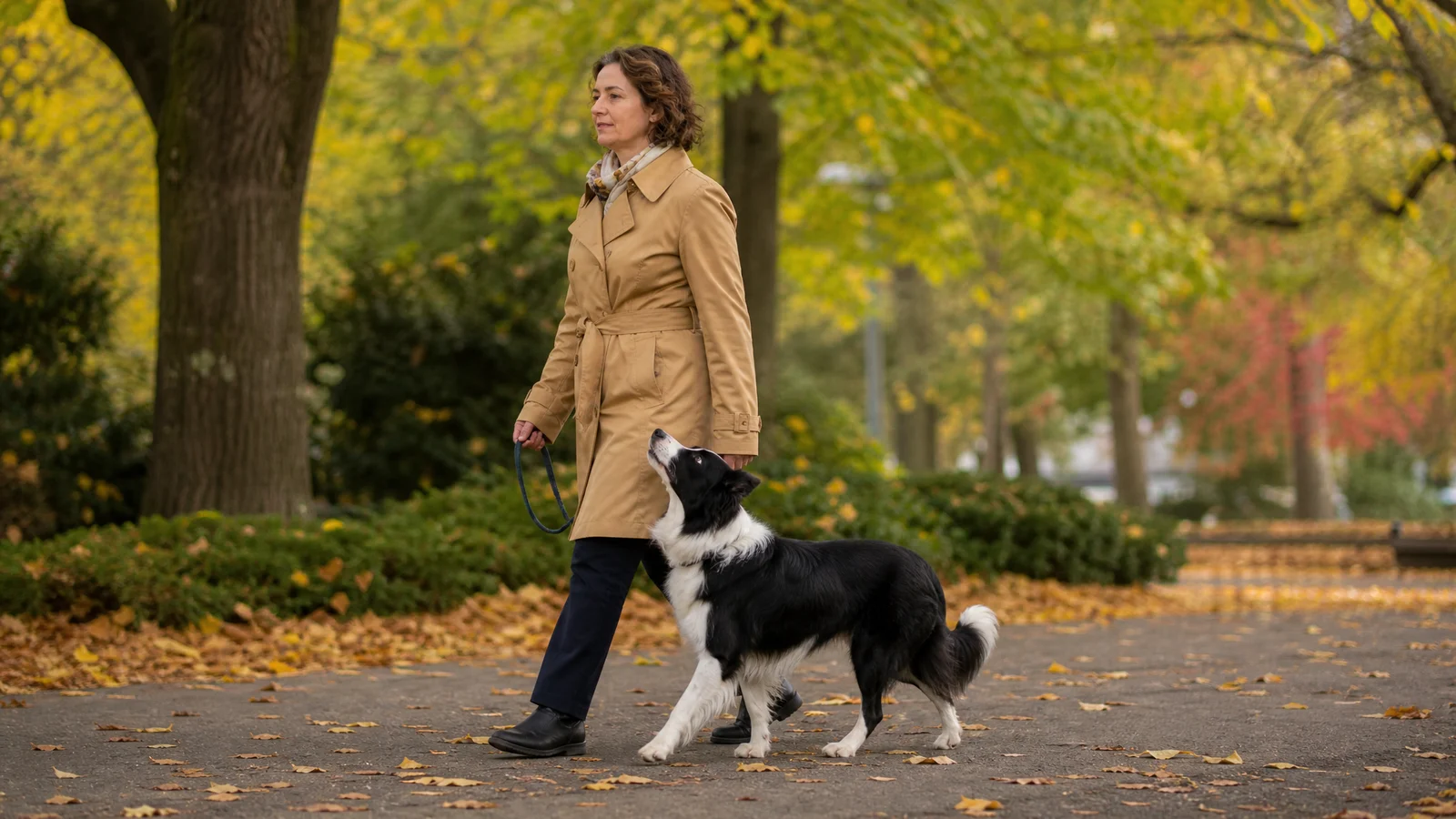 Training basicsHow to Teach a Border Collie to Heel
 Training basicsBorder Collie Temperament: What It Means for Training