 Border Collie
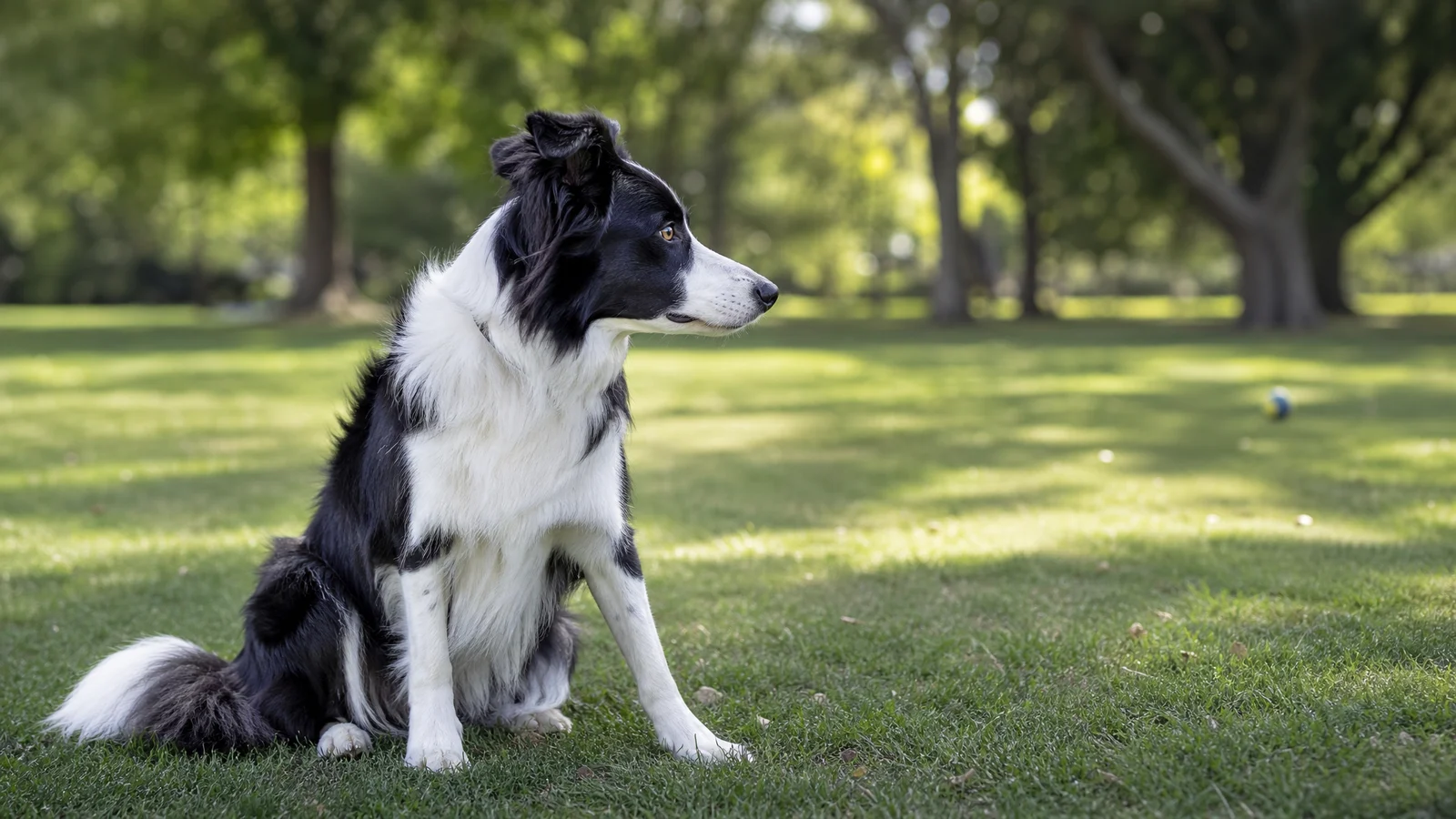
Calling a dog stubborn feels like an answer, but it works more like a stop sign. Once the word lands, nobody asks what the dog was asked to do, where, with what payment, or how much else was going on, so nothing changes and the next ask goes the same way. A cue that goes unanswered is better treated as a puzzle with a short list of suspects.
When a dog goes quiet in a new place, is the dog refusing to listen, or has the place changed what the cue means to them? We'll answer what a missed cue may be pointing to, how to carry a cue from one place to the next, and when a reward can change. After that, the useful question is what you would like to see instead.
When People Say Border Collies Are Easy to Train
In its guide to ignoring distractions, the American Kennel Club says "the more likely explanation for your dog's disobedience is that they're overwhelmed by the environment and simply can't focus," and adds that "it's often not deliberate defiance."
Stubborn is a conclusion about a dog's character, and a conclusion leaves nothing to adjust. A question does. When a cue goes unanswered, ask what changed since the last time it worked: the place, the people nearby, the reward on offer, the dog's energy, or the way the cue was asked. Any one of those can be enough to turn a reliable answer into silence.
That question also keeps your side of the work in view. A dog can learn a skill quickly and still need help showing it somewhere new, and that is a training job, not a verdict on the dog. If the slipping began around adolescence, our guide to teenage Border Collie training covers that stage. The same question suits a dog who answers on some days and not on others: look for a pattern in where and when the misses happen.
Quick to Learn, Slow to Carry Over
PetMD describes the pattern this way: "Dogs can be quick to pick up new skills but slow to transfer them to new scenarios, meaning they don't always generalize their lessons well." PetMD also says that your dog "ignoring" you might seem like insubordination when it's actually because the dog is shy, or scared, or unsure.
Here is how we carry a cue across places, one rung at a time. Move up only when your dog answers calmly at the rung you're on, meaning they respond to the first ask, take the reward and settle, and step back down a rung when a new place makes the cue fall apart.
- Ask in the spot where the cue was first learned, with the reward in your hand and the same cue word you always use.
- Ask in a different spot in the same room, keeping the cue and the reward exactly as they were.
- Ask in another room of the house, where the sounds, smells and furniture are different.
- Ask in a quiet outdoor spot, such as a fenced yard or a calm corner away from foot traffic, with your dog on a leash anywhere that isn't fenced.
Repeat each rung until the answer is easy, pay for it, and only then move on. Open-field recall sits far above the fourth rung, and our guide to Border Collie recall in open fields picks up there. For what to test at each age, our Border Collie puppy training timeline lays it out stage by stage.
If Border Collies Are Easy to Train, Why Miss Cues?
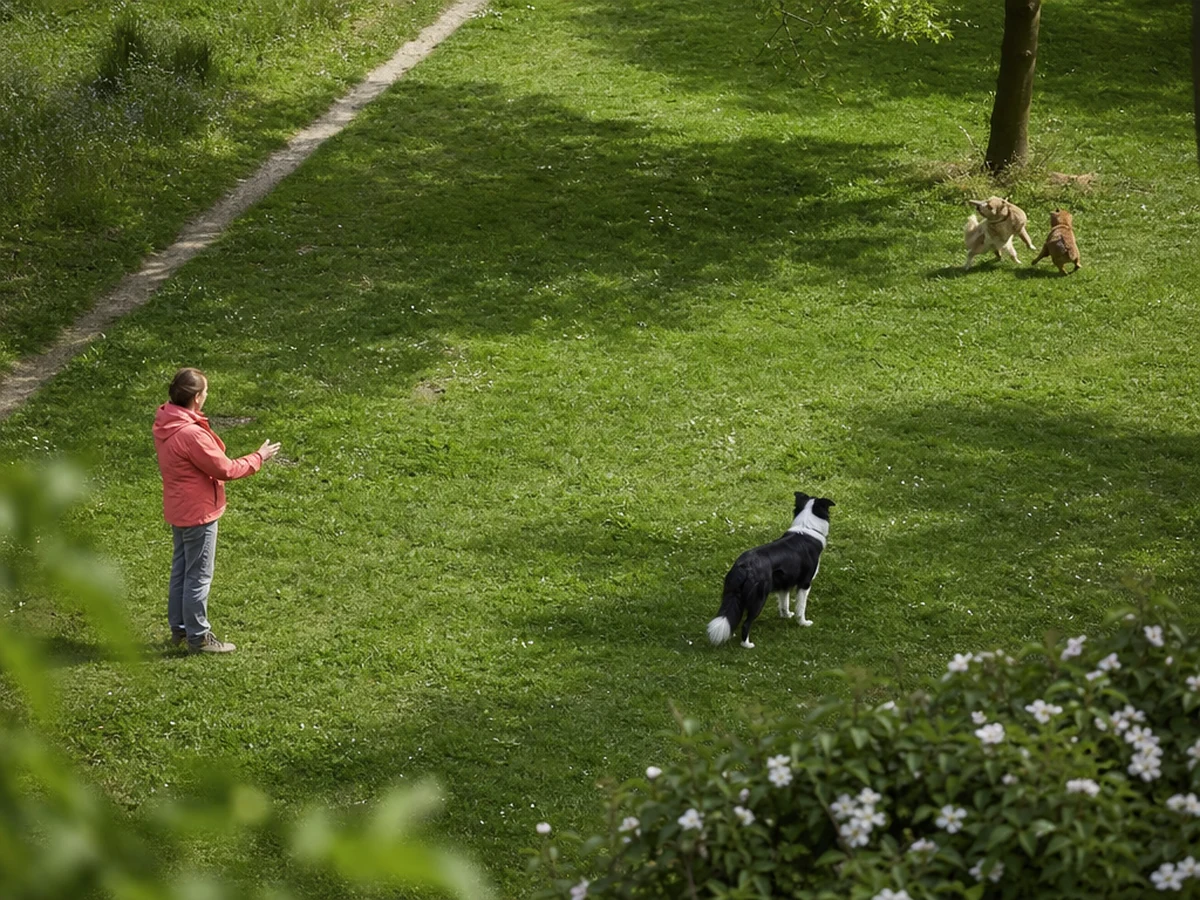
When a dog can't respond to a cue, VCA Animal Hospitals suggests considering possibilities such as "there is a competing motivation (something else has the dog's attention)," a dog who is "too tired, emotionally or mentally fatigued, or is over-excited," or one who is "experiencing or anticipating pain." VCA also advises to "avoid confronting or forcing your dog to comply with you."
Each possibility points to something you can change. If something else has your dog's attention, make the setting quieter or ask from closer. If your dog is worn out or wound up, stop and try again when they're calmer. If there's any chance of pain, the next step is a vet visit, not more repetitions. More than one possibility can be in play at once, so when one fix helps without solving it, check the others before deciding your dog has stopped trying.
Regular vet checkups belong in any training plan, and they give you a natural moment to mention a change in how your dog responds. If your dog freezes, snaps or avoids you when asked for a cue, bring in a qualified reward-based trainer, and our guide to Border Collie behavior problems is a good next read.
Your Voice and Your Pause When a Cue Fails to Land
Two small habits shape how a cue lands before any bigger change is needed. One is the voice you use, and the other is the moment you give your dog to answer.
Does tone of voice change whether a dog answers? A cue is the word, not the volume, so say it once in the same ordinary, friendly voice you used while teaching it. Turning it up or rattling it off a second time adds noise without adding information. If the cue didn't work, change the setting or the difficulty rather than the voice.
How long should you wait before deciding a cue was missed? Give a calm beat, long enough for your dog to work out what you asked and no longer. If nothing happens, don't repeat the cue in a rising voice. Make the next try easier by moving closer, quieting the setting or showing the reward. The exact length of the wait matters less than keeping it about the same from one try to the next.
Telling a Missed Cue From a Forgotten One
How can you tell a forgotten cue from a distracted dog? Go back to the spot where the cue was learned and ask once, with a reward ready. A prompt answer there means the skill is still in place and the new setting is the problem. A slow or missing answer means the cue needs a short refresher where it started, before it goes anywhere else.
What should you do the moment your dog does answer in a hard place? Pay right away, and let your dog enjoy the reward before asking for anything else. Answering where answering is difficult deserves the best reward you have with you. Ending the try on that success teaches the hard place that a cue there leads to something good, which is the whole point of carrying the cue over.
When to Change the Reward for a Reliable Cue
Dogs Trust says once a dog has learned a behavior and "can do it well in a variety of environments," you can change the type of reward. It says to "reward every time to begin with until your dog really understands what you'd like them to do," and then, "once they're reliably and consistently doing it," to reward every other time, then every third time, then mix and match when you give the food reward and when you just give them some verbal praise or a fuss.
That sequence is a stage the dog earns. A cue that still goes unanswered in a new place hasn't reached it yet, so keep paying every success there, however well the cue works at home, and let the ladder above decide when it's time to step up. Dropping the payment early is one more way a dog ends up labeled stubborn.
So Are Border Collies Easy to Train? Teach What to Do
The American Veterinary Society of Animal Behavior states that "training methods are most effective when they focus on teaching the animal what to do, rather than punishing them for unwanted behaviors."
That shifts the question from why a dog won't to what you'd like them to do instead. Pick the behavior you want in place of the one you keep seeing, such as four paws on the floor in place of jumping up, and decide it before the session starts so you can pay the instant it appears, and pay for it every time it happens. Our Border Collie mat habit guide walks through one lesson of that kind from start to finish.
Read that way, a missed cue points to a gap in what the dog has been taught and paid for in that place. A gap is something we can close with practice, so the stubborn label never has to settle the matter.
 Training basicsHow to Teach a Border Collie to Focus on You
 Training basicsHow to Teach a Border Collie to Sit
 BehaviorTraining an Older or Adopted Border Collie